
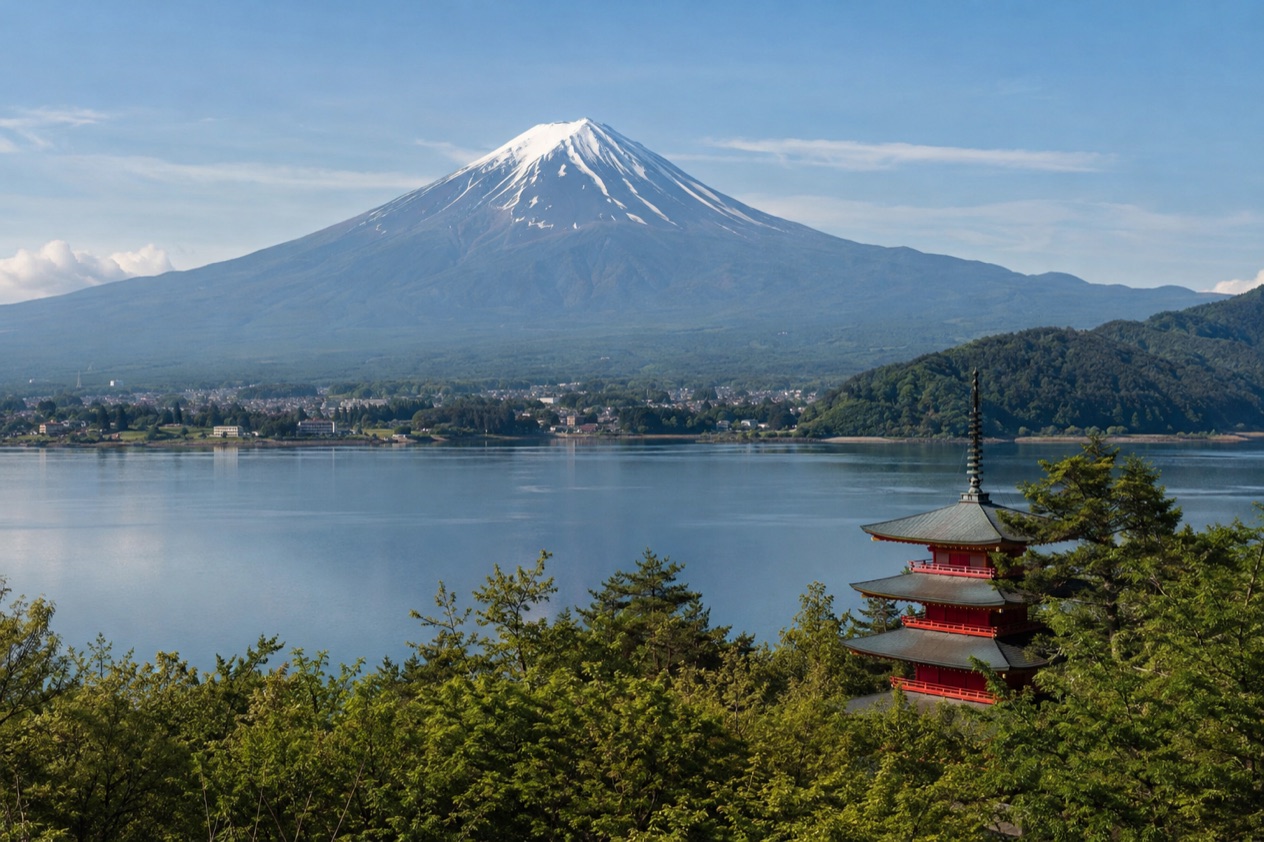
Steam rises from the sulphur vents of Owakudani while a boat crosses Lake Ashi, Mount Fuji somewhere in the view, and the day ends in a ryokan bath. In Nikko, the hours go to the gateways and carved halls of Toshogu, the mausoleum of a shogun, with a waterfall and a mountain lake close by.
Hakone is the trip of hot water, art and rides on trains, cable cars and boats. Nikko is the trip of shrines, falls and lakes, and the choice depends on which of those you want to build your days around.
Which is better, Hakone or Nikko?
Hakone suits travelers who want hot springs, art museums and a loop of rides on trains, cable cars and boats, while Nikko suits those who come for shrines, mausoleums, a waterfall and a lake in the mountains. Neither is better in the abstract. They are two different kinds of getaway from Tokyo, one built around soaking and views, the other around history and the landscape of a national park.
Hakone sits west of Tokyo, in Kanagawa Prefecture, and most of it lies inside the Fuji-Hakone-Izu National Park. Nikko is a town in Tochigi Prefecture, to the north of Tokyo, with its own national park around Lake Chuzenji.
| Category | Hakone | Nikko |
|---|---|---|
| Sights | Owakudani sulphur vents, Lake Ashi, the Hakone Open-Air Museum, Sengokuhara art museums | Toshogu Shrine, Taiyuin-byo, Futarasan Shrine, Rinno-ji, Kegon Falls, Lake Chuzenji |
| Vibe | A spa town and mountain resort area, organized around baths, views and a ring of transport | A shrine-and-temple town with a national park behind it |
| Things to do | Bathe in hot springs, cross the lake by boat, ride the ropeway, visit art museums | Walk through the shrine complexes, see the falls, spend time at the lake |
| Food | Black eggs at Owakudani, restaurants and gift shops in Hakone-Yumoto, ryokan dinners | Yuba (tofu skin) and the dishes of a mountain town |
| Weather | Humid subtropical, warm summers and cool winters, September the wettest month | Snow through the winter and a damp July up at the lake |
| Getting there | Odakyu Line from Shinjuku, or the Tokaido Shinkansen to Odawara and then the Hakone Tozan Railway | Train from Asakusa or Shinjuku to Tobu-Nikko Station |
| Best for | Hot springs, art, lake and ropeway rides, a ryokan night | Shrines and mausoleums, falls, history |
Sights and food
Hakone’s sights are scattered around a volcanic landscape and linked by the rides between them. Owakudani is a valley of active sulphur vents and hot springs, where visitors taste the black eggs said to prolong life.
Lake Ashi, a crater lake, offers views of Mount Fuji from its boats and shores. The Hakone Open-Air Museum opened in 1969 as Japan’s first open-air museum, with sculpture set out across open ground, and Sengokuhara is filled with art museums.
Nikko’s sights are mostly built, and they are about the Tokugawa family. Toshogu Shrine is the mausoleum of Tokugawa Ieyasu, founder of the shogunate that ruled Japan from 1603 to 1867. The shrines and temples of Nikko that carry UNESCO World Heritage status include 103 structures across three complexes.
Nearby stand the mausoleum of Tokugawa Iemitsu (Taiyuin-byo) and Futarasan Shrine, which dates to the year 767, along with Rinno-ji Temple. Japanese has a saying that sums up the town: never say kekkō, splendid, until you have seen Nikko.
On the food side, Hakone eats well because it is a resort. Hakone-Yumoto is known for its many restaurants and gift shops, so the arrival point is also a place for a first meal and a box of sweets to take home.
Up on the mountain, the black egg boiled in the hot water at Owakudani is the snack everyone talks about. In the ryokan, the evening meal is the centerpiece, a spread of small seasonal dishes served in the room or a dining hall after the bath.
Nikko is known for yuba, the delicate skin lifted from heated soy milk, which turns up in set meals and simmered dishes. Soba and other mountain-town comfort food fill out a day that includes a lot of walking between shrine gates. Food in Nikko is the reward at the end of the temple route rather than a reason to travel.
The verdict depends on what you came to look at. For history, carved architecture and the story of the Tokugawa shoguns, Nikko wins clearly. For art, views of Mount Fuji, a long list of places to eat and the pleasure of a bath after a day out, Hakone wins. Food leans toward Hakone because the ryokan dinner and the restaurant choice in Hakone-Yumoto add up to more variety on a short stay.
Things to do
The things to do in Hakone are water and movement. You soak in one of the area’s hot springs (Hakone has 17 types), cross Lake Ashi on the Hakone Sightseeing Cruise, and ride the Hakone Ropeway, an aerial lift linking Sounzan and Togendai by way of Owakudani. The rides feel like part of the sightseeing, since the cable car, the mountain railway and the boat each give a different angle on the landscape.
Art fills the gaps. Walk the sculpture grounds of the Hakone Open-Air Museum, browse the museums around Sengokuhara, or wander the shops of Hakone-Yumoto for sweets and local crafts. Mt. When the ropeway is under scheduled maintenance, a replacement bus runs on sections of it, so the loop keeps moving.
The Hakone Freepass is built around exactly this kind of day. It offers unlimited rides on eight means of transport, including the Hakone Tozan Train, the Hakone Ropeway and the Hakone Sightseeing Cruise. The Hako Ticket Plus version adds access to applicable art museums, hot springs and activity facilities, and it is valid for two days or three days. It also offers discounts at around 70 tourist spots.
In Nikko, the day is a walk through the shrine and temple grounds. Toshogu is the heart of it, with the buildings of a shogun’s mausoleum set among old trees. Taiyuin-byo holds the mausoleum of the third shogun, Iemitsu, and Rinno-ji Temple and Futarasan Shrine round out the complexes. The Toshogu Museum fits in alongside. The hours below shape the plan, since the grounds close in the afternoon, earlier in winter.
| Site | Open April to October | Open November to March |
|---|---|---|
| Toshogu Shrine | 08:00-16:30 | 08:00-15:30 |
| Taiyuin-byo | 08:00-16:30 | 08:00-15:30 |
| Toshogu Museum | 09:00-16:00 daily | 09:00-16:00 daily |
| Rinno-ji Temple | 08:00-17:00 | 08:00-16:00 |
Beyond the shrines, Nikko’s national park gives the trip its second half. Lake Chuzenji is a lake in Nikko National Park, and Kegon Falls drops at the lake in the same park. Together they turn Nikko from a temple visit into a day in the mountains. Buses also run from Oze to Nikko between mid-spring and mid-autumn, which links Nikko to hikers coming over from Gunma.
For evenings, Hakone gives you a ready-made answer, since the ryokan bath and dinner are the evening. Ryokan hosts also keep a schedule for meals and for locking up at night.
Weather and the best time to go
Hakone has a humid subtropical climate, with warm summers and cool winters, and September is its wettest month. At Odawara, at the foot of Hakone, January brings cool but sunny days with modest precipitation, while July is hot, humid and much wetter.
| Place | Month | Figures |
|---|---|---|
| Odawara, at the foot of Hakone | January | Average high 51.1°F, low 33.1°F, 3.30 inches of precipitation, 180 hours of sunshine |
| Hakone, mountain side | January | 5.03 inches of precipitation |
| Odawara, at the foot of Hakone | July | Average high 84.2°F, low 71.6°F, 8.50 inches of precipitation, 163 hours of sunshine |
| Hakone, mountain side | July | 16.74 inches of precipitation |
| Okunikko, near Lake Chuzenji | January | 6.4 days with precipitation, 24.8 inches of snowfall, 24.7 days of snow or sleet, humidity 66 percent |
| Okunikko, near Lake Chuzenji | July | 16.4 days with precipitation, humidity 88 percent |
In practice, a winter trip to Hakone means cool air and a hot bath that feels earned, and sunshine is plentiful at the foot of the mountain. A July trip means warm, damp air, and the mountain side gets a great deal of rain, so the lake and the ropeway views come with a good chance of cloud and showers. Because September is the wettest month, that stretch is worth planning around.
In January, snow or sleet falls on most days, and the total snowfall is deep by any measure, so the lake and the falls turn into a winter landscape. In July, rain or drizzle falls on well over half the days and the air is very humid, so a July visit to the lake calls for the same patience as Hakone’s wet season.
There is a difference in how the seasons play out. Hakone’s weather mostly changes the view, with cloud covering the lake or lifting off it, and the baths and museums work in any weather. Nikko’s weather changes the ground, with snow in winter and wet paths in summer, but the shrines keep their hours. The sightseeing hours also shift with the season, with the shrine grounds closing earlier from November to March.
Getting there and getting around
Both towns are reached from Tokyo by train, and the trips are of similar length. For Hakone, there are two routes.
From Shinjuku Station, the Odakyu Line runs to Hakone-Yumoto Station in roughly 70 minutes to an hour and a half depending on the service, and the Romancecar limited express runs between Shinjuku and Hakone-Yumoto. From Tokyo Station, you can take the JR Tokaido Shinkansen to Odawara Station and transfer to the Hakone Tozan Railway for Hakone-Yumoto, with the trip taking about 55 minutes in total.
For Nikko, the train from Asakusa Station or Shinjuku Station in Tokyo reaches Tobu-Nikko Station in about 2 hours. That makes Nikko the longer of the two rides, though both are trips you can make from Tokyo in a morning.
Once in Hakone, the transport is part of the experience. The Digital Hakone Freepass allows unlimited rides on the Hakone Tozan Line, the Hakone Tozan Bus in designated areas, the Hakone Tozan Cable Car, the Hakone Ropeway, the Hakone Sightseeing Cruise, the Odakyu Highway Bus in designated areas, the Tokai Bus in designated areas and the KANKO SHISETSU-MEGURI Bus. A version with an Odakyu Line ticket includes one return trip between the departure station and Odawara Station.
The Hakone Free Pass can be bought at Shinjuku Station, Odawara Station and other stations along the Odakyu Odawara Line and the Hakone Tozan Line. A ropeway under maintenance is replaced by buses on some sections, so the loop of rail, cable car, ropeway and boat keeps its shape.
Seasonal buses link Nikko with Oze from mid-spring to mid-autumn. For ways of moving between the town and the lake, there is no more to say with certainty, so plan the day by the opening hours of the sites.
Who should choose which
Pick Hakone if the trip is about relaxing and looking: hot springs, a lake with views of Mount Fuji, art museums, the steam of Owakudani and a night in a ryokan. It suits travelers who like moving between places by train, cable car, ropeway and boat, and anyone who wants a getaway from Tokyo with the bath as the highlight. Those staying in a traditional ryokan should plan to arrive at least one day after landing in Tokyo, to avoid missing dinner or being locked out at curfew time.
Pick Nikko if history and architecture are the draw. It suits travelers who want the story of the Tokugawa shoguns in the buildings themselves and who are happy to follow a day set by opening hours.
Combining the two is possible on a longer trip, with Hakone as the soaking stop and Nikko as the shrine stop, and both are reached from Tokyo by train. On a short stay, though, each is a trip of its own, and choosing one lets you spend the time there instead of on the way. Hakone fits a stay built around a ryokan night, Nikko a day of sights that can start from Tokyo.
Good to know before you go
Ryokan stays in Hakone run on a schedule, with a set time for dinner and a time when the doors lock for the night, so arrive with the evening in mind. In Nikko, the shrine grounds close in the afternoon, and earlier from November to March, so start the sightseeing early in the day. Hakone’s wettest month is September, and a Nikko visit in July or in deep winter means damp air or snow underfoot, so pack for the weather at the lake.
Sources
- Japan National Tourism Organization, Hakone (https://www.japan.travel/en/destinations/kanto/kanagawa/hakone-and-around/), checked October 11, 2026
- Hakone Tourist Information (https://www.hakonenavi.jp/international/en/), checked October 11, 2026
- Wikipedia, Hakone, Kanagawa (https://en.wikipedia.org/wiki/Hakone,_Kanagawa), checked October 11, 2026
- Wikivoyage, Hakone (https://en.wikivoyage.org/wiki/Hakone), checked October 11, 2026
- Japan Meteorological Agency (JMA), Normal values 1991-2020, monthly (https://www.data.jma.go.jp/stats/etrn/view/nml_amd_ym.php?prec_no=46&block_no=1008), station Odawara, elevation 14 m, checked October 11, 2026
- Wikipedia, Hakone Open-Air Museum (https://en.wikipedia.org/wiki/Hakone_Open-Air_Museum), checked October 11, 2026
- Wikipedia, Hakone Ropeway (https://en.wikipedia.org/wiki/Hakone_Ropeway), checked October 11, 2026
- Wikipedia, Ōwakudani (https://en.wikipedia.org/wiki/%C5%8Cwakudani), checked October 11, 2026
- Wikipedia, Lake Ashi (https://en.wikipedia.org/wiki/Lake_Ashi), checked October 11, 2026
- Japan National Tourism Organization, Nikko (https://www.japan.travel/en/destinations/kanto/tochigi/nikko-area/), checked October 11, 2026
- Wikipedia, Nikkō, Tochigi (https://en.wikipedia.org/wiki/Nikk%C5%8D,_Tochigi), checked October 11, 2026
- Wikivoyage, Nikko (https://en.wikivoyage.org/wiki/Nikko), checked October 11, 2026
- Japan Meteorological Agency (JMA), Normal values 1991-2020, monthly (https://www.data.jma.go.jp/stats/etrn/view/nml_sfc_ym.php?prec_no=41&block_no=47690), station Okunikko, elevation 1292 m, checked October 11, 2026
- Wikipedia, Nikkō Tōshō-gū (https://en.wikipedia.org/wiki/Nikk%C5%8D_T%C5%8Dsh%C5%8D-g%C5%AB), checked October 11, 2026
- Wikipedia, Kegon Falls (https://en.wikipedia.org/wiki/Kegon_Falls), checked October 11, 2026
- Wikipedia, Lake Chūzenji (https://en.wikipedia.org/wiki/Lake_Ch%C5%ABzenji), checked October 11, 2026
To plan your stay
- Best Time to Visit Hakone: Autumn Leaves, Rainy Season, Weather by Month and Festivals
- Things to Do in Hakone: Lake Ashi, Owakudani, Open-Air Museum and Hot Springs
- Where to Stay in Hakone: Hakone-Yumoto, Lake Ashi, Sengokuhara and Ryokan Stays
- Hakone from Tokyo: Romancecar, Shinkansen, Local Trains and the Hakone Freepass