
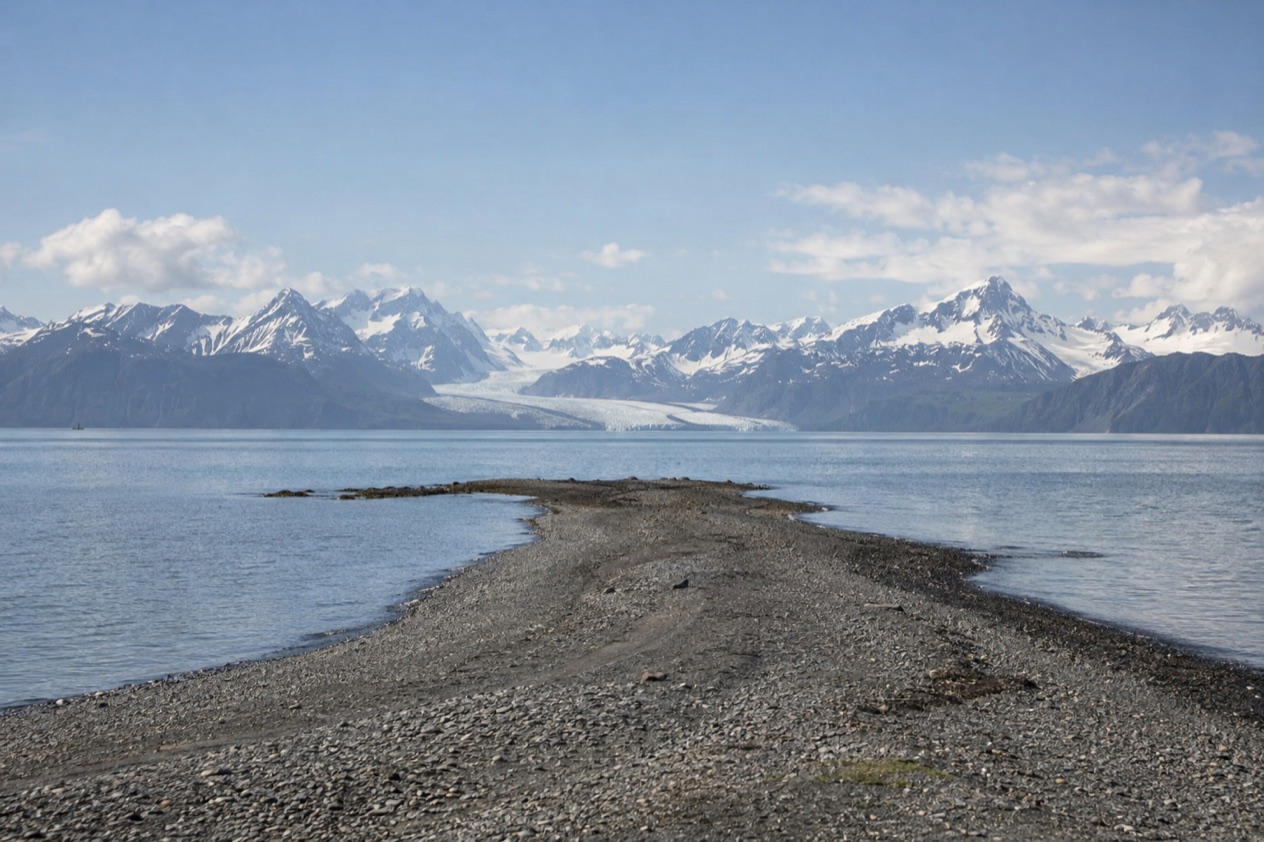
On a long June evening the light over Kachemak Bay keeps going well past supper, and boats ease back toward the harbor at the end of the Homer Spit while gulls argue over the docks. Winter is a different town altogether, one of ski trails, quiet galleries and short gray afternoons. Homer sits at the end of the road on the Kenai Peninsula, and each season gives it a distinct character.
When is the best time to visit Homer?
Early September suits those who want the same activities with a little more room and a change in the light.
For sightseeing, the summer months are the easiest to enjoy. July is the warmest month, with afternoons in the low 60s and daylight stretching to about eighteen hours. You can walk the Homer Spit, browse the art galleries, visit the award-winning Pratt Museum and still have light left for a late dinner. June is drier and has the longest days of the year, while August brings more rain and noticeably shorter evenings.
For wildlife and parks, the season is built around the calendar of the animals. Bear viewing runs from June through September, when brown bears gather on coastal sedge flats and streams, and Homer is the closest gateway to Katmai National Park and Preserve and Lake Clark National Preserve.
In spring the bears eat grasses and clams, in summer they follow the salmon, and in fall they turn to berries and seeds, so the experience changes with the month. Fishing for halibut, king salmon, silver salmon, lingcod and rockfish runs across the season out of the port.
The quiet seasons have their own reasons. Winter brings cross-country skiing on trails around town and a small-town rhythm that suits travelers who prefer galleries and cafés to boat docks. Families will find summer the most natural fit, with long days for the harbor, the tide of boats and the trail to Grewingk Glacier Lake.
Homer weather by month
Homer has a cool, maritime year: mild summers, winters that hover around freezing and a steady rhythm of light that swings from a few hours to nearly nineteen.
| Month | Average high (°F) | Average low (°F) | Precipitation (in) | Days with precipitation | Daylight on the 15th |
|---|---|---|---|---|---|
| January | 31.8 | 19.0 | 2.15 | 6.1 | 6 h 45 min |
| February | 34.9 | 21.7 | 1.82 | 5.3 | 9 h 10 min |
| March | 37.1 | 23.1 | 1.32 | 4.3 | 11 h 40 min |
| April | 46.1 | 31.3 | 1.15 | 3.2 | 14 h 27 min |
| May | 53.8 | 38.2 | 0.78 | 2.5 | 16 h 59 min |
| June | 59.3 | 44.7 | 0.87 | 2.8 | 18 h 40 min |
| July | 63.1 | 49.2 | 1.45 | 4.5 | 18 h 01 min |
| August | 62.6 | 48.0 | 2.31 | 7.4 | 15 h 42 min |
| September | 56.7 | 42.3 | 3.28 | 9.3 | 12 h 59 min |
| October | 47.1 | 33.3 | 2.61 | 7.6 | 10 h 20 min |
| November | 37.6 | 24.8 | 2.87 | 7.3 | 7 h 42 min |
| December | 34.0 | 21.4 | 3.27 | 8.7 | 6 h 04 min |
Late spring and early summer are the driest stretch, with only a few wet days a month, so May and June are good for planning outdoor days. Even in July, the warmest month, you want a fleece or a light insulated jacket for mornings and evenings, and a rain shell for the wetter days of August and September. Fall is the wettest part of the year, and from September to December the precipitation is spread over many more days.
In winter, highs hover near freezing, so precipitation can arrive as rain or as snow, and warm layers, hats and sturdy boots matter. The light is the other thing to plan around. In December the day is only about six hours long, which makes the hours between breakfast and mid-afternoon the time for outdoor plans. By May and June the opposite is true, and you can start late and still fill a full evening.
What is there to do in Homer in each season?
Summer: the long days on the water and the trail
Summer is when Homer does most of what it is known for. Boats leave the harbor on the Spit for halibut and salmon, and the town bills itself as the Halibut Fishing Capital of the World. Fishing out of the port can bring in king salmon, halibut, lingcod, rockfish and silver salmon across the season, and the waters reach into Kachemak Bay, Cook Inlet and the Gulf of Alaska.
From June through September, flights from Homer head toward Katmai and Lake Clark for brown bear viewing, with helicopter glacier landings also on the menu of local operators. On land, you can hike the Glacier Lake Trail, 3.2 miles long and easy, to Grewingk Glacier Lake with very little elevation gain. Kachemak Bay State Park, across the water, has more than 80 miles of trails and is reached only by boat or airplane.
Fall and spring: the shoulder seasons
In September the bears are still in the viewing season, and the berry harvest changes what they eat. The days shorten fast, and by October there are about ten hours of light, so evenings are for the galleries, the museum and a table in a restaurant rather than for the dock. Rain is more frequent now, and a waterproof layer replaces the sun hat.
Spring comes slowly. April has long days again, with more than fourteen hours of light, while the air is still cool. It is a quiet time to walk the Spit and to look for the bears’ early diet of grasses and clams, though the summer boat and flight season has not yet fully opened.
Winter: skis and slow days
In the Homer area more than 50 miles of winter ski trails are spread across Baycrest, Lookout Mountain and McNeil/Eveline, maintained by the Kachemak Nordic Ski Club, which also runs programs and events for the community. The Kachemak Ski Club has offered instructional downhill skiing and snowboarding at the Homer Rope Tow for more than 70 years.
With so little daylight, winter in Homer is about unhurried days, with museum visits, local art and the harbor in its quiet mood. It is not the season for bear flights or fishing charters, so leave those for summer.
When is Homer cheapest and least crowded?
Homer is least crowded in the cold months, from late fall through early spring, when the harbor is calmer and the town returns to its year-round residents. The Boat Harbor serves up to 1,500 commercial and pleasure boats at its summer peak, and that gives a sense of how busy the Spit becomes from the long days of June through August.
The peak weeks fall in the middle of summer, when fishing, bear viewing and the best weather overlap. That is when rooms and tours are in the greatest demand and the Spit feels most animated. Visitors who want a quieter experience can aim for the edges of the season, such as late May or September, when the days are still long enough to do plenty and the pace is easier.
From November to March, the town is calm. Travelers come then for the skiing and for the stillness of Kachemak Bay under snow, and for the slow pace of galleries and cafés. Those are the months when you are most likely to find open rooms and an unhurried town, though some seasonal businesses may be closed, and winter days are short.
Which months should you avoid in Homer?
There is no month to avoid outright, but December and January suit only travelers who come for winter and are happy with very short days.
The long-daylight months run from May through August, with the longest days in June, close to nineteen hours. Bear viewing is available from June through September, and fishing runs across the season, so these are the months when the water-based side of Homer is at work. Skiing belongs to the cold months, with the trail network and the Homer Rope Tow as the winter draw.
The wettest stretch comes from September through December, with rain on seven to nine days a month, and December has the least light, only about six hours. Anyone coming for the boats, the flights to the bear parks or the glacier landings will want to avoid those months. Travelers hoping for the aurora should know that no month is promised, and the dark winter evenings are only a chance.
The Sterling Highway is the only road into Homer, and it ends at the tip of the Spit. Kachemak Bay State Park has no road access, so arrival by boat or airplane is part of any trip across the bay, and Seldovia is likewise reached only by air or water.
Festivals and events in Homer through the year
Summer: peonies, fishing and the Spit
Homer is also called the City of Peonies, and the flowers are part of the summer story, with local farms and growers marking the blooming season. Summer is also the season of the working harbor, where fishing derbies and the daily return of the charter boats give the Spit its energy. Timing varies, so think of these as chances during the long days rather than fixed dates.
The Fourth of July is a fixed holiday that small Alaska towns celebrate with parades and gatherings, and Homer’s community life is most outgoing then. Evenings are long, so events carry on well into the night light.
Fall: berries, bears and quieter evenings
As fall begins, the bears turn to berries and seeds, and visitors on bear-viewing trips may see that change. The gallery scene and the Pratt Museum offer a good indoor rhythm as the weather turns wetter. Halloween on October 31 is celebrated in town with the usual costumes and community gatherings.
Thanksgiving, on a Thursday in late November, is a time for family meals, and the town keeps a small-community feel. Rooms and restaurants are quieter then.
Winter and spring: skis, lights and thaw
Winter events center on the ski community. The Kachemak Nordic Ski Club offers programs and events across the cold months, and the Homer Rope Tow brings together skiers and snowboarders. Christmas on December 25 and New Year’s Day on January 1 bring lights and gatherings to the dark months.
As spring returns, the days stretch fast, and the bears of Katmai and Lake Clark feed on grasses and clams. It is a time of change rather than big festivals, with the first boats returning to the harbor ahead of the summer season.
Sources
- NOAA NCEI, U.S. Climate Normals 1991-2020, monthly (https://www.ncei.noaa.gov/access/services/data/v1?dataset=normals-monthly-1991-2020&stations=USW00025507), station Homer Ap, elevation 64 feet, checked October 11, 2026
- Computed from the date and the latitude of the place (sunrise equation, solar elevation -0.833 degrees), October 11, 2026
- Homer Chamber of Commerce (https://www.homeralaska.org/), checked October 11, 2026
- Homer, attractions (https://www.homeralaska.org/things-to-do/attractions/), checked October 11, 2026
- Homer, bear viewing (https://www.homeralaska.org/things-to-do/outdoors-and-recreation/bear-viewing/), checked October 11, 2026
- Homer, fishing (https://www.homeralaska.org/fishing/), checked October 11, 2026
- Homer, glaciers (https://www.homeralaska.org/things-to-do/outdoors-and-recreation/glaciers/), checked October 11, 2026
- Homer, hiking and trails (https://www.homeralaska.org/things-to-do/outdoors-and-recreation/hiking-and-trails/), checked October 11, 2026
- Homer, outdoors and recreation (https://www.homeralaska.org/things-to-do/outdoors-and-recreation/), checked October 11, 2026
- Homer, things to do (https://www.homeralaska.org/things-to-do/), checked October 11, 2026
- Homer, winter activities (https://www.homeralaska.org/things-to-do/winter-activities/), checked October 11, 2026
- Alaska.org, dest homer (https://www.alaska.org/destination/homer), checked October 11, 2026
- Wikivoyage, Homer (https://en.wikivoyage.org/wiki/Homer), checked October 11, 2026
- Wikipedia, Homer, Alaska (https://en.wikipedia.org/wiki/Homer,_Alaska), checked October 11, 2026
- Wikipedia, Homer Spit (https://en.wikipedia.org/wiki/Homer_Spit), checked October 11, 2026
- Wikipedia, Kachemak Bay (https://en.wikipedia.org/wiki/Kachemak_Bay), checked October 11, 2026
- Wikipedia, Seldovia, Alaska (https://en.wikipedia.org/wiki/Seldovia,_Alaska), checked October 11, 2026
- Alaska.org, dest seldovia (https://www.alaska.org/destination/seldovia), checked October 11, 2026
- Wikipedia, Anchor Point, Alaska (https://en.wikipedia.org/wiki/Anchor_Point,_Alaska), checked October 11, 2026
- Wikipedia, Ninilchik, Alaska (https://en.wikipedia.org/wiki/Ninilchik,_Alaska), checked October 11, 2026
- Wikipedia, Kenai Peninsula (https://en.wikipedia.org/wiki/Kenai_Peninsula), checked October 11, 2026
- Kenai Peninsula Borough (https://www.kpb.us/), checked October 11, 2026
- Wikipedia, Climate of Alaska (https://en.wikipedia.org/wiki/Climate_of_Alaska), checked October 11, 2026
To plan your stay
- Things to Do in Homer: Halibut Fishing, Bear Viewing, Kachemak Bay and the Spit
- Where to Stay in Homer: the Spit, Town, Lake Shore Drive and Kachemak Bay Views
- Homer from Anchorage: The Sterling Highway, Road Conditions and Making a Day of It
- Know Before You Go to Homer: Weather, Bears, Getting Around and Local Customs