
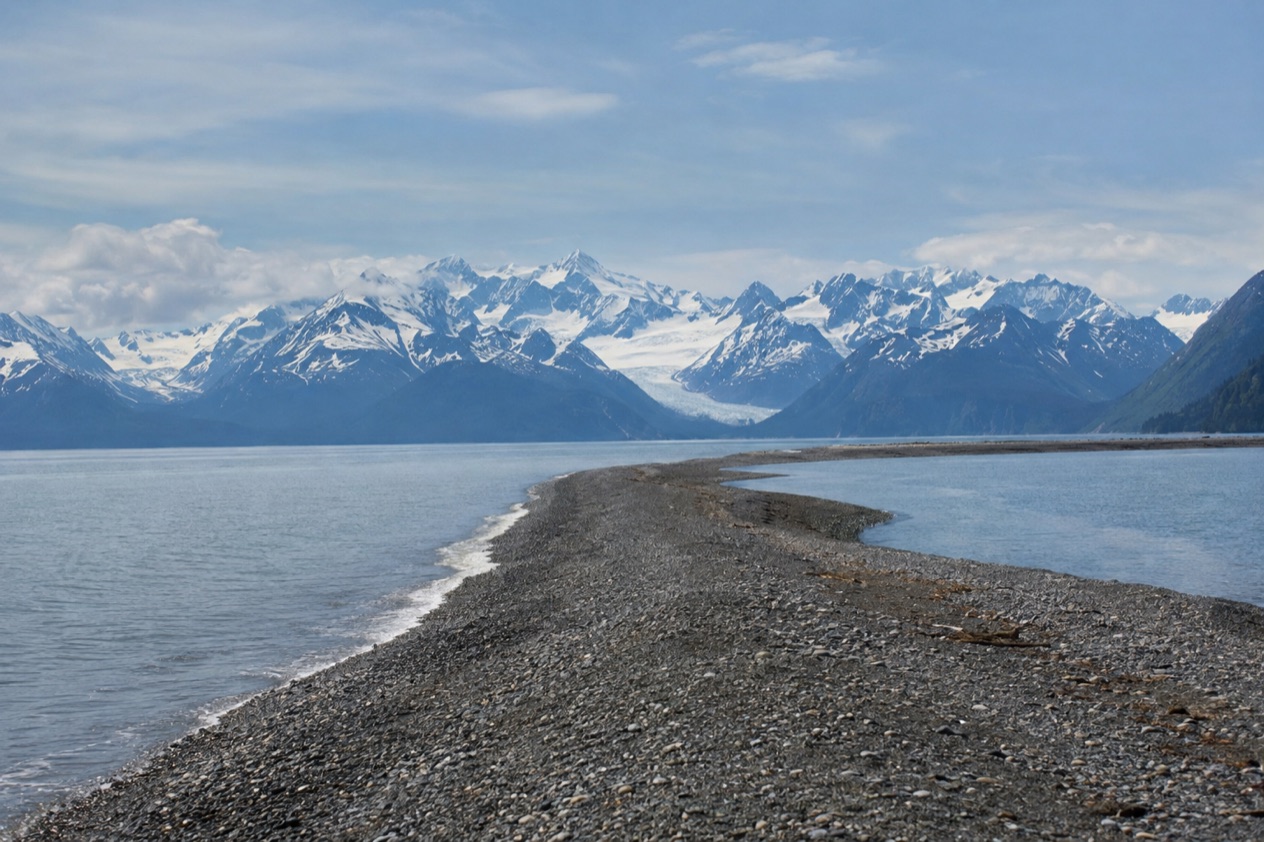
Leaving Anchorage early for Homer means a day of coffee in a paper cup, a road that keeps narrowing toward the water, and the first glimpse of Kachemak Bay opening up at the end of it. The town greets you with fishing boats, art galleries and a long finger of land reaching into the bay. This is the way to plan the trip from Anchorage, what the road asks of you and how to turn the trip into a day worth remembering.
How do you get to Homer from Anchorage?
Homer lies 200 miles from Anchorage, at the point where the Sterling Highway ends, and the road is the way almost everyone arrives. There is no need to look for a clever alternative: you head out of Anchorage, follow the highway down the Kenai Peninsula, and keep going until the pavement of the road gives way to the shore of Kachemak Bay.
What decides how the day goes is not the route but the way you treat it. A driver who wants to arrive and settle in will have a different day from one who wants to stop at every river, bakery and pullout. Because Homer is at the end of the road, nothing pulls you onward once you get there, which makes it a good place to slow down and let the trip be the point.
The second thing that decides is the condition of the road on the day. Alaska 511, run by the state Department of Transportation, rates roads as Good, Fair, Difficult, Very Difficult, Hazardous, Road Closure or No Winter Maintenance, and it also publishes incidents and closures reported through Waze. Looking at it before you leave Anchorage tells you whether the plan holds, and it is worth a second look at any stop along the way.
The third is what you want from Homer itself. If the goal is a day on the water, a fishing charter or a walk in Kachemak Bay State Park, you will want to arrive rested and start there.
If the goal is bears, the flights leave from Homer, so the drive is only the first leg of a longer plan. Homer is the closest town to Katmai National Park and Preserve and Lake Clark National Preserve, which is why so many trips end up pointing the same way.
Think of the trip as two halves: the road down, which is the part you share with everyone heading for the Kenai Peninsula, and the town at the end, which is the part that is yours. Give the second half more of your time than the first.
Ways to get to Homer from Anchorage
By road on the Sterling Highway
The Sterling Highway is the road to Homer, and it is the only route this trip needs. You leave Anchorage, travel down the Kenai Peninsula and arrive in a town that sits right on the shore of Kachemak Bay. Driving puts the timing in your hands: you can leave before the town wakes up, stop for a river or a roadside bakery, and reach Homer in time for a late lunch of halibut.
Road conditions change with the weather, and Alaska 511 is the tool for reading them. It gives each stretch of road one of its condition categories and carries the closures reported by drivers. On a day when it shows Difficult or worse, the sensible choice is to rethink the plan rather than push through.
This way suits anyone who wants to carry gear for fishing or camping, to stop when they like, or to arrive with a vehicle for the days that follow. It also suits people who enjoy the drive for its own sake, with a long stretch of forest and water behind the windshield and the bay waiting at the end.
By rail: a different trip from Anchorage
The Alaska Railroad’s trains from Anchorage that appear in the listings name Seward and Hurricane as their destinations, not Homer. The Coastal Classic runs from Anchorage to Seward, with GoldStar Service available on that route, and in the winter months the Hurricane Turn Train makes a round trip to Hurricane from Anchorage.
These are journeys in their own right, and they pair well with a separate trip to Homer rather than replacing it. A traveler who wants to spend a day on the rails and another at the end of the Sterling Highway can build a longer Kenai Peninsula trip around both, treating each as its own chapter.
By air from Homer: the bear country
Once you are in Homer, the sky becomes another way to travel. A short flight from town reaches Katmai and Lake Clark, where brown bears gather on coastal sedge flats and streams. Bear viewing runs from June through September, and the bears eat differently across the seasons: grasses and clams in spring, salmon swimming home to spawn in summer, berries and seeds in fall.
Two operators are based in town: Emerald Air Service on Lake Shore Drive and Alaska Bear Adventures with K Bay Air on Homer Spit Road. Both are part of the same picture, the town as a gateway. A flight like this is something you add to a stay in Homer, not a replacement for the drive, and it is a chance to see bears, never a promise.
Options compared
| Option | Best for | What to know |
|---|---|---|
| Sterling Highway by road | Reaching Homer from Anchorage with your own schedule | Homer is 200 miles away at the end of the highway, and Alaska 511 shows road conditions |
| Alaska Railroad from Anchorage | A separate rail trip on the Kenai Peninsula | The listed routes go to Seward (Coastal Classic, with GoldStar Service) and to Hurricane in winter, not to Homer |
| Flights from Homer | Bear viewing at Katmai and Lake Clark | Departs from Homer, with bear viewing from June through September |
The three options are not rivals. The road gets you to Homer, the train is its own outing on the same peninsula, and the flights are what you do once you are in town. Travelers use the road to arrive and then decide how much of the rest to add.
If bears are the draw, plan the stay around the season from June through September. If the draw is fishing, the water around Homer opens onto Kachemak Bay, Cook Inlet and the Gulf of Alaska. If it is simply the town, its museums, galleries and artists reward a slow afternoon.
Making a day of it
If you do only one day, leave Anchorage early so that you arrive with the town still fresh, and treat the drive as the first part of the experience rather than the price of admission.
Once in town, start with something that tells you where you are. The Pratt Museum is an award-winning museum that tells the story of the bay and the people who live along it. The galleries and local artisans are close enough that you can move between them at a walking pace, and Homer carries two nicknames you will see everywhere: the Halibut Fishing Capital of the World and the City of Peonies.
For the outdoors, Kachemak Bay State Park covers over 400,000 acres and holds more than 80 miles of trails, so there is room for a whole stay. Glacier Lake Trail leads 3.2 miles to Grewingk Glacier Lake with very little elevation gain, and it is the walk the town’s visitor material points to for seeing the glacier and its lake. Travelers can also camp in the park, which is remote.
Fishing is the other great draw. Anglers going out from the port of Homer can find king salmon, halibut, lingcod, rockfish and silver salmon across the season. If you are not fishing, a plate of fresh halibut at a harbor-side table is still the most natural way to taste the place. The Alaska Maritime National Wildlife Refuge has its headquarters in town, a reminder of how much of the surrounding coast is wild.
What to bring is simple: layers for the water, your own food for the road, and room in the schedule to stop. Plan for at least a night or two. Homer is at the end of the road, and it is also the beginning of the wilderness beyond it, so a longer stay lets you see both.
Good to know before you go
Check Alaska 511 before you leave Anchorage and again before the drive back, since the road is the whole link between the two towns. Services in the park and on the bay depend on the operator, so confirm anything you are counting on with the business itself. Homer offers a wide range of activities, from fishing to helicopter glacier landings to spas and wellness retreats, so a day spent differently from the plan is rarely a loss.
Sources
- Homer Chamber of Commerce (https://www.homeralaska.org/), checked October 11, 2026
- Homer, attractions (https://www.homeralaska.org/things-to-do/attractions/), checked October 11, 2026
- Homer, bear viewing (https://www.homeralaska.org/things-to-do/outdoors-and-recreation/bear-viewing/), checked October 11, 2026
- Homer, fishing (https://www.homeralaska.org/fishing/), checked October 11, 2026
- Homer, glaciers (https://www.homeralaska.org/things-to-do/outdoors-and-recreation/glaciers/), checked October 11, 2026
- Homer, hiking and trails (https://www.homeralaska.org/things-to-do/outdoors-and-recreation/hiking-and-trails/), checked October 11, 2026
- Homer, outdoors and recreation (https://www.homeralaska.org/things-to-do/outdoors-and-recreation/), checked October 11, 2026
- Homer, things to do (https://www.homeralaska.org/things-to-do/), checked October 11, 2026
- Alaska Railroad, Our trains (https://www.alaskarailroad.com/ride-a-train/our-trains), checked October 11, 2026
- Alaska Department of Transportation, Alaska Marine Highway System, Alaska Marine Highway System (https://dot.alaska.gov/amhs/index.shtml), checked October 11, 2026
- Alaska 511 (https://511.alaska.gov/), checked October 11, 2026
To plan your stay
- Best Time to Visit Homer: Weather by Month, Bear Viewing, Fishing and Winter Skiing
- Things to Do in Homer: Halibut Fishing, Bear Viewing, Kachemak Bay and the Spit
- Where to Stay in Homer: the Spit, Town, Lake Shore Drive and Kachemak Bay Views
- Know Before You Go to Homer: Weather, Bears, Getting Around and Local Customs