
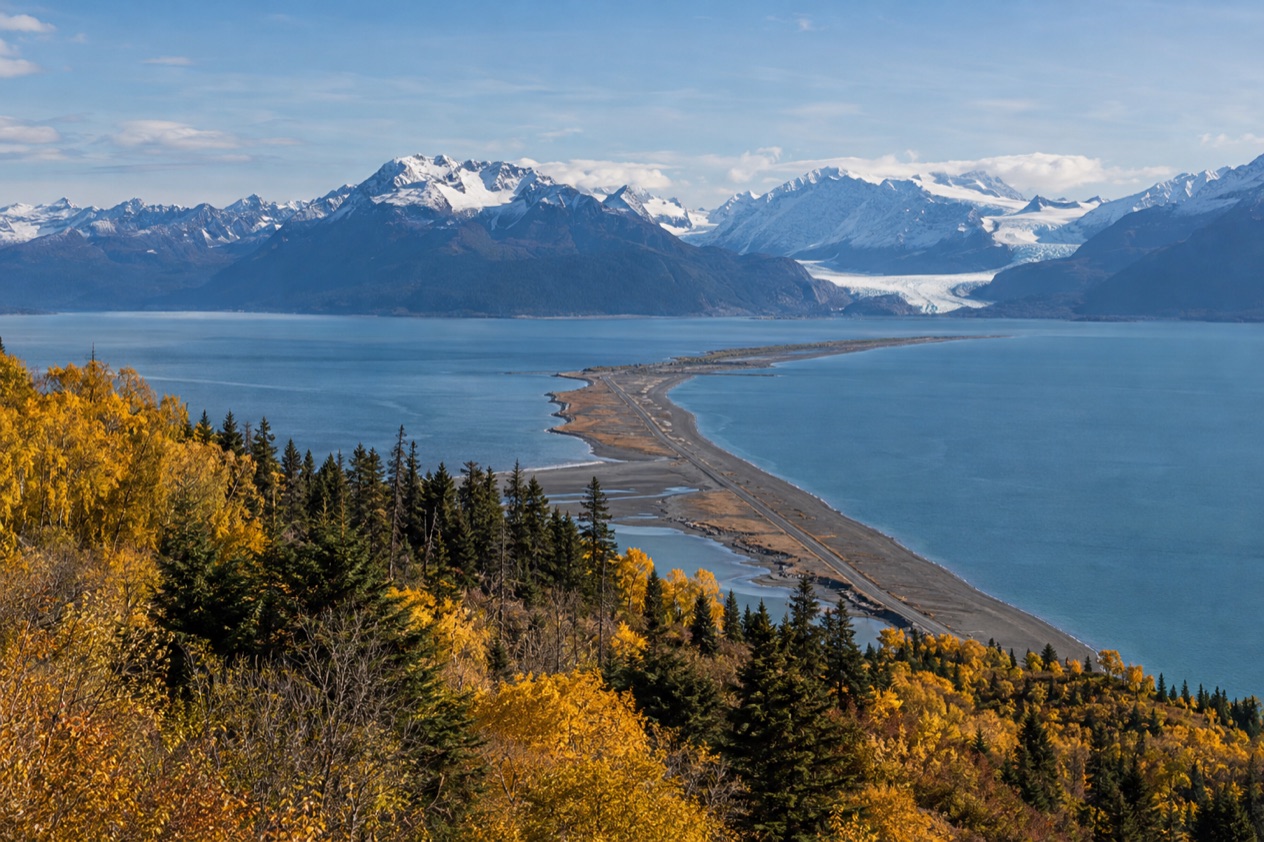
In September the fireweed along Homer’s roads has gone to silver fluff, and the light over Kachemak Bay slants low across the water well before dinner. Fishing boats still come and go from the harbor, gallery doors stay open, and the mountains across the bay take on their first hard edges of autumn. This is Homer at the end of the road, in the month when the long days of summer give way to cooler, quieter ones made for bears, trails and bowls of chowder.
What is the weather like in Homer in September?
September in Homer is cool, damp and bright by turns, a month for a fleece under a rain shell rather than for shirtsleeves.
| Month | Average high (°F) | Average low (°F) | Precipitation (in) | Days with precipitation | Daylight on the 15th |
|---|---|---|---|---|---|
| August | 62.6 | 48.0 | 2.31 | 7.4 | 15 hours 42 minutes |
| September | 56.7 | 42.3 | 3.28 | 9.3 | 12 hours 59 minutes |
| October | 47.1 | 33.3 | 2.61 | 7.6 | 10 hours 20 minutes |
Afternoons are cool enough that you will want a warm layer even in sun, and the dry spells feel crisp rather than soft. Mornings start colder, so a hat and gloves are not overkill on a trail or on the water. September is also the wettest of the three months in the table, and the rain tends to come as gray, drizzly days or passing showers that move through the bay and clear again.
The light has changed since August. Daylight is now close to an even split with the night, so the long, bright evenings of midsummer are gone. Evenings close in earlier, which suits a hot drink after a hike and a lingering dinner in town.
Dress for dampness more than for cold: waterproof outer layers, boots that handle wet ground, and something warm for the dock or the deck of a boat. Kachemak Bay is cold water, a place to look at and cross on a boat, not to swim in.
What to do in Homer in September
The big September story in this part of Alaska is bears. Fat Bear Week is held by Katmai National Park and Preserve in late September or early October, and it turns attention to the brown bears of Brooks River.
From Homer, a short flight leads to Katmai and Lake Clark National Parks, which are known for brown bear viewing. That makes September a natural month to think about the bears, even if you never leave town.
Back on the ground, Homer keeps its own rhythm. Galleries and studios fill the town, with glass, paintings, prints and pottery that draw on the bay and the mountains. The harbor remains a working place, and a plate of fresh halibut or a cup of seafood chowder tastes better when the air has a chill. The cooler days also suit the bookstores, coffee shops and museums, which are easy to fold into a gray afternoon.
Bear viewing from Homer
Brooks Camp sits at the mouth of the Brooks River on the shore of Naknek Lake, inside Katmai National Park and Preserve. Visitors there can watch brown bears, fish and learn about the area’s human history. Brooks Falls lies on the Brooks River, and it is the setting people picture when they hear the words Fat Bear Week.
Bears are a chance, not a promise, and weather can reshape a flying day. That is worth keeping in mind in a damp month, so give the plan some slack and let the sky have a say.
It suits travelers who want wildlife as the main event of a trip and are happy to spend a day of it in the air. Bring binoculars, a camera with a good zoom and an extra warm layer, since waiting and watching is a cold business.
Grewingk Glacier and Kachemak Bay State Park
Kachemak Bay State Park covers over 400,000 acres and has more than 80 miles of trails, so there is more terrain than one trip can use. The park is remote, and travelers can camp in it. September, with its cooler air and thinner crowds of summer insects, suits a day on the trail.
Glacier Lake Trail is 3.2 miles long and easy, with very little elevation gain, and it leads to Grewingk Glacier Lake. You walk through forest and open ground toward the ice, and the payoff is a pale gray lake with the glacier above it. The scene is moody in drizzle and sharp on a clear day.
Wear boots that tolerate mud and bring a rain shell, because the ground is likely to be wet. The trail suits hikers who want a glacier view without a day of climbing, and it makes a good anchor for a day away from the harbor.
Moose, seabirds and the refuge
Homer is the headquarters of the Alaska Maritime National Wildlife Refuge, which gives the town a quiet connection to seabirds and the coast. Moose are also part of the Alaska picture, and you may see one near a trail or a field.
Adult moose can reach 1,600 pounds, and only the males carry antlers. A big bull can grow an 80-pound rack in a single summer, so by September the antlers are fully grown and impressive to look at from a respectful distance.
Keep the binoculars handy on any walk. Along the shore and in the fields at the edge of town, a moment’s patience can turn a gray, drizzly stroll into a wildlife outing.
A two-day itinerary for Homer in September
Day 1 is for the town and the harbor. Start with coffee and a slow walk through the galleries while the morning is cool and the light is soft. By midday move to the waterfront for halibut or chowder, which suits the weather far better than a picnic. Afternoons are when the showers are most likely to break, so keep that stretch for a museum, a bookstore or a studio visit.
As evening approaches, head back toward the water for the low, slanting light over Kachemak Bay. Dinner at a harbor-side restaurant or a cozy dining room in town finishes the day. The light now fades earlier than in summer, so there is no need to rush.
Day 2 is for the trail. Spend the day on the Glacier Lake Trail to Grewingk Glacier Lake, leaving after breakfast so the whole bright part of the day is yours. A packed lunch eaten near the lake is a good plan, as long as you have a warm layer to sit in. Plan to be back in town for dinner, since daylight is shorter than in midsummer.
If the weather turns, trade the hike for a wet-weather day in town: another gallery, a long lunch and a book from a local shop. If you would rather fly to see bears, a short flight to Katmai or Lake Clark is the option, with the sky deciding the day.
Is Homer busy in September?
Homer in September has a calmer pace than the long days of summer, because the light and weather now set the schedule.
With less than thirteen hours of daylight in the middle of the month, days feel shorter and evenings come early. That shapes how people use the town: more time in cafés, more attention to the weather forecast and a steadier pulse along the harbor.
The big pull of the month is Fat Bear Week at Katmai, held in late September or early October, which keeps the bears in the conversation even for people staying in Homer. For the rest, the town goes about its business of fishing, art and small-town life without a festival crowd to manage.
What to pack for Homer in September
Pack for cool, damp days and chilly mornings, with a wardrobe built from layers you can add and remove through the day.
- A waterproof jacket, because September is the wettest of the three months.
- A warm fleece or wool layer for cold mornings and early evenings.
- Waterproof boots for the Glacier Lake Trail and wet ground.
- A hat and gloves for the harbor and for time on the water.
- Binoculars for moose, seabirds and distant bears.
- A camera with a zoom lens for wildlife.
Good to know before you go
What matters most in September is daylight and the weather. Days are noticeably shorter than in August, so plan outdoor outings for the bright hours and leave evenings for dinner and rest.
Homer sits at the end of the road on the Kenai Peninsula, on the shore of Kachemak Bay. The wilderness around it is reached by trail, by camping in remote Kachemak Bay State Park or by a short flight to the bear country of Katmai and Lake Clark. If bears are the reason for your trip, treat the flight as the plan to settle first, and keep your other days flexible around the weather.
Homer in September vs August and October
Moving the trip to August buys warmer afternoons, fewer rainy days and a long, bright evening. It is the better choice if you want to spend as much time as possible outdoors in the light, but it misses the focus of Fat Bear Week and the quieter, more autumnal mood of September.
Moving to October means a much colder month, with frost likely on the mornings and a lot less daylight. Fat Bear Week may extend into early October, but the town feels more closed in, and the trail days are short. Travelers who prefer a stark, quiet landscape and do not mind the cold may enjoy it.
September sits in the middle. Choose it if you want the bears in the spotlight, cool air for hiking and a slower town. Choose August for the warmest, brightest days, and October only if you are comfortable with cold and early darkness.
Is September a good time to visit Homer?
Yes, September is a good time to visit Homer for travelers who like cool air, wildlife and a slower pace, and who do not mind some rain.
It will suit hikers who want the Glacier Lake Trail to Grewingk Glacier Lake, bear enthusiasts drawn by Fat Bear Week and Brooks Falls, and people who enjoy galleries, chowder and long dinners as the light fades. It is less ideal for anyone set on warm, dry days or the very long evenings of summer, who would be happier in August.
On arrival, look at the sky and the forecast first, then decide whether the first good day goes to the trail or to a flight toward the bears. Everything else in town can fill the gaps around the weather. What is special about September here is the mix of bay, bears and early autumn light, a month when the town feels like the end of the road and the start of the wilderness at once.
Sources
- NOAA NCEI, U.S. Climate Normals 1991-2020, monthly (https://www.ncei.noaa.gov/access/services/data/v1?dataset=normals-monthly-1991-2020&stations=USW00025507), station Homer Ap, elevation 64 feet, checked October 11, 2026
- Computed from the date and the latitude of the place (sunrise equation, solar elevation -0.833 degrees), October 11, 2026
- Wikipedia, Fat Bear Week (https://en.wikipedia.org/wiki/Fat_Bear_Week), checked October 11, 2026
- Wikipedia, Brooks Falls (https://en.wikipedia.org/wiki/Brooks_Falls), checked October 11, 2026
- National Park Service, Katmai National Park & Preserve, plan your visit: brooks camp (https://www.nps.gov/katm/planyourvisit/brooks-camp.htm), checked October 11, 2026
- Alaska Department of Fish and Game, Moose species profile (https://www.adfg.alaska.gov/index.cfm?adfg=moose.main), checked October 11, 2026
- Wikipedia, Moose (https://en.wikipedia.org/wiki/Moose), checked October 11, 2026
- Homer, glaciers (https://www.homeralaska.org/things-to-do/outdoors-and-recreation/glaciers/), checked October 11, 2026
- Homer, hiking and trails (https://www.homeralaska.org/things-to-do/outdoors-and-recreation/hiking-and-trails/), checked October 11, 2026
- Homer, outdoors and recreation (https://www.homeralaska.org/things-to-do/outdoors-and-recreation/), checked October 11, 2026
- Homer, things to do (https://www.homeralaska.org/things-to-do/), checked October 11, 2026
- Homer, winter activities (https://www.homeralaska.org/things-to-do/winter-activities/), checked October 11, 2026
- Wikipedia, Climate of Alaska (https://en.wikipedia.org/wiki/Climate_of_Alaska), checked October 11, 2026
To plan your stay
- Things to Do in Homer: Halibut Fishing, Bear Viewing, Kachemak Bay and the Spit
- Where to Stay in Homer: the Spit, Town, Lake Shore Drive and Kachemak Bay Views
- Homer from Anchorage: The Sterling Highway, Road Conditions and Making a Day of It
- Know Before You Go to Homer: Weather, Bears, Getting Around and Local Customs