
THE AZORES · JULY · IPMA STATION 513
July is the driest month the Azores hand out at sea level, and the margin is bigger than the reputation of these islands suggests: 1.02 inches of rain at Ponta Delgada against 1.75 inches in June and 1.80 in August, in the 1991-2020 normals kept by IPMA, the Portuguese weather service. Average high 76.5°F, average low 66.0°F. Nothing tropical, nothing wet.
What the month takes back is the sea and the space. The surface water averages 73.1°F, a full 3.9°F cooler than in August, and July shares the northern school holidays with the one month that beats it on both air and water. Blue whales, the archipelago’s late-winter animal, are gone.
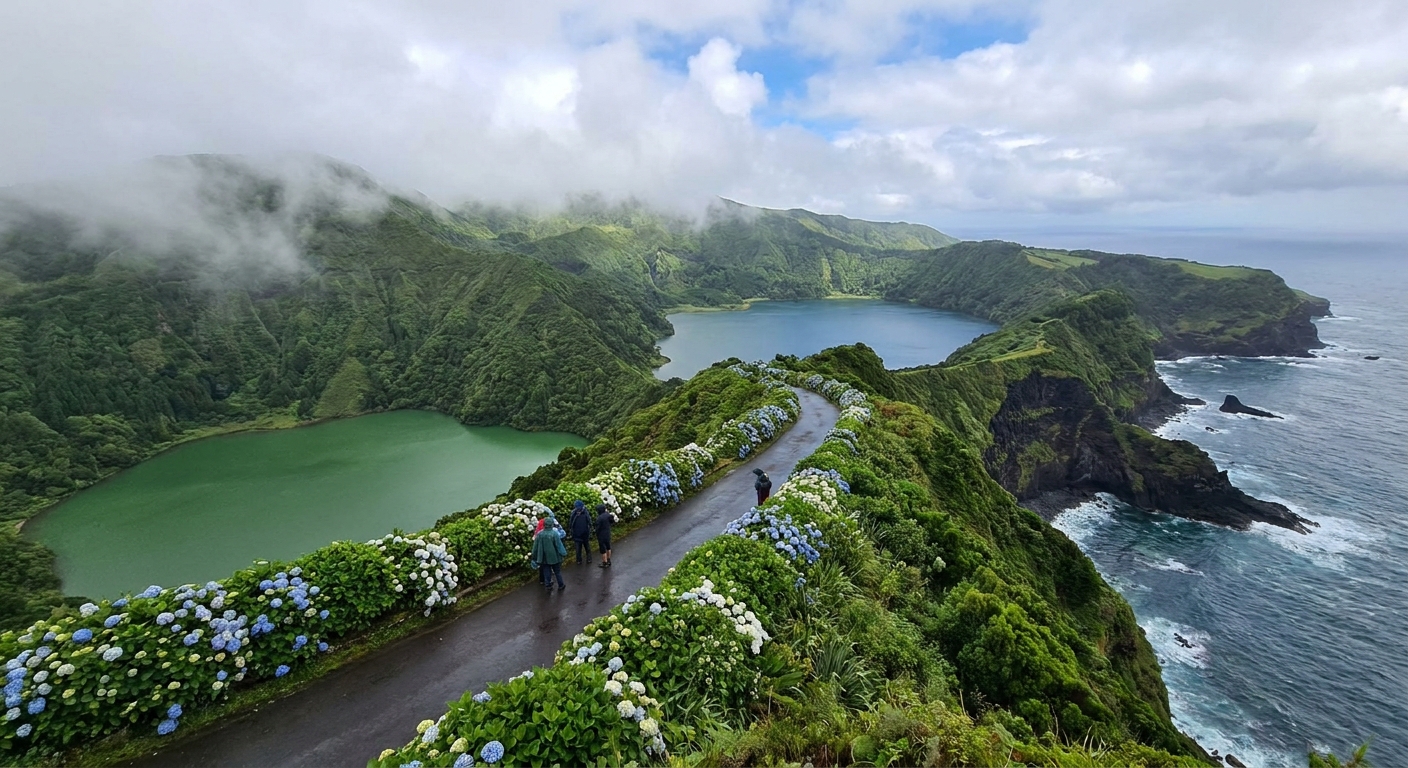
THE MONTH AT A GLANCE · THE AZORES · JULY
July is the driest month of the Azorean summer at sea level, with a 73.1°F sea and 14 hours 34 minutes of daylight, and you pay for it in company and in rooms nobody can price for you in advance.
DRIEST OF THE SUMMER TRIO: 1.02 IN · SEA 73.1°F · LIGHT UNTIL 9:05 P.M.
Go for: summer cetaceans (sperm, sei and baleen whales, spotted dolphins), 1.02 inches of rain across the whole month, and light on the road until 9:05 p.m.
Think twice before: planning a mountain day on a coastal reading. Station 513 sits 35 m above the sea; Pico da Vara stands at 1,105 m and keeps its own weather.
Normals: IPMA station 513 · Sea: Open-Meteo Marine · Cetaceans: Visit Azores · full sources at the end
On this page
- Azores weather in July76.5°F highs, 1.02 inches, 4.8 wet days
- Can you swim in the Azores in July?A 73.1°F sea, and what that number is
- Crowds, prices and the Ponta Delgada tourist taxEUR 2 a night, capped at 3 nights
- Things to do in the Azores in JulyWhale trips, Furnas thermal pools, Gorreana tea
- A two-day plan for São MiguelTwo days timed to 14 h 34 of light
- July vs June and AugustAir, rain and sea for the three months
- Is July a good time to visit the Azores?Who should book it and who should shift
Every air figure below is measured in one spot: Ponta Delgada Observatório, IPMA station 513, on the south coast of São Miguel at 35 meters above the sea. That island alone runs 62.1 km long and 15.8 km at its widest, and it climbs to 1,105 m at Pico da Vara. Read the numbers as a coastal reading, and put a shell in the bag for anything above the road.
Azores weather in July: average highs, lows and rain days
| July at Ponta Delgada | Normal, 1991-2020 |
|---|---|
| Average high | 76.5°F (24.7°C) |
| Average low | 66.0°F (18.9°C) |
| Precipitation | 1.02 in |
| Days with 0.04 in or more | 4.8 |
| Days with 0.39 in or more | 0.6 |
| Sea surface (2015-2024) | 73.1°F |
| Daylight, July 15 | 14 h 34 min |
| Sunrise / sunset, July 15 | 6:31 a.m. / 9:05 p.m. |
The source matters here, so name it: these are IPMA’s 1991-2020 climatological normals for station 513, Ponta Delgada Observatório, a thermometer standing at 35.0 m, not a reanalysis grid cell interpolated over the ocean. Average high 76.5°F, average low 66.0°F, 1.02 inches of precipitation for the month. Thirty years of readings from one instrument on one coast beat any modeled square, and they also stop at that coast.
Rain arrives 4.8 days in an average July, counting days that record at least 0.04 inch, and only 0.6 day reaches 0.39 inch or more. Divide the monthly total by the wet-day count and the typical wet day carries roughly a fifth of an inch: a passing squall, not a lost afternoon. One caution on comparisons: IPMA uses its own 1 mm and 10 mm thresholds, and American tables usually count days above 0.10 inch, so these counts do not slot into a US chart.
Between high and low sits 10.5°F, which is a narrow spread by summer standards and the reason nobody sweats through the night here. It also means an evening outdoors at 66°F, in Atlantic air, with wind. A light fleece and a wind shell do more work in an Azorean July than any amount of beachwear, and the ridge above Lagoa do Fogo will justify both. Our Portugal packing guide covers the rest of the bag.
Light is the month’s real luxury. On July 15 the sun comes up at 6:31 a.m. and goes down at 9:05 p.m. local time, giving 14 hours 34 minutes of daylight. Practically, that buys a lookout before breakfast and a second one after dinner, with the low sun on the crater rims from about eight o’clock.
Can you swim in the Azores in July? Sea temperature at 73.1°F
Yes, and the figure is 73.1°F. One qualification travels with it: that is the mean of daily maxima from the Open-Meteo Marine dataset over 2015-2024, so it sits a shade above what a full 24-hour average would report, and it describes surface water over a grid cell rather than a thermometer in one cove. Take it as the warm end of a normal July day in the water.
For anyone whose reference is the Gulf of Mexico, 73°F reads as brisk for the first thirty seconds and fine after that. No wetsuit required, no lingering either, and children tend to vote against a second swim. Four weeks later the same water averages 77.0°F, four weeks earlier 69.5°F, which is a real difference you can feel with your shoulders under. The thermal fallback is close: Poça da Beija at Furnas holds clear water and ferrous mud all year.
On wind and swell we hold no July normal for the islands, and we won’t put a number where we have none. What is documented is the practical consequence at sea: a whale and dolphin trip runs about three hours, and Visit Azores recommends a minimum age of five, because a sea an adult calls calm can be hard going for a small passenger. Families weighing that will want Portugal with kids alongside it.
How busy are the Azores in July? Crowds, prices and the tourist tax
Placing July in the year’s price cycle is a judgment, not a reading: we hold no monthly rate series for Azorean lodging, and inventing a percentage would be worse than admitting the gap. The structural facts point one way. The month sits inside the northern school break next to August, and it carries the least rain of the three summer months, which is when a rental car and a Furnas room stop being cheap.
Supply is the pressure point, not demand. São Miguel measures 744.7 square kilometers and held 137,856 residents at the 2011 census, more than half of all Azoreans, and the island’s stock of cars and beds is sized for that. Book the car before the hotel: our car rental guide explains why, and eight to ten weeks out (est.) is the lead time we’d work to for a July arrival, with flights checked earlier still through the US routes.
Ponta Delgada has levied a municipal tourist tax since January 2025. The city runs a dedicated platform for it, which confirms the tax exists, but the rate leaflet sits behind a login. Press and host guides agree on EUR 2 per person per night for guests aged 13 and over, capped at 3 consecutive nights, so about EUR 6 a head, with exemptions for under-13s, medical stays, disability of 60 percent or more, and Azores residents. Treat those figures as unconfirmed and ask the property to quote the tax in writing.
The cap is what decides the bill, and it varies across the country: Porto charges EUR 3 a night up to 7 nights (EUR 21), Funchal EUR 2 up to 7 nights (EUR 14), Ponta Delgada EUR 2 but stopping at 3. On the trip budget, the one line where paying more genuinely changes July is the car. Two ends of a 62-kilometer island can be having different days, and only wheels let you swap Sete Cidades for Furnas at ten in the morning.
Things to do in the Azores in July
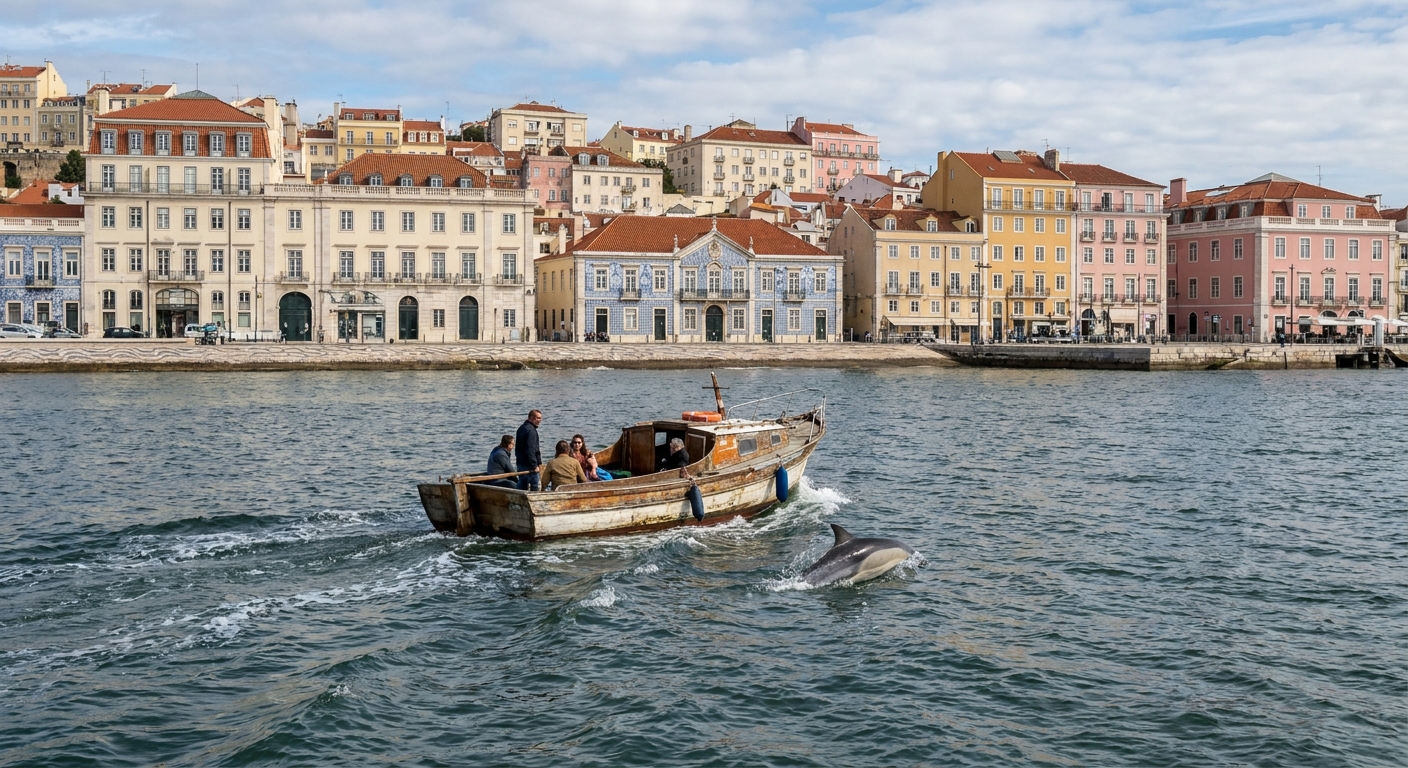
Cetacean watching runs all year here, but the month decides the cast. Sperm whales, sei whales and other baleen whales are frequent in summer, as are spotted dolphins, while blue whales belong to the end of winter and are not a July animal. Common dolphins and common bottlenose are resident in any month, and swimming with them is permitted. The archipelago is one of the world’s largest whale sanctuaries, with more than 20 species recorded, roughly a third of all that exist.
On tariffs and hours we can be exact about our limits. A boat trip lasts about three hours with a recommended minimum age of five. Terra Nostra Park at Furnas, whose thermal pool sits inside a botanical garden, runs around EUR 16 for a visiting adult against about EUR 12.80 for a resident, under-6s free, and those numbers come from secondary reporting: the park’s own pages returned 404 and the regional tourism portal 403 when we tried to read them. Gorreana, growing tea since 1883, and Porto Formoso both run visitable museum-factories, with no admission or opening times we could confirm.
Free is where July’s daylight pays off. Vista do Rei looks down on the twin Green and Blue lakes of Sete Cidades from the roadside, with no gate between you and the view, and Lagoa do Fogo is the wilder, higher one. At Ribeira Grande the Caldeiras stand among trees and fumaroles, the thermal building dating from 1811. All of it stays lit until nine.
The Azores in July: a two-day itinerary on São Miguel
Day one, west. Out by 7 a.m. while the crater rims are still clear, up to Vista do Rei for Sete Cidades, then down to the lakeshore before the coaches arrive. Late morning at Gorreana on the north coast, tea and factory floor. Lunch on the coast, then the water at its warmest point of the day, closer to that 73.1°F daily maximum than to any 24-hour mean. Save Lagoa do Fogo for 7:30 p.m.: the sun holds until 9:05.
Day two, east. A whale trip out of Ponta Delgada takes the first three hours, then the road to Furnas: the ferrous mud at Poça da Beija, or the garden pool at Terra Nostra around EUR 16 if the gate confirms it. Should the weather turn, and 0.6 day a month reaches 0.39 inch of rain, the day inverts easily. Thermal water works better under cloud, the Porto Formoso museum-factory is indoors, and Ponta Delgada’s streets have been the island capital’s since 1546.
The Azores in July vs June and August: 76.5°F, 72.3°F and 78.8°F
| Normal, 1991-2020 | June | July | August |
|---|---|---|---|
| Average high | 72.3°F | 76.5°F | 78.8°F |
| Average low | 62.2°F | 66.0°F | 67.8°F |
| Precipitation | 1.75 in | 1.02 in | 1.80 in |
| Days with 0.04 in or more | 6.6 | 4.8 | 6.5 |
| Sea surface | 69.5°F | 73.1°F | 77.0°F |
| Move four weeks | What changes |
|---|---|
| To June | 4.2°F cooler by day, sea down to 69.5°F, 0.73 in more rain over 1.8 extra wet days |
| To August | 2.3°F warmer by day, sea up to 77.0°F, 0.78 in more rain over 1.7 extra wet days |
August owns the thermometer twice over, 78.8°F in the air and 77.0°F in the water, and July owns the rain gauge outright: 1.02 inches against 1.80 in August and 1.75 in June, with 4.8 wet days where its neighbors both run above six. All five figures come from the same IPMA station and the same 1991-2020 period, so the comparison is a clean one, and the sea readings share the single Open-Meteo Marine method.
Shift forward four weeks and the trade is legible: 3.9°F more sea for nearly double the rainfall and two extra wet days, inside the same holiday crush. Shift back to June and the water drops to 69.5°F, which most swimmers notice immediately, while rain climbs to 1.75 inches over 6.6 days. If the whole calendar is still open, the twelve-month view for Portugal sets the archipelago against the mainland.
Is July a good time to visit the Azores?
For most travelers, yes. Anyone who values dry days over hot water gets the best of the summer here, 1.02 inches spread across 4.8 days, with a sea warm enough at 73.1°F to swim without argument and 14 hours 34 minutes of light to spend it in. It is a poor month for two groups: people hoping for blue whales, which show at the end of winter, and people expecting a quiet island or a cheap car.
If the crowd is the deal-breaker, June is the sensible retreat rather than August. You keep the summer cetaceans, since sperm, sei and baleen whales are frequent right through the season, and you pay 4.2°F of air, 3.6°F of sea and 1.8 extra wet days for the space. August offers the opposite bargain and no relief on company at all.
No other month combines the driest sea-level rainfall of the year’s warm half with a swimmable ocean and light that lasts past nine.
The last word
Book the car, then the bed, then the boat, and let the 4.8 wet days rearrange your two ends of the island rather than your trip. One footnote for the drive into Ponta Delgada: it has only been the capital since 1546, and it inherited the title from Vila Franca do Campo after an earthquake flattened that town in 1522. The Azores have always run on their own geology, and July is simply the month it stays quiet enough to enjoy.
Sources & data for this guide
- July, June and August normals (highs, lows, precipitation, wet days) · IPMA 1991-2020, station 513 Ponta Delgada Observatório, altitude 35.0 m · checked Sep 9, 2026
- Coastal scope of the normals, and the contrast with high ground · same IPMA station record · checked Sep 9, 2026
- Sea surface 73.1°F in July (mean of daily maxima, 2015-2024), with 69.5°F in June and 77.0°F in August · Open-Meteo Marine API · checked Sep 9, 2026
- Daylight 14 h 34 min, sunrise 6:31 a.m. and sunset 9:05 p.m. on July 15 (converted to Azores time) · sunrise-sunset.org · checked Sep 9, 2026
- Cetacean season, sanctuary status, 3-hour trips and minimum age five · Visit Azores (official regional tourism), Whale Watching pages · checked Sep 9, 2026
- São Miguel geography, 2011 census population, capital since 1546, Furnas thermal spots, crater-lake lookouts, Gorreana and Porto Formoso · Visit Azores, São Miguel pages · checked Sep 9, 2026
- Terra Nostra Park pricing (about EUR 16 / EUR 12.80, under-6s free) is an order of magnitude only: parqueterranostra.com returned 404 on its visit pages and turismo.azores.gov.pt returned 403 · attempted Sep 8, 2026 · confirm at the gate
- Ponta Delgada tourist tax: taxaturistica.cm-pontadelgada.pt confirms the tax and hides its rate leaflet behind a login · read Sep 9, 2026 · the EUR 2 rate, 3-night cap and exemptions come from Jornal de Notícias and Correio dos Açores and are unconfirmed
- Cap comparison (Porto EUR 3 up to 7 nights, Funchal EUR 2 up to 7 nights) · municipal primary sources · checked Sep 9, 2026
- No opening hours for any site on this page could be read from a primary source, and no July event date exists in our records, so none is quoted · check operators when you book.