
The first thing you notice at the Alaska Wildlife Conservation Center is how quiet it is. The Chugach Mountains stand over the enclosures, and somewhere out of sight a large animal shifts in the brush. This is a sanctuary for injured and orphaned Alaska animals, and it makes a calm, close-to-nature stop on the road between Anchorage, Girdwood and Portage.
Is visiting the Alaska Wildlife Conservation Center worth it?
Yes, it is worth the stop for anyone who wants to see Alaska’s big animals up close and learn why they are here, and it suits families, curious travelers and photographers alike. The animals are not part of a show. Most of those that arrive become permanent residents, and they live in spacious enclosures with a home for life.
What sets it apart from a zoo or a roadside attraction is the mission behind it. The center describes itself as a sanctuary built on conservation, education, research and quality animal care, and that shapes the visit. You come to understand animals you may only glimpse from a distance in the wild, such as moose, bears and other northern species, and to hear how each one ended up in care.
It also sits in a corner of Alaska that is rich in other things to do. Girdwood and its ski resort are close, Portage has its ghost forest and glacier valley, and the center is listed as an activity from Alyeska Resort in both winter and summer. That makes it easy to build a day around, with the animals as the anchor and the mountain scenery as the frame.
What to see at the Alaska Wildlife Conservation Center
What you see at the center is Alaska’s wildlife in residence, from the large animals most travelers hope to meet to the smaller residents that are easy to overlook. The center offers up-close experiences, and each one centers on a particular animal and a particular kind of attention.
Moose Encounters
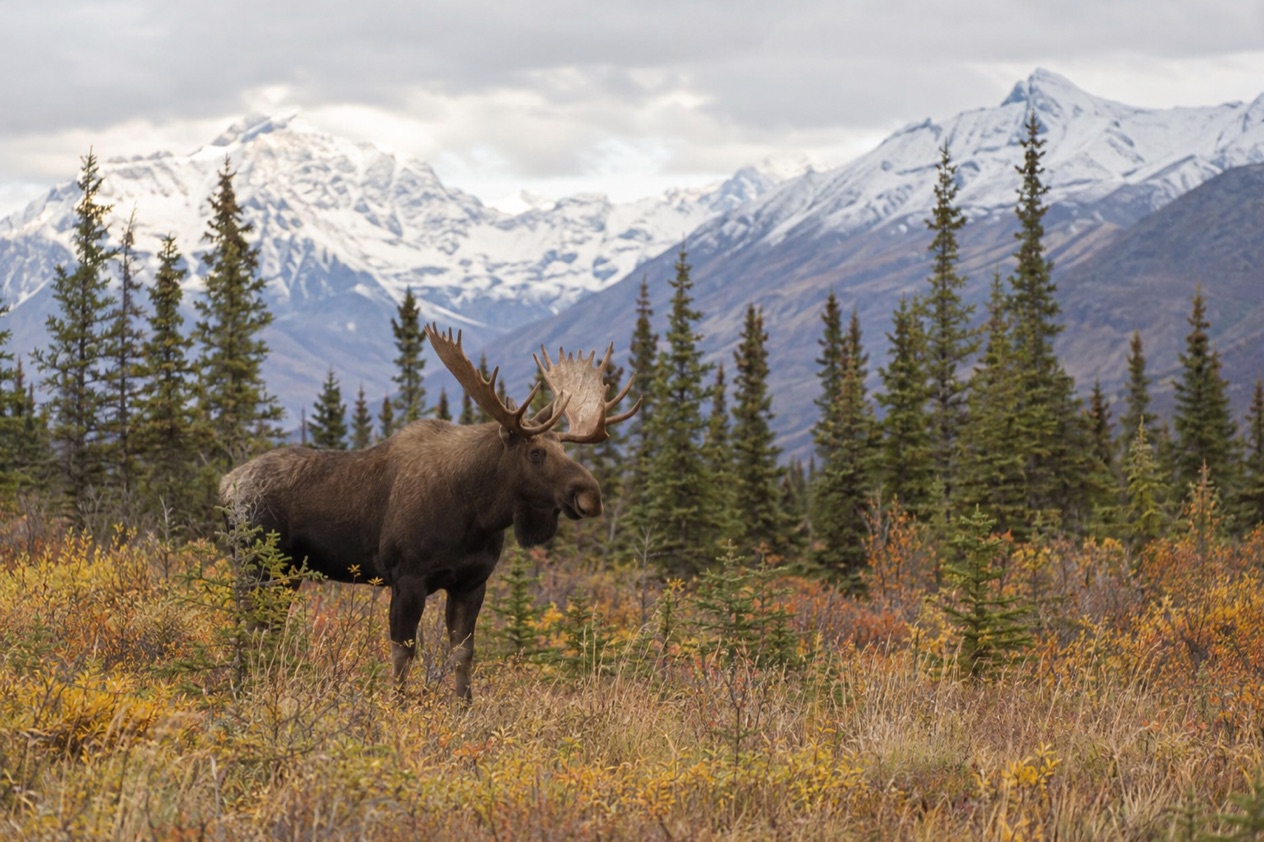
Moose are the animal most visitors associate with Alaska roads and backyards, and the Moose Encounters are built around meeting them at close range. These are huge, long-legged animals with a calm, slightly comic face, and seeing one up close gives you a sense of scale that a distant roadside sighting never does.
Look at the details. The broad muzzle, the dewlap hanging under the chin, the way a moose browses on willow and birch. Staff can explain how an individual ended up here, and that story, often of an orphaned calf that could not survive alone, is half the point of the visit.
Bear Encounters
The Bear Encounters bring you close to one of the animals Alaska is best known for. Bears are the residents many travelers most want to see, and a sanctuary lets you study them at a pace the wild never allows. You may see how they move, how they use their noses, and how powerful they look even when they are resting.
Orphaned cubs are a common reason bears come into care, and the center’s approach is to give them a permanent home rather than a quick return to the wild. Watch the behavior as much as the size, whether a bear is foraging, exploring an enclosure or simply dozing in the shade.
Walk on the Wild Side Tours
The Walk on the Wild Side Tours are the third kind of guided experience, and the name suggests a wider look at the sanctuary’s residents rather than a single species. It is the format for travelers who want the full picture of what lives here and how the animals are cared for day to day.
Expect to learn about the residents one by one. Each has a history, a personality and a set of needs, and a guide can connect them to the larger story of Alaska wildlife. Bring your questions about habitat and rescue, since that is where the tours earn their value.
The residents and the Wildlife Clinic
Beyond the headline animals, the center takes in injured and orphaned wildlife year-round, so the population reflects Alaska’s real troubles as much as its charms. A visit can introduce you to species you did not plan to see, and the stories attached to them are often the most memorable part.
The center is also raising funds toward a goal of $5 million for a much-needed new building for its Wildlife Clinic. The clinic is the place where care begins for many animals, so the campaign explains a good deal about how the sanctuary works behind the scenes.
Hours, tickets and rules
The center runs on a tour-based model. The experiences on offer are Moose Encounters, Bear Encounters and Walk on the Wild Side Tours, and visitors are advised to book tours early because they fill up fast. That one piece of advice shapes everything else about planning, so settle on the experience you want before you settle on the rest of your day.
The center takes in injured and orphaned animals year-round, which means the work behind the scenes never stops, even when the calendar changes around it. Special dates do come up. The center has offered a discounted annual Wolf Pack membership during short promotional windows, and the membership can be ordered online. A membership suits travelers who expect to return, or locals who want to support the sanctuary.
The center has also announced single-day closures from time to time, so it is worth treating its own announcements as the last word on any particular date. Rules for the tours, such as what you may touch or photograph, belong to the center and its guides, and a guide will tell you on the day. Nothing in the center’s own descriptions suggests you wander freely among the animals.
How to get to the Alaska Wildlife Conservation Center
The center sits in the Girdwood and Portage area, about 45 minutes south of Anchorage, with the Chugach Mountains all around. For most travelers Anchorage is the base, and the trip follows the Seward Highway along the water, a route that is scenic but can be slow during peak summer travel times.
Two nearby places help you place it on the map. Girdwood is about 30 miles south of the center of Anchorage along the same highway, and Portage is about 47 miles from downtown Anchorage, on the same corridor. Portage is now a junction where the Seward Highway and the Alaska Railroad connect to the Portage Glacier area and the Anton Anderson Memorial Tunnel, which leads to Whittier.
There is a train from Anchorage to Girdwood, which gives travelers without a vehicle a way to reach the area. Alyeska Resort in Girdwood also lists the center among its activities in both winter and summer, so a stay at the resort puts the sanctuary within an easy reach of your plans. Treat the highway as the main thread, and let the drive be part of the day.
When to visit the Alaska Wildlife Conservation Center
The center is a year-round place. It takes in injured and orphaned animals in every season, and Alyeska Resort lists it as an activity in both winter and summer, so there is no wrong season to go. What changes is the setting around it, from green summer slopes to a snowy Chugach.
Summer pairs naturally with the rest of Girdwood. The Girdwood Forest Fair takes place in early July, with Alaskan artists, hand-crafted items, exotic foods and entertainers. The Veilbreaker Skybridges are typically open from July to September for paid guided tours, weather permitting. A day that includes both the animals and the fair is a good summer plan.
Winter has its own appeal. Girdwood is home to Alyeska Resort, Alaska’s largest ski area, and skiers and snowshoers have over 30 miles of untracked trails to explore. The center is listed as a winter activity from the resort, which makes it a good break from the slopes. Whatever the season, book your tour early, since tours fill up fast.
Tips for your visit
Book your tour first and build the day around it. Since tours fill up fast, the booking decides the rest, and a Moose Encounter, a Bear Encounter or a Walk on the Wild Side Tour each gives a different kind of visit. If you are traveling with a group, agree on the experience before you reserve.
Combine the center with the rest of the corridor. Girdwood has the Crow Creek Gold Mine, a historic mining area open to the public as a tourist attraction, and a paved six-mile bike trail running from Alyeska Resort to Bird Point. Portage offers a very different kind of stop, with the ruins of a town destroyed in the 1964 earthquake, when the ground sank about six feet, and a ghost forest of trees killed by salt water.
Portage is also known for floating its rivers, including the Portage, Twentymile and Placer, and for fishing for hooligan in the Twentymile River. Each of those sits naturally alongside a visit to the sanctuary. Keep an open mind about the animals themselves, since each resident is there for its own reason, and the guides’ stories are what make the visit stay with you.
Good to know before you go
The center depends on visitors and supporters, so a tour, a membership or a gift helps the work directly, and the Wolf Pack membership can be ordered online. The sanctuary’s goal of $5 million for a new Wildlife Clinic building shows how much care goes on behind the enclosures. The drive from Anchorage along the Seward Highway can run slowly in peak summer, so leave room in the day, and book your tour early.
Sources
- Alaska Wildlife Conservation Center (https://www.alaskawildlife.org/), checked October 11, 2026
- Wikipedia, Portage, Alaska (https://en.wikipedia.org/wiki/Portage,_Alaska), checked October 11, 2026
- Wikivoyage, Girdwood (https://en.wikivoyage.org/wiki/Girdwood), checked October 11, 2026
- Alyeska Resort, winter (https://www.alyeskaresort.com/winter/), checked October 11, 2026
- Alyeska Resort, summer (https://www.alyeskaresort.com/summer/), checked October 11, 2026