
The first thing you notice around Sitka’s raptor sanctuary is the quiet of the Tongass National Forest, broken now and then by the thin, whistling call of a bald eagle. Spruce and hemlock close in, moss softens every surface, and the air carries the damp smell of rainforest.
The Alaska Raptor Center is a place to meet eagles, owls and other birds of prey up close, and to understand the care that goes into helping injured ones. It suits anyone spending time in Sitka who wants a wildlife stop with a purpose.
Is visiting the Alaska Raptor Center worth it?
Yes, especially for travelers who like their wildlife with a story, and for anyone curious about bald eagles beyond a quick glimpse from a car window. The sanctuary sits in the Tongass National Forest in Sitka, and it works as a rehabilitation center as much as a visitor stop.
That changes the feel of the visit. You are not looking at animals arranged for display. You are meeting birds that were hurt, often badly, and learning what it takes to get a wild hunter back into the sky.
Sitka offers other animal encounters, and the comparison is useful. Fortress of the Bear is a bear-focused stop, while the raptor center is about birds of prey, and about the long work behind each recovery.
Sitka National Historical Park gives you totem poles and the Russian Bishop’s House, which is history and forest walking rather than wildlife. Sportfishing excursions chase salmon on the water. The raptor center fills a different slot: close, quiet, and centered on eagles, which one local cruise listing singles out as the reason to come.
The center also gives a reason to care after you leave. It admits birds every year, releases birds every year, and welcomes support from visitors who want to take part. If the idea of adopting a raptor or helping a recovery along appeals to you, this is a visit that can continue long after the trip ends. For travelers who want only scenery and no animal story, the town’s other sights may fit better.
What to see at the Alaska Raptor Center
Bald eagles up close
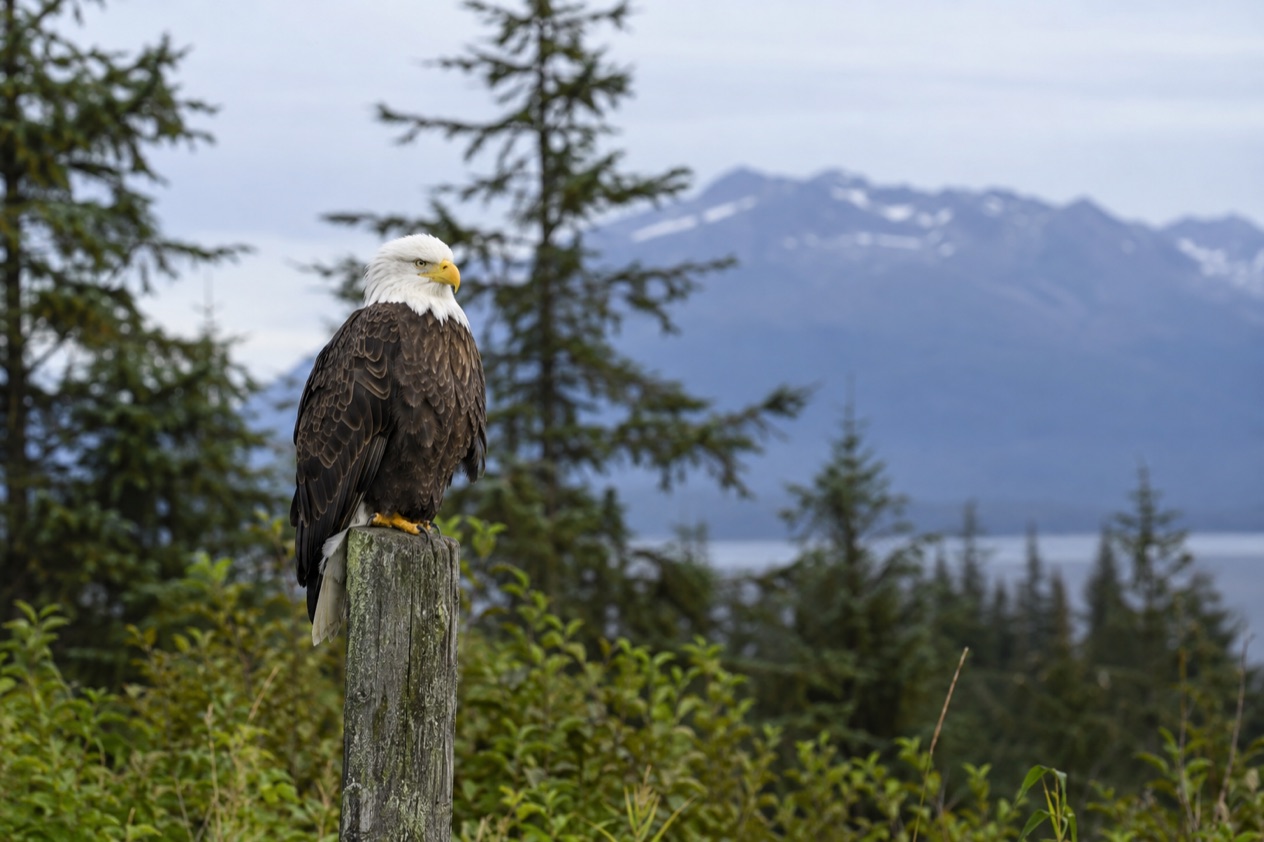
Bald eagles are the draw, and seeing one at close range is a different experience from spotting a distant white head in a treetop. You notice the hooked beak, the pale and steady eye, and the sheer weight of the talons. Plumage tells its own story, from the mottled brown of younger birds to the crisp white head and tail of mature adults.
Take your time at each enclosure. The birds shift position, turn their heads in sudden jerks and sometimes call, and watching a raptor decide that you are not interesting is oddly absorbing. Look at the feathers along the wing edge, which are built for silent, powerful flight.
The rehabilitation work
The center is a sanctuary first. Birds arrive injured, often from collisions, and the staff and volunteers care for them with the aim of returning them to the wild when that is possible. Because the center admits birds each year and releases birds each year, a visit shows a working place with a rhythm of arrival, recovery and sometimes departure.
Not every bird can leave. Some injuries, such as damaged wings or lost sight, mean a raptor cannot survive on its own, and those birds may stay as resident ambassadors. Their presence is what lets you meet a wild predator face to face, and each one has a history worth asking about.
Owls, hawks and other raptors
Eagles get the attention, but a raptor sanctuary is more than eagles. Owls, with their flat faces and immense dark eyes, tend to hold people longer than anything else, and hawks and falcons show a leaner, sharper build. Comparing them side by side teaches you quickly how each is shaped for its hunting style.
Watch posture and eyes. A hawk sits upright and alert, an owl seems to doze and then swivels its head toward a sound you did not hear. Which species you meet depends on which birds are in residence, so treat each visit as its own.
The rainforest setting
The location is part of the visit. The sanctuary lies within the Tongass National Forest, and the surroundings of dripping conifers, ferns and soft gray light suit birds of prey. Sitka has an oceanic climate with abundant rain, which gives the forest its deep green and its muffled sound.
Pause outside, away from the enclosures, and listen. Wind in the branches, a distant raven, water somewhere nearby. It is a good reminder that the birds you have just met belong to this landscape, and that the aim of the work is to return them to it.
Hours, tickets and rules
Plan your day around Sitka’s own rhythms, because the town runs on a small scale and many businesses keep seasonal schedules. The table gives the hours of two things you may be using on the same day: Fortress of the Bear, a natural pairing for a wildlife outing, and The Ride, the town’s local bus.
| Site | Open |
|---|---|
| Fortress of the Bear | Daily 9AM–5PM in summer, Friday–Saturday 10AM–3PM in winter |
| The Ride bus (Green, Red and Blue lines) | Monday–Friday 6:30AM–6:30PM |
The Ride does not run on New Year’s Day, Memorial Day, Labor Day, Alaska Day, Thanksgiving Day or Christmas Day. Alaska Day also falls within the week of the city’s annual Alaska Day Festival, so a bus-free day can coincide with a busy one in town. The center welcomes support through volunteering, donating, adopting a raptor, attending its annual gala or shopping.
How to get to the Alaska Raptor Center
Sitka sits on Baranof Island, and the town is reached only by air and by sea. There is no road connection to the rest of Alaska, so every trip to the raptor center begins with a flight or a boat. Once you are in town, the center is a local outing within Sitka, in the Tongass National Forest.
By ferry or plane
Alaska Marine Highway ferries serve Sitka year-round with room for both passengers and vehicles, which suits travelers working their way along the Inside Passage with a car. Arriving by ferry gives you a slow, watery introduction to the island, with forested shorelines and, if you are lucky, a few seabirds overhead.
Whichever way you arrive, base yourself in town and treat the raptor center as one of several stops there.
From a cruise ship
Cruise passengers land at Old Sitka Dock. From there, a free shuttle bus runs to Harrigan Centennial Hall in downtown Sitka, a ride of about fifteen minutes. Downtown is the natural place to get your bearings before heading to the center, and it puts you near Sitka National Historical Park as well.
Around town by bus
It is the local public bus, and it pauses on several holidays. For a stop in the Tongass National Forest, plan your route with those days in mind, and keep the center’s location in Sitka as your guide.
When to visit the Alaska Raptor Center
Sitka’s weather is the main thing to plan around, and it rarely holds still. The town has an oceanic climate with abundant precipitation, and the annual average is 131.74 inches. Rain here is a fact of life, and a visit to a forest sanctuary feels right in a gray, misty light.
Temperatures stay moderate across the year. The coldest month is January, with a mean of 36.4 °F, and the warmest is August, at 57.2 °F. Winter brings some snow, an average of 33 inches over the season, which turns the forest quiet and white. Summer is milder and gives you the easiest outdoor conditions, while the cold months suit travelers who like stillness.
Seasons also shape what else you can combine with the visit. Autumn brings the Alaska Day Festival, a week of reenactments and interpretive programs that adds a lively town backdrop to a wildlife outing.
The annual gala is another special occasion. It features auction items and a chance to mingle with the center’s supporters, and it suits travelers who want to meet the people behind the sanctuary.
Tips for your visit
Dress for Sitka rather than for the calendar. With rain so abundant, a waterproof layer and sturdy shoes make sense for any forest setting, and a hat helps when a drizzle starts. Bring a camera, and use patience more than zoom, since the best photographs of raptors come from waiting for a bird to turn its head.
Pair the center with other Sitka stops. Sitka National Historical Park is a national protected area that includes the Russian Bishop’s House, restored by the National Park Service and once partly a schoolhouse. Fortress of the Bear adds a different kind of wildlife. Together they make a day of forest, history and animals, and the town holds 22 buildings and sites on the National Register of Historic Places for a longer stay.
If you want the visit to mean something beyond the hour, look at the ways to support the center. You can volunteer, donate, adopt a raptor, attend the annual gala or shop. Adopting a raptor is a quiet way to stay connected to a particular bird after you go home. Families can use the same angle, asking children to pick a favorite species and follow its story.
Sportfishing excursions for salmon are on offer in Sitka too, and they round out a trip for anyone who wants water as well as forest. Keep your plans loose on weekdays when The Ride is running and on holidays when it is not.
Good to know before you go
Sitka is small, and it is reached only by air or sea, so build slack into any day that depends on a ferry or a flight. Weather can be wet in any season, and the bus network pauses on six holidays, among them Alaska Day and Thanksgiving. The raptor center is a working sanctuary that depends on its supporters, which makes a donation or an adoption a fitting way to say thank you.
Sources
- Alaska Raptor Center, Sitka (https://www.alaskaraptor.org/), checked October 11, 2026
- Wikivoyage, Sitka (https://en.wikivoyage.org/wiki/Sitka), checked October 11, 2026
- Wikipedia, Sitka, Alaska (https://en.wikipedia.org/wiki/Sitka,_Alaska), checked October 11, 2026
- Holland America Line, Alaska cruises (https://www.hollandamerica.com/en/us/cruise-destinations/alaska-cruises), checked October 11, 2026