
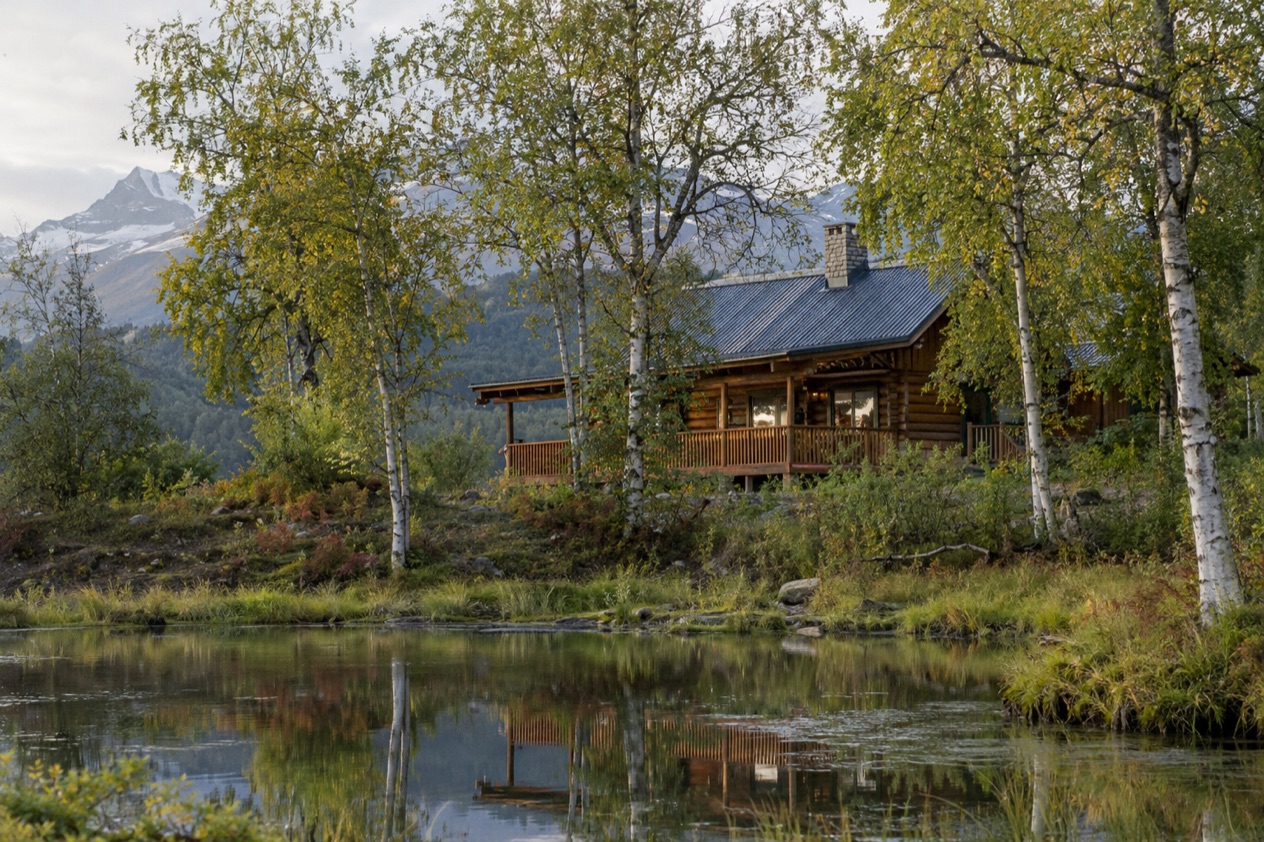
Past the entrance, the path leads down through birch and spruce toward Lake Tiulana, where six dwellings stand around the water, each built in the style of a different Alaska Native people. Drumbeats and singing may carry from the Gathering Place, and young guides lead small groups from house to house. The Alaska Native Heritage Center in Anchorage is a cultural visit for anyone who wants to understand the peoples whose homelands you are traveling through.
Is visiting the Alaska Native Heritage Center worth it?
Yes, especially if you want to meet Alaska’s Native cultures through people, objects and places rather than through a wall of text. It suits first-time visitors to Alaska who want context for the rest of the trip, families who like to see and handle things, and anyone interested in art, dance and storytelling.
The center shares the heritage of Alaska’s 11 major cultural groups: the Athabaskan, Eyak, Tlingit, Haida, Tsimshian, Unangax (Aleut), Alutiiq, Yup’ik, Cup’ik, Siberian Yupik and Inupiaq peoples. That reach is the point. Instead of focusing on one region, you move from one way of life to another within a single wooded setting, and you see how the climate, the land and the water shaped each of them.
Anchorage has many museums that present Russian, gold rush and pioneer history alongside Native history. What sets this place apart is the open-air side.
The dwellings are life-sized, the tours are often led by youth interns, and the Gathering Place brings dancing, games and storytelling to a stage rather than a display case. It is a place to listen as much as to look, and it works well early in a trip, before you travel on to other parts of the state.
What to see at the Alaska Native Heritage Center
The Village Sites around Lake Tiulana
Outdoors, six life-sized dwellings surround Lake Tiulana, and together they represent the ways of living of the Athabascan, Inupiaq and St. Lawrence Island Yupik, Yup’ik and Cup’ik, Aleut, Alutiiq, and the Eyak, Tlingit, Haida and Tsimshian peoples. The lake is named for Paul Tiulana, an Iñupiat artist and dancer. Each dwelling shows how people built and lived in a particular environment, from forest to tundra to coast.
Look at the materials, the shape of each entrance and the way each home sits in the landscape. Youth interns lead many of the tours, and the artifacts of daily life they show make the differences easy to grasp. Guided walking tours run daily in the summer season, and the times are in the table further down. Personal photography is welcome in the village sites, without flash.
The Hall of Cultures
Indoors, the Hall of Cultures is the place for rotating exhibits and for craft and artwork made by Alaska Native artists. Family craft activities are part of the program, which makes it a good stop for visitors who like to do something with their hands as well as look.
Because the exhibits rotate, what you find will differ from one visit to the next. Personal photography is welcome here, but flash is not, and no food or drink is allowed inside the hall. Spend your time with the artwork itself: the details of the craftsmanship reward a slow look.
The Gathering Place and the theatre
The Gathering Place is the center’s stage for demonstrations of Alaska Native dancing, Native Games and traditional storytelling. Watching a dance or hearing a story told aloud adds something the dwellings cannot, a sense of living tradition. Photography is welcome during cultural programming, without flash.
The theatre shows rotating films, including the center’s own documentary, Stories Given, Stories Shared. It is a quiet way to sit down between outdoor stretches and hear Native voices tell their own stories.
Hours, tickets and rules
Several groups enter free, including young children, ANCSA members, Indigenous individuals with tribal enrollment or Tribal ID, and Southcentral Foundation guests. The village tours and the café follow the summer season, and the café is closed in winter.
Personal photography is welcome in the Hall of Cultures, the Village Sites and during cultural programming on the Gathering Place stage, but flash photography is not permitted. No food or drink is allowed in the Hall of Cultures.
How to get to the Alaska Native Heritage Center
The center is at 8800 Heritage Center Drive, Anchorage, AK 99504, ten miles from downtown Anchorage. Anchorage is the natural base for the visit, and the center sits on 26 wooded acres, so once you arrive you are in a green, quiet setting rather than in the city streets.
Put the street address into your map or navigation app and you will be pointed to the entrance. From there, the guided village tours begin at the Crossroads, which is where you gather for the morning and afternoon departures in the summer season.
If you plan to join a guided tour, aim to be at the Crossroads before the time you want. The tours last 60 to 90 minutes, so work backward from the departure when you decide when to leave Anchorage.
When to visit the Alaska Native Heritage Center
The summer season is when the full visit comes together: the guided village tours run daily and the café is open every day.
Going late in the day has its own appeal. After 4pm the ticket price drops by half, and the grounds around Lake Tiulana tend to feel quieter as the day winds down.
In the winter season the café is closed, and the guided outdoor tours are described only for the summer season. Plan a winter visit around the indoor parts, the Hall of Cultures and the theatre.
Tips for your visit
Plan for the full tour if you can. A guided walk takes 60 to 90 minutes, and you will want time on top of that for the Hall of Cultures, a film in the theatre and a stop at the Gathering Place. Check the program for dance, games or storytelling so you can fit a demonstration into the day.
Bring your camera, and remember that flash is not allowed. Leave snacks and drinks outside the Hall of Cultures. In the summer season, Café Di’eshchin is open from 9AM to 5PM if you want to eat on site. Residents should carry ID to get the Alaska Resident price.
Families will find family craft activities in the Hall of Cultures, and the outdoor dwellings give children something concrete to explore. To round out the day, Anchorage’s other museums cover the city’s Dena’ina Athabascan heritage, Russian influence and railroad history, which makes a good companion to what you see here.
Good to know before you go
The center is an educational and cultural institution that opened in 1999, and it is described as Alaska’s premier cultural destination representing all Alaska Native peoples. Go with curiosity and take your time at each dwelling. The summer season brings the guided tours and the open café, while winter is quieter and more focused on the indoor spaces.
Sources
- Alaska Native Heritage Center (https://www.alaskanative.net/visit), checked October 11, 2026
- Visit Anchorage, museums and culture (https://www.anchorage.net/things-to-do/museums-and-culture/), checked October 11, 2026
- National Park Service, Kobuk Valley National Park, plan your visit: conditions (https://www.nps.gov/kova/planyourvisit/conditions.htm), checked October 11, 2026
- National Park Service, Kobuk Valley National Park, plan your visit: basicinfo (https://www.nps.gov/kova/planyourvisit/basicinfo.htm), checked October 11, 2026