
On the morning of July 10, Grand Bahama smells of frying fish and fresh-cut lime, and school bands drift down the roads of Freeport with brass and goatskin drums. The sea has reached its warmest of the year, the days are long, and the shade of a casuarina tree is where the afternoon is spent. July is a month for people who want to live in and around the water, with a national holiday and a table of conch salad thrown in.
What is the weather like in Freeport and Grand Bahama in July?
July is hot, humid and bright, with a sea as warm as the air by late afternoon and showers that arrive fast and leave just as quickly.
| Month | Sea at Freeport and Grand Bahama (°F) | Daylight on the 15th (hours and minutes) |
|---|---|---|
| June | 84.3 | 13 h 51 min |
| July | 87.2 | 13 h 41 min |
| August | 87.3 | 13 h 06 min |
July in Nassau brings average highs near 91°F and lows in the mid-70s, and about twelve days of the month see rain. Grand Bahama has a hot, rainy season that runs from May through October, so July sits squarely inside it. In practice that means a heavy, damp warmth by the middle of the day, and showers that pass over in a burst rather than settling in for a gray afternoon.
Mornings are the kindest hours. The light comes early, the air still holds a little freshness, and a walk through pine and palm feels pleasant before the sun climbs. By midday the heat presses down and the best place to be is in the water or under a roof with a fan turning. You can still dine outdoors in a T-shirt since evenings remain warm, and the extended daylight provides ample brightness for that.
With so much daylight, there is no need to rush. You can swim in the morning, rest through the hottest hours, and still have a long golden stretch before dusk. Plan outdoor effort for the early part of the day, and keep a flexible hour or two in the afternoon for a shower to come and go.
Can you swim in Freeport and Grand Bahama in July?
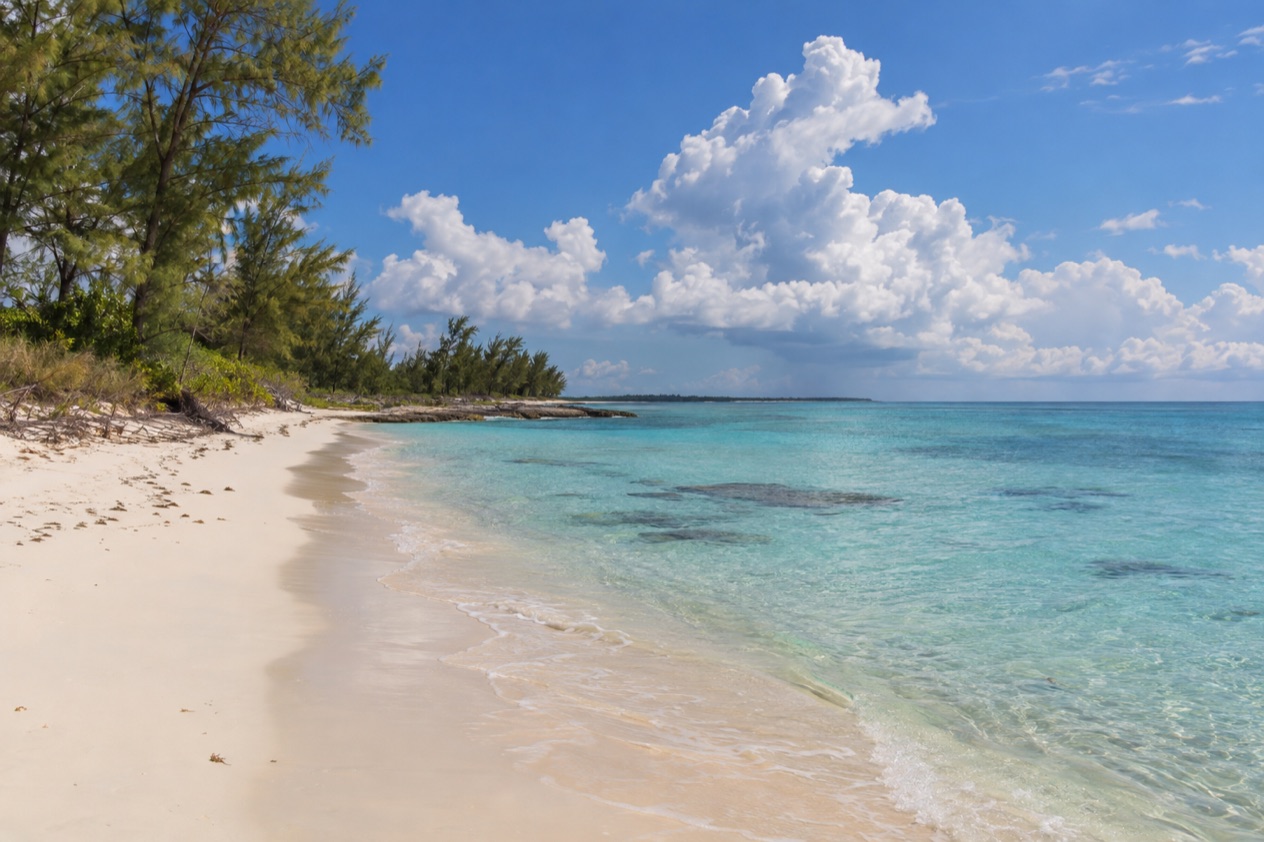
Yes, the water is warm enough that a long swim feels like a pleasure rather than a shock, and July is the warmest stretch of the sea all year, just ahead of August.
The island’s beaches run along its southern shore, around Lucaya and eastward, and each stretch has its own character, from resort sand with bars close by to quieter strands backed by pines and sea grape. How the water behaves differs from beach to beach and changes with the wind, so a spot that looks glassy one morning may have a little more movement the next. Treat any day as a fresh start rather than a promise.
Many visitors pair a swim with a mask and fins, and the clear warm water suits floating above the sea floor and watching small fish. The sun is strong from mid-morning, so a rash guard and a hat make longer stays in the water more comfortable. Families, couples and anyone who simply wants to spend hours afloat will find July generous here.
What to do in Freeport and Grand Bahama in July
The date that gives July its mood is Independence Day on July 10. Around it, porches and storefronts take on national colors, and stands by the roadside fry fish and conch fritters. Expect church services, school bands, speeches and gatherings with music, and in Bahamian fashion the food is as much a part of the day as the ceremony.
Food in July is most rewarding when it is eaten outdoors. Conch salad is cut to order with lime, onion, pepper and a splash of sour orange, and it tastes best chilled and eaten in the shade. Look for cracked conch, johnnycake, peas and rice, and a cold Kalik beer or a cup of sky juice. Guava duff, a soft rolled pudding with a sweet sauce, ends a meal well.
Port Lucaya and the waterfront
Lucaya is a suburb of Freeport whose livelihood is tourism, and Port Lucaya is where the day gathers once the sun softens. Boats rock at the docks, a marketplace of shops and open-air bars surrounds a central square, and the long evening light makes a stroll along the water unhurried.
Come for a late lunch of grilled fish or conch, linger over a drink as the light turns gold, and stay for live music, which tends to start up as it gets dark. Couples, groups of friends, and families with older children who enjoy watching the boats and the crowd will find it a good fit. A pair of sandals, not heavy shoes, is all you need.
Lucayan National Park
A small park of 40 acres, Lucayan National Park near Freeport gathers the island’s six ecosystems into a single outing, which the Bahamas offers nowhere else. Paths lead through pine forest, mangrove and coastal scrub toward the shore. One of the world’s largest underwater cave systems also lies within the park, and that claim to fame is what the place is known for.
Go early, before the heat builds and while the forest still holds some coolness. Access to the caves depends on the season because bats use them, so expect that a visit may not include a look into the caves themselves. Bring water and insect repellent, since July brings mosquitoes after a shower, and keep your belongings with you on the trail.
Beyond the park, the island rewards a slow day by the sea. Fishing boats leave from the docks, and the warm water is a natural invitation to hire a boat for a few hours of fishing or reef-hopping. In the rain, a covered bar or restaurant at the marketplace is the right place to wait, as most storms run their course quickly.
The town of Freeport itself is a place of wide roads and shopping centers, laid out when it was established as a free trade zone in 1955. It has little of the old-world charm of other island towns, but it works as a base for the beaches, the marketplace and the park, and for the restaurants where locals eat. The pace is slow, and in July the slowest hours belong to the afternoon.
If the day is for beaches, plan on a morning swim, a shaded lunch and an afternoon of reading or napping. If you want to move, pick the early hours for walking and the evening for strolling. July rewards people who treat the middle of the day as a pause rather than a project.
A two-day itinerary for Freeport and Grand Bahama in July
Day 1 starts at Lucayan National Park right after breakfast, while the forest paths are still shaded and the air has not yet thickened. Walk the trails to the shore and look at the mangroves and the pines. By late morning, with the heat rising, leave for a beach near Lucaya and spend the middle of the day in the water, with a long shaded lunch of grilled fish or conch salad at a beach bar.
In the late afternoon, when the sun has lost its edge, drift back to Port Lucaya. Wander the marketplace, watch the boats, and settle at a waterfront table as the light goes gold. Daylight lasts into the evening, so there is no hurry. Live music usually follows dinner, and a slow walk along the dock ends the day.
Day 2 is for the sea. Spend the morning on a boat, either fishing or exploring the reefs with a mask, then return in time for lunch somewhere simple, perhaps a roadside stand with fried fish and johnnycake. The afternoon belongs to a hammock, a book or a nap while the heat peaks.
Later, take a drive through Freeport to see the town, stop for a cold drink, and finish with a seafood dinner. If a shower turns the afternoon gray, shelter in the marketplace, where shops and covered bars keep you dry, and wait for the clouds to clear. They usually do before dinner.
Is Freeport and Grand Bahama busy in July?
July is lively without being frantic, with families on summer break and a holiday spirit around Independence Day, though the island is large enough to absorb visitors.
The week of July 10 is the busiest stretch in the calendar. Locals gather with relatives, roads and beaches fill with picnics, and restaurants and bars can feel full. Visitors who want a table at a favorite spot are wise to plan that week early, while the weeks before and after settle into a looser rhythm.
Port Lucaya fills in the evening, when the cool hours bring people out. The beaches are busiest over the weekend and fade quickly in the afternoon rain. Lucayan National Park stays quiet in the morning, which is another reason to go early. Rooms and rental cars tend to be easier to find outside the holiday week, and a restaurant table is easiest to get before the dinner rush.
In July you don’t need reservations for a park, a trail or a boat, so what matters most is simply picking days that match your pace. Weekdays outside the holiday week are the quieter choice, and the mornings are calmer than the evenings everywhere.
What to pack for Freeport and Grand Bahama in July
Pack for heat, sun and sudden showers, with clothes that dry quickly and shoes that go from sand to a restaurant floor.
- Light cotton or linen clothes, because the middle of the day is hot and damp.
- A swimsuit or two and a rash guard, since you will spend hours in the water.
- A hat and strong sunscreen, for long days under a high sun.
- A light rain jacket or a small umbrella, for the showers that pass through.
- Insect repellent, for the park paths and the evenings.
- Sandals and a pair of closed shoes, for the beach and the trail.
Good to know before you go
The U.S. State Department rates the Bahamas Level 2, “Exercise increased caution”, and says most crime occurs in Nassau on New Providence and in Freeport on Grand Bahama.
July falls inside the Atlantic hurricane season, which runs from June 1 to November 30, with its peak still weeks away in September. The Bahamas Ministry of Tourism & Aviation follows tropical systems and points travelers to the Bahamas.com hurricane page for updates. Grand Bahama was struck by Hurricane Dorian in 2019, a reminder that storms are part of the island’s story, so keep an eye on the forecast as your dates approach.
Independence Day on July 10 is the holiday that shapes the month, and the island feels it in the days around it. Beyond that, the month is straightforward, with long daylight hours that make planning easy.
Freeport and Grand Bahama in July vs June and August
Moving a month earlier brings you to June, when the sea is a few degrees cooler and the days are a little longer. The island is quieter before the summer break reaches full swing, and the hurricane season has just begun. June suits travelers who prefer a gentler sea and a calmer pace, and who are happy to skip the Independence Day gatherings.
August keeps the sea just as warm as July and brings a similarly hot, damp rhythm, with the days growing shorter. Early in the month comes Emancipation Day, another occasion for gatherings and music, and by then the hurricane season is moving toward its peak. The festive mood carries over from July, but the Independence Day atmosphere is gone.
If you want the national holiday and the warmest water, stay with July. If you prefer a quieter beach, aim for June. If you like the idea of a second holiday and do not mind another few weeks of heat, August makes sense. For most beach-minded travelers, July is the middle that holds the best of both.
Is July a good time to visit Freeport and Grand Bahama?
Yes, July is a good time for travelers who love heat, warm water and a holiday mood, and who plan their days around the sea.
It suits swimmers, boat people, families on summer break and anyone who enjoys long outdoor evenings with good food. People who dislike humidity, or who prefer to walk and sightsee through the whole day, may be happier in the cooler, drier months of the winter season. Those with a strong dislike of showers should also look elsewhere, since afternoon rain is part of the pattern.
On arrival, start with the morning: a swim, a slow lunch, and a rest through the heat. Save the evenings for Port Lucaya, when the light softens and the music begins. July brings the warmest sea of the year, a national holiday full of drums and fried fish, and conch salad eaten under a sky that clouds over and clears again within the hour.
Sources
- Open-Meteo Marine API, average 2015-2024, checked October 10, 2026
- sunrise-sunset.org, sunrise and sunset calculated for the 15th of the month, checked October 10, 2026
- NOAA NCEI, GHCN-Daily station BF000078073 (Nassau Airport), normals 1991-2020 computed from the daily record (https://www.ncei.noaa.gov/access/services/data/v1?dataset=daily-summaries&stations=BF000078073), checked October 10, 2026
- NOAA National Hurricane Center, Climatology (https://www.nhc.noaa.gov/climo/), checked October 10, 2026
- Bahamas Ministry of Tourism, Investments & Aviation (bahamas.com), Hurricane and storm information (https://www.bahamas.com/hurricane-storm-information), checked October 10, 2026
- Wikipedia, Hurricane Dorian (https://en.wikipedia.org/wiki/Hurricane_Dorian), checked October 10, 2026
- Bahamas Ministry of Tourism, Investments & Aviation (bahamas.com), travel blog, Abacos and Grand Bahama after Hurricane Dorian (https://www.bahamas.com/blog/things-to-know-when-visiting-the-bahamas-after-dorian), checked October 10, 2026
- Wikipedia, Grand Bahama (https://en.wikipedia.org/wiki/Grand_Bahama), checked October 10, 2026
- Wikivoyage, Grand Bahama travel guide (https://en.wikivoyage.org/wiki/Grand_Bahama), checked October 10, 2026
- Wikipedia, Freeport, Bahamas (https://en.wikipedia.org/wiki/Freeport,_Bahamas), checked October 10, 2026
- Wikipedia, Lucaya (https://en.wikipedia.org/wiki/Lucaya,_Bahamas), checked October 10, 2026
- Bahamas Ministry of Tourism, Investments & Aviation (bahamas.com), Lucayan National Park (https://www.bahamas.com/natural-wonders/lucayan-national-park), checked October 10, 2026
- Wikipedia, Geography of the Bahamas (https://en.wikipedia.org/wiki/Geography_of_the_Bahamas), checked October 10, 2026
- Bahamas Ministry of Tourism, Investments & Aviation (bahamas.com), Island FAQ (https://www.bahamas.com/plan-your-trip/island-faq), checked October 10, 2026
- U.S. Department of State, The Bahamas Travel Information, Safety and security (https://travel.state.gov/), checked October 10, 2026
- Bahamas Department of Immigration, Entry requirements (https://www.immigration.gov.bs/entry-requirements/), checked October 10, 2026
- Bahamas Department of Immigration, Before your arrival (https://www.immigration.gov.bs/entry-requirements/before-your-arrival/), checked October 10, 2026
- U.S. Department of State, The Bahamas Travel Advisory, Level 2 (https://travel.state.gov/), checked October 10, 2026
To plan your stay
- Things to Do in Grand Bahama: Lucayan National Park, Diving, Beaches and Port Lucaya
- Where to Stay in Grand Bahama: Lucaya, Freeport, West End and How to Pick a Hotel
- Freeport and Grand Bahama from Miami: Ferry, Flights, Cruise Ships and a Day in Lucaya
- Know Before You Go to Grand Bahama: Entry, Money, Getting Around and Sun