
Early on Grand Bahama, the first light catches the masts at Port Lucaya and a few people are already walking the beach with coffee, while a band is still packing up in Count Basie Square from the night before. Twenty minutes of driving inland, Freeport is waking up as a working city, with trucks at the harbor and planes coming in from Florida. The island is long and low, and where you sleep decides whether your days start on the sand, in town or at the quiet western end.
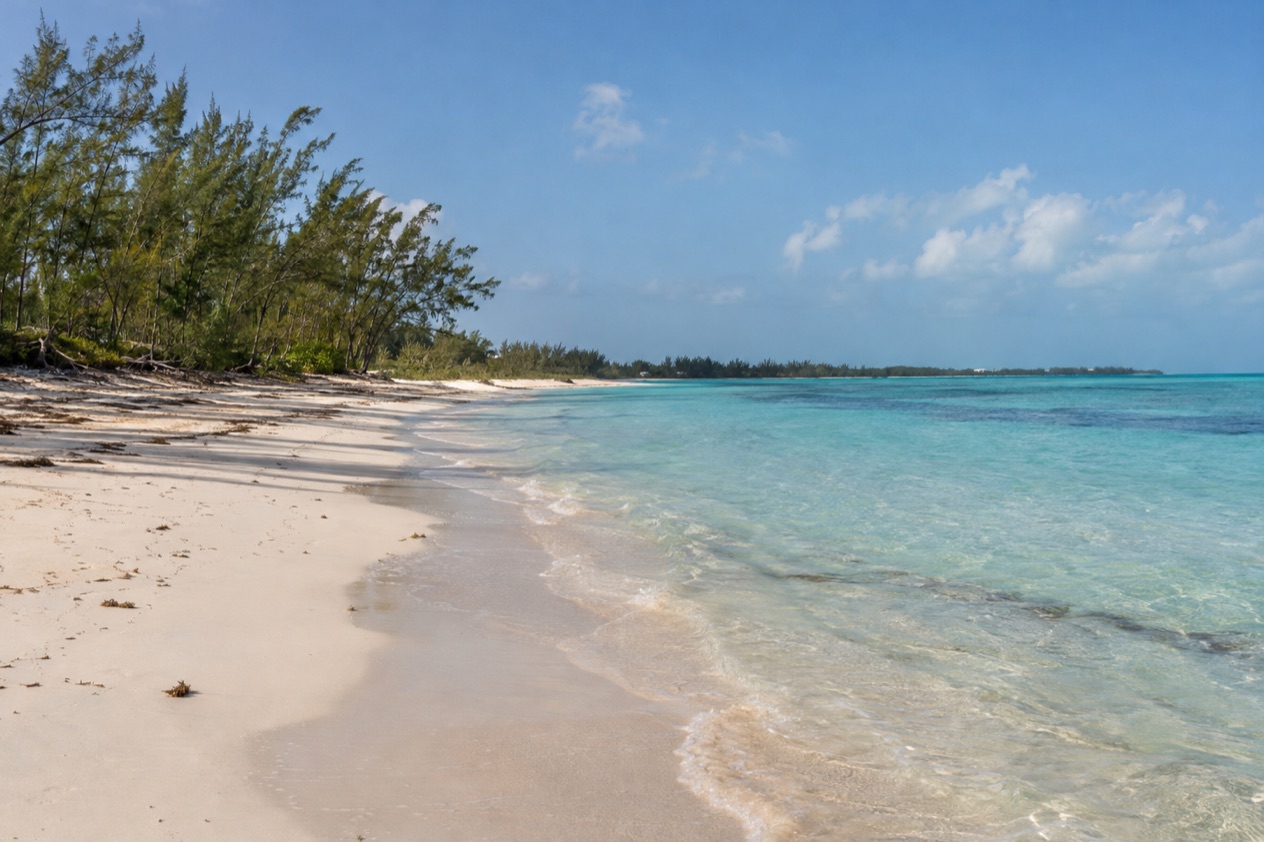
What is the best area to stay in Grand Bahama?
For a first visit, a beach week, a family trip or a few lively evenings, Lucaya and Port Lucaya make the most sense, while Freeport suits travelers who want a wider range of lodging for every budget and West End suits those who want to be far from the resort strip.
Grand Bahama is the northernmost island of the Bahamas and the third largest, so it is a place of distances rather than a single town. Most visitors treat it as a few clusters.
Lucaya is the tourist district, built around beaches and hotels, and its primary industry is tourism. Freeport is the main city, with the commercial harbor and the main airport. West End sits at the far western tip, closest to Florida, and feels like a different island altogether.
If this is your first time, Lucaya gives you the most in one place. You wake up near the beach, you can walk to the Port Lucaya Marketplace for shopping and dinner, and the live music in Count Basie Square gives the evenings a center. Diving and dolphin encounters run from the UNEXSO base, which has been a draw here for decades, so a day on the water is easy to build around a stay in this area.
For a beach holiday, the beachfront resorts of Lucaya are the natural choice. The Our Lucaya complex, for example, combines two properties on one grounds, and that kind of all-in-one setup suits people who want to unpack once and stop making decisions. Families often prefer this style, because the island offers family-friendly resorts and the pace of a resort day is set for children.
On a budget, look at Freeport. The city offers lodging from resorts to romantic all-inclusives to cozy bed and breakfasts for every budget, and a B&B or a small apartment can stretch a week further than a beachfront tower. The trade is that you are a short hop from the shore rather than on it, and you will want a plan for getting to the beach each day.
For nightlife, the answer is Port Lucaya. It is a well-known spring break destination, and socializing there centers on Count Basie Square, where live entertainment, restaurants and shops sit side by side. In busy weeks the area has a young, crowded energy. If that sounds tiring rather than fun, pick a spot a little further along the coast.
For quiet, think about the western end of the island or a private rental away from the resort strip. These places give you space and a slower rhythm, and in return you give up the walk-out-the-door restaurants and music. A rental also asks a little more of you, since travelers are advised to stay alert in vacation rental properties, especially where private security is not present.
One more thing shapes the choice, and that is the calendar. Grand Bahama has a hot, rainy season from May through October and a warm, dry season from November through April, and the hurricane season runs from June through November. A stay in the dry months leaves you free to plan beach days. A stay in the rainy months is a good time to choose lodging with plenty to do on site.
The best areas to stay in Grand Bahama
Lucaya and Port Lucaya
Lucaya is the part of Grand Bahama built for vacations. It is a suburb of Freeport, its main industry is tourism, and the mood is one of flip-flops, sunscreen and drinks carried in from the beach. The lodging mixes large all-inclusive style resorts with smaller hotels and apartment stays, and the beachfront properties are what most people picture when they book here.
At the heart of the area, Port Lucaya Marketplace has shops, restaurants and a waterfront where boats tie up. In Count Basie Square there is live entertainment, with local bands playing calypso, reggae and rake-and-scrape and a crowd that grows as the evening goes on. The dive operation UNEXSO, with its dolphinarium and its diving charters, sits in the same district, so a morning on the water and an evening in the square fit into one day.
This area suits first-timers, couples, families and groups of friends. If you want a quiet room, ask for one away from the square on busy nights. A good habit here is to eat dinner at the marketplace one night, then try a restaurant beyond the strip the next, so you taste more of Bahamian cooking, including conch in its many forms and fresh fish with peas and rice.
Freeport
Freeport is the island’s main city, founded as a free trade zone in the mid-1950s, and it is the practical heart of Grand Bahama. It holds the commercial harbor and the main airport, and it is known as the second-largest city in the Bahamas. This is where the island’s everyday life happens, so the streets feel less like a resort and more like a working town with banks, supermarkets and local lunch counters.
Lodging here is the widest in range. The city offers family-friendly resorts, romantic all-inclusives and cozy B&Bs for every budget, and you will also find rental houses and apartments for longer stays. It is a sensible choice for people who want to see how the island really lives, who plan to move around, or who are arriving or leaving at odd hours and prefer to sleep near the airport.
The trade-off is that Freeport is not a beach town. Plan your days so the shore is part of them, whether through a day at Lucaya or an outing further afield. Freeport is also the place the U.S. State Department mentions when it discusses crime on the island, so choose lodging with some attention to its surroundings and treat a rental the way you would any unfamiliar place.
West End and the western tip
West End is the westernmost town on Grand Bahama and the closest point on the island to Florida, across the water from Palm Beach. It is a quiet place of low houses, fishing boats and long views over the sea. The feel here is old Bahamas, with small settlements, local bars and a pace that has little to do with the resort strip further east.
This end of the island suits people who want to be left alone: anglers, couples looking for peace, and travelers who like a rental house with a porch more than a lobby with a pool. Lodging is smaller in scale and more private, so you should expect fewer restaurants at the door and more time spent driving or cooking for yourself.
Because it is a long way from the Port Lucaya nightlife, West End works best as a base for a calm week, or as a second stop after a few days in Lucaya. If you stay in a private property, remember the advice to stay alert in rentals where there is no private security.
The south side and Celebration Key
On the south side of the island, Celebration Key is a newer destination from Carnival, designed for Carnival guests. It has a mile-long white sand beach, Paradise Plaza as the first welcome ashore, and Lokono Cove, where local artisans sell their work and Bahamian art, music and history are on show. It is a day destination for cruise passengers, not a neighborhood to book a room in.
It still matters when you choose where to sleep, because it tells you what the south shore is becoming. Starfish Lagoon is made for families with waterslides and a splash pad, Calypso Lagoon is for adults with swim-up bars, and Pearl Cove Beach Club is adults only.
If you are on the island by cruise ship, this is where your beach day lands. If you are staying on land, base yourself in Lucaya or Freeport.
Grand Bahama areas compared
| Area | Best for | Feel | What is close |
|---|---|---|---|
| Lucaya and Port Lucaya | First visit, beach, families, nightlife | Resort district with beaches, a marketplace and live music | Port Lucaya Marketplace, Count Basie Square, UNEXSO |
| Freeport | Budget, longer stays, early or late flights | Working city, the second largest in the Bahamas | Commercial harbor, main airport, everyday shops |
| West End | Quiet, anglers, privacy | Small town at the far western tip, close to Florida | Fishing boats and open sea views |
| South side (Celebration Key) | Cruise day, not an overnight base | Carnival’s beach destination with lagoons and a beach club | White sand beach, Paradise Plaza, Lokono Cove |
The main trade-off on Grand Bahama is beach against local life. Lucaya puts you steps from the shore, the marketplace and the music, but you will share it with other visitors and, in busy weeks, a young crowd. Freeport gives you more of the real island and a broader choice of lodging, but you have to make an effort to reach the water.
The second trade-off is quiet against nightlife. If your ideal evening is a live band, a rum drink and a walk back to your room, Port Lucaya wins. If it is a porch, a book and the sound of the sea, the western end is the better answer. A stay that splits the difference is also common: a few nights in Lucaya for the energy, then a few in a quieter spot to rest.
Finally, think about how you will move around. The island is spread out, and a base in Lucaya reduces the amount of travel you need each day, while a base in West End or in a rental house asks you to plan each outing. Lucayan National Park, with its six ecosystems and its seasonal cave access, is one outing worth building a day around from any of these bases.
How to choose your hotel in Grand Bahama
Start with the question of all-inclusive or not. An all-inclusive resort takes the planning out of the week: meals, drinks and often activities are in one place, which suits families with children and travelers who want to relax without counting. A hotel or apartment without meals included gives you the freedom to eat at Port Lucaya Marketplace, try local spots in Freeport and cook a few meals yourself.
Next, think about what you want outside the door. A beachfront stay puts you on the sand with the sound of the surf.
A stay a street or two back, or beside a canal or marina, trades the front row for a calmer setting and often a more local feel. Ask the property where its beach is and how you get to it, because on a long island the answer varies from one hotel to the next.
The hotel search on the Bahamas Ministry of Tourism website lets you filter by what matters to you. You can look for a casino, children’s activities, a golf course or a spa, and there is also a filter for Clean and Pristine certified hotels. For families, the children’s activities filter is a quick way to narrow the list. For couples, a spa or golf course may matter more.
Think about the season. The hot, rainy season runs from May through October, and the warm, dry season from November through April.
The hurricane season is June through November, with the highest risk in August, September and October, and Grand Bahama was struck by Hurricane Dorian in early September 2019 as a Category 5 hurricane. When you travel in those months, read the terms of your booking and your travel insurance with care, and pick lodging with a plan in mind for a change of weather.
Busy weeks matter too. Port Lucaya is a spring break destination, so rooms near Count Basie Square will feel livelier then, and you should decide whether that is what you want. For a calmer week, choose a quieter part of Lucaya, Freeport or the western end. Festivals and holiday periods bring their own crowds, so think about what the week around your dates is likely to look like before you pick a neighborhood.
Families and travelers with mobility needs should ask specific questions before booking: how far the room is from the lobby, the pool and the beach, whether there are steps, and how the grounds are laid out. A large resort can mean long walks between buildings, and a smaller property can mean stairs. Asking in plain terms gets you a better answer than a general question about accessibility.
Finally, check the practical points before you commit. Ask about noise, especially if the room is near a bar, a stage or Count Basie Square.
Ask how you will get from the airport to the property, since Grand Bahama International Airport is in Freeport and your lodging may be some distance away. If you rent a house or apartment, remember the advice to stay alert in vacation rentals without private security, and look at the surroundings with that in mind.
Good to know before you go
The U.S. State Department rates the Bahamas Level 2, “Exercise increased caution”, and says most crime occurs in Nassau on New Providence and in Freeport on Grand Bahama.
Most travelers arrive at Grand Bahama International Airport in Freeport, which receives flights from the United States and Canada as well as domestic flights from other islands of the Bahamas. A ferry also links Freeport with Port Everglades in Fort Lauderdale, operated by Baleària. Freeport and Lucaya are on Eastern Time, the same as the U.S. East Coast, so there is no clock to reset on arrival.
Visitors to Lucayan National Park are advised never to leave belongings unattended, as thefts have been known to occur. The same habit serves you well at beaches and in parked cars across the island. The caves in the park have seasonal access because they are also used for bat conservation, so a visit there depends on the time of year.
Sources
- Bahamas Ministry of Tourism, Hotels (https://www.bahamas.com/hotels), checked October 10, 2026
- Wikipedia, Grand Bahama (https://en.wikipedia.org/wiki/Grand_Bahama), checked October 10, 2026
- Wikipedia, Freeport, Bahamas (https://en.wikipedia.org/wiki/Freeport,_Bahamas), checked October 10, 2026
- Wikipedia, Lucaya (https://en.wikipedia.org/wiki/Lucaya,_Bahamas), checked October 10, 2026
- Carnival Cruise Line, Celebration Key (https://www.carnival.com/celebration-key), checked October 10, 2026
- Bahamas Ministry of Tourism, Investments & Aviation (bahamas.com), Freeport and Grand Bahama Island (https://www.bahamas.com/islands/freeport-grand-bahama-island), checked October 10, 2026
- Wikivoyage, Grand Bahama travel guide (https://en.wikivoyage.org/wiki/Grand_Bahama), checked October 10, 2026
- U.S. Department of State, The Bahamas Travel Information, Travel Advisory (Level 2) (https://travel.state.gov/), checked October 10, 2026
- U.S. Department of State, The Bahamas Travel Advisory, Level 2 (https://travel.state.gov/), checked October 10, 2026
- NOAA National Hurricane Center, Climatology (https://www.nhc.noaa.gov/climo/), checked October 10, 2026
To plan your stay
- Best Time to Visit Freeport and Grand Bahama: Weather, Sea Temperatures, Seasons and Events
- Things to Do in Grand Bahama: Lucayan National Park, Diving, Beaches and Port Lucaya
- Freeport and Grand Bahama from Miami: Ferry, Flights, Cruise Ships and a Day in Lucaya
- Know Before You Go to Grand Bahama: Entry, Money, Getting Around and Sun