
Late in the afternoon at Port Lucaya, a band starts up in Count Basie Square, boat masts clink in the marina, and the smell of fried conch drifts across the paving stones. Beyond the town, pine woods give way to mangrove creeks, blue holes and long empty beaches. Grand Bahama is the island for travelers who want the water, the reefs and the wild interior as much as the resort strip, and it suits couples, families and divers alike.
What are the best things to do in Grand Bahama?
The best things to do in Grand Bahama are mostly in or under the water, with a good handful of walks, markets and evening music to fill the rest of the day. The island is large and spread out, so most visitors pick two or three anchors and let the rest follow. These are the essentials.
- Walk the boardwalks of Lucayan National Park, the one place in the Bahamas where all of the island’s ecosystems sit side by side.
- Look into Ben’s Cave, an inland blue hole where fresh water floats over salt.
- Spend a morning at Gold Rock Beach, where the tide pulls the shoreline far out across the flats.
- Dive with Caribbean reef sharks at Shark Junction, or drift over the coral heads of Picasso’s Gallery.
- Meet the wild stingrays that Keith Cooper has befriended in Freeport.
- Browse the shops and eat outside at Port Lucaya Marketplace, then stay for the live music in Count Basie Square.
- Boat out to Peterson Cay, a tiny national park with reefs around it.
- Try a conch salad, cracked conch and a Bahamian fish fry, because the table here is as much a part of the trip as the sea.
A good first day pairs the park with a beach, since Gold Rock sits within the same protected area as the caves. A second day can go to the water: a dive, a snorkel or a boat out to the cay. Evenings belong to Port Lucaya, where the food and the music are within a few steps of each other.
Anglers have their own reason to come. The shallow flats on the north side of the island, around West End, are a popular bonefishing destination, and the whole island has a laid-back, working-harbor feel that is very different from a big resort strip.
Sights and landmarks in Grand Bahama
Grand Bahama’s sights are less about monuments than about places where the land opens up: a pine forest, a limestone cave, a harbor town, a marketplace on a lagoon. Freeport is known as the second-largest city in the Bahamas, but the character of the island is found just outside it, and the best landmarks reward slow looking.
Lucayan National Park
Lucayan National Park lies near Freeport and covers only forty acres of land, yet it is the only place in the Bahamas where you can see all six of the island’s ecosystems. Wooden boardwalks and trails lead through pine forest, mangroves, coppice and out to the coast, with shade, birdsong and the smell of sap along the way.
The park also protects one of the largest underwater cave systems in the world, and two of its caves are open to the public. Access to the caves is seasonal because they double as bat habitat, so a visit in one month may let you look into the caves while another may not. The walk itself is worth doing either way.
Do not leave belongings unattended at the park. Thefts have been known to occur, so carry what you need and keep it with you. Gold Rock Beach is part of the same park, which makes the two a natural pairing.
Ben’s Cave
Ben’s Cave is one of two inland blue holes inside Lucayan National Park, named for UNEXSO legend Ben Rose. Looking down into it, you see a clear upper layer of fresh water resting on top of the saltwater below, a boundary that gives the pool its glassy, layered look.
It is a place for standing still, watching the light fall through the opening and the roots hang from the limestone lip. Photographers love the way the water changes color with the angle of the sun. Pair it with the rest of the boardwalk trail so the visit has some shape.
Port Lucaya Marketplace
Lucaya is a suburb of Freeport, and its main business is tourism. At its center, Port Lucaya Marketplace gathers shops, restaurants and a waterfront promenade, with live entertainment in Count Basie Square. It is the place on the island where everything meets: boat crews, cruise visitors, resort guests and locals out for a meal.
Come in the afternoon to browse straw work, hot sauces, rum cakes and local art, then stay as the light drops and the musicians arrive. The marina behind the shops is a pleasant place to wander and watch the charter boats come and go. It is the easiest landmark on the island to enjoy without any plan.
Freeport, Lucaya and West End
Freeport was established as a free trade zone on August 4, 1955, and the grid of wide boulevards still shows its ambitions as a planned city. Today it is the island’s commercial hub, with the airport, the harbor and a range of lodging from family resorts to small B&Bs. Out at the resort of Our Lucaya, the Radisson and Reef Village properties sit together on the shore.
At the far western end, West End is the oldest settlement on the island and the first port of entry for boaters crossing from Florida. It has a small-harbor atmosphere, with fishing boats, weathered docks and a long local memory of rum-running days. It makes an interesting contrast to the planned streets of Freeport.
Beaches and outdoor things to do in Grand Bahama
Grand Bahama’s coast runs from busy resort sand to long stretches with nobody on them, and the sea around it is full of reefs, wrecks and creatures worth a day on the water. The island’s flat, pine-covered interior adds trails and mangrove creeks for anyone who wants to get off the beach.
Gold Rock Beach
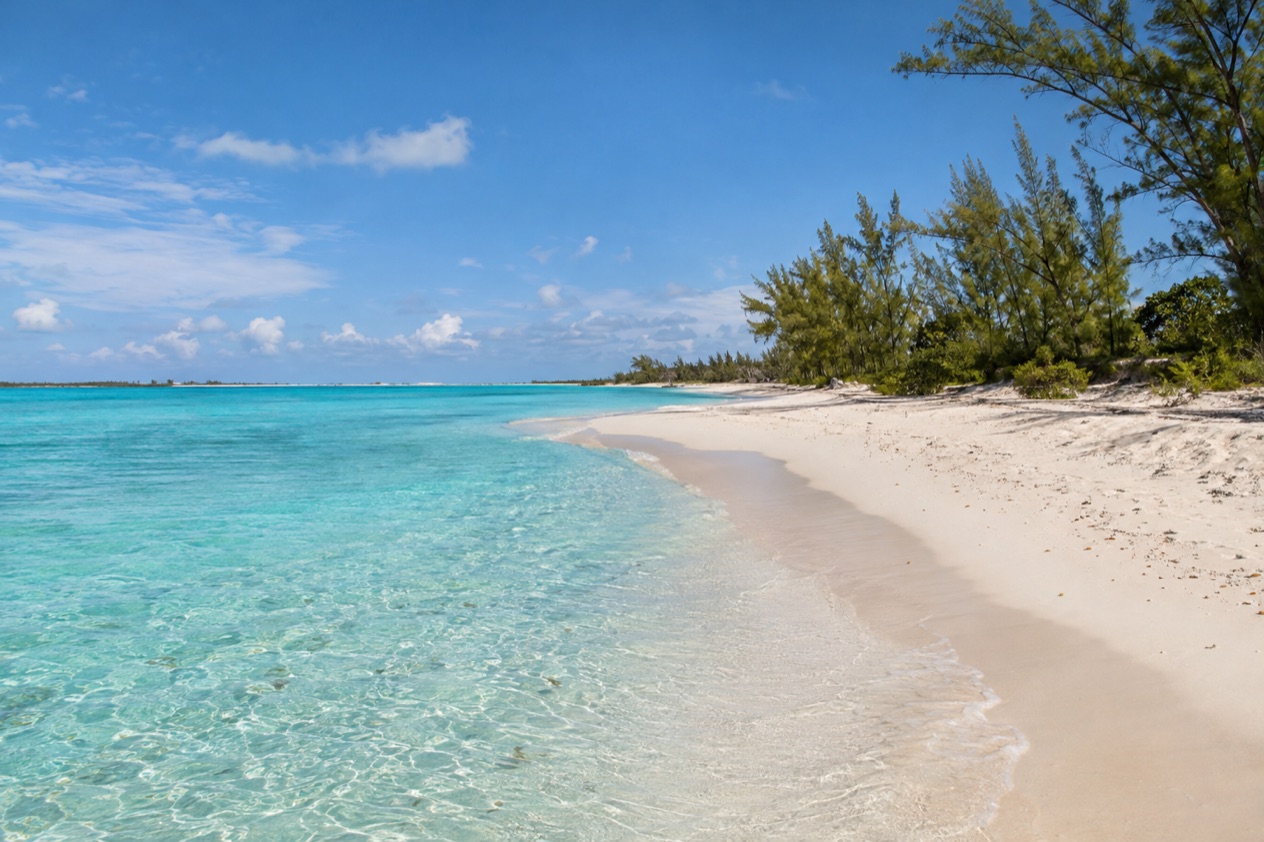
Gold Rock Beach lies about twenty-five miles from Freeport, inside Lucayan National Park and protected by the Bahamas National Trust. At low tide the shoreline spreads yards out into the sea, which earned it the nickname of the island’s welcome mat. The wide, pale flats are made for beachcombing and long, slow walks.
The facilities are modest: barbecue pits, picnic tables and benches, and nothing else. That makes it a place to bring your own lunch and shade, and to settle in for a few hours. The quiet is the draw, along with the sense of having a wild stretch of coast largely to yourself.
Taino Beach
Taino Beach is in Freeport, and its park is leased from the Grand Bahama Port Authority for ninety-nine years. The Freeport/Lucaya Council has developed it for Bahamians and visitors, with restrooms, playground equipment and sitting areas. Locals and visitors share it, which gives it a relaxed, neighborhood feel that the quieter beaches do not have.
It suits a lazy afternoon with children or a late-day walk when the sun is lower. Conch stands and beach bars in the area give you food and a cold drink without leaving the sand, and the mood is easygoing rather than polished.
Diving and snorkeling
Diving is one of the island’s great draws, and UNEXSO in Lucaya was the first destination dive charter business in the world. Picasso’s Gallery is famous for coral heads shaped like a painter’s palette, while sunken shipwrecks bloom with gorgonian sea fans and swarms of fish. Divers can also swim alongside Caribbean reef sharks.
At Shark Junction, Caribbean reef sharks likely appear on most dives, with nearly guaranteed encounters. UNEXSO requires that any diver joining the active shark feeding dive have an Open Water Diver certification and one dive through UNEXSO first. If you do not dive, the reefs and wrecks are the reason to look into a snorkeling or boat outing.
Stingrays, bonefishing and mangrove country
In Freeport, Keith Cooper offers a stingray meet-and-greet where visitors can swim with wild stingrays that he has befriended over twelve years. It is a memorable encounter, in the water with graceful animals that have come to know him and his routine.
On the north side of the island, around West End, the water is very shallow because this edge belongs to the Bahama Banks. That makes it popular for bonefishing, a quiet kind of sport that is about patience, polarized glasses and the flash of a fish in the shallows. For non-anglers, the same flats are beautiful to look at from a boat.
Day trips from Grand Bahama
Most of the best outings from Grand Bahama leave from the water, since the cays, banks and shark grounds are best reached by boat. A few trips stay on land and combine well with the beaches and the park. All of them reward an early start and a loose schedule.
Peterson Cay National Park
Peterson Cay is a national park of just one and a half acres, set one mile off Freeport’s southern shore. It is the smallest national park in the Bahamas and can be reached only by boat. Visitors are instructed to anchor in specific areas away from the coral reefs, which protect the fragile reef life around the cay.
What you find is a tiny scrap of sand and scrub surrounded by clear water, with a reef that makes the visit worthwhile for people who like to look underwater. It suits boaters, snorkelers and anyone who likes the idea of a whole park they can see in a single glance. Bring what you need for the day, as the cay is a place for the sea and not for services.
Tiger Beach
Tiger Beach lies twenty-six nautical miles off the west end of Grand Bahama, and the depth there is only twenty feet. It is a dive and shark-encounter destination rather than a beach in the usual sense, a stretch of shallow sand and open water far from the shore.
It suits experienced, shark-minded divers who want to spend a long day at sea and are comfortable being among large animals. For everyone else, it is enough to know it exists, and that the diving on the island’s own reefs offers plenty without the long run out.
West End
West End is the westernmost town on Grand Bahama and the oldest settlement on the island, only fifty-five nautical miles from the Florida coast. It is the first port of call for most boaters entering Bahamian waters from the United States, and its docks and small harbor reflect that role.
A day here is about atmosphere: walking the waterfront, watching the boats, and looking out over the Bahama Banks. It is also the base for bonefishing on the north side of the island. Visitors who like quiet places with a past will enjoy it more than those after shopping or nightlife.
Celebration Key
Celebration Key is a destination from Carnival on the south side of the island, designed for Carnival guests. It has a mile-long white sand beach, and Paradise Plaza is its first portal, welcoming guests ashore with information, live music and photo spots.
Families will find Starfish Lagoon, with the Flash Flamingo and Mach III Marlin waterslides, the Guppy Grotto splash pad and courts for basketball, beach volleyball and pickleball. It is aimed at cruise guests of that line, so it is a different kind of day from the island’s wild coast and small harbors.
What to eat in Grand Bahama
Eating in Grand Bahama means conch in every form, fresh fish from the nearby banks, and the fried, spiced, citrus-bright cooking of the Bahamas. The food is casual and generous, served at beach bars, roadside stands, marina restaurants and the occasional fish fry.
Conch is the national obsession. It arrives as conch salad, chopped raw with onion, pepper, tomato and a squeeze of sour orange and lime, as cracked conch, pounded and fried until golden, and as fritters, little crisp balls of batter and chopped conch served with a dipping sauce. Eating conch salad within sight of the water is one of the island’s great small pleasures.
Fish comes simply: grilled or fried grouper and snapper, often with a plate of peas and rice and a side of coleslaw or macaroni. Rock lobster, called crawfish locally, shows up grilled, in salads or in a rich stew. Look for boiled fish at breakfast, a peppery, lime-sharp broth with potatoes and onion that locals swear by.
Johnnycake, a dense, slightly sweet bread, appears alongside many meals. Sweet things include guava duff, a rolled pastry steamed and served with a warm sauce, and coconut tarts and pineapple desserts. Fritters and plantains are common side dishes, and you rarely leave a table feeling underfed.
To drink, order a Kalik or a Sands beer, a rum punch, or a Bahama Mama with its mix of rum, coconut and fruit. Switcha, a limeade made from fresh limes, is the non-alcoholic classic. Many beach bars serve all of it with a view and a breeze.
Where you eat shapes the meal. Port Lucaya Marketplace has a range of dining on the water, from casual to a little more polished. Roadside and beachside stands serve the same dishes with fewer frills, and smaller settlements have local places where the day’s catch is the menu. A fish fry on a weekend evening is the way to eat the way locals do.
Things to do in Grand Bahama at night
Evenings on Grand Bahama are mostly about music, a table outdoors and the sound of the marina, and Port Lucaya is where it gathers. Count Basie Square has live entertainment, and the Marketplace around it combines shopping and dining in an open-air setting.
A typical night begins with a drink as the light turns gold over the water, then dinner at a terrace table, perhaps with conch or grilled fish. When a band is playing in the square, you drift toward it, order another round and watch the crowd. The mood is relaxed, a mix of resort guests, boat crews and residents.
Resort areas such as Our Lucaya, with its Radisson and Reef Village properties, have their own bars and restaurants, so guests staying there can keep the evening close to their rooms. Freeport has a range of places to eat and drink beyond the Lucaya strip, from casual bars to full dinners, and the lodging in the city ranges from family-friendly resorts to cozy B&Bs.
Quieter evenings have their own appeal. A walk along the marina, a drink on a dock, or a long dinner under the stars is often the best night out. Away from the lights of town the sky is dark, and on the quieter beaches you can sit and listen to the sea.
If you arrive tired from a dive or a long day on the water, the easiest plan is to stay close to the marina, eat early and let the music find you. Weekend fish fries add a lively local option, with fried fish, conch and cold beer served in an informal setting.
Things to do in Grand Bahama with kids
Children in Grand Bahama have beaches, boats and animals, and a good portion of the island’s best experiences are the kind that spark curiosity. The island offers family-friendly resorts, and several of its attractions are built with young visitors in mind.
Taino Beach has a park with restrooms, playground equipment and sitting areas, which makes it a practical stop when children need to run around. Gold Rock Beach has picnic tables and barbecue pits, so a family can bring lunch and spend the day exploring the wide, shallow flats at low tide.
At Celebration Key, Starfish Lagoon is made for families, with two waterslides, a splash pad and sports courts. It is designed for Carnival guests, so it suits families already traveling with that line. Older children who like animals may enjoy the stingray meet-and-greet in Freeport, where visitors swim with wild stingrays that Keith Cooper has befriended.
Lucayan National Park gives children a chance to walk boardwalks through forest and mangrove, peer into a blue hole and look for birds and lizards. It works best as a morning outing, with shade and a snack to keep everyone going. Keep belongings with you, as thefts have been known to occur there.
Think about the sun and the heat. The island’s rainy season runs from May through October and is hot, while the dry season from November through April is warmer in a gentler way. In either, plan shade breaks, plenty of water and an early start, and keep children close near any water.
Distances on the island are real, so cluster activities by area. Pair Lucaya’s marketplace, marina and nearby beaches in one day and save the park and Gold Rock for another, with a picnic.
Good to know before you go
The U.S. State Department rates the Bahamas Level 2, “Exercise increased caution”, and says most crime occurs in Nassau on New Providence and in Freeport on Grand Bahama.
Grand Bahama sits in the Eastern Time Zone, and its main airport is Grand Bahama International, with West End Airport serving mostly private aircraft. The hurricane season runs from June 1 to November 30 on the island, with the highest risk in August, September and October, so the months outside it are the ones to pick if you want to avoid it. The currency is the Bahamian dollar.
Freeport and Lucaya hold most of the lodging and dining, while the parks, beaches and West End lie at a distance, so it helps to plan each day around one part of the island.
Sources
- Bahamas Ministry of Tourism, Investments & Aviation (bahamas.com), Freeport and Grand Bahama Island (https://www.bahamas.com/islands/freeport-grand-bahama-island), checked October 10, 2026
- Wikipedia, Grand Bahama (https://en.wikipedia.org/wiki/Grand_Bahama), checked October 10, 2026
- Wikivoyage, Grand Bahama travel guide (https://en.wikivoyage.org/wiki/Grand_Bahama), checked October 10, 2026
- Wikipedia, Freeport, Bahamas (https://en.wikipedia.org/wiki/Freeport,_Bahamas), checked October 10, 2026
- Wikipedia, Lucaya (https://en.wikipedia.org/wiki/Lucaya,_Bahamas), checked October 10, 2026
- Bahamas Ministry of Tourism, Investments & Aviation (bahamas.com), Lucayan National Park (https://www.bahamas.com/natural-wonders/lucayan-national-park), checked October 10, 2026
- Bahamas Ministry of Tourism, Investments & Aviation (bahamas.com), Gold Rock Beach (https://www.bahamas.com/natural-wonders/gold-rock-beach), checked October 10, 2026
- Bahamas Ministry of Tourism, Investments & Aviation (bahamas.com), Taino Beach (https://www.bahamas.com/natural-wonders/taino-beach), checked October 10, 2026
- Bahamas Ministry of Tourism, Investments & Aviation (bahamas.com), Bens Cave (https://www.bahamas.com/natural-wonders/bens-cave), checked October 10, 2026
- Bahamas Ministry of Tourism, Investments & Aviation (bahamas.com), Keith Coopers Stingrays Freeport (https://www.bahamas.com/experiences/keith-coopers-stingrays-freeport), checked October 10, 2026
- Bahamas Ministry of Tourism, Investments & Aviation (bahamas.com), Dive Freeport (https://www.bahamas.com/experiences/dive-freeport), checked October 10, 2026
- Bahamas Ministry of Tourism, Investments & Aviation (bahamas.com), travel blog, Grand Bahama diving (https://www.bahamas.com/blog/dive-it-all-on-grand-bahama), checked October 10, 2026
- Carnival Cruise Line, Celebration Key (https://www.carnival.com/celebration-key), checked October 10, 2026
- Wikipedia, West End, Grand Bahama (https://en.wikipedia.org/wiki/West_End,_Bahamas), checked October 10, 2026
- Bahamas Ministry of Tourism, Investments & Aviation (bahamas.com), Things to do (https://www.bahamas.com/plan-your-trip/things-to-do), checked October 10, 2026
- U.S. Department of State, The Bahamas Travel Advisory, Level 2 (https://travel.state.gov/), checked October 10, 2026
- NOAA National Hurricane Center, Climatology (https://www.nhc.noaa.gov/climo/), checked October 10, 2026
To plan your stay
- Best Time to Visit Freeport and Grand Bahama: Weather, Sea Temperatures, Seasons and Events
- Where to Stay in Grand Bahama: Lucaya, Freeport, West End and How to Pick a Hotel
- Freeport and Grand Bahama from Miami: Ferry, Flights, Cruise Ships and a Day in Lucaya
- Know Before You Go to Grand Bahama: Entry, Money, Getting Around and Sun