
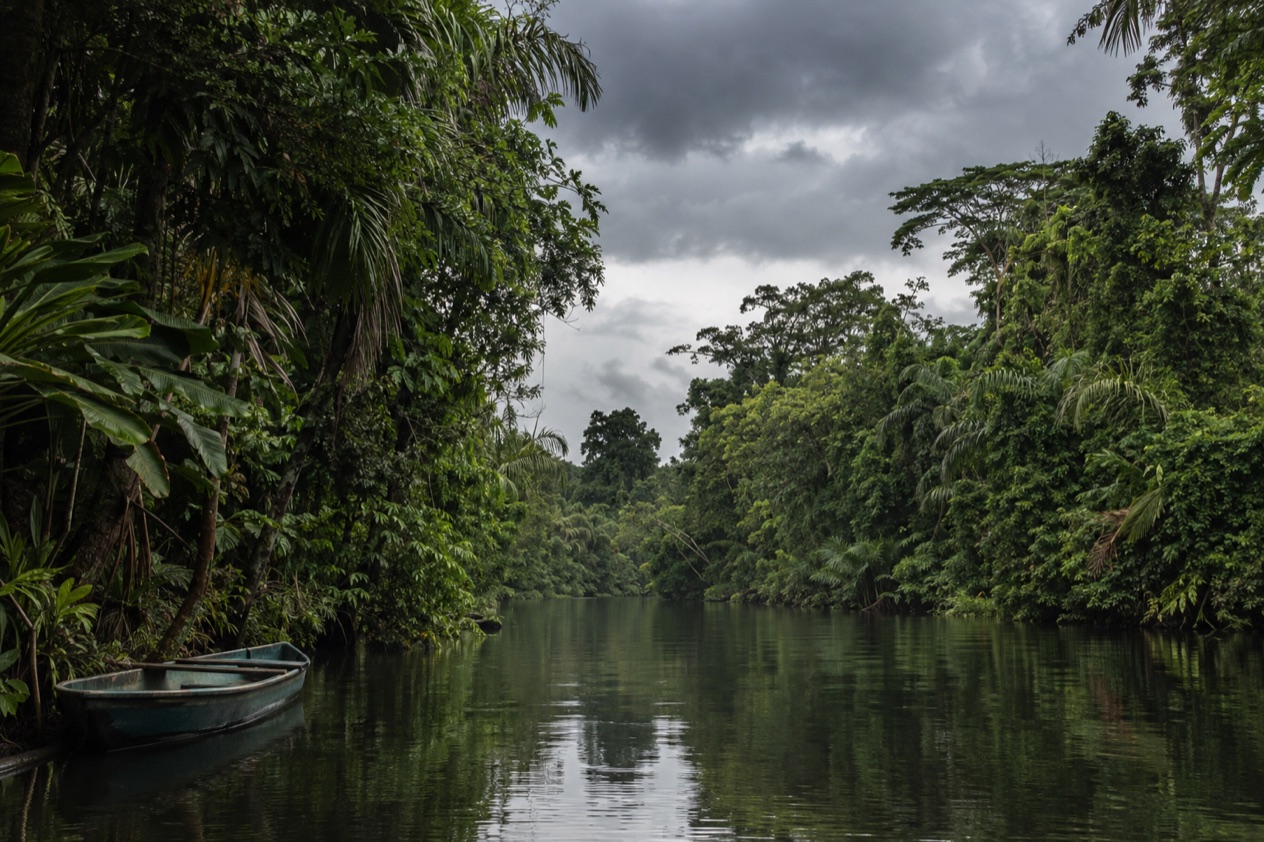
In November, the first sound in Tortuguero is often rain drumming on a tin roof, then the putter of a small boat easing out into a canal where howler monkeys are already calling from the treetops. The village is quiet, the jungle is saturated green, and the Caribbean pounds the long dark beach just beyond the last houses. This is a month for travelers who like their rainforest wet, warm and unhurried.
What is the weather like in Tortuguero in November?
November in Tortuguero is hot, humid and very wet, with rain on most days, though it rarely lasts from dawn to dusk.
| Month | Average high (°F) | Average low (°F) | Rain days | Sea (°F) |
|---|---|---|---|---|
| October | 82.7 | 73.7 | 26.8 | 86.5 |
| November | 80.8 | 73.0 | 24.4 | 84.4 |
| December | 80.1 | 71.9 | 20.8 | 82.6 |
Mornings are often the best window. The air is already warm, the canals are glassy, and the light filters softly through the canopy, which is exactly when birds and monkeys are most active. Plan your boat outings early and you will often get at least a few hours between the showers.
The rain here is the Caribbean kind. It can arrive as a brief shower that passes in minutes, or settle in as a steady downpour that lasts for hours, and some days bring heavy rain of an inch or more. Because Tortuguero sits on the Caribbean side, it does not follow the pattern of the Pacific coast, where the rains come mostly in the afternoon. Here the sky can open at any hour.
Evenings stay warm enough to sit outside in short sleeves, with the sound of frogs and insects filling the dark. Daylight lasts nearly twelve hours around mid-month, so dinner is usually after dark and an early night is the local habit. Bring a real rain jacket or poncho, since the damp never fully leaves clothes, and expect everything to dry slowly.
Can you swim in Tortuguero in November?
That warm water invites long swims, but this beach exists for watching rather than for wading in.
In November, the Caribbean waters off Tortuguero feel as warm as a bath, which means temperature is never a concern. The problem is the shoreline itself. A long, steep shoreline lies exposed to the sea and takes a beating from heavy surf, while rip currents in this area and across Costa Rica present a grave danger, claiming the lives of several U.S. tourists annually. Most beaches in Costa Rica do not have lifeguards or warnings about unsafe conditions.
Many visitors spend their time on the beach walking, watching the waves and looking for driftwood rather than swimming. If you want to cool off, many lodges have pools, which suit children and nervous swimmers far better than the open surf.
If you do step into the sea, stay at the water’s edge, never go out alone, and follow any flags or local advice you see. Bring a rash guard or light cover-up for sun and sand, since the sea and the sky are both strong in this part of the coast.
What to do in Tortuguero in November
November has no big festival in Tortuguero, but All Souls’ Day on November 2 is a national holiday. What defines the month is the wet forest itself, while green turtle nesting is past its peak and hatchlings may still emerge. Rain keeps the canals high, the foliage thick, and the amphibians loud, and the village moves at a slow, damp pace.
Most days revolve around the water. You travel by boat or on foot, and the rhythm is set by the weather as much as by any schedule. A good day here means getting out when the rain eases and spending the downtime in a hammock, with a book, or over a long lunch.
Canal tours by boat
The canals are the heart of Tortuguero. A small boat, often a quiet paddle or electric one, slides under overhanging branches while a guide points out what you would otherwise miss: a green basilisk lizard on a log, a heron stalking the edge, a caiman half submerged, a sloth curled in a cecropia tree. Monkeys, including howlers and spider monkeys, are regularly heard and sometimes seen.
Go at first light if you can. Animals are more active in the cooler early hours, and the water is calm before any wind or rain picks up. Rain gear is essential, and a poncho that covers your camera or phone helps. Sightings are never guaranteed, but the guides know the usual perches and feeding spots, and patience is usually rewarded.
These tours suit almost everyone, including families and people who prefer to sit rather than walk. They are especially good in wet weather, since the boat canopy gives some shelter and the rain brings out frogs and birds.
The village and the beach
The village is a small strip of colorful wooden houses, simple restaurants and a few craft shops, set between the canal and the sea. The village is compact, and its sandy lanes are friendly and low-key. In November, with fewer visitors, it feels especially relaxed.
The beach is wide and wild, lined with driftwood and backed by palms. It is lovely for a long walk, particularly after rain, when the light turns silver and the sand is firm. Remember that this is not a swimming beach, and be careful near the water’s edge.
Local sodas serve rice and beans with fish or chicken, and Caribbean touches such as coconut-based sauces and plantains appear on many plates. A hot dish after a wet morning is exactly the right thing.
Rainforest walks and wet-day options
On foot, you can explore forest trails with a guide, where the wet ground brings out mushrooms, leafcutter ants and tiny poison dart frogs. Rubber boots are the usual footwear, and many lodges lend them. Bring both insect repellent and sunscreen on these paths.
When the rain truly settles in, slow down. Many visitors read, nap, or watch birds from a lodge porch, and the sound of rain on leaves is half the experience. Short breaks in the weather are the moment to step out for a quick walk or a boat ride.
A two-day itinerary for Tortuguero in November
Arriving at this destination on Day 1 requires a boat or a small plane, since it has no road access. Drop your bags, take a slow walk through the village, and have lunch at a simple local spot. In the mid-afternoon, once you have settled in, walk the beach to see the surf and the driftwood before the light fades, since daylight is under twelve hours and evenings come early.
As dusk falls, listen for frogs and insects from your lodge, then have dinner there or in the village. Turn in early so you are ready for the morning. If it rains, a long dinner and a quiet evening on the porch are the plan.
Day 2 starts early with a canal tour at first light, when the wildlife is most active and the water is calmest. Keep your rain gear within reach, since showers can arrive at any moment, and expect to spend a few hours on the water.
After the boat, return for a late breakfast or brunch, then take a guided forest walk if the weather allows. If the rain has set in, use the afternoon for a hammock, a book, or time at a lodge pool. Have a last meal at a different local restaurant from the day before, then head out by boat or plane as your schedule requires.
Is Tortuguero busy in November?
No, November is generally a quiet month in Tortuguero, with fewer visitors and a slower pace than in the dry-season months.
The heavy rain keeps many travelers away, and the lodges and tour boats are rarely crowded. That tends to mean easier choices of rooms, calmer canals and a friendlier feel in the village. Restaurants are relaxed, and you can usually find a table without much fuss.
All Souls’ Day on November 2 is a national holiday, so some Costa Rican families travel around it, and it may be a little busier near that date. Since you can get to the village only by boat or small plane, the first thing to sort out is how you will travel, especially if your trip falls around the holiday.
Make it a habit to reserve your lodge and transfer well ahead for any holiday week, and a bit closer to your dates during quiet stretches. Boat and plane seats are limited by nature, so do not leave them to the last minute even in a calm month. Tours are usually arranged through your lodge, which keeps planning simple.
What to pack for Tortuguero in November
Pack for heat, humidity and steady rain, and expect everything to stay damp.
- Bring a lightweight poncho or rain jacket since showers can arrive at any hour.
- Quick-dry clothes, because cotton stays wet for a long time.
- Waterproof bags or covers for phones, cameras and documents.
- Insect repellent for the forest trails and the evenings.
- Sandals or water shoes for the lodge and the village, plus rubber boots if your lodge does not lend them.
- Bring binoculars to spot monkeys and birds up in the high canopy.
Good to know before you go
The U.S. State Department rates Costa Rica Level 2, ‘Exercise increased caution,’ due to crime; it says petty crime is common throughout Costa Rica and that violent crime also affects tourists, including armed robbery, homicide and sexual assault.
November falls at the very end of the Atlantic hurricane season, which runs from June 1 to November 30, and the Caribbean coast is part of that picture. Heavy rain can slow boats and flights, so keep your schedule flexible, especially on the day you arrive or leave. Because there are no roads into Tortuguero, your transfer is the first thing to confirm, and the second is your lodge.
Carry small bills and a bit of patience. Services in a small jungle village run on their own rhythm, and wet weather can change plans without much notice. Flexibility is the best tool you can pack.
Tortuguero in November vs October and December
Shifting to a month sooner means slightly higher temperatures, a balmier ocean and less precipitation, plus rain almost daily. October is also closer to the peak of the Atlantic hurricane season, so the jungle feels at its wettest and the pace is slowest.
Moving a month later, the rain begins to ease, the air is a touch cooler, and there are somewhat more dry spells. December is also the start of holiday travel, so the village and lodges tend to feel livelier, and planning ahead matters more.
If you want the quietest, greenest version of the rainforest and do not mind getting wet, stay with November. If you prefer a few more dry hours and do not mind more company, December is the better bet. October suits people who want the deepest wet-season atmosphere and the fewest crowds.
Is November a good time to visit Tortuguero?
Yes, November is a good time to visit for travelers who love rainforest and do not mind rain, and a poor fit for anyone hoping for dry, sunny days.
It suits wildlife lovers, photographers who enjoy moody light, and anyone who wants a quiet village and unhurried canals. Families with patient children can enjoy it too, particularly with a lodge that has a pool. For folks craving sand, a swim, or dependable sun, this place fits them less well.
On arrival, settle in, confirm your boat tour for the next morning, and take a slow walk to get your bearings. After that, let the weather set the pace. What makes November special here is the sound of it: rain on leaves, frogs after dark, and howler monkeys calling across a canal that seems to belong only to you.
Sources
- Open-Meteo / ECMWF ERA5, normals 1991-2020 computed for the grid cell at 10.543N 83.502W, checked October 8, 2026
- Open-Meteo Marine API, average 2015-2024, checked October 8, 2026
- sunrise-sunset.org, sunrise and sunset calculated for the 15th of the month, checked October 8, 2026
- U.S. Department of State, Costa Rica Travel Information, Safety and security (https://travel.state.gov/content/travel/en/international-travel/International-Travel-Country-Information-Pages/CostaRica.html), checked October 8, 2026
- NOAA National Hurricane Center, Climatology (https://www.nhc.noaa.gov/climo/), checked October 8, 2026
- U.S. Department of State, Costa Rica Travel Advisory, issued April 1, 2026 (https://travel.state.gov/content/travel/en/traveladvisories/traveladvisories/costa-rica-travel-advisory.html), read via the State Department open data API on October 8, 2026
To plan your stay
- Things to Do in Tortuguero: Canal Boats, Turtle Nesting, Rainforest Walks and Caribbean Food
- Where to Stay in Tortuguero: Village, Beachfront and Canal Lodges
- Tortuguero National Park: Turtle Nesting, Canal Boat Tours, Hours and How to Get There
- Best Time to Visit Tortuguero: Turtle Season, Weather by Month and Canal Tours