
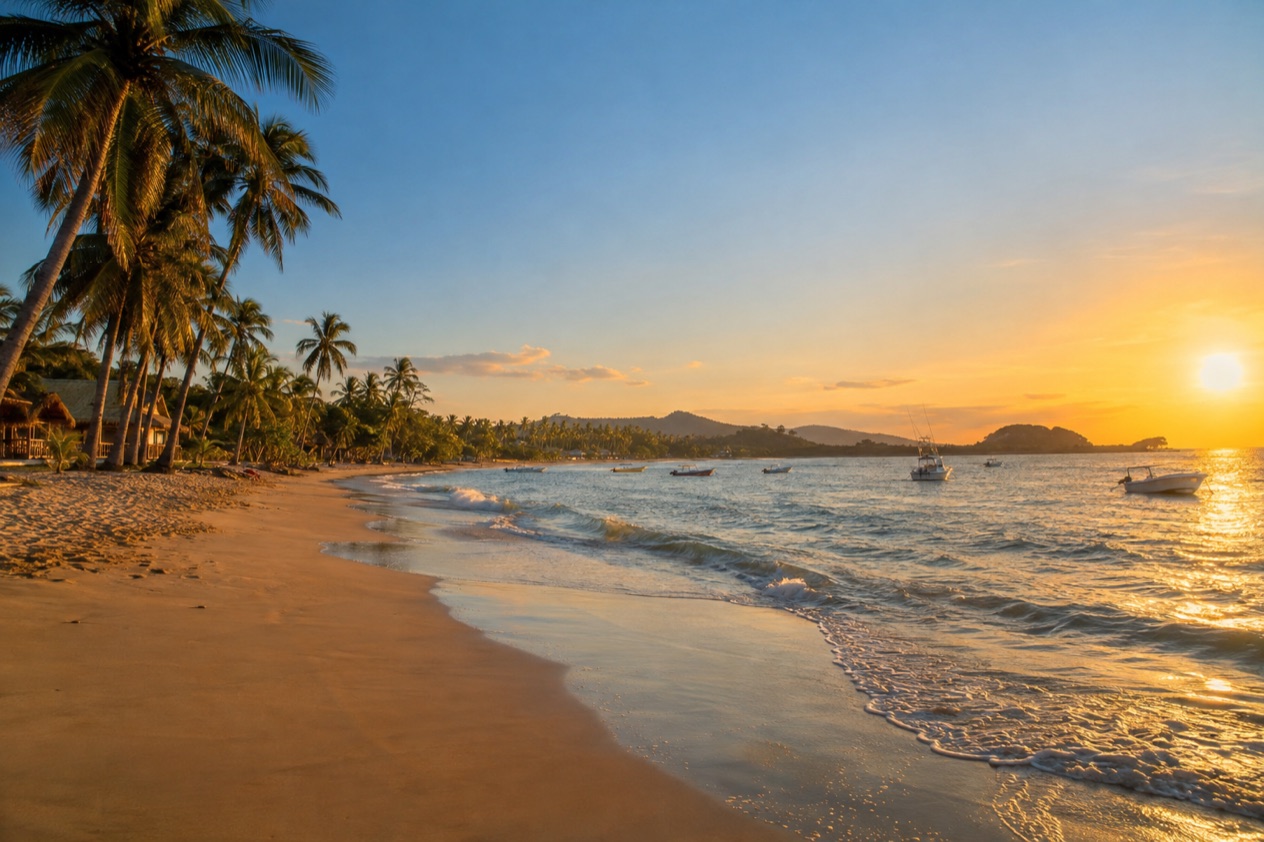
In January, Tamarindo wakes to surfboards being waxed on the sand and the smell of coffee drifting out of cafés along the main street. By late afternoon the beach fills with families, joggers and dogs chasing the tide line, and everyone stops when the sun drops into the Pacific. It is the heart of the dry season on the Guanacaste coast, a month of hot sun, warm water and a town in full holiday mood.
What is the weather like in Tamarindo in January?
January in Tamarindo is hot, sunny and almost completely dry, with a steady breeze in the afternoons that takes the edge off the heat.
| Month | Average high (°F) | Average low (°F) | Rain days | Sea (°F) |
|---|---|---|---|---|
| December | 86.1 | 75.3 | 1.4 | 83.2 |
| January | 88.5 | 75.2 | 0.4 | 83.0 |
| February | 90.4 | 75.5 | 0.2 | 83.0 |
Mornings start warm and bright, and are the kindest time for walking the beach or heading out on a hike. By midday the sun is strong, so shade, a hat and a long lunch become part of the rhythm. Afternoons are hot but usually drier and breezier than you might expect, and the light turns golden well before sunset.
Rain is a rarity this month. The green of the wet season has faded to straw and dusty gold on the hillsides behind town, and a shower, if one comes at all, passes quickly. Evenings stay warm enough for shorts and a light shirt, and dinner on a restaurant terrace needs no jacket.
Days are a little under twelve hours long, so the sun rises early and sets in the early evening. Plan your active outings for the morning and keep the middle of the day for the pool, a smoothie or a siesta.
Can you swim in Tamarindo in January?
Yes, the ocean is warm enough for a long, comfortable swim, with water in the low 80s that needs no wetsuit and no time to get used to.
The beach in town is a wide sweep of sand with a lively surf break, and waves are often enough for beginners to practice but can also push swimmers around. Many visitors wade, float and play near the shore rather than swim far out. Because conditions change and most beaches lack lifeguards or warnings, do not assume that a calmer-looking stretch or a tidal pool is safe.
In Costa Rica, rip currents pose a serious threat and are responsible for multiple drownings of American visitors annually, while lifeguards and alerts about hazardous conditions are absent at most beaches.
Bring a rash guard for sun protection and sunscreen for the hours in the water. Larger swells turn up at shores a quick drive to the north and south, a better fit for skilled surfers than for casual swimmers.
What to do in Tamarindo in January
January begins with New Year’s Day on January 1, a national holiday, when the town slows down in the morning and the beach fills by afternoon. Costa Rican schools are on their long summer break from December into early February, so local families share the sand with visitors from abroad, and the mood is festive, relaxed and a little noisy in the best way.
In mid-January, the Fiestas Civicas of Santa Cruz fill that Guanacaste town with bull-riding, parades and street food. It is the month’s big cultural event and a chance to see a more rural, cowboy side of the province. Expect crowds, music and plenty of fried snacks, grilled meat and cold drinks from stalls.
Surf lessons and the beach break
Tamarindo’s beach break suits beginners, and surf schools rent boards and give lessons right on the sand. January’s dry weather and warm water make it an easy month to learn, and early morning sessions are cooler and often tidier than the busy afternoon.
For those who already surf, larger waves await at breaks just a brief drive north and south of town. Ask the shop where you rent your board which spot suits your level that day, because conditions shift with the tide and swell. Even strong surfers should respect the currents, and beginners are best off staying with an instructor.
Bring a rash guard, and plan a cold drink and shade afterward. Non-surfers will enjoy sitting on the sand with a coconut and watching the lineup, which is half the entertainment of the town.
Sunsets and the main street
Sunset is the daily gathering. People drift to the beach with a drink, a few start a drum circle or a game of beach soccer, and the sky turns orange and pink over the water. Sunset is a popular time at bars and restaurants with ocean views.
After dark, the main street comes alive with restaurants, shops and nightlife. Fresh fruit smoothies, cold beer and tropical cocktails suit the warm nights.
Shops sell sandals, sundresses, hats and local crafts, and strolling is easy and relaxed. Keep valuables out of sight, since petty crime is common throughout Costa Rica.
Day outings from town
Dry January weather suits mangrove boat trips on the Tamarindo estuary, horseback rides through the dry forest and snorkeling stops at nearby coves. Many visitors also hire a driver or join a tour for a day in Santa Cruz during the fiestas. In Guanacaste and the northern region, wildfires are a frequent sight from January through the end of May, which means smoke or burned hillsides can show up on some of your drives.
Mornings are best for hiking and horseback riding, when the air is cooler. Afternoons suit a pool, a yoga class or an ocean-view lunch. Look for the howler monkeys in the trees near the edges of town, which you may hear before you see them, especially at dawn.
A two-day itinerary for Tamarindo in January
Day 1 begins early, with coffee and gallo pinto at a café on the main street before the sun gets strong. Spend the morning on a surf lesson at the beach break, when the air is cooler and the water inviting. When noon rolls in, head for the shade and a leisurely lunch of ceviche or a casado, then spend the hottest hours resting beside a pool.
In the late afternoon, wander the shops along the main street and pick up sunscreen, a hat or a sundress. As the day cools, walk to the beach to watch the sunset with a cold drink, then settle into a restaurant for grilled fish and a slow dinner.
Day 2 is for the coast beyond town. Rise early and drive to one of the beaches a short distance north or south, where bigger waves draw surfers and quieter stretches reward a long walk. Pack water, a hat and a picnic, and stay until the sun is high.
Return for a late lunch, then spend the afternoon on a horseback ride or a boat trip if the day allows. If the weather turns, which is unlikely this month, a spa treatment, a cooking class or a long café stop make easy indoor plans. In mid-January, you could trade this day for the Santa Cruz fiestas and an evening of street food.
Is Tamarindo busy in January?
Yes, January is one of the livelier months in Tamarindo, with the dry season, school break and holiday atmosphere all bringing crowds.
Costa Rican schools are on their long summer break from December into early February, which keeps the beaches busy with local families, and visitors from abroad arrive to escape winter. New Year’s Day on January 1 is a national holiday, and the first days of the month feel especially full. Restaurants fill at sunset, surf schools run steady lessons and the main street is lively into the evening.
The first weeks of January are especially busy in Tamarindo. Later weeks are a little calmer, though the Santa Cruz fiestas in mid-January bring crowds to the area for a few days. Book early for the stays that overlap with those dates, and leave more room for flexibility if you travel at the quieter end of the month.
Early mornings on the beach, hikes before the heat and weekday visits to quieter beaches offer the calmest moments. Even in a busy month, you can find space by moving a little away from the main stretch of sand.
What to pack for Tamarindo in January
Pack for sun, heat and warm water, with a few light layers for breezy evenings.
- Light, breathable clothes, since days are hot and nearly dry.
- A wide-brimmed hat and strong sunscreen for the midday sun.
- A rash guard for surf lessons and long hours in the water.
- Sandals and closed shoes for walks, hikes and horseback rides.
- A refillable water bottle for hot days and outings.
- A light layer for breezy evenings on a terrace.
Good to know before you go
The U.S. State Department rates Costa Rica Level 2, ‘Exercise increased caution,’ due to crime; it says petty crime is common throughout Costa Rica and that violent crime also affects tourists, including armed robbery, homicide and sexual assault.
The dry season includes January, and in Guanacaste and the northern region, wildfires are common from January through the end of May, so along certain roads you may see smoke or hillsides that have burned. The Liberia airport sits roughly an hour away by car, and once you get there, Tamarindo is a breeze to explore on foot.
You must carry a passport that stays valid for your whole visit, plus either a return ticket or evidence that you are traveling onward to another country. Authorities may allow visitors to stay up to 180 days without a visa, but this is not guaranteed.
Tamarindo in January vs December and February
Moving the trip a month earlier brings you to December, which is slightly cooler and a little more likely to see a passing shower, with the holiday season at full strength. The sea is about the same, and the town is just as festive, with school break in full swing.
A month later, February is hotter and even drier, with the school break ending early in the month and the beach feeling a little less crowded. The sea stays warm, and the sun is stronger, so shade and sunscreen matter more. You will miss the Santa Cruz fiestas, which belong to mid-January.
Choose January if you want the fiestas, the holiday mood and a nearly rain-free stretch. Shift to February if you prefer a bit more space and do not mind the extra heat, and consider December if you want the start of the dry season with a little more greenery.
Is January a good time to visit Tamarindo?
Yes, January is a very good time for travelers who want sun, warm water and a lively beach town, especially surfers, families on school break and anyone escaping winter.
It suits people who enjoy a social, festive atmosphere and do not mind sharing the beach. Travelers who want quiet, cooler air or the lush green of the wet season should choose another month. On arrival, consider a surf lesson or boat trip, then find a spot on the sand for sunset.
What is special about January here is the mix of an almost rainless sky, a warm ocean and the Guanacaste cowboy fiestas in Santa Cruz, all within a short drive of a beach where the day still ends with everyone watching the sun go down.
Sources
- Open-Meteo / ECMWF ERA5, normals 1991-2020 computed for the grid cell at 10.2993N 85.8371W, checked October 8, 2026
- Open-Meteo Marine API, average 2015-2024, checked October 8, 2026
- sunrise-sunset.org, sunrise and sunset calculated for the 15th of the month, checked October 8, 2026
- U.S. Department of State, Costa Rica Travel Information, Safety and security (https://travel.state.gov/content/travel/en/international-travel/International-Travel-Country-Information-Pages/CostaRica.html), checked October 8, 2026
- U.S. Department of State, Costa Rica Travel Advisory, issued April 1, 2026 (https://travel.state.gov/content/travel/en/traveladvisories/traveladvisories/costa-rica-travel-advisory.html), read via the State Department open data API on October 8, 2026
- U.S. Department of State, Costa Rica Travel Information, Entry and exit requirements (https://travel.state.gov/content/travel/en/international-travel/International-Travel-Country-Information-Pages/CostaRica.html), checked October 8, 2026
To plan your stay
- Things to Do in Tamarindo: Surf Lessons, Leatherback Turtles, Beach Days and Sunset Evenings
- Where to Stay in Tamarindo: Town Center, Playa Langosta, Playa Grande and How to Choose
- Tamarindo vs Jaco: Beaches, Surf, Weather and Getting There
- Day Trips from Tamarindo: Playa Grande, Rincon de la Vieja, Liberia and Surf Beaches