
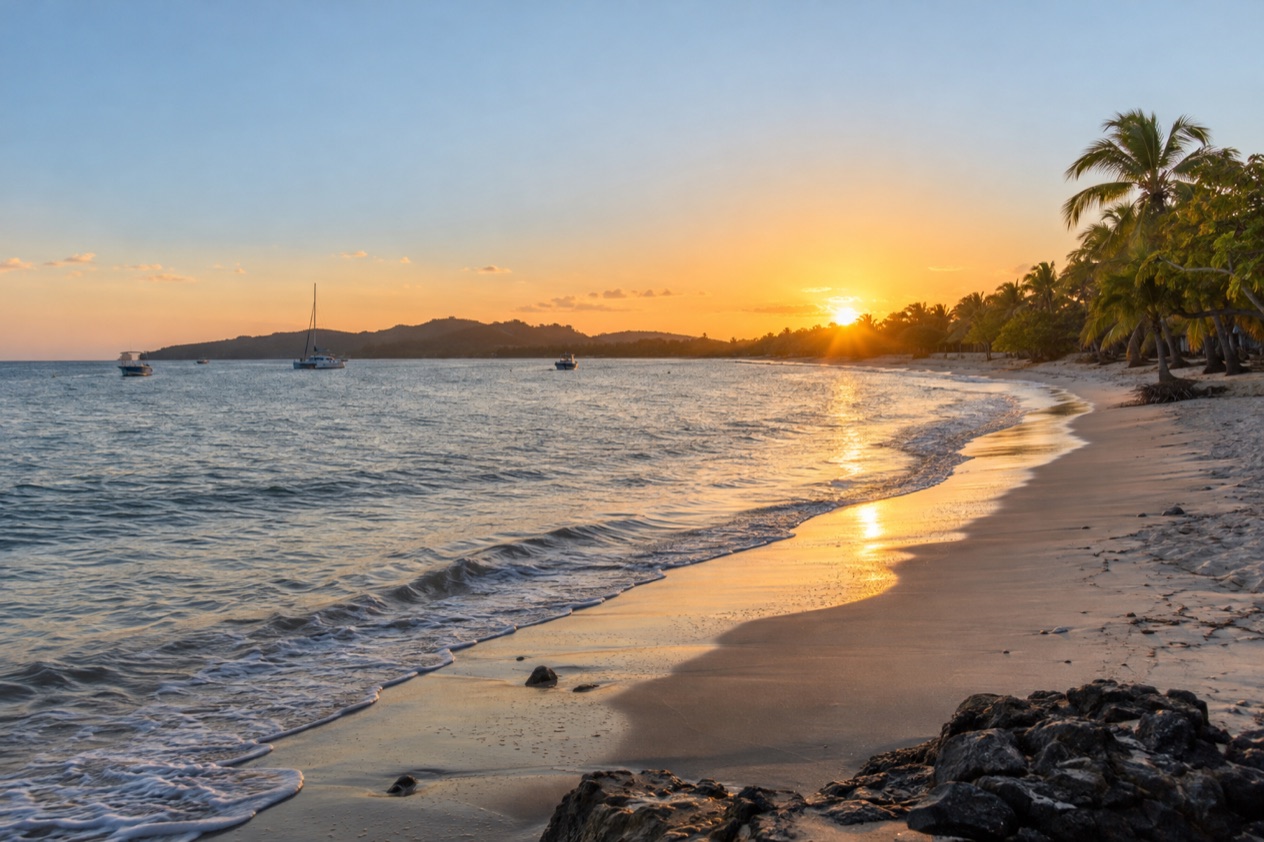
Late in the afternoon in February, surfers walk back up Tamarindo’s beach with boards under their arms while the sky over the water turns orange, and the bars along the main street set out their tables for sunset. The dry season is in full swing, the hills of Guanacaste have turned golden brown, and the days are hot, bright and almost free of rain. This is a month for anyone who wants a Pacific beach town at its easiest, with surf lessons in the morning, cold drinks at dusk and plans that rarely need a backup.
What is the weather like in Tamarindo in February?
February falls in the middle of the dry season along the Guanacaste coast, where Tamarindo enjoys hot, sunny, dry conditions. Days are long and bright, nights stay warm, and a rainy day is the exception rather than something to plan around.
| Month | Average high (°F) | Average low (°F) | Rain days | Sea (°F) |
|---|---|---|---|---|
| January | 88.5 | 75.2 | 0.4 | 83.0 |
| February | 90.4 | 75.5 | 0.2 | 83.0 |
| March | 91.7 | 76.2 | 0.5 | 85.2 |
Mornings are the best hours for anything active. The air is already warm at breakfast, but the sun is still gentle, so walks on the beach, surf lessons and runs along the sand feel pleasant. By midday the heat builds and the light turns white and hard. Most people retreat to a pool, a shaded restaurant terrace or the water itself until the afternoon softens.
Rain is rare enough that it hardly shapes a day. When a cloud does pass, it is a brief shower that dries off the pavement within minutes.
The landscape away from the coast looks parched, with dust on the dirt roads and trees that have dropped their leaves, which is the normal look of Guanacaste at this time of year. Breezes off the ocean help in the evenings, which stay warm enough for sandals and a T-shirt.
Daylight lasts just under twelve hours, so sunset arrives in the early evening and darkness falls fairly quickly afterward. Pack for sun more than for weather: light fabrics, a hat and plenty of sunscreen. A thin layer is handy only for air-conditioned restaurants and breezy boat rides.
Can you swim in Tamarindo in February?
The Pacific right here stays warm enough that you can take a long, comfortable swim, and even for surfing you will not need a wetsuit. The water feels refreshing after a hot beach morning rather than cold.
Conditions change from beach to beach and from day to day. Tamarindo’s main beach is the usual place for lessons and beginners, with waves that often suit learners, while the stretch toward Playa Langosta tends to be quieter and a little more sheltered.
Playa Grande, just across the estuary, is better known for stronger surf and draws more experienced surfers. Waves can grow bigger at times, so look at the sea before you go in and ask a local surf shop how it is behaving that day.
Each year, several U.S. tourists drown on this coast because rip currents are so hazardous. Because most beaches have no lifeguards on duty and lack warning signs, ask the hotel or a surf school what conditions are like that day, follow any flags that are posted, never swim alone, stay within arm’s reach of children, and limit yourself at the water’s edge to wading, floating or playing.
Nervous swimmers will be happier wading and floating near the shore. Bring a rash guard for the sun, water shoes if you plan to walk on rocky stretches, and a hat for the beach.
What to do in Tamarindo in February
February is about the beach, the surf and the long golden evenings. With so little rain, every outdoor plan is on the table: boat trips, beach hopping, walks at dawn and dinners with a view of the sunset.
The one big festival the month is known for in Costa Rica, the Envision Festival, takes place at Uvita, far down the Pacific coast and not a side trip from Tamarindo. It is a music, art and yoga gathering, usually held in late February, and its dates change every year. Anyone planning around it should treat it as a separate destination.
The town itself keeps a steady surf-town rhythm. In February, the day here begins with bold coffee along with açaí bowls, smoothies, and gallo pinto, the traditional Costa Rican breakfast of rice and beans cooked together. For lunch, people often go for fresh ceviche, fish tacos, or a casado, which is a plate of rice, beans, salad, plantains, and either meat or fish. At night, the main street fills with restaurants, shops and bars, and the mood is relaxed and sandy-footed.
Surfing and beach hopping
Surf lessons are the signature activity, and the dry-season mornings are a good moment to try. Instructors work with beginners in the gentler waves at Tamarindo’s main beach, and boards are easy to rent for those who already know what they are doing. Early starts mean cooler air and often cleaner water, while afternoons can be busier and windier.
Just past the main beach, Playa Langosta sits a few minutes from town and is ideal for a quieter stroll, a swim or a sunset. Farther along the coast, beaches such as Avellanas and Negra are known among surfers, and a day spent driving between them gives you a feel for the empty, wilder side of Guanacaste. Roads can be rough and dusty in the dry season, so give yourself time and keep to daylight for driving.
Bring water, shade and snacks to any beach outside town, because there may be no shop nearby. Remember that most beaches have no lifeguards, so treat the sea with respect and stay out of the water when waves look too big for your level.
Playa Grande and the leatherback turtles
Playa Grande is a nesting beach for leatherback turtles, the largest sea turtles in the world, and it lies close to Tamarindo across the estuary. In daytime it is a long, wide beach with strong surf, big skies and a feeling of space that the main town beach lacks. You can walk its length in the morning, watch surfers and look for shorebirds along the waterline.
Spotting a turtle is never guaranteed, only a possibility, and because the beach is protected, you should go at night only on an authorized tour with a guide. Ask a tour operator or your hotel about current rules rather than wandering the sand after dark. Lights, flash photography and noise disturb nesting animals, so keep them off the beach at night.
The estuary, wildlife and sunset on the water
Between Tamarindo and Playa Grande, the estuary is lined with mangroves and is a calm place for a paddle or a guided boat ride. Birds are the easiest sightings, from herons and egrets to kingfishers, and you may spot monkeys or crocodiles with a guide who knows where to look. Early morning and late afternoon are the best times, when the heat eases and animals are more active.
Sunset sails and catamaran trips are popular in the dry season because the sea is warm and skies are generally clear. They usually combine time on the water with swimming or snorkeling stops and a view of the sun dropping into the Pacific.
They suit couples, families with older children and anyone who wants to see the coast from the water. If you prefer to stay on land, find a spot on the sand an hour before dusk and watch the beach slowly empty and the sky change color.
For a lazy day, spend the morning in a yoga class or at the pool, take a long lunch in town and browse the surf shops, boutiques and craft stalls in the afternoon. Evenings are for live music, tacos from a street-side kitchen or a table with the sound of waves nearby. February’s dryness means outdoor seating is almost always an option.
A two-day itinerary for Tamarindo in February
Day 1 starts early, with breakfast and a coffee before the heat arrives, then a surf lesson at Tamarindo’s main beach while the water is at its friendliest. Rinse off and take a long lunch in town, perhaps ceviche or a fish taco at a casual place near the sand. The hottest hours are for a pool, a nap or shopping in the air-conditioned boutiques.
In the late afternoon, walk the beach toward Playa Langosta as the light turns gold, then settle in for sunset with a drink. Dinner can be a seafood restaurant on or near the main street, where the evening air stays warm enough to eat outside. If the weather does turn, which is unlikely, spend the afternoon in a café, a spa or a cooking or yoga class.
Day 2 is for the other side of the estuary. Head to Playa Grande in the morning for a long beach walk and a look at the surf, or join a guided estuary outing for birds and mangroves. The earlier you go, the cooler and more wildlife-rich it will be.
After a late lunch and some time in the shade, spend the afternoon on a sunset boat trip, or drive to a quieter beach such as Avellanas for a different feel from Tamarindo. Finish with a relaxed dinner in town and, if you have energy left, a drink and live music along the main street. Since the day length is just under twelve hours, the plan fits neatly between sunrise and an early dusk.
Is Tamarindo busy in February?
Yes, February is a lively month in Tamarindo, since the dry season brings sun-seeking visitors and surfers from North America and beyond. Beaches, restaurants and the main street feel animated, especially around sunset, though it is a beach town and rarely feels overwhelming.
Rooms, rental cars and tables at popular restaurants are easier to secure when you plan ahead, and the busiest stretches are around school breaks and holiday weeks in the United States. Book early if your dates fall on a long weekend, and a bit later if you are traveling in a quieter midweek stretch. Sunset dinners and boat trips are the first things to fill, so reserve those once your dates are set.
Surf lessons and guided outings are popular in the morning, while afternoons are slower on the beach as people retreat from the heat. If you want a calmer experience, choose Playa Langosta or a more distant beach, and head out early. Crowds thin once the sun drops, but the main street stays social in the evening.
The Liberia airport is about an hour’s drive away, so arrival and departure days need a little buffer, especially on busy weekends. No park or trail reservation is tied specifically to Tamarindo in February, but guided outings, such as turtle-related ones and estuary tours, are best arranged ahead of time through a reputable operator.
What to pack for Tamarindo in February
Bring clothes for heat and sun, with a few items that make beach days and evenings easier.
- Sunscreen and a wide-brimmed hat, because the sun is strong and shade is scarce on the sand.
- A rash guard or light long-sleeved swim shirt for surf lessons and long days in the water.
- Sandals and a pair of closed shoes for dusty dirt roads and estuary outings.
- A refillable water bottle, since hot, dry days make it easy to get dehydrated.
- A light layer for breezy boat rides and air-conditioned restaurants.
- Insect repellent for evenings near the estuary and mangroves.
Good to know before you go
The U.S. State Department rates Costa Rica Level 2, ‘Exercise increased caution,’ due to crime; it says petty crime is common throughout Costa Rica and that violent crime also affects tourists, including armed robbery, homicide and sexual assault.
February sits in the dry season, so roads are dusty rather than muddy and outdoor plans are rarely rained out. Having a rental car helps for beaches beyond town, but the dirt roads can be slow, so allow extra time.
Book sunset trips, guided outings and rooms near the beach first, and keep valuables out of sight in parked cars and on the sand. Petty crime is the main concern in beach towns, so carry only what you need to the water.
Tamarindo in February vs January and March
Going a month earlier brings nearly identical sea warmth and the same dry, sunny feel, with slightly cooler afternoons. January tends to carry the energy of the holiday season, so the town can feel more crowded in its first weeks, and February is a touch calmer once those holidays pass.
Moving to March means a hotter, more intense sun and a warmer sea, which swimmers and snorkelers may enjoy. The heat can feel heavier in the middle of the day, and the landscape becomes even drier. Spring break travel adds to the energy in town, so it can feel busier on the beach and in restaurants.
February suits people who want the dry-season weather without the holiday rush or the peak heat. If a festive mood is what you are after, pick January, while March rewards those who enjoy warm water, plenty of beach time, and do not object to more heat and more people.
Is February a good time to visit Tamarindo?
Yes, February is an excellent time to visit Tamarindo for anyone who wants sun, warm water and an easy beach routine. Surfers, couples, families with older children and travelers who like a social town with restaurants and nightlife will all find plenty to do.
It is less ideal for travelers who dislike heat, who want lush green scenery or who prefer quiet, empty beaches. The afternoons are strong, the landscape is dry and the town is lively. If that does not appeal, a different month, or a more remote stretch of the coast, may suit you better.
On arrival, settle in, get a feel for the beach and book the activities that fill up first, like a sunset sail, a guided estuary outing or surf lessons. Then let the days fall into a rhythm of early mornings in the water and slow evenings on the sand, with the sky going orange over the Pacific as the last surfers come in.
Sources
- Open-Meteo / ECMWF ERA5, normals 1991-2020 computed for the grid cell at 10.2993N 85.8371W, checked October 8, 2026
- Open-Meteo Marine API, average 2015-2024, checked October 8, 2026
- sunrise-sunset.org, sunrise and sunset calculated for the 15th of the month, checked October 8, 2026
- U.S. Department of State, Costa Rica Travel Information, Safety and security (https://travel.state.gov/content/travel/en/international-travel/International-Travel-Country-Information-Pages/CostaRica.html), checked October 8, 2026
- U.S. Department of State, Costa Rica Travel Advisory, issued April 1, 2026 (https://travel.state.gov/content/travel/en/traveladvisories/traveladvisories/costa-rica-travel-advisory.html), read via the State Department open data API on October 8, 2026
To plan your stay
- Things to Do in Tamarindo: Surf Lessons, Leatherback Turtles, Beach Days and Sunset Evenings
- Where to Stay in Tamarindo: Town Center, Playa Langosta, Playa Grande and How to Choose
- Tamarindo vs Jaco: Beaches, Surf, Weather and Getting There
- Day Trips from Tamarindo: Playa Grande, Rincon de la Vieja, Liberia and Surf Beaches