
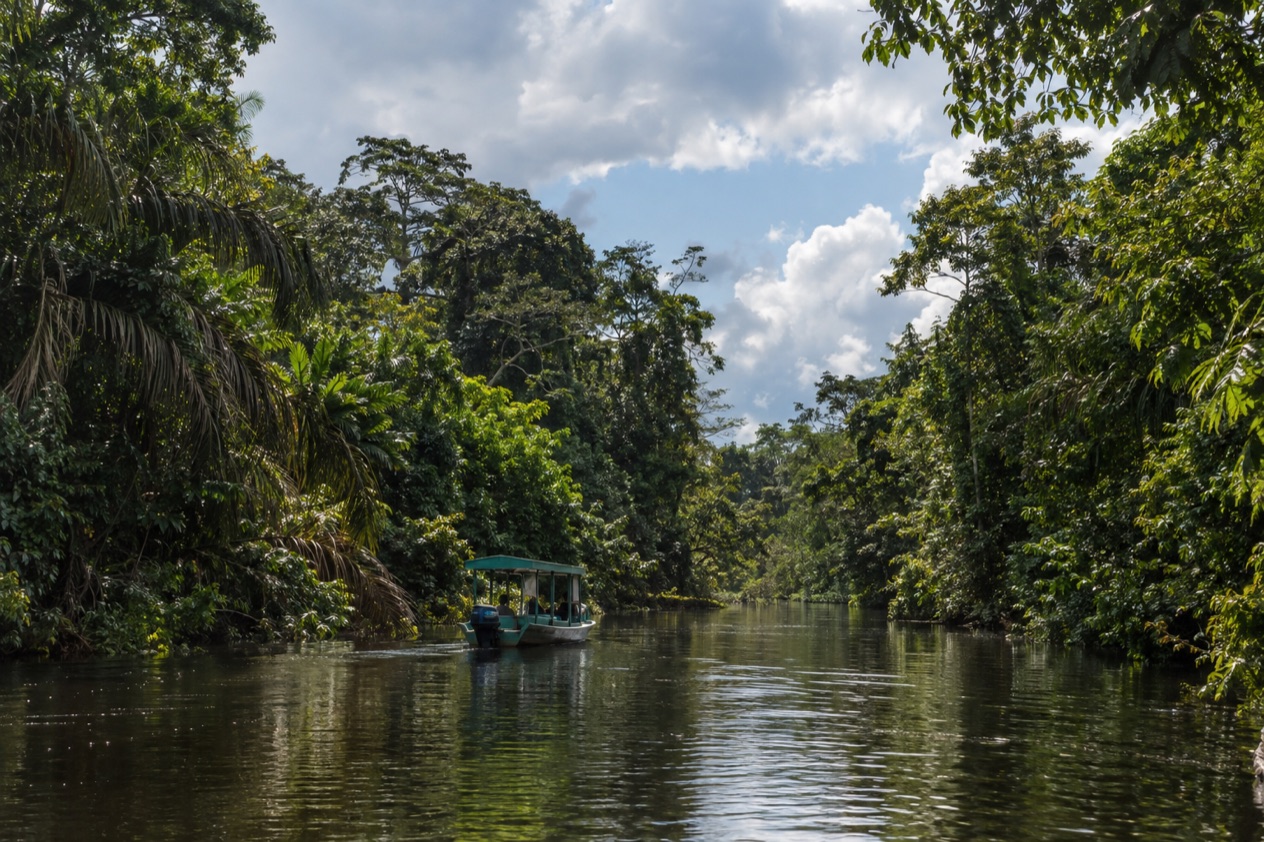
In June the canals of Tortuguero turn the color of strong tea after a downpour, and the first sound of the morning is a howler monkey somewhere above the boat. Herons stand motionless on the banks, the village sits low and green between the river and the sea, and the lodge docks are wet and shining. This is the Caribbean rainforest in its full green season, a month for travelers who want animals, water and jungle noise more than a dry beach tan.
What is the weather like in Tortuguero in June?
Warm, humid and wet: June in Tortuguero brings summer heat and rain on most days, so plan on getting rained on at least once.
| Month | Average high (°F) | Average low (°F) | Rain days | Sea (°F) |
|---|---|---|---|---|
| May | 83.4 | 74.4 | 24.2 | 86.2 |
| June | 83.1 | 74.4 | 26.8 | 86.5 |
| July | 82.1 | 73.8 | 28.6 | 85.0 |
Unlike the Pacific side, where June brings clear mornings and showers that arrive later in the day, the Caribbean coast gets rain all year and does not keep to a schedule. A bright morning is common and welcome, but a downpour can arrive at dawn, at noon or in the middle of the night. Rain here often comes hard and then thins to a drizzle that hangs on for hours, and a few days a month it is heavy enough to turn the paths in the village into puddles.
The air stays warm even at night, so you never need more than a light layer, and the real challenge is humidity. Clothes dry slowly, so quick-drying fabrics are far happier here than cotton. On the water, a poncho or a rain jacket matters more than sunscreen, though the sun can still burn through thin clouds on the open river, and the light is soft and silvery under a gray sky, which actually helps when you are looking for animals in the trees.
Evenings are mild and noisy with frogs and insects. The month also opens the Atlantic hurricane season, which runs from June 1 to November 30, though its peak comes much later in the year.
Can you swim in Tortuguero in June?
The water is bathtub-warm, but the beach itself is a place to walk rather than to swim. The Caribbean here arrives in long, heavy waves on a steep, dark-sand shore, and the seabed drops quickly.
In Costa Rica, rip currents pose a genuine threat and claim the lives of several U.S. tourists every year, and most beaches lack lifeguards or warnings about hazardous conditions. That is why many visitors treat the beach as a place for a long stroll at the water’s edge, shells and driftwood in hand, and nothing more. Should you wade, float, or play where the water meets the sand, keep kids close enough to touch and check with your lodge or a surf school on that day’s conditions.
For a proper swim, many lodges have a pool, which is the practical answer for children and nervous swimmers after a muddy morning on the canals. Snorkeling is not what Tortuguero is about, since river water carries a lot of sediment in the rainy months. Surfers will not find a known break here either. Bring a quick-dry towel and sandals you do not mind getting wet.
What to do in Tortuguero in June
Tortuguero has no roads in, so every activity starts on the water or on foot. Travelers head out on the canals in boats to spot caimans, monkeys, herons and kingfishers, and the majority lodge at places with guided tours.
June suits this kind of trip well, because the forest is at its greenest and the light under cloud is good for watching animals. Everything is slower and quieter than on the Pacific side, and the rain is part of the experience.
Canal tours by boat
A guided boat ride through the narrow side channels is the heart of a stay. The boats are small, often paddled or run on a quiet motor, and the guides spot what you would never find alone: a green basilisk lizard on a branch, a sloth curled in a cecropia tree, a bunch of spider monkeys crashing through the canopy. Herons, kingfishers and jacanas work the banks, and a caiman may lie half-submerged near the roots.
Go early. Birds and mammals are most active in the first hours of the day, and the air is cooler on the water.
Bring your own poncho on rainy mornings, and keep it handy throughout the ride. Keep your camera in a dry bag and bring binoculars if you own them. A tour suits almost everyone, from children who like animals to older travelers who prefer to sit.
The village and the beach walk
The village is small enough to cross in a few minutes, a strip of colorful wooden houses, small sodas serving rice and beans, souvenir stands and a few bars with music drifting onto the street. Between rain spells, walk its one main path to the sea, where the beach stretches away in both directions and the surf thunders. It is a place to see driftwood, hermit crabs and frigatebirds rather than to lie in the sun.
The village is the best rainy-day stop, since you can duck from a shop into a café and wait out a downpour with a cold drink. Ask about the local turtle conservation work, which is a big part of the village’s identity, and respect any rules posted on the beach. June can catch the end of leatherback nesting and the beginning of green turtle nesting, but sightings are never guaranteed.
Walking in the forest
Rubber boots are the key to a forest walk in June, so bring or arrange a pair before setting out. The trails are muddy, the leaf litter is full of life and the air smells of wet earth. Guides point out poison dart frogs, leafcutter ants marching in lines and the strange buttress roots of giant trees. Birdsong rises after every rain, and a walk at the edge of the rain is often better than one in dry weather.
A night walk, led by a guide with a flashlight, shows another side of the forest: sleeping birds, tree frogs and insects that never appear by day. Stay with the guide, keep your voice low and wear closed shoes and long pants. This outing suits people who are comfortable with insects and humidity, and less so those who dislike mud.
At the table, expect Caribbean cooking, with coconut in the rice and beans, plantains, fresh fish and fruit juices, usually served at the lodge in generous set meals. Try a cup of local coffee or cacao after a wet morning. There are no big festivals to plan around here in June, and the mood is of a quiet, rainy, green village that gets on with its work.
A two-day itinerary for Tortuguero in June
Day 1 starts with the boat, with rain gear ready whatever the hour. After you arrive and settle into your lodge, take a late-morning canal tour with a guide, ponchos at hand. Return for lunch at the lodge, where the cooking is generous and Caribbean, and rest through the heaviest hours of the day, when rain is most likely and the humidity peaks.
With about twelve and three-quarter hours of daylight in mid-June, there is time for a slow late-afternoon walk through the village. Stop at a small soda for a snack, browse the craft stalls, then have dinner at the lodge. If the rain closes in, stay on the porch with a drink and listen to the frogs.
Day 2 begins at first light, with a second boat outing or a guided forest walk in boots, whichever the lodge offers. Birds are at their busiest and the air is cool. Come back for a big breakfast, then spend the late morning on the beach, walking the shoreline and looking at the surf rather than swimming.
After lunch, use the quiet hours for the lodge pool, a hammock or a visit to a village café, the best rain card of the trip. In the late afternoon, if the sky clears, walk back to the village for a last look at the colored houses and the river. Evening is for an early dinner, a night walk if you are keen, and packing for the boat or the small plane out.
Is Tortuguero busy in June?
Not especially: June is a rainy, quieter month here, and the village feels calmer than in the drier stretches of the year.
Because the only ways in are by boat or small plane, Tortuguero never has crowds in the way a beach town does. Most visitors arrive with a lodge package, so the numbers you see are the numbers of the lodges and the tour boats. In a rainy month, many travelers choose the Pacific coast instead, and that leaves more room on the canals and more calm in the village.
That helps with rooms, since lodges are easier to book than in the busiest months, and you may find a boat to yourself. Still, lodges here are limited in number and many sell packages with transport, meals and tours, so booking early remains a good habit, especially if you want a particular lodge or are traveling during a U.S. summer vacation week.
There are no rental cars to worry about, since no roads lead in, and restaurants are small and mostly connected to lodges or to the village. The reservation that matters is the lodge itself, which arranges boat transfers and tours. Since Tortuguero’s park entry rules may shift, visit the park’s official page ahead of your trip for any details about entry.
What to pack for Tortuguero in June
Pack for rain, humidity and mud, and keep things light.
- Bring a thin rain jacket or poncho, because rain may hit the river at any hour.
- Quick-dry shirts and pants, since cotton stays damp in the humidity.
- Closed shoes or sandals with grip, for muddy paths and wet docks.
- A dry bag or zip bags, to protect phones, cameras and documents.
- Insect repellent, for the forest and the evenings.
- Binoculars, for birds and monkeys in the high canopy.
- A swimsuit and quick-dry towel, for the lodge pool.
Good to know before you go
The U.S. State Department rates Costa Rica Level 2, ‘Exercise increased caution,’ due to crime; it says petty crime is common throughout Costa Rica and that violent crime also affects tourists, including armed robbery, homicide and sexual assault.
Since Tortuguero can only be reached by boat or small plane, plan your lodge and arrival arrangements together. The Atlantic hurricane season, which covers the Caribbean Sea, starts on June 1, so June is its first month, though its peak is still months away.
Carry a bit of cash for the village shops and keep your valuables in a waterproof bag. Rain can delay boats, so leave some slack on the day you travel onward.
Tortuguero in June vs May and July
Moving a month earlier to May brings slightly fewer wet days and a little less rain overall, though it is still a rainy month on this coast. The sea is about the same, the air is just as warm, and the forest is nearly as green. You gain a touch more chance of a dry hour or two, but not a different season.
A month later, in July, the rain increases, with more wet days and a bit more water falling, and the air is a degree or so cooler. The sea cools slightly too. The village remains calm, and the canals stay full, which some people prefer. The hurricane season is further along, though its peak is still ahead.
If you want the best odds of a drier spell, May is the better choice, while June and July are for travelers who accept the rain as part of the forest. Those who care most about a quiet village and lush scenery will be happy in either. If beaches and sunshine are the goal, this coast is not the place in any of the three months.
Is June a good time to visit Tortuguero?
Yes, if you come for wildlife, water and quiet and are happy to travel in the rain. It suits birders, photographers who like soft light, families with children who love animals, and anyone who wants a real jungle atmosphere without the crowds.
It is less suited to travelers who want sunny beach days, swimming in the sea or a flexible schedule, since rain can interrupt boat rides and delay transfers. If that sounds like you, another coast or another month may fit better.
Once you get there, get settled and arrange your first guided canal trip through the lodge, best saved for the following early morning, because that is when the forest comes most alive. Keep your rain gear handy from the first boat ride. What makes June special in Tortuguero is the sound of rain on the leaves, the glassy canals afterward and a village that feels like it belongs to the forest.
Sources
- Open-Meteo / ECMWF ERA5, normals 1991-2020 computed for the grid cell at 10.543N 83.502W, checked October 8, 2026
- Open-Meteo Marine API, average 2015-2024, checked October 8, 2026
- sunrise-sunset.org, sunrise and sunset calculated for the 15th of the month, checked October 8, 2026
- U.S. Department of State, Costa Rica Travel Information, Safety and security (https://travel.state.gov/content/travel/en/international-travel/International-Travel-Country-Information-Pages/CostaRica.html), checked October 8, 2026
- NOAA National Hurricane Center, Climatology (https://www.nhc.noaa.gov/climo/), checked October 8, 2026
- U.S. Department of State, Costa Rica Travel Advisory, issued April 1, 2026 (https://travel.state.gov/content/travel/en/traveladvisories/traveladvisories/costa-rica-travel-advisory.html), read via the State Department open data API on October 8, 2026
To plan your stay
- Things to Do in Tortuguero: Canal Boats, Turtle Nesting, Rainforest Walks and Caribbean Food
- Where to Stay in Tortuguero: Village, Beachfront and Canal Lodges
- Tortuguero National Park: Turtle Nesting, Canal Boat Tours, Hours and How to Get There
- Best Time to Visit Tortuguero: Turtle Season, Weather by Month and Canal Tours