
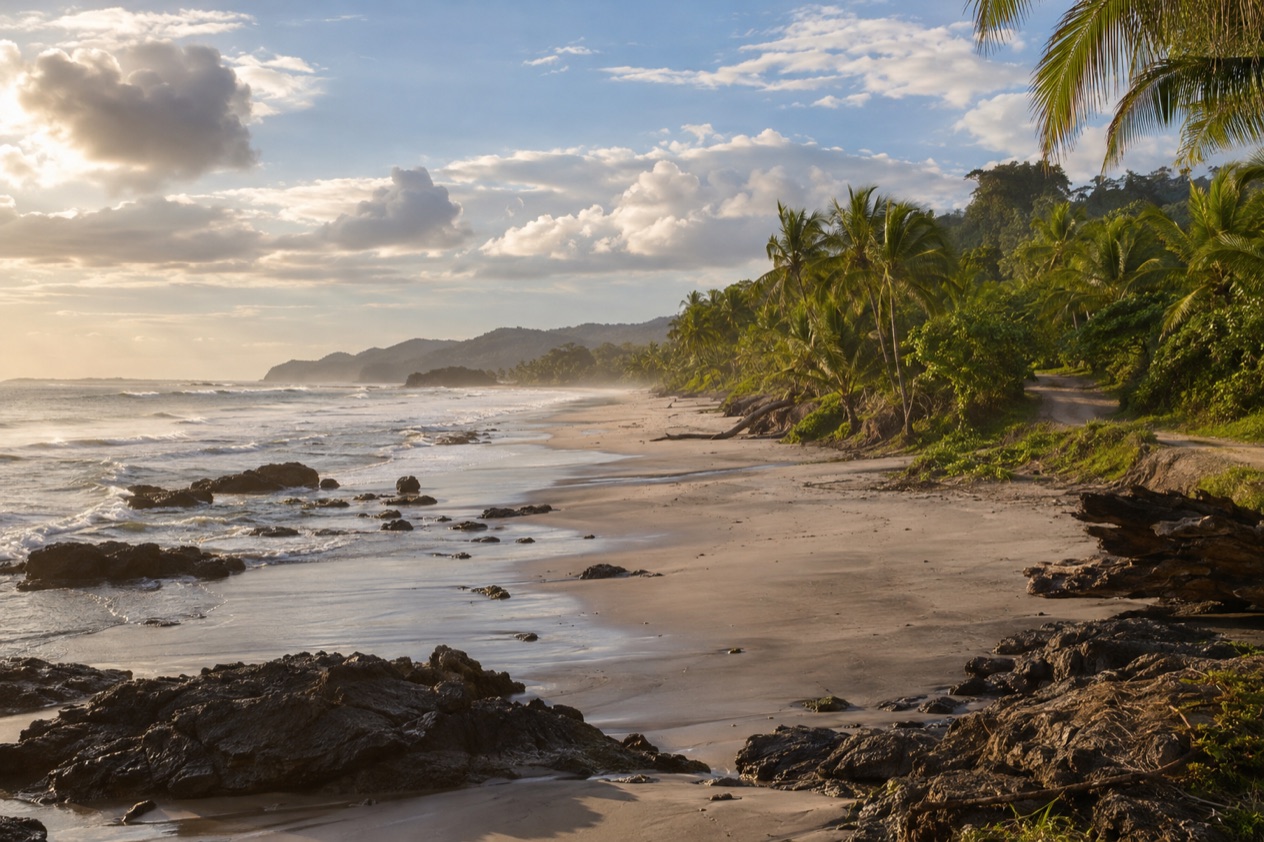
In May, the first afternoon clouds pile up over the Nicoya Peninsula, the air goes heavy and sweet, and the dust on Santa Teresa’s one long dirt road finally settles. Surfers come out of the water as the light turns silver, and the cafes along the road fill with people waiting to see whether the sky will open. This is the start of the green season, a month of lush hillsides, empty-feeling beaches and warm rain, for travelers who like their surf towns a little quieter.
What is the weather like in Santa Teresa in May?
May is hot, humid and wet, the month when the rains arrive and short showers or a wetter spell settle into nearly every day. Mornings are often bright and the clouds build later, so the weather feels very different from April.
| Month | Average high (°F) | Average low (°F) | Rain days | Sea (°F) |
|---|---|---|---|---|
| April | 85.4 | 77.8 | 6.9 | 86.9 |
| May | 83.1 | 76.9 | 21.8 | 87.6 |
| June | 82.3 | 76.4 | 24.4 | 86.0 |
Plan around the clock. The best hours for the beach, a surf lesson or a walk in the forest are usually the early ones, when the sun is strong and the air is still. By midafternoon the sky often darkens, and the rain arrives as a warm downpour that can last an hour or settle in for the evening. Now and then a day turns gray from start to finish.
Nights stay warm, so you sleep with a fan or air conditioning rather than a blanket, and you can eat outdoors in a T-shirt between showers. Clothes dry slowly in the humidity, so lightweight, quick-drying fabrics make life easier. The landscape pays you back for the rain: hills that were brown in April turn deep green, and the light after a storm is soft and golden.
Can you swim in Santa Teresa in May?
The sea is warm in May, but warm water does not make it safe. The water feels like the air, which is why a swim after a sweaty morning is such a pleasure.
Warm does not mean gentle. Santa Teresa and neighboring Mal Pais face the open Pacific, and the waves here are often strong, with surf that can be big in the green season.
Rip currents pose a serious threat, so every year several U.S. tourists drown, and most beaches lack lifeguards or any alert about dangerous conditions. Before entering, remember that rip currents are very dangerous and that most beaches have no lifeguards or warnings about unsafe conditions.
Surfers and bodyboarders are in their element, and beginners can learn on the softer white water near the shore with a school. Nervous swimmers and families with small children may prefer cooling off in a hotel pool. Rinse off afterward, since the salt and humidity cling, and bring sunscreen even on cloudy mornings.
What to do in Santa Teresa in May
May has no big parade or fiesta here. The one date on the calendar is May 1, Labor Day, a national holiday that brings Costa Rican families to the coast for a long weekend. The real event of the month is the change of season, when the green season begins with the first regular afternoon rains and the whole peninsula seems to exhale. Plan your active hours for the morning and keep the afternoons flexible.
Surf and the beach road
The main draw for most visitors is surfing, and May offers a fine time to get in the water. Beginners should choose a surf school that can assess the day’s conditions, while experienced surfers can ask about larger green-season swells. Early sessions are the ones to book, before the clouds and the wind pick up.
Between sessions, the dirt road itself is the attraction. It runs behind the beach past surf shops, juice bars, taco stands and small hotels, and you can walk or cycle most of it. Hermosa, to the north, is another favorite for sunset, when wet sand reflects the sky. Wear shoes you do not mind getting muddy, because rain turns the side paths into puddles.
Cabo Blanco and the forest walks
The green season brings a stretch of humid forest to life at the southern tip of the peninsula, where Cabo Blanco Absolute Nature Reserve keeps it protected. The trail leads through shade to a remote beach, with a chance of seeing monkeys, birds and other wildlife, always a chance and never a promise. A guided walk is the way most visitors spot animals.
Go early, when the air is cooler and the animals more active, and expect mud and humidity underfoot. Because the reserve’s rules, hours, and access may change, check the park’s official page before you plan your day. Pair the walk with a late lunch back in town, when the afternoon rain is most likely.
Food, yoga and slow afternoons
Rain suits the town’s slower side. Yoga studios hold their classes under open-air roofs where the sound of a downpour becomes part of the practice, and cafes serve smoothies, açaí bowls and strong Costa Rican coffee while the sky clears. Many places offer massage and breathwork for the gray hours.
At dinner, seek out the traditional dish known as casado, which can be a lunch or dinner featuring rice, beans, salad, plantain, plus your pick of fish, chicken or beef. Fresh ceviche, grilled fish with patacones (fried green plantain) and fish tacos suit the heat, and breakfast is often gallo pinto, the rice and beans mixed with eggs. Wash it down with fresh fruit juices, and finish at a little spot for ice cream as the evening cools.
Sunset is the evening ritual, and in May the sky often gives a show right after the rain, with the clouds turning orange and pink over the water. Stay on the beach or at a roadside bar until the light fades.
A two-day itinerary for Santa Teresa in May
Day 1 starts with surf, because mornings are when the weather is kindest. Be in the water soon after dawn, then eat a big breakfast of gallo pinto and fruit at a cafe on the road. With about twelve and a half hours of daylight, you have time for a surf lesson, a quiet lunch and still catch the evening.
Spend midday in the shade with a casado or a fish plate, then rest while the first clouds roll in. If the afternoon rain comes, book a yoga class or a massage and let the downpour pass. When it clears, walk the dirt road toward Hermosa for sunset, then have dinner at a small place with grilled fish.
Day 2 is for the forest. Check Cabo Blanco’s official page for current access rules before making it part of your itinerary. Return to town for a late lunch, usually a bowl of ceviche or a smoothie bowl, before the showers arrive.
If the rain settles in, spend the afternoon browsing the surf shops, the craft stalls and the bookshops, or have a long coffee under a roof.
Is Santa Teresa busy in May?
No, May is one of the calmer months, a shoulder time when the town has room to breathe. The dry-season crowds have gone, and the beach and the dirt road feel less hurried.
The exception is the Labor Day long weekend at the start of the month, when Costa Rican families fill hotels and restaurants. Book early for those days, and expect traffic on the road and busier tables at dinner. The rest of the month is easier, and you can usually plan rooms and rental cars closer to your dates, though the best small hotels still go first.
Surf schools and yoga studios keep running, with smaller classes and more attention from instructors. For the nature reserve, check the park’s official page for any reservation rules before you set the day, since those can change.
What to pack for Santa Teresa in May
Pack for heat, humidity and afternoon rain, and keep everything light so it dries fast.
- A light rain jacket, because afternoon downpours are common and umbrellas fight the wind.
- Quick-drying shirts and shorts, since damp clothes take a long time to dry.
- Sunscreen and a hat, as the morning sun is strong even when clouds gather later.
- Sandals plus closed shoes for muddy trails and the walk in the reserve.
- A rash guard for surfing, to protect against sun and board rash.
- Insect repellent for evenings and forest walks.
- A waterproof bag to keep phones and papers dry.
Good to know before you go
The U.S. State Department rates Costa Rica Level 2, ‘Exercise increased caution,’ due to crime; it says petty crime is common throughout Costa Rica and that violent crime also affects tourists, including armed robbery, homicide and sexual assault.
May brings the first regular rains, so build slack into your days and keep mornings for anything outdoors. The road through town is dirt, which means dust in dry spells and mud after storms, and getting around is slower than it looks on a map.
Labor Day closes many offices and services, so handle errands before or after it, and book rooms first for that weekend. Strong waves and rip currents deserve respect on every beach, and most have no lifeguards.
Santa Teresa in May vs April and June
Moving four weeks earlier gets you the tail of the season, with more sun, firmer roads and fewer gray afternoons, though rain still arrives in short showers and the odd wetter spell. The sea is a touch cooler and the hills are browner, and the town is busier with visitors who come for dependable weather. Choose April if sunshine matters more than green scenery or quiet.
Four weeks later, in June, the rain is more settled, with showers on almost every day and more gray stretches. The landscape is at its greenest, rooms are easier to find, and the beaches feel quieter. Surfers who like larger swells and travelers who do not mind a wet day will like it, while sunseekers should look elsewhere.
May sits in the middle. It has warm water, long days and a good chance of bright mornings, with the rains only just getting started. Pick May for a balance of surf, green hills and thinner crowds, April for the most reliable sun, and June if you want the full green season.
Is May a good time to visit Santa Teresa?
Yes, if you are happy to plan your days around the clouds and want a surf town with room to spare. Mornings give you real beach weather, the water is warm, and the afternoons are for yoga, coffee and long dinners.
Surfers, yoga fans, wildlife walkers and anyone who likes a green, relaxed coast will enjoy it. Travelers who need dependable sun all day, or who dislike humidity and muddy trails, will be happier in the dry months. On arrival, walk the length of the beach road to get your bearings, then ask a surf school which stretch of water suits you that morning.
What is special about May here is the turn of the season. You see the town just as the first rains wake the forest, with the dust gone, the hills turning green and the sky putting on its best color at the end of the day.
Sources
- Open-Meteo / ECMWF ERA5, normals 1991-2020 computed for the grid cell at 9.6458N 85.1698W, checked October 8, 2026
- Open-Meteo Marine API, average 2015-2024, checked October 8, 2026
- sunrise-sunset.org, sunrise and sunset calculated for the 15th of the month, checked October 8, 2026
- U.S. Department of State, Costa Rica Travel Information, Safety and security (https://travel.state.gov/content/travel/en/international-travel/International-Travel-Country-Information-Pages/CostaRica.html), checked October 8, 2026
- U.S. Department of State, Costa Rica Travel Advisory, issued April 1, 2026 (https://travel.state.gov/content/travel/en/traveladvisories/traveladvisories/costa-rica-travel-advisory.html), read via the State Department open data API on October 8, 2026
- U.S. Department of State, Costa Rica Travel Information, Entry and exit requirements (https://travel.state.gov/content/travel/en/international-travel/International-Travel-Country-Information-Pages/CostaRica.html), checked October 8, 2026
To plan your stay
- Things to Do in Santa Teresa: Surf, Yoga, Beaches and Day Trips
- Where to Stay in Santa Teresa: Beach Areas, Boutique Stays and How to Choose
- Best Time to Visit Santa Teresa: Dry Season, Green Season, Weather by Month and Festivals
- Santa Teresa in April: Weather, Surf and Beach Days, Holy Week and What to Do