
In May, San Jose wakes up bright and washed. The mountains around the Central Valley turn a deeper green, the first regular afternoon rains drum on tin roofs, and office workers duck into a soda for a plate of casado as the clouds roll in.
The capital is mild and leafy, with museums, markets and coffee shops to fill the gray hours. May suits travelers who want the city as a base for volcanoes and coffee country, at a time when the landscape is turning lush.
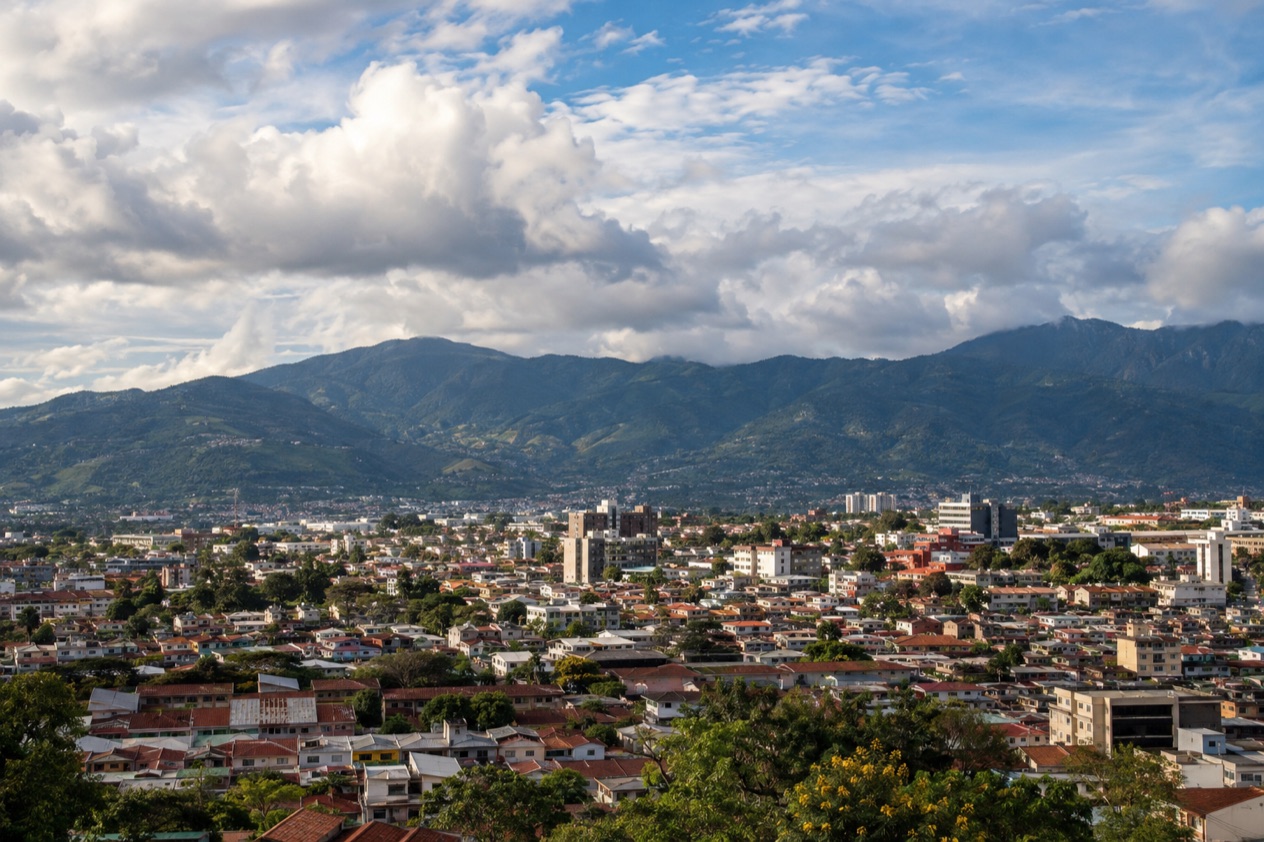
What is the weather like in San Jose in May?
May is warm in the morning, mild in the afternoon and wet, because it is the month the rainy season takes hold in the Central Valley.
| Month | Average high (°F) | Average low (°F) | Rain days |
|---|---|---|---|
| April | 79.6 | 64.0 | 10.2 |
| May | 76.6 | 64.8 | 23.3 |
| June | 75.6 | 64.7 | 25.3 |
The pattern most days is simple. Mornings start clear or hazy and are the best hours for anything outdoors, from a walk through the parks to a drive toward a volcano.
Clouds build through midday, and the rain usually arrives in the afternoon, sometimes as a brief downpour and sometimes as a steady soak that lasts into the evening. Rain is part of nearly every day, so plan around it rather than hoping to dodge it.
A light sweater comes in handy once evening arrives, and because the city sits at about 3,800 feet, the air stays free of that thick, muggy feel you get near the ocean. Heavy rain is not an everyday event, but a few days bring real storms. Daylight lasts a little over twelve and a half hours in mid-May, so there is time for a full morning outing and an indoor afternoon.
Dress in layers and keep a rain jacket within reach. Umbrellas are handy in town, while a hooded shell works better on a volcano or farm tour. Expect clouds to hide some views, especially after midday, so treat any summit or valley panorama as a chance, never a promise.
What to do in San Jose in May
May opens with Labor Day on May 1, a national holiday. The city quiets down, and the cafés and parks fill with families. It also marks the start of the green season, so the first regular afternoon rains tend to arrive around now, and the hills begin their transformation from dusty gold to lush green.
The season suits a mornings-out, afternoons-in rhythm. Leave early for anything outdoors, then spend the wet hours in the city’s indoor places. The National Theater, a handsome 19th-century hall in the center, is a striking city landmark. The Gold Museum and the Jade Museum are both easy rainy-afternoon stops, with pre-Columbian pieces displayed in calm, dry rooms.
Food is a good reason to stay in town. Look for a casado, Costa Rica’s everyday lunch, which brings together rice, beans, plantain, salad and meat or fish.
Gallo pinto, the rice-and-beans mix, comes with eggs at breakfast, and a cup of local coffee suits the cool, damp afternoons perfectly. The Central Market is a maze of small counters, spice sellers and sodas, a lively place for lunch when it pours outside.
Poas and Irazu volcanoes
You can reach each volcano by car from the capital as a day trip, and each one pays you back for setting out early. Poas is the one most visitors choose, with a huge crater and, on a clear morning, a view into it. Irazu, on the way toward Cartago, is higher and often cooler, with a stark landscape of ash and craters when the clouds part.
In May the timing matters. Clouds usually thicken by late morning, so the early hours are your best chance for a view, though no hour guarantees one. Bring a warm layer and a rain shell, since the summits are chillier than the city. Since park rules, access and conditions can shift, look at the park’s official page before you head out.
A volcano morning pairs well with a farm stop on the way back. That way the cloudy afternoon is spent somewhere warm, with a cup in your hand, rather than at a summit in the mist.
Coffee farms and Cartago
Coffee country sits in the hills around the valley, and a farm visit is a natural fit for a rainy month. You walk among the shrubs, learn how the cherries are picked, dried and roasted, and finish with a tasting. The rain is good for the plants, and the hills look their freshest at this time of year.
A road trip can also take you to Cartago, the former colonial capital. Its basilica, a striking church with a long devotional tradition, is the main reason to go. Combine it with Irazu for a full day, volcano first in the clear morning and church afterward when the clouds close in. If you want a slower day, stay in the capital: wander the pedestrian streets of the center, browse the craft stalls, and keep a café in mind for the moment the sky opens.
A two-day itinerary for San Jose in May
Day 1 is for the volcano and the farm. Leave early in the morning, while the skies are most likely to be open, and consider Poas only after checking the park’s official page for current access and entry arrangements. Come down toward midday, when clouds start to gather, and stop at a coffee farm for lunch and a tasting. Back in the city, spend the wet hours indoors.
Spend the wet hours at the Gold Museum, then walk the center when the rain eases. Sunset comes early in the evening, so dinner at a local restaurant is a good way to close the day, ideally a place serving a proper casado or a plate of grilled fish.
Day 2 is for Cartago and the city itself. Start with Irazu if the morning looks clear, then continue to the basilica in Cartago for a late-morning visit and lunch at a simple family restaurant. The ride back to San Jose fits in before the afternoon downpour.
Spend the afternoon at the National Theater with a coffee in its café, then head to the Central Market to look for snacks and souvenirs. If the weather turns heavy, the Jade Museum is a dry, quiet alternative. An evening stroll is pleasant once the rain stops, and the cool air makes a hot drink welcome.
Is San Jose busy in May?
May is a calmer month in San Jose, since the rainy season has begun and the peak of the dry-season crowds has passed.
The one busy moment is the Labor Day weekend at the start of the month, when locals travel and rooms and rental cars can be harder to find. Around that date it helps to book early, and for the rest of the month a later, more relaxed approach usually works. Restaurants and museums are rarely crowded, and you can usually walk in without much waiting.
For most travelers, the capital is just a stop on the first and last nights of a trip, which means hotels get a constant flow linked to flights instead of a seasonal spike. The volcanoes draw more people on clear mornings, so arriving early helps there too.
Park rules and any entry arrangements change, so check the official page of the park before you set out.
What to pack for San Jose in May
Pack for mild days, cool evenings and rain at almost any hour, with layers that dry quickly.
- A light rain jacket with a hood, for the afternoon showers and for volcano summits.
- A warm sweater or fleece, because evenings and high elevations turn cool.
- Waterproof shoes with good grip, for wet sidewalks and farm paths.
- A small daypack cover or dry bag, to protect a camera and phone.
- Sunscreen and a hat, since mornings can be bright at this elevation.
- A compact umbrella for city walking between museums and cafés.
Good to know before you go
The U.S. State Department rates Costa Rica Level 2, ‘Exercise increased caution,’ due to crime; it says petty crime is common throughout Costa Rica and that violent crime also affects tourists, including armed robbery, homicide and sexual assault.
The green season begins in May, so schedule your outdoor activities for the morning and leave the afternoon open. May 1 brings Labor Day, a nationwide day off, so some places may be shut.
You must have a passport that stays valid for your whole visit, plus either a return ticket or proof that you are traveling on to another country. Officials might permit you to remain as long as 180 days with no visa, but that is never assured.
For your first and last nights, the capital makes a handy base, since the volcanoes, coffee farms and Cartago can all be reached by road as day trips. Book the volcano outing first, since it depends most on a clear morning.
San Jose in May vs April and June
Moving the trip to April gives you a drier, warmer city, with sunnier mornings and fewer showers. Volcano views are more likely to be open, and outdoor plans are easier to keep. The trade-off is that the landscape is browner, the green has not yet arrived, and the dry-season visitor traffic is a little stronger.
June is wetter still, with rain on most days and a deeper green across the valley. It is cooler and the clouds hang lower, so views from the summits are less reliable, though the city’s indoor places and farm tours work just as well. The month is quiet, a good choice for travelers who do not mind a gray sky.
If sunshine and clear volcano mornings matter most, shift earlier. If you like the fresh green look and a calmer pace, May or June are both fine. May sits in the middle, with the first rains arriving but still some bright mornings to work with.
Is May a good time to visit San Jose?
Yes, May is a good time for travelers who like green hills, quiet museums and a relaxed pace, and who are happy to plan around afternoon rain.
It suits coffee lovers, families using the capital as a base, and anyone who wants volcano and farm outings without a heavy crowd. Those who need dependable sunshine or long open-air afternoons should look at an earlier month. On arrival, line up the volcano morning first, since early hours give the best chance of a view, and keep the afternoons for the city’s theaters, museums and cafés.
What makes May special here is the moment the valley changes, the first afternoon rains settling in and the hillsides turning green around a capital that smells of coffee and wet earth.
Sources
- Open-Meteo / ECMWF ERA5, normals 1991-2020 computed for the grid cell at 9.9281N 84.0907W, checked October 8, 2026
- sunrise-sunset.org, sunrise and sunset calculated for the 15th of the month, checked October 8, 2026
- U.S. Department of State, Costa Rica Travel Advisory, issued April 1, 2026 (https://travel.state.gov/content/travel/en/traveladvisories/traveladvisories/costa-rica-travel-advisory.html), read via the State Department open data API on October 8, 2026
- U.S. Department of State, Costa Rica Travel Information, Entry and exit requirements (https://travel.state.gov/content/travel/en/international-travel/International-Travel-Country-Information-Pages/CostaRica.html), checked October 8, 2026