
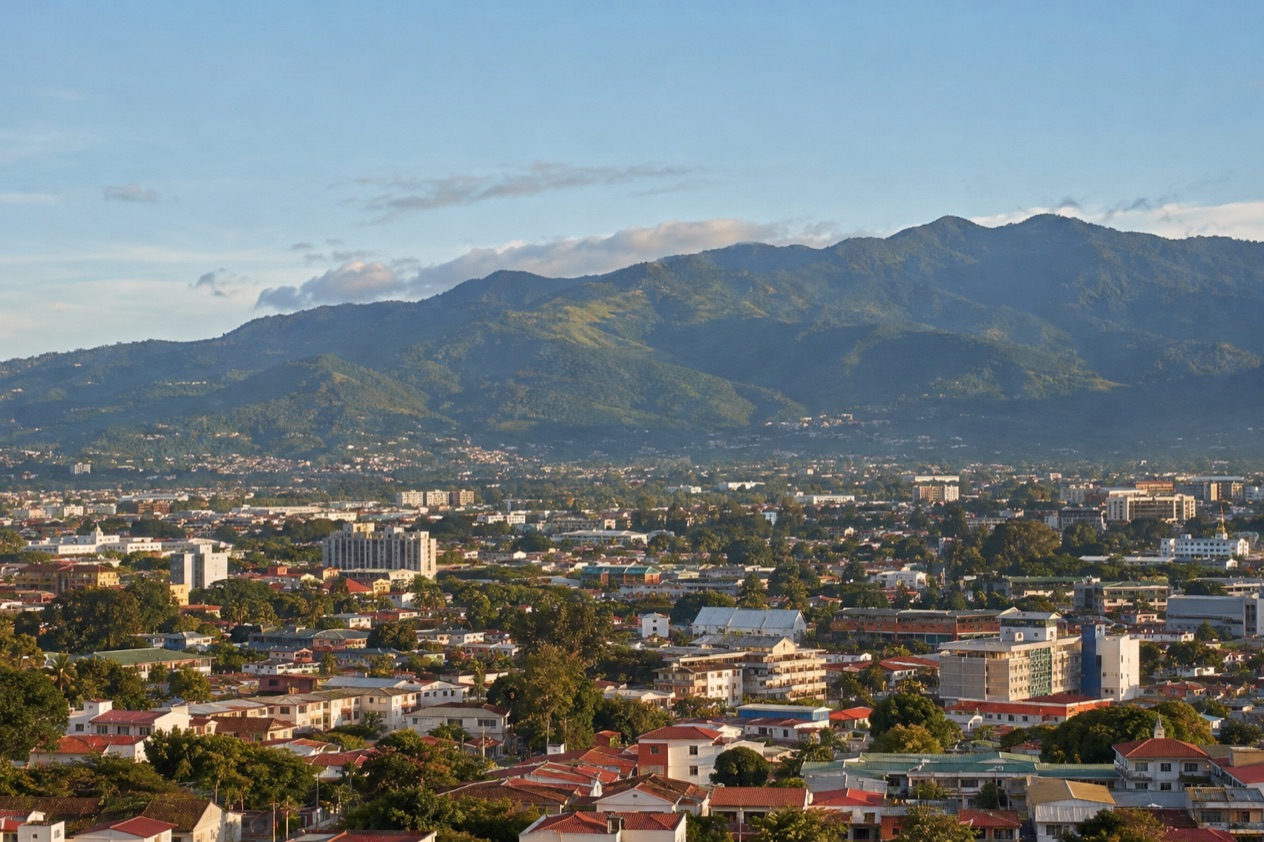
On a green-season afternoon in San Jose, the clouds roll down from the mountains around the Central Valley, the first fat drops land on the pavement of Avenida Central, and everyone ducks under an awning with a cup of coffee in hand. In the dry months the same streets fill with bright light, vendors setting up near the Central Market and office workers lunching on casados in the shade of the plazas. The year here is a slow swing between those two moods, in a capital where the air stays mild and spring-like the whole time.
When is the best time to visit San Jose?
The best months for most travelers run from December through April, when the Central Valley and the Pacific side are in their dry season, mornings are bright and the roads out of the city are at their friendliest. That window suits first-time visitors who want to string together a volcano, a cloud forest and a beach without losing afternoons to downpours. It is also when flights and rooms are in the highest demand, so the best weeks fill early.
For a beach week, the dry months are the safest bet, since the Pacific coast is sunniest then and the sea is more often usable for long days outdoors.
If sightseeing in the capital is the point, almost any month works. The National Theater, the Gold Museum and the Central Market are all indoors or covered, and mornings are usually the clearest part of the day even in the rainy months.
Travelers on a budget or after quiet trails do well in the green season, from about May to November. Landscapes turn lush, rooms are easier to find, and rain tends to arrive in the afternoon, so you plan outings for the morning and leave the late hours for a museum, a café or a long dinner.
September and October bring the heaviest rain, so they suit people who are happy to be flexible and wet. May and June are a gentler way into the green season, and the early weeks of December often combine fresh green hills with the first dry days.
Families should know that March brings spring break, and the beaches and resorts along the Pacific fill with American school groups and loud, happy crowds. Children who like a lively scene will love it. Families who want space on the sand might prefer the weeks either side of it, or the drier stretch of January and February, when school calendars are less synchronized.
San Jose weather by month
Because the city sits high in the Central Valley, temperatures barely budge from month to month, and the rain is what really tells the seasons apart.
| Month | Average high (°F) | Average low (°F) | Rain days |
|---|---|---|---|
| January | 75.9 | 61.7 | 7.1 |
| February | 77.9 | 61.9 | 5.6 |
| March | 79.5 | 62.8 | 6.0 |
| April | 79.6 | 64.0 | 10.2 |
| May | 76.6 | 64.8 | 23.3 |
| June | 75.6 | 64.7 | 25.3 |
| July | 75.3 | 64.4 | 22.6 |
| August | 75.4 | 64.2 | 23.9 |
| September | 75.3 | 63.8 | 26.2 |
| October | 74.4 | 63.8 | 26.8 |
| November | 73.8 | 63.5 | 20.8 |
| December | 74.6 | 62.6 | 11.8 |
Days are comfortable all year, warm in the sun and cool enough in the evening that a light sweater feels right at dinner. The warmest afternoons come in March and April, just before the rains return, and the coolest in November and December. February and March are the driest stretch, with sunshine on most days.
In April the showers begin to show up, and by May rain falls on most days, usually in the afternoon. The wettest weeks are in September and October, when gray, heavy skies can last through the evening. By December the showers thin out again, and daylight hardly changes through the year, staying close to twelve hours.
What is there to do in San Jose in each season?
December to April: the dry months
This is the time for the day trips that depend on a view. The Poas and Irazu volcanoes are classic day trips from San Jose. Cartago and its basilica make an easy pairing with Irazu, and coffee farms in the surrounding hills are busy with the harvest, which runs through the late months of the year and into the early ones.
The dry season is also the one for beaches. Jaco is the closest, about an hour and a half to two hours from the airport area, and Manuel Antonio, three to three and a half hours away, pairs a national park walk with a long stretch of sand.
Monkeys, sloths and birds are chances rather than promises, and a guided walk is how most visitors spot them. Leave the cloud forest for a day when you are happy with mist, because even in the dry months the mountains hold cloud.
May to November: the green months
When the rains come back the hills turn intensely green, waterfalls fill and rooms and trails empty out a little. Put your plans in the morning, at a volcano, a coffee farm or the Central Market, where stalls sell fresh fruit, tamales and coffee beside the lunch counters. When the afternoon sky opens, the city offers plenty to do under cover, including the Pre-Columbian Gold Museum beneath the Plaza de la Cultura and the National Theater, a gilded building from the late nineteenth century.
Rain adds drama rather than ruin to a trip on the Pacific coast, but the roads get slower and rivers can run high, so drive times quoted for the longer routes can stretch. La Fortuna, about three hours away, and Monteverde, three and a half to four and a half, are longer trips whose drive times can stretch in rain. Save the long beach days and any boat trips for another time, and expect the sea to be rougher and muddier after a heavy spell.
The shoulder months and the winter holidays
April and early December are the in-between weeks, when the green is fresh and the sun still shows up most mornings. They are good months for a mix of beach and mountain, with rain that turns up as a short afternoon visit rather than a daily storm. Late December is another story, because Christmas and New Year pull many Costa Rican families to the coast and many American visitors to the country, so plan that stretch early and expect crowds.
In the capital, Christmas brings lights on the central streets and cafés selling tamales, and the weather is mild enough to walk the pedestrian avenues in the evening. It is a good moment to stay in the city for a night or two before heading out to the coast.
When is San Jose cheapest and least crowded?
The quietest months are those of the green season, above all September and October, when the rain is at its heaviest and fewer visitors arrive. Hotels in the capital and lodges in the mountains have empty rooms then, restaurants are easy, and the trails at Poas or the walks around Cartago are lightly trafficked. May and June share some of that calm, with a lighter touch of rain and the countryside at its freshest.
The busiest weeks are the ones U.S. travelers favor. Christmas and New Year top the list, when beach towns and popular lodges fill and the roads to the Pacific are packed on the way out and back.
Spring break in March brings groups of students and families to the coast, and Holy Week in the spring, which moves each year, sends Costa Rican families to the beaches, so the shore feels crowded and traffic on the way to Jaco slows to a crawl. Summer school vacation draws more American families, so July and August feel busier than their rain would suggest.
If you want sun and still some elbow room, aim for the edges of the dry season. Early December and the weeks after Holy Week offer good weather with calmer rooms and beaches. The capital itself stays fairly steady, because most visitors only pass through for a night or two. That makes it an easy base in the busiest weeks, with a day trip into the hills while the coast is at its loudest.
Which months should you avoid in San Jose?
Few months need to be avoided outright, but September and October are the hardest for a trip built around views and beaches. Rain falls on nearly every day then, skies stay gray, and volcano summits often hide in cloud.
Roads to the coast and the mountains can be slow after heavy rain. Travelers who plan around museums, markets and a coffee farm can still have a good week.
The Atlantic hurricane season overlaps with the green months, and Costa Rica is not exempt from tropical weather. Storms can bring days of heavy rain to the Pacific side and the mountains, and the Caribbean coast has a pattern of its own, with rain at any time of year. Because of that, build slack into your schedule for long drives and for flights home.
Heat is not much of a worry in the capital, where the altitude keeps afternoons mild, but the lowland coasts feel hotter and stickier, especially just before the rains return in April and May. For beach trips, the peak crowded weeks of Christmas, New Year and spring break are the other thing some people want to avoid, for the sake of space and price rather than weather. The U.S. State Department rates Costa Rica Level 2, exercise increased caution, due to crime, and that applies in every month.
Festivals and events in San Jose through the year
Winter holidays and Holy Week
December brings San Jose’s Festival de la Luz, while December 25 and January 1 shape the holiday period. Streets in the center are strung with lights, families gather over tamales and sweet bread, and many Costa Ricans take their own vacation at the beach. The mood is festive and the weather mild. Reservations for rooms, rental cars and tours are tight in those weeks.
Holy Week falls in March or April depending on the year, and it is a quiet, family-centered time. Many Costa Ricans head for the coast, and some businesses in the capital close for a few days, so the city can feel emptier than usual. It suits a visitor who likes calm streets, and the beaches of the Pacific are at their busiest then.
Independence Day in September
September 15 is Independence Day, and it is a bright spot in the wettest stretch of the year. Schoolchildren carry handmade lanterns in the evening before, and bands and school groups march through towns across the country on the day itself. In the capital it is a good moment to watch a parade from the sidewalk and to see how locals celebrate, rain or not.
The rainy weather makes an umbrella or a light rain jacket part of the festival, so plan around the afternoon sky. It is a lively event that fits a short stay in the city, and a good reason to be in San Jose in a month that is otherwise quiet.
Nature seasons and the coffee harvest
Costa Rica’s wildlife keeps its own calendar. Sea turtles come ashore to nest on some Pacific and Caribbean beaches at different times of year depending on the species and the beach, and whales pass along the Pacific coast in more than one season. These sightings are chances rather than promises, and local guides and park offices can tell you what is happening where when you book.
Closer to the capital, the coffee harvest brings the hills of the Central Valley to life in the closing months of the year and into the early ones, when pickers work the slopes and farms offer tastings. A visit to a farm, followed by a cup in the city, is a fine way to see what the dry season begins with, and it fits easily into a day trip from San Jose.
Sources
- Open-Meteo / ECMWF ERA5, normals 1991-2020 computed for the grid cell at 9.9281N 84.0907W, checked October 8, 2026
- sunrise-sunset.org, sunrise and sunset calculated for the 15th of the month, checked October 8, 2026
- U.S. Department of State, Costa Rica Travel Advisory, issued April 1, 2026 (https://travel.state.gov/content/travel/en/traveladvisories/traveladvisories/costa-rica-travel-advisory.html), read via the State Department open data API on October 8, 2026