
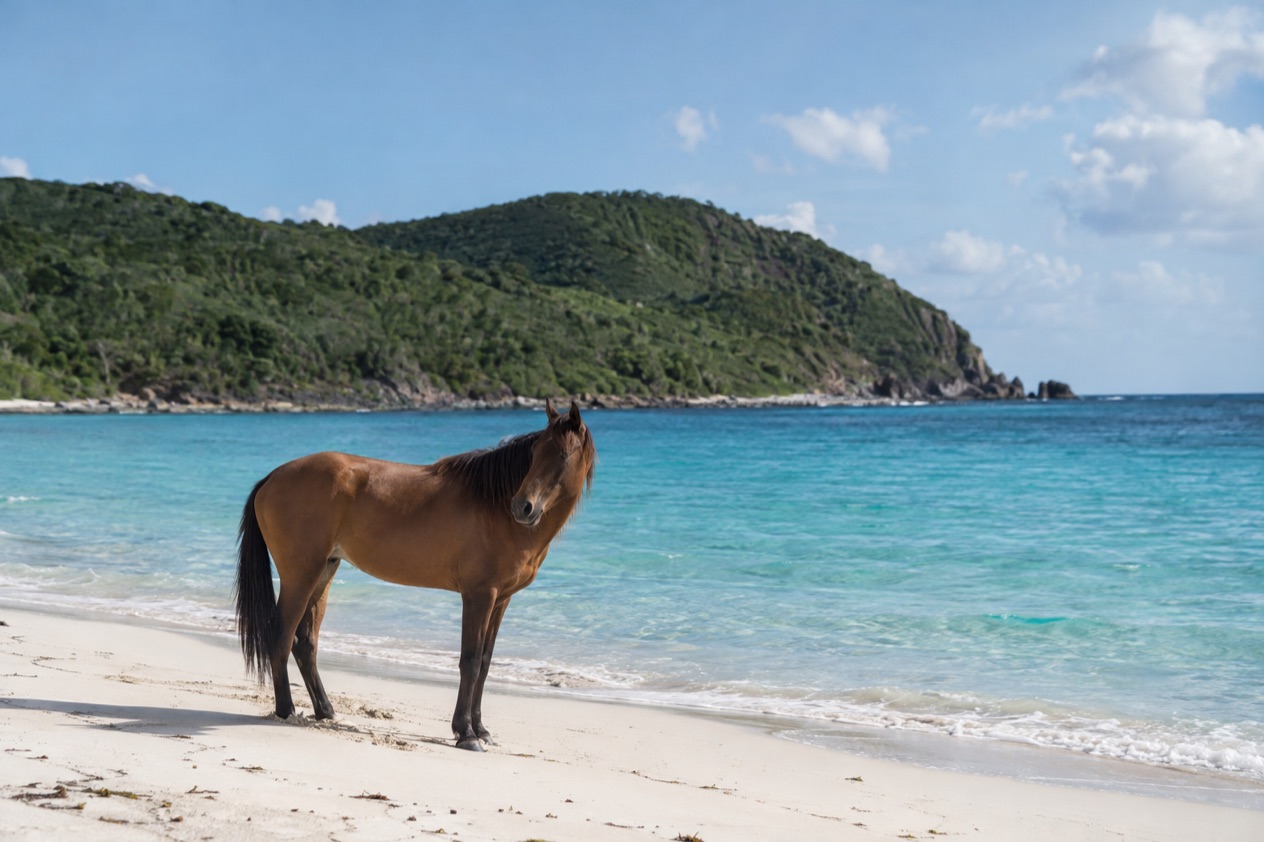
Toward sunset in Esperanza, a horse wanders along the road past open-air restaurants while kayakers drag their boats up the sand and the first lights come on along the waterfront. Vieques moves at the speed of that horse. It is a long, green, lightly built island off Puerto Rico’s east coast, made for people who want empty beaches, dark skies and a glowing bay, with a few good meals in between.
What are the best things to do in Vieques?
The best things to do in Vieques are the ones that take you outdoors and slow you down: a night on the bioluminescent bay, a day on a long beach with no hotel in sight, and a slow evening on the Esperanza waterfront. The island has no big attractions to tick off. What it offers is space, and the pleasure comes from the hours you spend in it.
Most visitors settle into a rhythm. Mornings go to the beach while the light is soft, midday to shade and a plate of fried snacks, afternoons to a second beach or a wander through town, and nights to the water or the stars. Here are the essentials.
- Paddle or ride an electric boat across Mosquito Bay with a guide, and watch the water light up around you, a chance that is strongest on moonless nights.
- Spend a day on Sun Bay, the family favorite, with shade trees, a long curve of sand and horses grazing behind the beach.
- Visit Red Beach and Blue Beach, two of the most visited stretches of sand on the island, set within former Navy land.
- Walk the Esperanza waterfront at dusk, when the guesthouses, bars and open-air restaurants come alive.
- Climb up to El Fortín in Isabel Segunda, the old Spanish fort above the ferry town, for its views and its small museum.
- Look for the wild horses that roam the roads and beaches, and give them room.
- Explore the wildlife refuge, where a long, undeveloped coastline shelters birds, turtles and the endangered Puerto Rican boa.
- Eat grilled fish, mofongo and fried alcapurrias at a roadside kiosk or a waterfront table.
One more thing helps everything else: leave room in the plan. Vieques rewards a loose schedule, because the best moments are often a stop for a horse on the road or a beach you did not plan to visit.
Sights and landmarks in Vieques
The landmarks of Vieques are few and quiet, and most of them tell the story of an island that spent decades as a military range and is now a nature haven. Around the world, Vieques is recognized above all for the outcry over the Navy’s bombing range, and that outcry brought the Navy’s exit in 2003. That history is visible everywhere, in the old Navy roads, in the closed areas, and in the long stretches of coast that were never built on.
Isabel Segunda and El Fortín
Isabel Segunda, the ferry town on the north coast, is where most visitors arrive and then go straight through without pausing. It is worth a slower look. The town has a small plaza, a seafront malecón with a few simple restaurants, bakeries, a grocery run and the island’s main street life, which gives it a more everyday feel than Esperanza.
Above the town sits El Fortín Conde de Mirasol, the last Spanish fortress built in the Americas. It is a modest stone fort with thick walls and a lookout over the water, and inside it houses a small museum of local art and history. Come in the morning, when the heat is lower and the view over the Caribbean is clearest. It suits history lovers and anyone who wants a short break from the beach.
Esperanza and its waterfront
Esperanza is the laid-back village on the south coast, and its main sight is the waterfront itself. A string of guesthouses, small restaurants and bars faces a shallow bay, with a pier, boats at anchor and a malecón that serves as the village’s living room. Nothing here is grand. It is a place to walk slowly at the end of the day.
Go in the late afternoon, when the light turns gold across the water and the first tables fill up. Locals and visitors mix easily here, and the village tends to feel both lively and small at the same time. It is the right base for anyone who wants to walk to dinner and back.
The wildlife refuge and the Navy’s legacy
Vieques National Wildlife Refuge covers former Navy lands that Congress turned into protected land, and it is the largest national wildlife refuge in the Caribbean. Within its shores, woods and marshes live sixteen plant and animal species listed by the federal government, including the endangered Puerto Rican boa, and the migratory peregrine falcon appears there during winter. Some of the island’s best-known beaches lie within it.
Because of the risk from unexploded ordnance and the clean-up that comes afterward, the public cannot enter a large part of the eastern refuge, so keep to the open roads and trails and honor every sign and gate. Drones are prohibited on the refuge. You come here to walk, look at birds and enjoy beaches that have no buildings behind them.
| Site | Open |
|---|---|
| Vieques National Wildlife Refuge | Open to the public year-round (a major portion of the east side is closed) |
Small stops along the way
Beyond the main sights, the island rewards a slow drive. Look for the old Navy bunkers hidden in the forest, the quiet fishing spots along the south coast, the pastel houses of the villages, and the roadside stands that sell fruit and snacks. Many of these stops cost nothing and ask only for a little curiosity.
The island is about 20 miles long and only a few miles wide, so a day of sightseeing never feels rushed. You can see the fort in the morning, drive to a beach for lunch and be back in Esperanza by sunset.
Beaches and outdoor things to do in Vieques
Beaches are the reason most people come, and Vieques has many of them, long and undeveloped, with sea grape trees, grazing horses and almost no buildings. On the island, three of the most popular spots are Sun Bay, Red Beach and Blue Beach, while Caracas Beach lies nearby at the eastern end. Conditions change from day to day and from beach to beach, so watch the water, and where a flag, a sign or a lifeguard is present, follow it.
Sun Bay
Sun Bay (Sun Bay Beach Park) is the island’s classic public beach, a wide crescent of sand backed by palms and shade trees. It has the feel of a local gathering place, with families, picnickers and the occasional horse strolling along the edge of the sand. It is usually the easiest beach for a first day.
Come early for the best light and a good patch of shade, and stay for the afternoon if you like a long, lazy beach day. It suits families, couples and anyone who wants a long, relaxed beach day. Bring water, a hat and sunscreen, since shade is limited at midday.
Red Beach, Blue Beach and Caracas
On the eastern end, Red Beach (Caracas Beach) and Blue Beach are among the most scenic on the island. They lie on former Navy land, and they feel wilder than Sun Bay, with scrub forest behind them, clear water in front and fewer people on the sand. Each has its own character, from sheltered stretches to more exposed shores.
Many visitors combine two of these beaches in one day, swimming at one and snorkeling or walking at the next. Because exposure differs from beach to beach, look at the water before you get in. Bring food and plenty of water, as these are places to spend the day rather than a quick stop.
Mosquito Bay by kayak or electric boat
Mosquito Bay (Puerto Mosquito) is the island’s bioluminescent bay and its big night-time draw, declared the brightest in the world by Guinness World Records in 2006. You can go with a guide by kayak or electric boat, and local vendors can set up the kayaking for you. Tiny organisms in the water glow when disturbed, so every paddle stroke, and every fish that darts beneath you, leaves a trail of blue-green light.
On nights with no moon, the glow shows up best, so look at the lunar calendar as you pick which evening to go. It remains a chance rather than a promise, and a cloudy or bright-moon night will look different. The experience suits anyone who likes being on the water in the dark, and it is a highlight of the trip for many visitors.
Snorkeling, walking and wildlife
Beyond the big beaches, there is plenty to do outdoors. Snorkeling along sheltered shores brings fish, sea grass and, sometimes, turtles. Walking the open trails and roads of the refuge brings birds, lizards and views over empty coast. In spring and summer, sea turtles nest on some beaches, and you may see signs asking visitors to keep clear.
The wild horses are part of the scenery, grazing on roadsides and wandering onto the sand. Admire them from a distance, keep food away from them and drive slowly, especially at dusk. Early morning is the best time for birds and for the softest light on the beaches.
Day trips from Vieques
You can get to the island by public ferry from Ceiba or on a small plane, which keeps the main island within easy reach. These are the outings that fit best.
Ceiba and its mangroves
Ceiba is the mainland port for the ferry, on the northeast coast of Puerto Rico, about an hour’s drive from San Juan. Many visitors see it only as a place to park and board, but it holds some of the quieter pleasures of the east coast. You can also seek out Playa Los Machos, the mangroves of Medio Mundo y Daguao, and Charco Frío y Las Tinajas.
The town also has history. It was home to the Roosevelt Roads Naval Station, which closed in 2004, and cellist Pablo Casals built his home here, known as El Pesebre. Ceiba celebrates its patron saint festival in June, with parades, games, artisans, regional food and live music. A morning here before or after the ferry fits easily into a trip.
San Juan by air
You can leave San Juan for Vieques out of either of two airports, Luis Muñoz Marín International Airport or Isla Grande Airport, and the flight takes 20 to 30 minutes. The airport on Vieques, Antonio Rivera Rodríguez, handles only small propeller planes, so the trip feels more like a bus ride in the sky, with sea and reefs below the window. Flights from Ceiba are even shorter, about five minutes.
From San Juan, a day among the cobblestones of Old San Juan, the forts and the plazas makes a good contrast to island quiet. It suits travelers with an extra day before or after their island stay, who want a city meal and a museum visit.
Caja de Muertos from Ponce
Caja de Muertos is an uninhabited island off the southern coast of Puerto Rico, in the municipality of Ponce, and it is a nature reserve. The ferry leaves from the La Guancha Boardwalk sector of Ponce Playa, and the island lies about five miles south of the mainland. It has five beaches, among them Playa Pelícano and Playa Larga, and a still-working lighthouse on the highest hill, established in 1887.
This is a trip for travelers who plan to cross the main island and want another wild, protected place. It is not an easy add-on from Vieques, so treat it as part of a longer stay on the south coast.
Smaller outings
- Fajardo, near the ferry coast, has another bioluminescent bay, Laguna Grande, for travelers who want to compare glows.
- The mountains of the Sierra de Luquillo rise behind Ceiba, with Pico del Oeste as the highest point in the municipality, for a green change of scene.
- Medio Mundo y Daguao offers mangrove scenery and a quiet stretch of coast for those who like to look at birds.
What to eat in Vieques
Eating in Vieques means island Puerto Rican cooking with a strong seafood streak, served at roadside kiosks, family-run restaurants and open-air tables on the water. The pace is unhurried, so a meal can easily fill an evening. Expect fried snacks, grilled fish, rice and beans, and cold drinks with a lot of ice.
Fried snacks and kiosk food
Start with the fritters. Alcapurrias are fritters made of grated green banana and taro filled with seasoned meat, bacalaítos are crisp salt cod fritters, and tostones are twice-fried green plantain slices. They come hot and greasy from a counter, and they are the perfect beach snack.
Pinchos, grilled skewers of chicken or pork brushed with a sweet sauce, are a classic of roadside stands. Order them with a cold drink and eat them standing in the shade. This is the most local way to feed a family without spending much, and the quality is often excellent.
Seafood and island plates
With the sea all around, fish is the natural choice. Look for the catch of the day grilled whole or fried, served with rice, beans and tostones. Conch salad, shrimp in garlic sauce and lobster appear on many menus, depending on the season and what the boats brought in.
Mofongo, mashed fried plantain seasoned with garlic and pork cracklings, is the dish most people want to try. It is often served as a mound with shrimp, chicken or fish tucked inside or poured on top, and it fills you up for the rest of the day. Order it at a sit-down restaurant, where the kitchen will take its time over it.
Drinks, sweets and the holiday table
Drinks lean tropical. A piña colada or a rum punch suits a beach afternoon, and Medalla, the local light beer, goes with almost everything. For something non-alcoholic, ask for fresh fruit juice or a piragua, shaved ice drenched in fruit syrup and sold from carts, a treat that kids love.
Tembleque, a coconut pudding set with cornstarch and dusted with cinnamon, is a classic sweet, and many bakeries in Isabel Segunda sell bread, pastries and sandwiches for a simple breakfast. During the long Christmas season, which runs from late November into mid-January, look for pasteles, lechón asado (roast pork) and coquito, the creamy coconut and rum drink, on local tables.
Things to do in Vieques at night
Nights in Vieques are slow and dark, and that is the appeal. Street lights are few, the stars are bright, and the main event is the water. After dinner, there is little else to do, which suits the island perfectly. Nightlife means a drink by the sea, some music and an early bed.
A night on Mosquito Bay
The bioluminescent bay is the island’s signature night. Guided kayak or electric boat trips go out after dark, and once your eyes adjust, the water begins to shimmer with every movement. Fish look like streaks of light in the shimmering water.
The darker the night, the stronger the glow, so moonless evenings are the best choice. It is a chance and not a promise, and conditions change with the sky and the water. Bring a change of clothes, bug repellent and a camera that can wait in a bag, as most phones capture little of the glow anyway.
Esperanza after dark
Esperanza is the island’s nightlife center, and it stays small. The waterfront fills with open-air restaurants and bars, with live music some evenings and a mix of locals, sailors and visitors at the tables. A cold drink, a plate of fish and the sound of waves make a complete evening.
Walk the malecón after dinner, look at the boats rocking on their moorings, and stop for a nightcap if you like. The mood is relaxed, and the village tends to quiet down early, so you rarely feel rushed or out of place.
Isabel Segunda and quieter evenings
In Isabel Segunda, evenings center on the plaza and the seafront, with a few restaurants and bars for locals and arriving travelers. It feels more like a working town than a resort, with families out for an ice cream, neighbors talking on benches and music drifting from a car or a bar.
Quieter options abound. Sit on a guesthouse porch with a book or look at the sky away from any city glow. On a clear night, the Milky Way can be striking, and that may be the best free show on the island.
Things to do in Vieques with kids
Vieques is a good island for children who like being outdoors, with beaches, animals and boats in place of rides and arcades. The pace is slow, but the heat, the sun, the sea and the roads ask for steady attention from parents.
Beaches, horses and nature
Sun Bay is the natural first stop for a family day, with sand, shade trees, picnic space and, often, horses wandering by. Children love watching them from a distance, and the open beach gives plenty of room to run. Snorkeling along sheltered shores can show kids fish and sea grass, with an adult always close by.
The wildlife refuge adds a lesson in nature, with birds, lizards and, if you are lucky, a turtle trail on the sand. Keep a respectful distance from the wild horses, do not feed them, and teach children to watch for them on the road. Conditions in the water change from beach to beach, so follow any flag, sign or lifeguard.
A night on the bay and an old fort
Mosquito Bay can be a magical evening for older children who are comfortable on the water and awake after dark. The guide leads the way, and watching the water light up around a kayak or boat is something kids tend to remember. For younger ones, a late start can be a lot, so think about nap time and bedtime.
In Isabel Segunda, El Fortín offers a short, easy history lesson, with walls to explore and a view over the water. Combine it with an ice cream or a piragua in town, and children will have a good morning without much effort.
What to keep in mind
The island is hot and humid, so plan for shade, water and breaks. Pack hats, sunscreen, light clothes and shoes that can get wet. Beaches often have limited facilities, so bring snacks, drinks and something to sit on, and head back to the guesthouse for a rest in the middle of the day.
Distances are short, but beaches are spread out, and many roads are quiet and rural. Build a loose plan with one main outing a day and plenty of free time. Children tend to be happiest with a beach, a snack and a few hours to dig in the sand.
Good to know before you go
Vieques lies about 8 miles east of the main island and is reached by the public ferry from Ceiba, which runs several times a day, or by small plane from San Juan or Ceiba. You will use the U.S. dollar here, and no passport or visa is required for U.S. citizens.
The island is spread out, so arrange transportation between your lodging, the beaches and dinner before you arrive. The Atlantic hurricane season runs from June 1 to November 30, so follow the National Hurricane Center and local official alerts if you travel in those months, and in some springs and summers sargassum seaweed can reach shores on the east and south.
Sources
- U.S. Fish and Wildlife Service, Vieques National Wildlife Refuge (https://www.fws.gov/refuge/vieques), checked October 8, 2026
- Wikipedia, Vieques (https://en.wikipedia.org/wiki/Vieques,_Puerto_Rico), checked October 8, 2026
- Wikipedia, Ceiba (https://en.wikipedia.org/wiki/Ceiba,_Puerto_Rico), checked October 8, 2026
- Wikipedia, Caja de Muertos Island (https://en.wikipedia.org/wiki/Caja_de_Muertos_Island), checked October 8, 2026
- NOAA National Hurricane Center, Climatology (https://www.nhc.noaa.gov/climo/), checked October 8, 2026
To plan your stay
- Best Time to Visit Vieques: Weather by Month, Beaches, Crowds and Festivals
- Where to Stay in Vieques: Esperanza, Isabel Segunda, Sun Bay Rentals and the Refuge Coast
- Vieques from San Juan: Ceiba Ferry, Small Planes and a Day on the Island
- Know Before You Go to Vieques: Ferry and Flights, Refuge Rules, the Bioluminescent Bay and Sun