
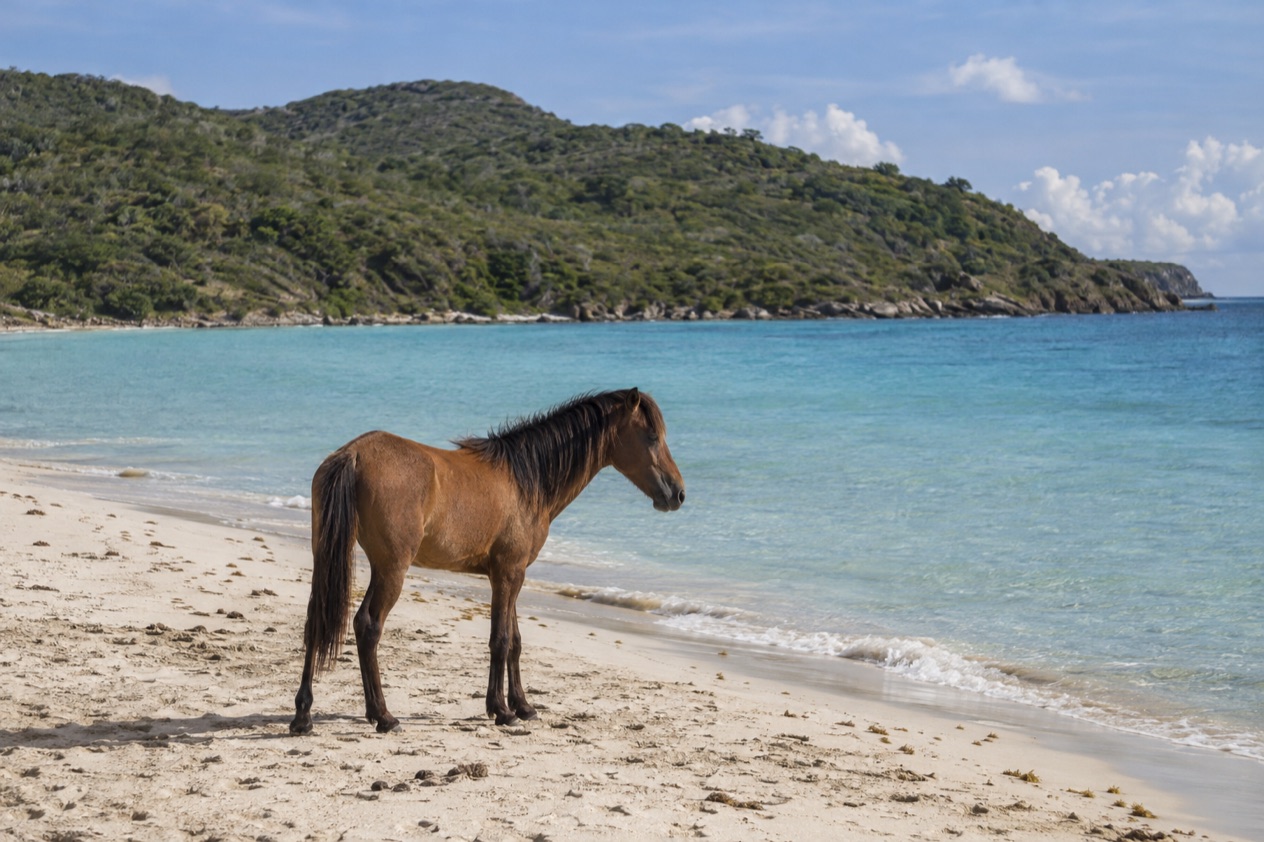
In Vieques the mornings begin with roosters and the occasional wild horse grazing at the edge of a road, and by afternoon the shade of a sea grape tree is the best seat on the island. Winter and spring bring dry, breezy days, summer brings heat and a lazy rhythm, and autumn brings heavy skies and empty beaches. This is a small island off Puerto Rico’s east coast, and each part of the year gives it a different personality.
When is the best time to visit Vieques?
The best time to visit Vieques is from December through April, when the island is at its driest and the days are warm without being heavy, though early May and the weeks around Christmas can also be lovely if you book early. These months suit almost every kind of traveler, and they are also when the island is busiest.
For beach and sea days, February through April is hard to beat. Rain comes in brief showers that pass quickly, the trade winds keep the afternoons comfortable, and the long beaches of the former Navy land, Sun Bay, Red Beach and Blue Beach among them, are most inviting.
The water is warm enough to enjoy long swims and snorkeling sessions, though it is a little cooler than in late summer. Conditions change from day to day and beach to beach, so follow any flag or sign you find.
For sightseeing, the drier months make it easy to string together a morning at the wildlife refuge, a lunch in Esperanza and a night kayak on Mosquito Bay. The bioluminescent glow is there all year and is strongest on moonless nights, so plan that outing around the lunar calendar more than the season. Wild horses roam the roads and beaches in every month.
For quiet and flexible plans, the shoulder months of May, early June and late November make sense. Showers are more frequent, but the island empties out and guesthouses have room. Families should know that March brings U.S. spring break, which can make the main beaches and the ferry from Ceiba livelier and louder than the rest of the year. If your children like calm, aim for late January, February or April.
Vieques weather by month
Vieques is hot all year, and the real difference between months is how often it rains and how warm the sea feels.
| Month | Average high (°F) | Average low (°F) | Rain days | Sea (°F) |
|---|---|---|---|---|
| January | 77.2 | 74.9 | 5.8 | 80.8 |
| February | 76.8 | 74.5 | 4.0 | 80.2 |
| March | 76.9 | 74.6 | 4.2 | 80.6 |
| April | 77.9 | 75.5 | 5.9 | 81.6 |
| May | 79.4 | 76.8 | 10.9 | 83.8 |
| June | 80.9 | 78.1 | 10.4 | 85.2 |
| July | 81.3 | 78.3 | 12.4 | 85.2 |
| August | 81.8 | 78.7 | 13.7 | 85.6 |
| September | 82.0 | 78.7 | 14.8 | 86.6 |
| October | 81.4 | 78.2 | 15.2 | 86.6 |
| November | 80.0 | 77.1 | 13.4 | 84.4 |
| December | 78.5 | 76.0 | 8.1 | 81.9 |
The year falls into two clear halves. From January to April the island is at its driest, with short, passing showers and a steady breeze, and nights stay warm enough for dinner outdoors.
In May the rain days climb sharply and stay high through November, with September and October the wettest stretch, when gray skies and heavy downpours are common and some days start sunny and end stormy. Heat builds slowly toward September, and nights rarely cool off. December is a transition month, with showers fading and the air a little lighter.
What is there to do in Vieques in each season?
Dry months, December to April
This is the season for long beach days. You can start at Sun Bay, a wide shaded crescent where families set up under the trees, then move on to Red Beach and Blue Beach, whose sheltered coves are good for snorkeling when the sea is quiet. Wild horses often wander along the sand and the nearby roads, so keep a respectful distance and never feed them.
In the evenings, Esperanza’s waterfront comes to life, with open-air restaurants serving fresh fish, tostones and cold drinks while the lights of fishing boats shimmer offshore. A kayak trip on Mosquito Bay with a guide is a highlight, and you may see the water glow around your paddle, especially on a moonless night. Leave the more remote beaches for the drier months.
Wet and hot months, May to November
Summer and autumn are slower and steamier. Mornings tend to be the best part of the day, so swim and snorkel early, retreat to a hammock or a café during the heat of the afternoon, and expect a storm now and then in the evening. Visit the towns, the small museums and the market stalls when showers roll through.
Sea turtles nest on island beaches in spring and summer, and you may spot signs of nesting activity in the sand. The water is at its warmest in these months, which is lovely for long swims. Leave the long outings for mornings, keep days flexible, and expect some tours or boat trips to be called off when the weather turns. This is also the time to leave the farthest beaches for another trip.
Shoulder months and the winter holidays
Late April, May and early December are good in-between times, with enough sunshine for the beach and fewer people on the sand. Late November through early January brings the long Puerto Rican Christmas season, with parrandas (groups of neighbors singing from house to house), pasteles, and plenty of music in the plazas of Isabel Segunda.
Three Kings Day on January 6 is a high point of the season, and celebrations may continue afterward. Book early for these weeks, as rooms are limited on an island this small.
When is Vieques cheapest and least crowded?
Vieques is quietest from September through early November, when the rain is frequent and the beaches belong to a handful of travelers and the wild horses. Guesthouses in Esperanza and Isabel Segunda may have more availability at this time of year.
The busiest weeks are the ones U.S. mainland visitors choose: Christmas and New Year, Presidents Day weekend, March spring break, Easter week (which moves each year), and the long summer vacation stretch from late June through July. During these times, the island is busier and availability is tighter. Book rooms and the Mosquito Bay tour well ahead.
If you want the island at a gentler pace without giving up the weather, aim for late April, May, or the first half of December. You will find shorter lines at restaurants, more space on Sun Bay and a better chance of a room with the view you wanted, and rooms are easier to find than at peak-season rates.
Which months should you avoid in Vieques?
If you can choose, avoid September and October, which are the wettest months and sit right at the peak of the Atlantic hurricane season, which runs from June 1 to November 30. Most activity occurs between mid-August and mid-October, with the peak around September 10, so a trip in that window can be disrupted by storms, canceled ferries and flights, or a stretch of heavy gray weather.
If you choose to travel then, keep an eye on alerts from the National Hurricane Center and local authorities, remain adaptable with your schedule and consider travel insurance. Forecasts change quickly, so it is wise to stay in touch with your lodging.
Heat is the other factor. From June through September the air is heavy and nights stay warm, which suits beach lovers but can tire anyone who wants to hike the refuge trails. In certain springs and summers, sargassum seaweed may arrive on beaches along the east and south coasts, where it can gather on the sand and turn the water cloudy, so consider it a possibility rather than a sure thing, and remember that no beach is promised protection.
Winter cold fronts here are mild and mostly bring a few breezy, cloudy days. They mostly bring a few breezy, cloudy days and a bigger swell on the north coast, but the south side usually stays more sheltered.
When can you swim in Vieques?
You can swim in Vieques in every month, because the sea stays warm all year, from pleasantly cool-to-warm in late winter to bathtub-warm in early autumn.
From January through April the water is most refreshing, with clear days that make for good snorkeling at Blue Beach and Red Beach. Summer and early autumn bring the warmest sea, ideal for long swims but sometimes cloudy after heavy rain. In November and December it cools down a little and the visibility often improves again.
Conditions change from day to day and beach to beach. Most days, the water on the Caribbean side and along the south coast stays calmer than it does up north, yet if you see a flag, a sign or a lifeguard, do what it says. After a storm, expect cloudier water and stronger currents.
Festivals and events in Vieques through the year
Winter holidays and Carnival
Christmas on Vieques stretches from late November into mid-January. Neighbors gather for parrandas, singing aguinaldos and playing guitars, cuatros and güiros, and kitchens fill with pasteles, lechón asado and arroz con gandules. Isabel Segunda lights up its plaza and the waterfront is decorated.
Three Kings Day on January 6 is the heart of the season for children, who leave grass or boxes under their beds for the Kings’ camels. Ask at your guesthouse about the dates and the locations.
Easter week, local fiestas and the summer
Holy Week moves every year, and in Vieques it mixes quiet processions with beach days for families on vacation. Expect busy beaches and full guesthouses during Holy Week. Many locals head to Sun Bay for a day of cooking and music.
On June 23 the Noche de San Juan Bautista draws people to the shore at midnight to walk backward into the sea, a tradition said to bring luck for the year ahead. Small patron-saint fiestas also take place across the island in summer, with food stalls, live music and dancing in the plaza. Dates vary, so ask where you are staying.
Nature seasons: turtles, horses and glowing water
Sea turtles nest on island beaches in spring and summer. You may see tracks in the sand in the morning, and it is important to keep lights off and give nests plenty of room. The wildlife refuge protects much of the coast where this happens.
You can see Mosquito Bay light up throughout the year, though the finest shows come on nights without a moon, and a guide takes you in by kayak or electric boat. Wild horses are part of daily life in every season, and early mornings are the best time to see them grazing along the roadsides and beaches.
Sources
- Open-Meteo / ECMWF ERA5, normals 1991-2020 computed for the grid cell at 18.1255N 65.44W, checked October 8, 2026
- Open-Meteo Marine API, average 2015-2024, checked October 8, 2026
- sunrise-sunset.org, sunrise and sunset calculated for the 15th of the month, checked October 8, 2026
- NOAA National Hurricane Center, Climatology (https://www.nhc.noaa.gov/climo/), checked October 8, 2026
To plan your stay
- Things to Do in Vieques: Mosquito Bay, Wild Beaches and Esperanza Evenings
- Where to Stay in Vieques: Esperanza, Isabel Segunda, Sun Bay Rentals and the Refuge Coast
- Vieques from San Juan: Ceiba Ferry, Small Planes and a Day on the Island
- Know Before You Go to Vieques: Ferry and Flights, Refuge Rules, the Bioluminescent Bay and Sun