
In mid-July the fishing boats in Dewey’s harbor are dressed up for the Virgen del Carmen, and the little town turns out along the waterfront to watch them pass. Golf carts rattle past the canal, someone is grilling near the water, and the sea beyond the mangroves is the color of a swimming pool. July is a warm, easygoing month on Culebra, with long days for beaches, snorkeling and slow evenings in town.
What is the weather like in Culebra in July?
July in Culebra is hot, humid and bright, with the trade winds doing most of the work of keeping you comfortable and short showers passing through now and then.
| Month | Average high (°F) | Average low (°F) | Rain days | Sea (°F) |
|---|---|---|---|---|
| June | 81.8 | 79.4 | 7.0 | 85.0 |
| July | 82.3 | 79.6 | 8.9 | 85.2 |
| August | 82.8 | 79.9 | 10.7 | 85.6 |
Mornings start warm and clear, and that is the best stretch for the beach, before the sun climbs and the sand heats up. By midday the sun is strong, so shade, a hat and a long pause for lunch make sense. The days are long, with about thirteen hours of daylight in the middle of the month, which leaves room for a late swim after the heat eases.
Rain usually arrives as a quick shower that blows in off the sea, soaks the golf cart seats and moves on. Most days with rain still have plenty of sun, and heavy downpours are rare. Because the temperature hardly drops after dark, you can dine outdoors in a T-shirt and go to bed with a fan on.
Dress light and quick-drying, and keep a thin rain layer in the bag rather than a real jacket. The sea stays warm, so swimsuits dry fast and a wet afternoon rarely feels cold. Since July sits inside Atlantic hurricane season, watch the National Hurricane Center and local official alerts closely as your trip gets closer.
Can you swim in Culebra in July?
Sure, you can swim for a long time in that sea because it is so warm, and at that temperature it feels refreshing instead of cold.
Around Culebra, summer tends to bring the milder season for the ocean, and the island lies on Puerto Rico’s calmer side. Flamenco Beach, a wide curve of pale sand inside the wildlife refuge, often has clear, shallow water in July, though conditions shift from day to day and from beach to beach. When a lifeguard, a sign or a flag gives you direction, follow it.
If snorkeling tops your list, head to Tamarindo Beach on the west side, where green sea turtles frequently feed on seagrass, then continue to Carlos Rosario Beach, only a short stroll from Flamenco, with its coral reef sitting right offshore. If you want room to spread out, the eastern end’s Zoni Beach is a long, quiet stretch. Bring a mask, a snorkel, sunscreen and a rash guard, since the sun on your back while you float is stronger than it feels.
What to do in Culebra in July
The date that colors the month is the Virgen del Carmen, celebrated around mid-July. She is the patron saint of fishermen, and in Dewey the day centers on a procession of boats in the harbor. Fishing families, neighbors and visitors gather along the water, and the mood is part devotion, part neighborhood party. Even if you miss the exact day, the harbor in July feels like a working fishing town more than a resort.
Beyond the festival, July is a beach month, and Culebra has no big resorts to get in the way. Culebra is tiny, with a single town and a calm harbor, and people explore it by rented bike or golf cart, a rhythm that fits the place. Mornings are for the sand and the water, afternoons for shade, and evenings for the waterfront in Dewey.
Flamenco Beach and the tanks
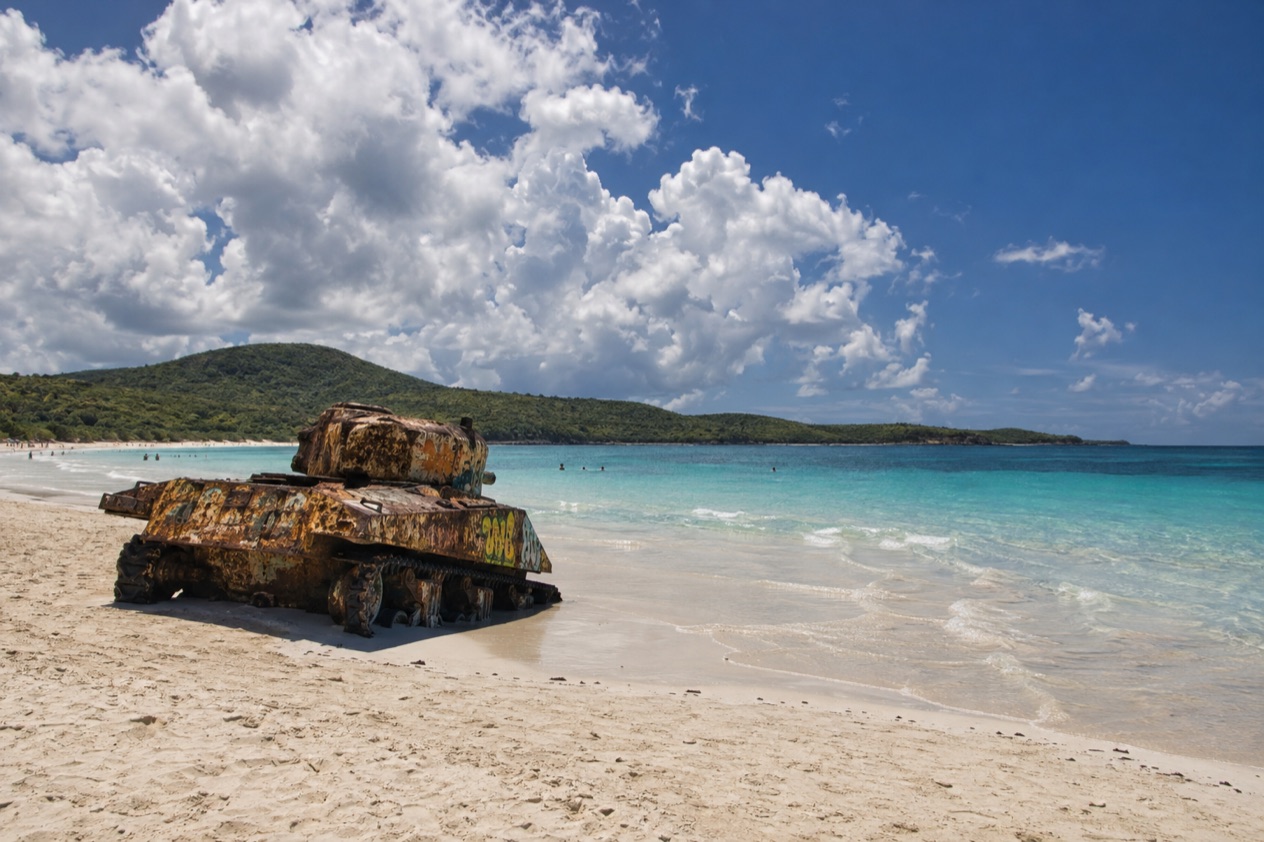
Within the Culebra National Wildlife Refuge, Flamenco is the picture-perfect beach, a wide curve of pale sand and clear, shallow water. Those rusted military tanks on the sand, now covered in graffiti and a favorite spot for photos, have also played a part in making the beach famous. You reach it from Dewey by golf cart, bike or taxi.
Go early, when the light is soft and the sand is still cool underfoot. Later in the day it fills with families, umbrellas and coolers. Bring your own shade and water, and plan to walk the length of the curve at least once.
Snorkeling at Tamarindo and Carlos Rosario
On the island’s west side, Tamarindo Beach draws snorkelers, and green sea turtles are frequently seen there feeding on the seagrass. Stay still in the water, give them space, and allow them to keep grazing. The water over the seagrass is shallow, which makes it an easy place to spend an hour.
At Carlos Rosario, a coral reef lies close to the beach, just a short walk from Flamenco, so it pairs perfectly with a morning spent there. A mask and snorkel are all you need, and a swim shirt helps with the sun. Because the water changes from one day to the next, check it before you head in.
Zoni and the quiet east
At the island’s eastern end, Zoni Beach lies wide and quiet, pulling in much smaller crowds than Flamenco. It is the place for a picnic, a walk along the sand and a long stretch with few other people around. On a July afternoon the trade winds make it feel a little cooler than the sheltered beaches.
Bring everything you need, food, water and shade, because it is a beach for settling in rather than for stopping by. Sunsets in town and the harbor are the other July pleasure: kayaks and small boats at anchor, the canal at Dewey, and an evening of fish, rice and cold drinks at a waterfront table.
A two-day itinerary for Culebra in July
Day 1 begins at Flamenco Beach as early as you can manage, because the morning light is best and the beach is nearly empty. Take a dip, stroll to the tanks, then keep walking to Carlos Rosario for your first snorkel above the reef. By late morning the sun is hot, so head back to Dewey for lunch at a casual harbor spot.
Spend the afternoon in the shade or in the room, then return to the water for a late swim when the light turns golden. Dinner is simple and local, in a small place near the canal. If a shower comes through, wait it out under a roof, since it rarely lasts long.
The morning of Day 2 takes you west to Tamarindo Beach, where you can snorkel among turtles that frequently feed on the seagrass there. Eat a picnic lunch or return to town, then spend the heat of the day with a slow walk along Dewey’s waterfront and the small shops. Come mid-July, find out about the Virgen del Carmen boat procession that takes place in the harbor.
In the late afternoon, drive east to Zoni Beach for a long, quiet stretch of sand and a view that empties of people by evening. Sunset comes after a long day, so there is no rush. If the weather turns wet, spend the time at a harbor café, in the shops or just waiting for the sun to come back out.
Is Culebra busy in July?
July certainly brings plenty of energy to Culebra, as summer breaks draw families and travelers from the main island and the mainland.
The island is small, so a busy week shows quickly. Rooms, golf cart rentals and restaurant tables are the first things to fill, and Flamenco Beach is the most crowded place, especially by late morning. The holiday around the Virgen del Carmen adds locals and visitors to the harbor in Dewey.
Book early, as a habit, for any week that includes mid-July, and still book ahead for the quieter weeks. Reserve a golf cart as soon as you have your dates, since there are only so many on the island. Zoni and the west-side beaches stay calmer, and early mornings and late afternoons are quiet almost everywhere. Ferries to the island leave from Ceiba, so plan your arrival around that.
What to pack for Culebra in July
Pack for sun, salt and short showers, and for days spent mostly in a swimsuit.
- Pack a snorkel and mask for Carlos Rosario’s reef and the turtles at Tamarindo
- A rash guard and sunscreen, since you will spend hours in the water
- A wide-brimmed hat, since midday shade is scarce
- A light rain layer, for the quick showers
- Water shoes and a dry bag, for rocky entries and golf cart rides
- Insect repellent, for warm evenings by the water
Good to know before you go
July falls inside the Atlantic hurricane season, which runs from June 1 to November 30, so follow the National Hurricane Center and local official alerts as the trip approaches. You can reach the island by taking a public ferry from Ceiba or by catching a quick flight, and after you arrive, bikes or golf carts are available for rent so you can get around. Reserve the cart and your room first, since both are limited on an island this small.
Culebra in July vs June and August
Moving the trip to June gives you slightly fewer rainy days and a sea that is just a shade cooler, with the island a little less full. You also miss the Virgen del Carmen procession in the harbor, which is the main reason to be in town in mid-July.
August is a bit warmer and wetter, with more rain days and a sea at its warmest. It is also deeper into the hurricane season, with the busiest weeks of the season starting from mid-August. Showers tend to be more frequent, though plenty of sun still comes between them.
Choose July if you want the harbor festival and the long summer days. If you care most about drier days, go with June, and save August for adaptable travelers who are okay with a few extra showers and fine with watching the forecast.
Is July a good time to visit Culebra?
July works well for snorkelers, beach lovers and anyone seeking a small island that holds a local festival, while folks who can’t stand heat and humidity will find it a tougher fit.
You will love it if your idea of a vacation is a morning swim, an afternoon in the shade and a harbor dinner. It is a good month for families, for turtle watchers and for travelers who like a place where the pace is set by the boats. Travelers who want cool air, dry days or an empty island should look at another month.
On arrival, sort out the golf cart and head to the water, starting with Flamenco in the morning. What makes July special here is the mix of a sea that feels like a warm bath and the boats of Dewey, dressed for the Virgen del Carmen, gliding past a waterfront full of neighbors.
Sources
- Open-Meteo / ECMWF ERA5, normals 1991-2020 computed for the grid cell at 18.3N 65.28W, checked October 8, 2026
- Open-Meteo Marine API, average 2015-2024, checked October 8, 2026
- sunrise-sunset.org, sunrise and sunset calculated for the 15th of the month, checked October 8, 2026
- NOAA National Hurricane Center, Climatology (https://www.nhc.noaa.gov/climo/), checked October 8, 2026
To plan your stay
- Things to Do in Culebra: Flamenco Beach, Snorkeling with Sea Turtles, Wildlife Refuge and Island Life
- Culebra from San Juan: Road to Ceiba, Ferry or Flight, and a Day on the Island
- Know Before You Go to Culebra: Getting There, Water, Beaches and Island Customs
- 3 Days in Culebra: Flamenco Beach, Snorkeling Coves and a Slow Harbor Town