
The day starts in the dark, with the first coffee from a gas station and the highway running east out of San Juan as the sky turns gray over El Yunque. By the time the road bends into Ceiba, the old naval base is behind the windshield and the smell of salt is in the air. Ahead lies a small island of pale sand, roaming chickens and golf carts, and this is how a morning leaving the capital turns into a day on Culebra.
How do you get to Culebra from San Juan?
The easiest way is to drive to Ceiba, about an hour from San Juan, and take the public ferry across to Culebra. The other route skips the road entirely: a short domestic flight leaves from the San Juan airport and lands on the island itself. Both routes are real choices, and which one fits depends on what you want from the day.
The main island lies about 17 miles west of Culebra, which makes for a quick hop across the water, yet no direct overland route from San Juan will get you there. The public ferries leave from Ceiba, never from Fajardo, which is a common mix-up because Fajardo is the bigger town nearby and the one that tends to come up in conversation. Ceiba lies a little south of Fajardo on the northeast coast, and the drive there follows the same highway corridor east from the capital.
What decides between the two routes is mostly how you like to travel. The ferry is the way most visitors reach the island and feels like part of the trip: you park or get dropped off at the dock, join the crowd with beach bags and coolers, and watch the main island shrink behind you.
The flight is for people who value the hours more than the experience, or who would rather not manage a car and a dock at all. In both cases you arrive in the harbor town of Dewey, the island’s only town, where a quiet waterfront and a handful of small restaurants and rental shops greet you.
Once you are there, the island is small enough that distance stops mattering. Travelers navigate by way of bikes and golf carts they rent, big resorts do not exist, and beaches, not a schedule, determine the rhythm. Plan the trip from San Juan with this in mind, because a day trip here is really a day of beaches with transport at either end.
The season matters a little as well. The Atlantic hurricane season runs from June 1 to November 30, with its peak in September, and a trip that depends on a ferry or a small plane is the kind that weather can reshuffle. Should your visit land in that stretch of the calendar, watch the National Hurricane Center along with alerts from local officials, since predictions can change fast.
Ways to get to Culebra from San Juan
Rental car to Ceiba, then the public ferry
This is the classic route. You pick up a car in San Juan, drive east for about an hour, leave it in Ceiba and board the public ferry to Dewey.
The drive itself is easy to follow, and the last stretch runs through a landscape that changes from city suburbs to palm-lined flats and the green slopes of the Sierra de Luquillo inland. Ceiba is a pleasant, low-key town, and the big empty grounds of the former Roosevelt Roads naval station, closed in 2004, tell you a lot about its recent history.
It suits travelers who like to stay flexible, who want to stop for breakfast on the way or who are combining Culebra with a few other days in the east. , so you will not need it once you cross. early, and to decide before you go whether you will rent a golf cart on the island, since that is how most people get around.
Flying from the San Juan airport
Domestic flights connect Luis Muñoz Marín International Airport to Culebra, and the flight is short, a hop over open water with views of the green hills of the main island, then the turquoise shallows and cays around Culebra. For anyone who does not want the road to Ceiba, this takes the car and the dock out of the picture and puts you on the island quickly.
The flight suits travelers short on time, anyone who gets seasick, and those who prefer a seat with a view to a crowded deck. The trade-off is that it is a small-plane trip, so you travel light: a beach bag, a mask and a change of clothes rather than a big cooler. Watch how you plan the return, since the last flight and the last boat are the two things that decide when you must be back at the harbor or the airstrip.
With a driver or on an organized tour
If you would rather not drive, the road leg to Ceiba can be handled by someone else, whether that is a private driver, a ride arranged through your hotel or a tour that bundles the transfer. The ferry crossing stays the same, but the part where you find parking and manage the logistics belongs to somebody else.
This works best for groups and for people who want to nap or look at the scenery on the way east. It is also a reasonable choice for a long day when you do not want to drive back to San Juan after hours on the beach and a ferry ride. Confirm the details directly with whoever you hire, since what is included varies from one arrangement to the next.
Options compared
| Option | Time each way | Best for | What to know |
|---|---|---|---|
| Rental car to Ceiba, then ferry | Road to Ceiba, then the crossing | Flexible days, stops on the way | Leave the car in Ceiba, ferries leave from there |
| Flight from San Juan | A short hop by air | Saving time, avoiding the road | Small plane, pack light |
| Driver or tour to Ceiba, then ferry | Road to Ceiba, then the crossing | No driving, groups | Check what the arrangement includes |
Put plainly, the car and ferry combination is the most familiar and the most flexible, the flight is the quickest and the simplest, and a driver takes the stress out of the road. None of them is wrong, and the choice usually comes down to whether you value time, freedom or ease.
For a single day on the island, the flight tends to leave the most hours for the sand, while the ferry gives you the slow, scenic approach and a sense of crossing to somewhere separate. If you plan to stay a night or two, the ferry becomes easier to justify, because there is no hurry and you can stop in Ceiba on the way out or back.
One thing the three share is that the island ends up shaping the schedule. Culebra is small, quiet and unhurried, so the best plan is a simple one: get there, get to the water, and leave enough margin at the end of the day to reach your boat or plane without watching the clock.
Making a day of it
The trick is to treat the island as a place to settle in rather than to tick off, and to leave San Juan early so that the first hours are not spent in transit.
Stops in Ceiba on the way
If you are driving and have time, Ceiba rewards a short stop. A quiet mood settles over Playa Los Machos, a beach the locals love, while Medio Mundo y Daguao’s mangroves form a green, watery world unlike any open sand you are about to see. Charco Frío y Las Tinajas, a spot for people who like a little exploring, is another of the town’s places of interest.
Every June, the town’s patron saint festival, the Fiestas Patronales de San Antonio de Padua, delivers live entertainment along with parades, games, artisans and regional food. If your trip falls then, it can turn the pass-through town into part of the day. Otherwise, keep your stop short and save your energy for the island.
Beaches on Culebra
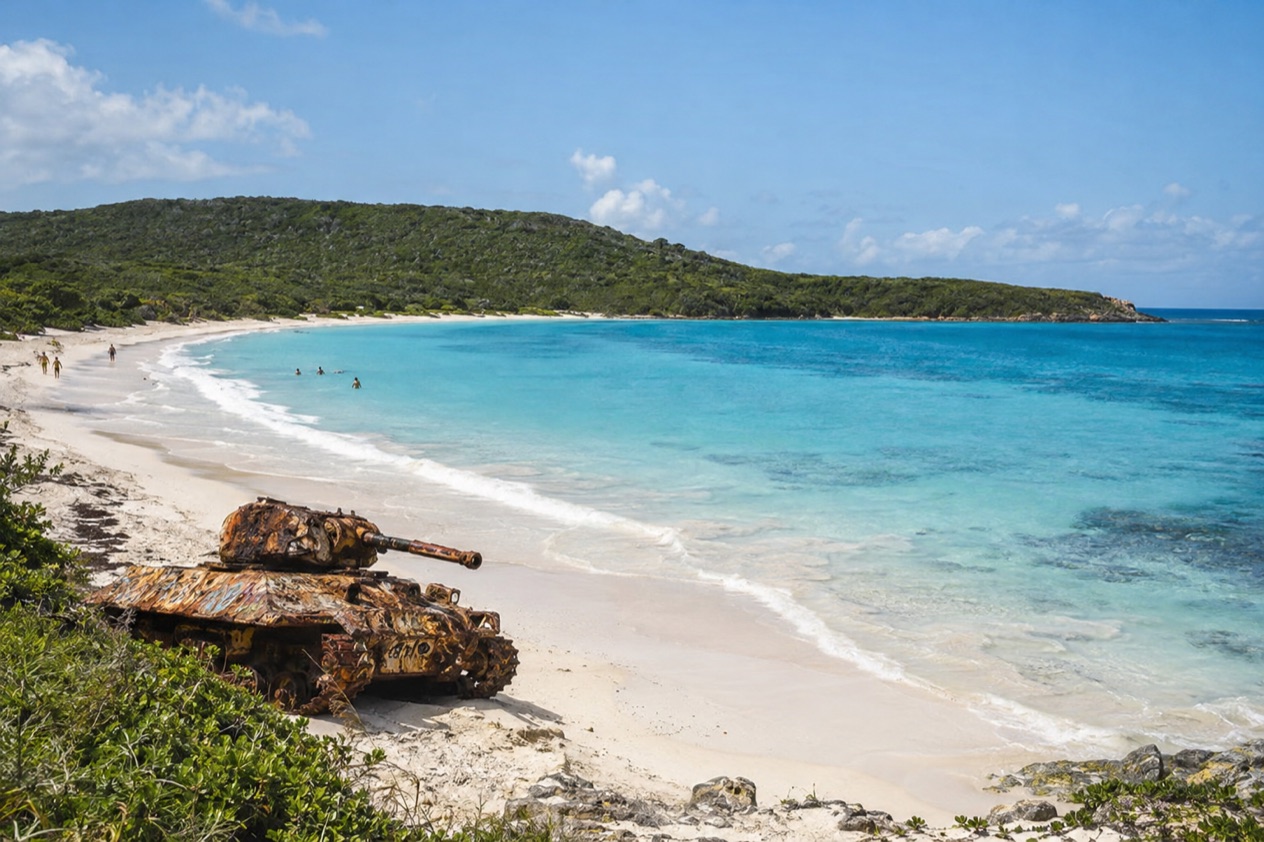
Everyone talks about Flamenco Beach, a broad horseshoe of light sand and transparent shallow water that lies within the Culebra National Wildlife Refuge. Two rusted Sherman tanks, left over from target practice, sit on the sand and make for the island’s best-known photograph. Near Flamenco, a short walk away, Carlos Rosario Beach is a snorkeling spot with a coral reef close to shore.
Tamarindo Beach, on the west side, draws snorkelers hoping to watch green sea turtles graze above the seagrass, but spotting one is luck, not a guarantee. At the eastern end, Zoni Beach is long, quiet and much less visited than Flamenco, a good answer when the main beach feels busy. Day to day and beach to beach, the situation shifts, so obey any flag, sign or lifeguard you find.
| Site | Open |
|---|---|
| Culebra National Wildlife Refuge public areas and hiking trails | Every day, 6:00 AM to 6:00 PM |
Dewey, wildlife and the pace of the island
Dewey is the island’s only town, a quiet harbor with small places to eat and rent a golf cart or a bike. You will likely share the road with feral chickens, which wander freely over much of the island and turn up at breakfast tables and parking lots alike. Fresh water on Culebra is brought from the main island by undersea pipeline, so a short shower and a refilled bottle are the island’s habits.
The Flamenco Peninsula hosts tens of thousands of pairs of nesting sooty terns, a vast seabird colony safeguarded by the refuge, while sea turtles lay their eggs on Culebra’s beaches. In Dewey’s harbor, a procession of boats around mid-July honors the Virgen del Carmen, the fishermen’s patron saint, which makes that a wonderful time to plan a visit.
Bring a mask and snorkel, sunscreen, water, a hat, light clothes and sandals you do not mind getting sandy. Leave the schedule loose and stay long enough that the beaches, not the transport, set the pace of the day.
Good to know before you go
Americans do not need a passport or a visa for Puerto Rico, the money there is the U.S. dollar, and flying from the mainland counts as a domestic trip. Culebra has no rivers or streams and gets little rain, so sun, wind and sea set the pace of life here, and no gear counts for more than a sun hat and lots of water.
The island is small, with one town and no big resorts, so go with an easy plan and an early start. During hurricane season, which runs from June to November, keep an eye on the forecast before you commit to a ferry or a flight, and use the usual common sense with your belongings on the beach.
Sources
- Wikipedia, Ceiba (https://en.wikipedia.org/wiki/Ceiba,_Puerto_Rico), checked October 8, 2026
- U.S. Fish and Wildlife Service, Culebra National Wildlife Refuge (https://www.fws.gov/refuge/culebra), checked October 8, 2026
- Wikipedia, Culebra (https://en.wikipedia.org/wiki/Culebra,_Puerto_Rico), checked October 8, 2026
- Wikipedia, Luis Muñoz Marín International Airport (https://en.wikipedia.org/wiki/Luis_Muñoz_Marín_International_Airport), checked October 8, 2026
- NOAA National Hurricane Center, Climatology (https://www.nhc.noaa.gov/climo/), checked October 8, 2026
To plan your stay
- Best Time to Visit Culebra: Weather by Month, Beaches, Crowds and Festivals
- Things to Do in Culebra: Flamenco Beach, Snorkeling with Sea Turtles, Wildlife Refuge and Island Life
- Know Before You Go to Culebra: Getting There, Water, Beaches and Island Customs
- Culebra in January: Weather, Flamenco Beach, Snorkeling and a Two-Day Plan