
At the baggage carousel in San Juan, the warm, humid air hits you and the question follows right behind: line up for a taxi, or go find the rental desk? Since Puerto Rico is part of the United States, a trip there feels like staying domestic, and your need for a car comes down to where you plan to stay. Stay in the capital and you can manage without wheels, but anyone who wants rainforest, coffee mountains, the west coast and the south will want a car.
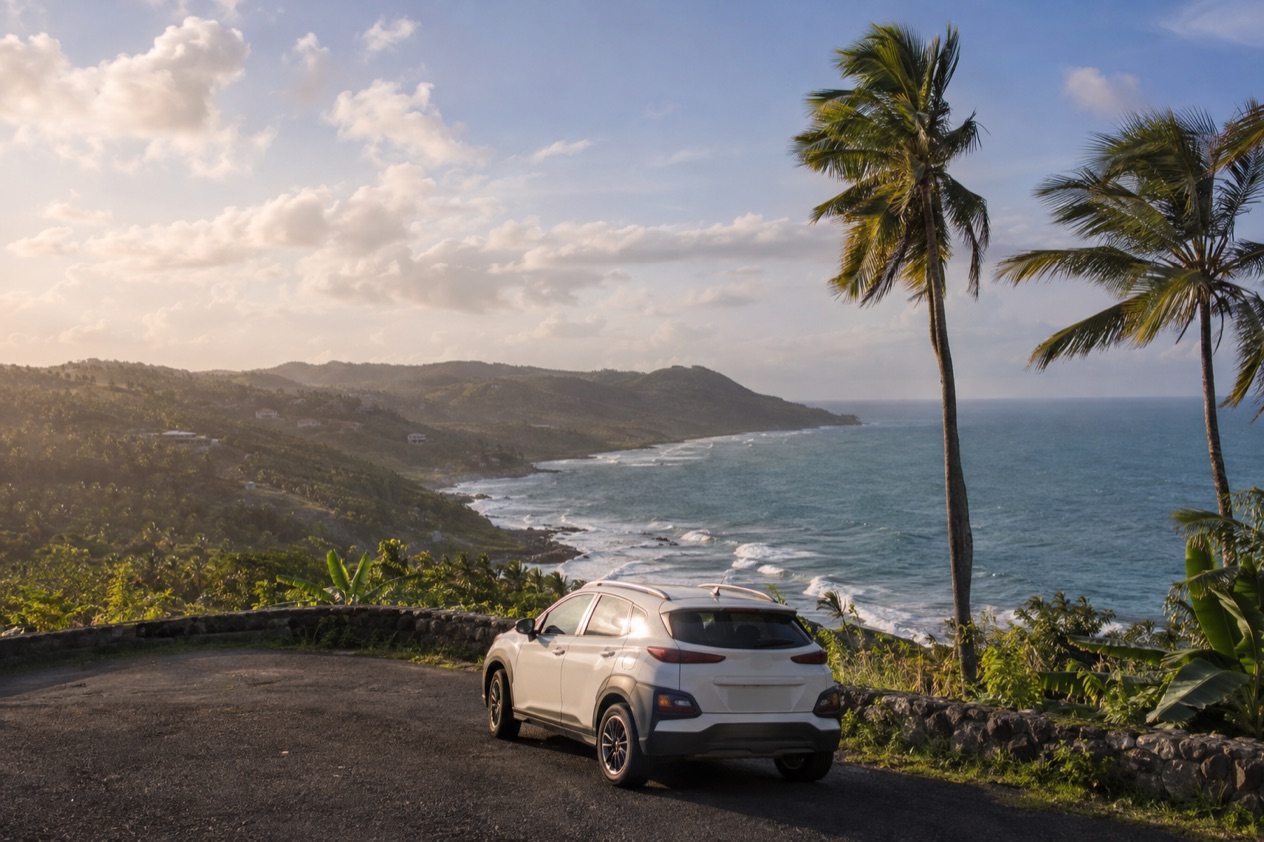
Do you need a car in Puerto Rico?
It depends on how much of the island you want to see, but for most visitors who leave the San Juan area, yes. At roughly 100 miles long and 35 miles wide, the main island sounds compact until you set out to fit a rainforest, a surf town and a colonial city into a single trip. The places people dream about are spread around the coast and up in the hills, and public transportation is built for locals going about their day, not for a sightseer’s schedule.
When a car makes the trip
The northeast holds El Yunque rainforest, Fajardo and the port of Ceiba. The west has Rincon and the beaches around Aguadilla. The south has Ponce, with a drier, hotter climate than the capital, and the central mountains hold the coffee towns and the cooler air. Linking two or three of those areas is where a car pays for itself, because you stop when a roadside kiosk smells good or a viewpoint opens up.
A car also suits families with beach gear, surfers with boards, and anyone who likes to wander without a timetable. You can drive out to a small town for pinchos (grilled skewers) at a roadside stand, stay for the afternoon rain to pass, and head back toward the coast when the light turns golden. Staying in a rental house outside the main towns is much easier with your own transportation too.
When you can skip it
If your plan is a few days in San Juan, a car is more of a burden than a help. Old San Juan is a place for walking its blue cobblestone streets, the forts, the plazas and the cafés. The hotel areas and the restaurant streets of the metro area are reachable by taxi or the other options below, and a car in the old city mostly means circling for a place to leave it.
The public ferries to both islands leave from Ceiba, and flights also connect San Juan with each island. Once there, you are staying on a small island with beaches and a different rhythm, so your main-island driving plan simply ends at the dock or the airstrip.
Getting around without one
There are real alternatives in and around the capital, and you can also mix them with a rental for only part of the trip. A common plan is a few car-free days in San Juan, then picking up a car on the day you head for the rainforest, the west coast or the south.
| Option | What it is | Where it goes |
|---|---|---|
| Tren Urbano | Metro system, 10.7 miles with 16 stations | San Juan metro area, including Bayamón and Guaynabo |
| Carros públicos | Jitney-style shared taxis, over 3,000 vehicles on almost 500 routes | Local and islandwide |
| Ferry | Public passenger boats | San Juan to Cataño, Ceiba to Culebra, Ceiba to Vieques, Ponce to Caja de Muertos |
| Domestic flights | Short hops from San Juan | Culebra, Mayagüez and Vieques |
Carros públicos provide local and islandwide transportation. They run on set routes, so they work best when you already know where you are headed and have time to spare. For a tight itinerary with several stops in a day, a car is the simpler tool.
What are the roads and tolls like in Puerto Rico?
Puerto Rico has a dense, well-connected network of more than 8,950 miles of paved roads, and the fast routes between big towns are tolled freeways called autopistas. The island lays out clearly on a map, with a main highway system along the coast and a web of smaller roads climbing into the hills. A few roads are even marked with Interstate shields, yet they link to no part of the mainland, so they make a fine photo and a little grin.
Tolls and AutoExpreso
Tolls here work differently from many mainland roads. AutoExpreso is the electronic toll system, and since 2012 it has been the exclusive form of payment on most Puerto Rico tollways. Cash is no longer accepted on most Puerto Rico tollways.
The E-ZPass or SunPass transponder from home will not help you, because AutoExpreso is not interoperable with other electronic toll systems outside the island. Think of the tolls as part of the rental conversation rather than something you sort out on the road. The detail to hold on to is that the autopistas are electronic only, and you want that settled before you leave the airport.
Highways and the scenic way
From San Juan’s airport, the roads fan out quickly. If you set out from Hato Rey, the Teodoro Moscoso Bridge carries you to the terminals, while drivers leaving Old San Juan get there via the Baldorioty de Castro Expressway, or PR-26. In the northwest, the airport near Aguadilla is reached by two connector highways from PR-2, which is the road you will likely use along the west coast.
Between San Juan and Ponce, PR-1 is the old way across the island. It is now mostly used by people living nearby, and it serves as a scenic route for those who prefer to see towns, small plazas and roadside stands rather than watch an autopista slide by. The drive itself makes the trip part of your day, including a midday meal at some point on the route, and it fits someone who has hours to spare instead of someone hurrying to catch a ferry or a plane.
Driving with the island’s rhythm
The weather shapes a drive here more than anything else. On this island, no areas get more rain than the central mountains and the north coast, which means that after a bright coastal morning, climbing up to the coffee towns can turn the day gray and misty by afternoon. The south and west coasts usually see less rain, so a day in Ponce can feel like a different world from one in the rainforest.
Plan the long drives for the morning, leave room for a stop in a town plaza, and keep the evening for a short ride rather than a long one. Winding mountain roads and unfamiliar signs are easier in daylight, and Spanish signs are mixed with English ones, so a few words of Spanish never hurt. When hurricane season arrives, it pays to follow the National Hurricane Center along with alerts from local officials, but ahead of those months, what you are able to do usually comes down to the weather.
Can you rent a car in Puerto Rico with a U.S. license?
Puerto Rico is a U.S. territory, and U.S. citizens traveling from the mainland do not need a passport or a visa. Since Puerto Rico belongs to the United States, citizens traveling from the mainland do not need a passport or a visa. Check your rental reservation before you fly.
Picking up the car
Most visitors pick up a car at Luis Muñoz Marín International Airport, the main gateway on the north coast. Check your airline’s current terminal before you fly. Knowing your terminal helps you picture the first hour on the ground.
Two more cities, Aguadilla in the northwest and Ponce in the south, also welcome commercial flights. Those airports are handy when your vacation is based on the west coast or the south, because you can skip the long cross-island drive on arrival day. Landing at one and flying home from another is a neat way to avoid retracing your route, if your plans allow it.
Choosing where to start and end
A loop is the classic choice. You might head east from San Juan to the rainforest and Fajardo, swing across the south to Ponce, climb into the central mountains and finish along the west coast around Rincon. A one-way trip can save backtracking, while a simple round trip from San Juan keeps things straightforward for a shorter stay.
Think also about where the car sleeps. In Old San Juan, the car is something you do not need for several days, so some travelers spend the first nights in the capital and pick up the keys only when they leave town. That keeps the rental days focused on the parts of the island where you really want them, and leaves the city to your own two feet.
What to settle at the counter
Check your reservation’s driver, insurance and deposit terms before you fly. The same goes for the tolls, since the electronic system is the only way to pay them on most tollways. Check how your rental handles AutoExpreso before you fly.
Once the keys are in your hand, the island opens up. Many of its best moments are small ones: a bakery stop for a warm pastry in a mountain town, a beach found at the end of a side road, a bioluminescent bay visited on a moonless night. A car is simply what links those pieces, and it is a good thing to hold for only the stretch of days that needs it.
Good to know before you go
Everything is paid for in U.S. dollars, so there is no currency to exchange. Puerto Rico remains warm and humid throughout the year, but the stretch from about December to April tends to be drier, while about May to November brings more rain. The Atlantic hurricane season runs from June 1 to November 30, with its peak around September 10, so a driving trip in those months deserves an eye on the forecast and on local official alerts.
Pack sunscreen, a light rain jacket and shoes that handle wet stones, and keep your phone charged for maps in the hills. Park in the daylight, leave nothing in view, and treat the car like a rental anywhere else on the mainland.
Sources
- Wikipedia, Transportation in Puerto Rico (https://en.wikipedia.org/wiki/Transportation_in_Puerto_Rico), checked October 8, 2026
- Wikipedia, AutoExpreso tolls (https://en.wikipedia.org/wiki/AutoExpreso), checked October 8, 2026
- Wikipedia, Luis Muñoz Marín International Airport (https://en.wikipedia.org/wiki/Luis_Muñoz_Marín_International_Airport), checked October 8, 2026
- Wikipedia, Rafael Hernández Airport (Aguadilla) (https://en.wikipedia.org/wiki/Rafael_Hernández_Airport), checked October 8, 2026
- Wikipedia, Mercedita Airport (Ponce) (https://en.wikipedia.org/wiki/Mercedita_Airport), checked October 8, 2026
- NOAA National Hurricane Center, Climatology (https://www.nhc.noaa.gov/climo/), checked October 8, 2026
To plan your stay
- Best Time to Visit Puerto Rico: Dry Season, Hurricane Season, Beaches and Festivals
- Where to Stay in Puerto Rico: San Juan, Rincon, Vieques and the Best Areas for Your Trip
- Getting Around Puerto Rico: Rental Cars, Tolls, Carros Publicos and Ferries to Culebra and Vieques
- Know Before You Go to Puerto Rico: ID, Money, Getting Around and Local Customs