
On an October morning in Dewey, before the day gets going, you hear roosters, the clink of halyards in the harbor, and a golf cart easing toward the bakery. The ferry from Ceiba has not yet unloaded its first crowd, and the water in the canal is the color of green glass. October on Culebra is a warm, unhurried month for swimming, snorkeling and doing very little, with the island’s beaches often feeling like your own.
What is the weather like in Culebra in October?
October in Culebra is hot, humid and showery, with warm nights and a sea that stays bathwater-warm.
| Month | Average high (°F) | Average low (°F) | Rain days | Sea (°F) |
|---|---|---|---|---|
| September | 82.9 | 79.9 | 12.2 | 86.7 |
| October | 82.4 | 79.4 | 12.8 | 86.6 |
| November | 81.1 | 78.4 | 10.6 | 84.4 |
Mornings start soft and bright, and the best hours for the beach are usually between breakfast and early afternoon. When noon arrives, the sunshine beats down and the atmosphere feels thick, so a hat, some shade and lots of water count for more than a jacket would. Nights barely cool down, which means dinner outside in a T-shirt and sandals.
Rain falls on a good share of the days, but it mostly comes as passing showers, often a sudden afternoon downpour that clears within the hour and leaves the light sharp and clean. A day of rain from dawn to dusk is the exception, and an inch or more in a single day is rare. Because the island is small and low, there is no dry side to escape to, so the habit is simply to wait a shower out on a porch or under the beach trees.
Pack for sun first and rain second. Days run about 11 hours and 46 minutes long in mid-month, so there is time for a full beach morning and a slow sunset. As your trip gets close, keep an eye on the National Hurricane Center, since October falls within Atlantic hurricane season.
Can you swim in Culebra in October?
Yes, the sea is about as warm as it gets all year, warm enough to stay in for a long time without ever feeling a chill.
Culebra lies off Puerto Rico’s northeast coast. The island’s most famous place to swim is Flamenco Beach, a broad arc of light sand and transparent, knee-deep water. Because conditions change from one day and one beach to the next, look at the water before you go in, and follow whatever a flag, a sign or a lifeguard tells you if one is present.
Snorkelers have two good choices. On the west side, green sea turtles frequently feed on seagrass at Tamarindo Beach, and from Flamenco a brief stroll leads to Carlos Rosario Beach, where coral lies close to shore. Visibility drops after heavy rain, so the calmer mornings after a dry night usually give the clearest view. Bring a mask, a snorkel and sunscreen, and keep your distance from the turtles.
Families and nervous swimmers tend to like the shallow, gradual entry of Flamenco. Zoni Beach at the eastern end is longer, quieter and more open, so take a look at the surf before settling in.
What to do in Culebra in October
October has no big festival on Culebra. Every July, midway through the month, the island’s biggest event takes place: a boat parade honoring fishermen’s patron saint, the Virgen del Carmen. What October gives you instead is the island at an easy pace: empty stretches of sand, open tables at dinner and long afternoons with nothing scheduled.
Days here follow a simple rhythm. A rented golf cart or a bike carries you between beaches, where you swim, grab something grilled and keep going. It is a place where the plan fits on the back of a napkin, and a passing shower is just a reason to order another coffee.
Flamenco Beach and the tanks
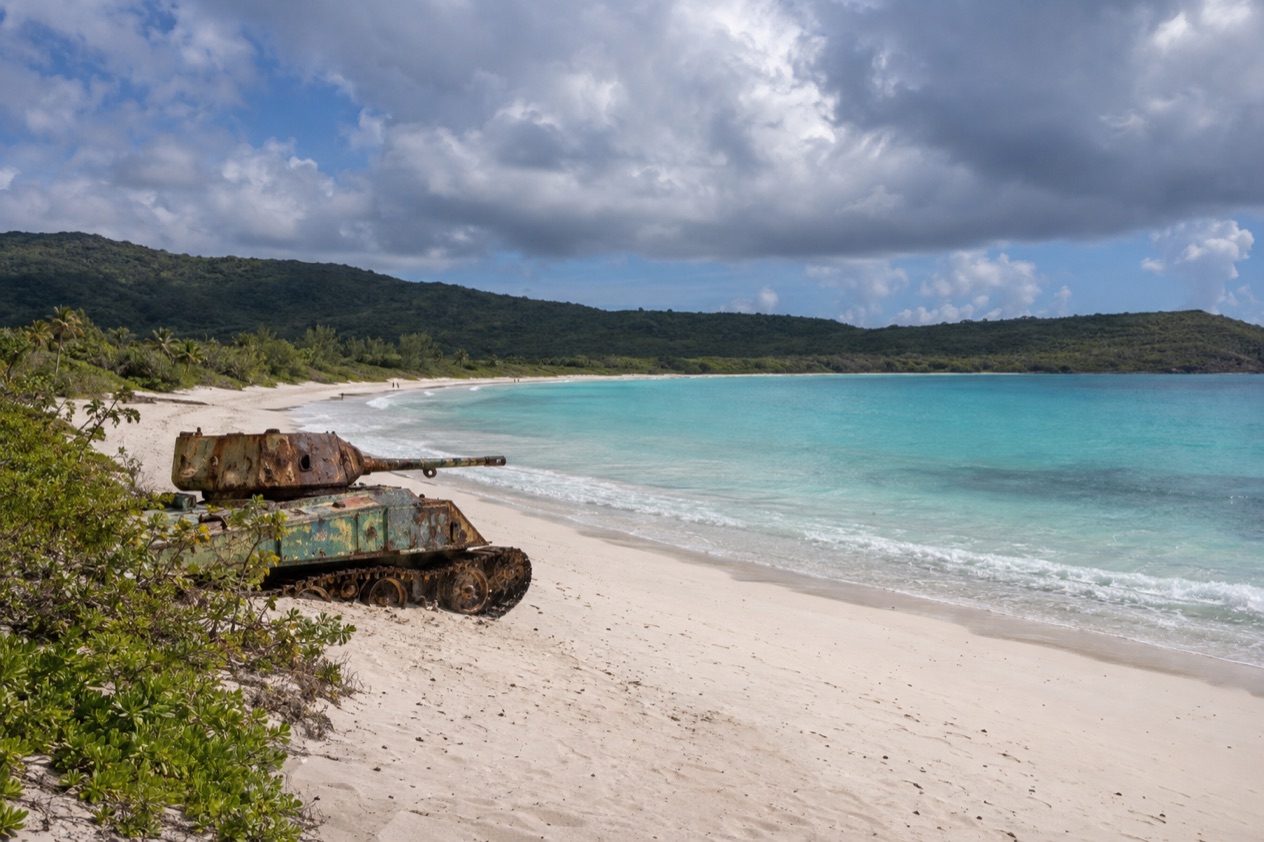
The postcard of Culebra is Flamenco, a horseshoe of pale sand within the Culebra National Wildlife Refuge, where the water is shallow and clear and rusted military tanks sit abandoned on the beach. The tanks are now covered in graffiti and sea air, and they make for some of the most photographed spots on the island. Kiosks near the entrance sell grilled fish, empanadillas and cold drinks, and the shade under the trees is welcome by midday.
Arrive at first light, while the beach lies bare and the glow is gentle, then linger until midday. In October the crowds are often thinner than in winter or spring, so you may have long stretches of beach to yourself. Bring water shoes if you want to walk the rocks at the far ends, and keep an eye on the sky, since afternoon showers can roll in quickly.
Snorkeling at Carlos Rosario and Tamarindo
From Flamenco, Carlos Rosario is just a brief stroll away, and because the coral reef lies near the shore, reaching it takes neither a boat nor a lengthy swim. The coral reef lies close to shore. Go in the morning, before the wind picks up and the water gets stirred.
Tamarindo, on the west side, is where people go for sea turtles. Grazing on the seagrass is where green turtles are frequently spotted, gliding along at a slow pace and coming up to breathe. Think of it as a possibility, not a guarantee, so drift without splashing and allow them to continue eating. Pack a rash guard if you tend to burn, since you will spend a long time face-down in the sun.
Zoni Beach and the quiet east
On the island’s eastern tip sits Zoni, a long and quiet beach with far fewer visitors than Flamenco. The drive out gives you a look at the island’s scrubby hills and small bays, and the beach itself feels open and wild, with the nearby cays on the horizon. Bring your own snacks and water, since there is little around.
It suits a lazy half day: a long walk along the sand, a swim if the water looks gentle and a nap under a tree. Check the surf first, because the east side faces open water and conditions can change from one day to the next.
Dewey, the harbor town
Dewey is the island’s only town, a small grid of low houses along a canal with a swing bridge, a few bakeries, fish shacks and open-air bars. In the evening, people drift to the waterfront for a drink, and the pace stays slow. Show up for fried fish or a bowl of seafood stew, and afterward keep an eye on the boats as they bed down for the night.
Rainy afternoons suit the town well. Wander the shops, sit down for a long lunch and wait for the clouds to move off, then walk the harbor as the light turns gold. Rooms and tables are usually easier to find in October than in the busy winter months.
A two-day itinerary for Culebra in October
Day 1 begins with Flamenco Beach, early, while the sand is empty and the air is still soft. Swim and walk past the tanks. Around midday, once the sun turns intense, head into the shade to eat lunch, then make your way to Carlos Rosario and snorkel the reef.
In the late afternoon, drive back to Dewey, return the sand to your shoes and settle in at a waterfront spot for dinner. Fish, rice and beans and a cold drink are the natural choice. If a shower arrives, take it as a cue to linger over dinner rather than rush.
Day 2 heads west to Tamarindo in the morning for turtles and seagrass, when the water is usually clearest. Eat a simple lunch in town, then spend the hot afternoon at Zoni Beach in the east, where the quiet suits a long, slow swim and a nap.
Come back to Dewey before dark and walk the canal as the lights come on. If the weather turns, spend the rainy hours in the bakeries and shops of town, then try the beaches again once the sky clears. Light fades in the early evening, so plan to be off the roads by dusk.
Is Culebra busy in October?
No, October is one of the quieter months on Culebra, with fewer visitors and a calmer feel than the winter and spring peaks.
The summer crowds have gone home, schools are back in session and the island settles into a slower rhythm. Beaches that fill up in high season, Flamenco above all, often have plenty of space. Restaurants and bars still open their doors, though some small businesses may keep shorter schedules or close for a break, so it helps to ask your host about places before you plan a meal around them.
In October, rooms and rental golf carts tend to be more available than during peak weeks, yet because Culebra is a small island with few places to stay and a small supply of carts, booking in advance is still smarter than hoping to walk in. Weekends can feel livelier, especially with day-trippers from the main island.
What to pack for Culebra in October
Think light, quick-drying and sun-ready, with something to handle a sudden shower.
- A light rain jacket or poncho, for the passing afternoon downpours
- Bring a mask and snorkel along, and you can see the turtles at Tamarindo plus the reef at Carlos Rosario.
- A wide-brim hat and sunscreen, because the sun stays strong even when clouds roll in
- Water shoes, for rocky entries and walks along the shore
- A dry bag, to protect your phone and wallet on the cart and the beach
- Insect repellent, for the evenings by the harbor
Good to know before you go
October falls inside the Atlantic hurricane season, which runs through November 30, with most activity between mid-August and mid-October. Stay tuned to the National Hurricane Center plus local official alerts, and stay flexible with your plans.
A quick flight or the public ferry from Ceiba will bring you to Culebra, and visitors get around on rented golf carts and bikes once they land. Dewey is the only town, with a calm harbor and no big resorts, so reserve your stay and your ride before you leave.
Culebra in October vs September and November
Moving the trip a month earlier to September gives you almost the same weather and an equally warm sea, but you are closer to the peak of the hurricane season, when activity is at its highest. Showers feel much the same, and the island is similarly quiet. It suits travelers who want the lowest crowds and are comfortable with a flexible plan.
November is a little cooler and a little drier, with a sea that has started to ease down from its peak warmth. It is still pleasant for swimming, and the end of the hurricane season is in sight. The island starts to pick up as the winter visitors begin to arrive, so rooms and carts become harder to find as the month goes on.
Choose September or October if the warmest water and the emptiest beaches matter most, and November if you prefer fewer showers and are happy to share the sand with a few more people. October is a good middle ground.
Is October a good time to visit Culebra?
Correct: for those seeking calm shores, mild seas and unhurried days, and who don’t mind a brief rain shower plus a schedule that can shift.
Swimmers, snorkelers and anyone happy to spend days moving between a beach and a shady table will love it. Travelers who need guaranteed sun every hour, or who want a busy nightlife and festivals, should pick another month. Since Culebra is tiny and October stays calm, grab your golf cart or bike the moment you get there, then make for the beach before the morning light fades.
What stays with you from October here is the combination of the warmest sea of the year and the quietest sand: a turtle surfacing over the seagrass at Tamarindo, and a long stretch of Flamenco with only your footprints on it.
Sources
- Open-Meteo / ECMWF ERA5, 1991-2020 normals calculated on the grid cell 18.3N 65.28W, checked October 8, 2026
- Open-Meteo Marine API, average 2015-2024, checked October 8, 2026
- sunrise-sunset.org, sunrise and sunset calculated for the 15th of the month, checked October 8, 2026
- NOAA National Hurricane Center, Climatology (https://www.nhc.noaa.gov/climo/), checked October 8, 2026
To plan your stay
- Things to Do in Culebra: Flamenco Beach, Snorkeling with Sea Turtles, Wildlife Refuge and Island Life
- Culebra from San Juan: Road to Ceiba, Ferry or Flight, and a Day on the Island
- Know Before You Go to Culebra: Getting There, Water, Beaches and Island Customs
- 3 Days in Culebra: Flamenco Beach, Snorkeling Coves and a Slow Harbor Town