
In May, the little harbor of Dewey wakes early. Fishing boats putter out past the swing bridge, roosters announce the morning from every yard, and golf carts rattle down to Flamenco Beach before the sun gets serious. The island is hot, green and unhurried, with a sea that has finally warmed up. May is a good month for beach days, snorkeling and slow island driving on Puerto Rico’s quietest inhabited island.
What is the weather like in Culebra in May?
May in Culebra is hot, humid and mostly sunny, with a few short showers that pass quickly and a steady trade wind that keeps the heat from feeling heavy.
| Month | Average high (°F) | Average low (°F) | Rain days | Sea (°F) |
|---|---|---|---|---|
| April | 78.9 | 76.7 | 3.9 | 81.6 |
| May | 80.4 | 78.0 | 8.0 | 83.7 |
| June | 81.8 | 79.4 | 7.0 | 85.0 |
Mornings are the best hours: the light is clear, the air is a little softer, and the beaches are nearly empty. By midday the sun is strong and the shade of a sea grape or an almond tree becomes precious. Nights stay warm enough that you will not want more than a thin layer, and dinner outside in shorts is the norm.
Rain arrives as brief tropical showers, often in the afternoon or overnight, and then the sun returns. A truly soaking day is unusual. The month is clearly wetter than April, so a shower is more likely than not to cross your path at some point, but it rarely rearranges a whole day.
Pack for sun first: the light bounces off pale sand and shallow water and burns quickly, even under cloud. The sea is warm and inviting, a few degrees above April, and the wind usually makes the shaded afternoon pleasant.
Can you swim in Culebra in May?
In May the water typically offers a welcome break from the noon heat, and it stays warm enough for swimming and snorkeling with no wetsuit.
Water conditions shift daily and vary by beach, so check them before entering. With its broad curve of light sand and transparent, shallow water, Flamenco Beach makes an obvious initial stop for families and for anyone eager to ease into the sea.
Out west, snorkelers head to Tamarindo Beach, where green sea turtles frequently turn up feeding over the seagrass. A coral reef sits right off the coast of Carlos Rosario Beach, and from there Flamenco is just a brief stroll.
Since the water shifts daily and varies by beach, check it out before entering. If a flag, sign, or lifeguard is present, do what they say, and keep your distance from turtles and coral when you snorkel.
Bring a mask, a rash guard or a light shirt for the sun, and sunscreen. If you would rather swim where hardly anyone else is, Zoni Beach stretches long and peaceful at the island’s eastern tip.
What to do in Culebra in May
Part of the island’s charm in May is that no major festival takes place. The big patron-saint celebration, the Virgen del Carmen boat procession in Dewey, comes around mid-July. In May the island belongs to its beaches, its reefs and its slow rhythm, with the winter visitors gone and the summer rush not yet begun.
A day here usually means a beach, a snorkel, a long lunch and a golf cart ride along roads that wind between hills and quiet coves. With just one town, Dewey, plus a quiet harbor and no big resorts, Culebra moves visitors around on bikes and golf carts they rent. The waterfront has small restaurants and bars where fresh fish, rice and beans and cold drinks arrive without ceremony.
Flamenco Beach and the tanks
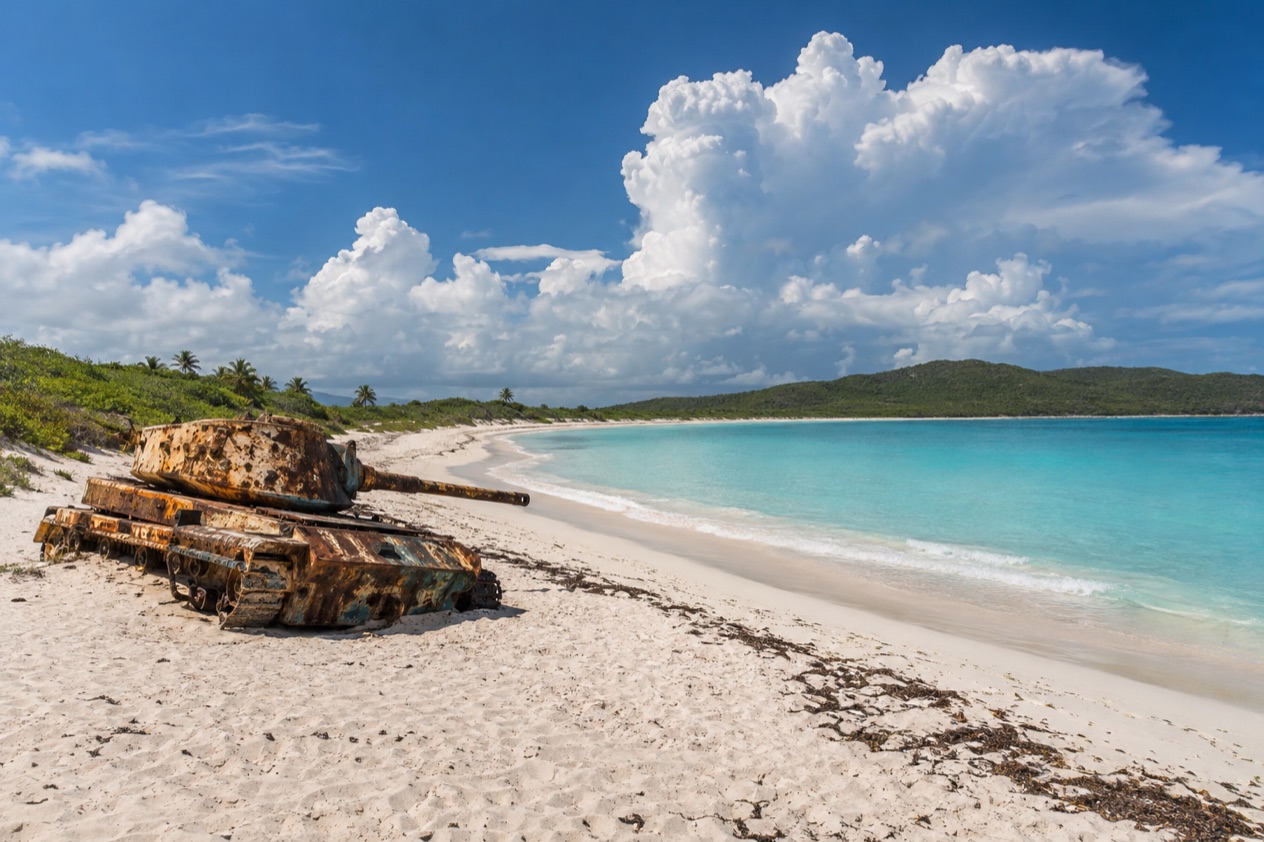
Within the Culebra National Wildlife Refuge sits Flamenco Beach, a broad horseshoe shaped by light colored sand and transparent, gentle water. Its fame comes from rusted military tanks abandoned on the sand, today layered with graffiti and a beloved place to take pictures. The walk along the water, with the hills curving around, is one of the island’s great pleasures.
Go early, when the sand is empty, the light is soft and the sea is often very still. In the afternoon, the kiosks behind the beach are good for a cold drink and something fried. This beach suits families, couples, and anyone who simply wants to float. Bring shade, since the middle of the sand has little of it.
A short walk from Flamenco Beach brings you to Carlos Rosario Beach, with a coral reef close to shore. It is a good place to bring a mask after an hour on the sand, and it is quieter than its famous neighbor.
Tamarindo and turtle snorkeling
Many visitors come to the island’s west side for Tamarindo Beach, the snorkeling beach they have in mind. Over the seagrass, green sea turtles frequently feed, rising slowly headfirst to take in air. You may see them, though nature gives no promises, and the calm patience of watching from a respectful distance is half the experience.
The beach is a narrow ribbon with rocky patches, so water shoes help. Morning light makes the visibility better, and the afternoon sun can turn the surface glary. Keep your fins off the seagrass and give the turtles space.
Zoni and the quiet east
On the island’s eastern tip, Zoni Beach stretches long and peaceful, drawing far fewer visitors than Flamenco. The drive out passes scrubby hills, goats on the verge and views across to the neighboring islets. The trade wind blows steadily here, and the waves can be livelier than in the sheltered bays, so check the water first.
It is a place for a picnic, a long walk and a book under a tree. Bring water, snacks and shade, because there is little around. Evening here is lovely, with the light turning gold on the sand, and you may have the whole stretch nearly to yourself.
Back in Dewey, the harbor is the evening gathering place. Boats rock at their moorings, the swing bridge connects the two sides of the lagoon, and the small bars fill with divers, sailors and families sharing grilled fish, tostones and cold beer or a rum drink.
A two-day itinerary for Culebra in May
Day 1 begins with an early start for Flamenco Beach, while the sand is still cool and the sea often at its quietest. Walk the length of the horseshoe, see the tanks, and swim before the sun climbs. By late morning, move to the shade of the kiosks for a long lunch of fried fish or a simple sandwich, and let the hottest hours pass.
In the afternoon, walk over to Carlos Rosario Beach for a snorkel along the reef, then return to Dewey. Sunset comes after a day of about thirteen hours of light, so you have time for a drink on the waterfront and a dinner at one of the small harbor restaurants.
Day 2 heads west to Tamarindo Beach in the morning, where green sea turtles are often seen feeding over the seagrass. Spend a long while snorkeling, then drive the quiet roads east toward Zoni Beach for a picnic lunch and a walk on its long sand.
Spend the late afternoon at the harbor or by a swimming spot near town, and have a last dinner in Dewey. If rain sets in, take the day slowly: a long lunch in town, a stroll through the shops and galleries, and a card game on a covered porch until the sun returns.
Is Culebra busy in May?
Culebra is moderately quiet in May, busier on weekends and holiday weeks, and calm in between.
The island is small, with limited rooms, rental golf carts and restaurant tables, so even a modest crowd is felt. Weekends bring day-trippers and visitors from the main island, and the beach kiosks and harbor restaurants get lively. Midweek is gentler, with plenty of space on the sand and in the water.
You can reach Culebra by public ferry from Ceiba or by a short flight.
Restaurants are small, and some close on certain days, so a short plan for dinner helps. Flamenco Beach fills up by late morning on weekends, which is another reason to arrive early. Zoni and Tamarindo stay calmer than Flamenco most days.
What to pack for Culebra in May
Pack light, breathable clothes and plan for sun, salt water and the occasional shower.
- Sunscreen and a hat, because the sun reflects off pale sand and shallow water.
- Bring a snorkel and mask for Tamarindo’s turtles and the reef at Carlos Rosario.
- Water shoes, for rocky entries and uneven sand.
- A light rain jacket or a dry bag, for short afternoon showers.
- A long-sleeved swim shirt, to protect your shoulders during long snorkels.
- A refillable water bottle, since the days are hot and shade is scarce.
Good to know before you go
May comes just before the Atlantic hurricane season, which runs from June 1 to November 30, so the month sits outside the official season, though it is wise to follow the National Hurricane Center and local alerts as the season approaches. Culebra has just one town, Dewey, and because people get around on rented bikes and golf carts, reserve your cart early. Reaching Culebra is possible by public ferry out of Ceiba or by a quick flight, and whichever option you choose, lock in that reservation ahead of booking your lodging.
Culebra in May vs April and June
Moving four weeks earlier, to April, brings drier days and a sea that is a touch cooler. Showers are fewer, so a beach day is easier to count on, and the island is typically in its calmer stretch after the busiest winter and spring weeks. It suits anyone who wants dependable sun and does not mind a slightly fresher swim.
Moving four weeks later, to June, makes the sea warmer still and the air a little hotter. Rain is similar to May, and the Atlantic hurricane season begins on June 1, so the weather deserves closer attention. The island feels more like summer, with more visitors on weekends and school breaks.
May sits comfortably between the two: warm water, mostly sunny days and a quiet island. Choose April if you want the driest conditions, June if you want the warmest sea, and May if you want the balance of both with few crowds.
Is May a good time to visit Culebra?
For beach lovers, snorkelers, and anyone drawn to a quiet island with warm water and long days, May is indeed a wonderful time.
It suits couples, families and divers who want to spend most of the day outside. It is less ideal for anyone who needs guaranteed dry weather or who wants a lively festival calendar, since the island’s big celebration comes in July. Surfers will also do better elsewhere in winter.
Once you get there, lock in your golf cart and plan that first beach morning, then let the water shape the rest of your trip. Go early to Flamenco, save Tamarindo for a clear-water snorkel, and keep Zoni for a quiet afternoon. May in Culebra is the month of warm water, sea turtles over the seagrass and rusted tanks glowing in the early light.
Sources
- Open-Meteo / ECMWF ERA5, 1991-2020 normals calculated on the grid cell 18.3N 65.28W, checked October 8, 2026
- Open-Meteo Marine API, average 2015-2024, checked October 8, 2026
- sunrise-sunset.org, sunrise and sunset calculated for the 15th of the month, checked October 8, 2026
- NOAA National Hurricane Center, Climatology (https://www.nhc.noaa.gov/climo/), checked October 8, 2026
To plan your stay
- Things to Do in Culebra: Flamenco Beach, Snorkeling with Sea Turtles, Wildlife Refuge and Island Life
- Culebra from San Juan: Road to Ceiba, Ferry or Flight, and a Day on the Island
- Know Before You Go to Culebra: Getting There, Water, Beaches and Island Customs
- 3 Days in Culebra: Flamenco Beach, Snorkeling Coves and a Slow Harbor Town