
Before the sun clears the hills, fishermen are already standing on the old pier at Crash Boat, and the first jets of the morning are lifting off the long runway nearby. Aguadilla sits in the middle of a coastline that rewards anyone willing to leave early. Surf towns, lighthouses, cliffs, cheese kitchens and sunset beaches all lie within an easy morning’s drive, and each makes a full day out.
What are the best day trips from Aguadilla?
The best day trips from Aguadilla stay on the northwestern corner of the island, south to Rincón and east to Isabela, with Crash Boat Beach as the easiest warm-up on your own doorstep. These trips stay in northwestern Puerto Rico.
- Crash Boat Beach, for a morning at a pier left over from the Ramey Air Force Base days, with room to swim, snorkel and watch the fishing boats.
- Rincón town and its surf beaches, for Domes, Steps and the Thursday Art Walk in the plaza.
- Punta Higuero Lighthouse and Tres Palmas Marine Reserve, for a slower day of cliffs, reef and sunset on the Rincón coast.
- Isabela’s beaches, for Jobos, Montones and a long lunch by the Atlantic.
- Turn inland from Isabela’s shore and you will find more treasures, among them the Guajataca Tunnel, the San Antonio de la Tuna Ruins, and white cheese in banana leaves, nearly as fresh as you could hope for.
- Pico Atalaya (La Bandera) above Rincón, for a wide view over the west coast.
- A whale-watching day from Rincón, for humpbacks in the winter months.
The best day trips from Aguadilla
Crash Boat Beach
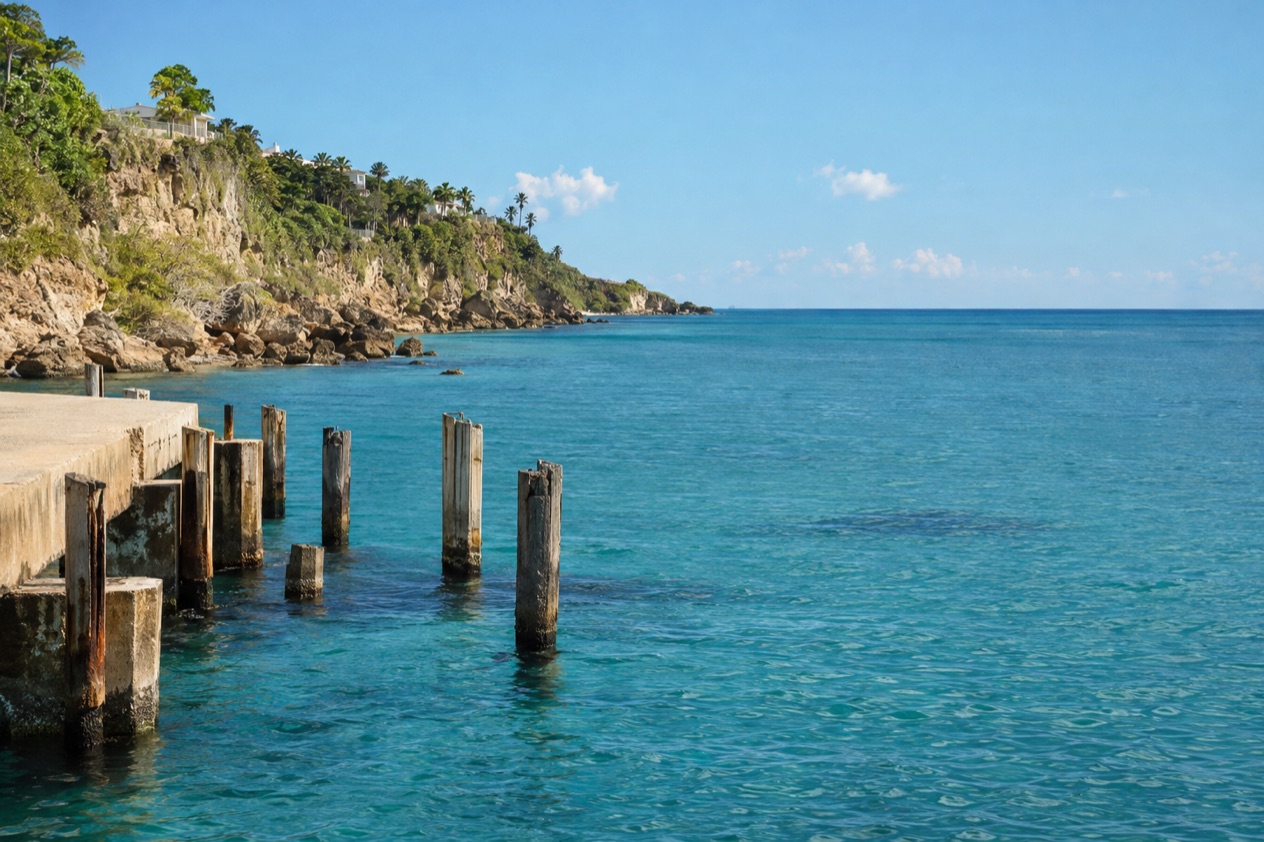
Crash Boat is the nearest of all the trips, on the coast halfway between the old Ramey base (today’s airport) and the center of Aguadilla. The name of the beach comes from the military rescue boats whose pier once served as a launch point to reach downed airmen. Sand eventually built up around it and made it useless for docking, so now the weathered remains of the pier serve fishermen and anyone who wants a place to sit and look at the water.
Swimming, sunbathing, surfing and snorkeling are all possible here, and on weekends local families pack the sand. Early morning is the quietest and best for photographs, when the colored fishing boats sit against the pier. Along this Atlantic-facing shore, conditions shift from one day to the next, so look at the water before you go in and follow whatever flag, sign or lifeguard is present.
Plan a half day. It pairs easily with an afternoon in Aguadilla itself, or with a late lunch at one of the casual seafood spots near the beach. If exploring near the old pier is on your list, pack water shoes.
Rincón: Domes, Steps and the town plaza
A quick drive south down the coast by car from Aguadilla brings you to Rincón, the island’s surf town. International fame came to it thanks to the 1968 World Surfing Championship, staged at Domes and Maria’s Beaches. Domes takes its name from the dome of the decommissioned BONUS nuclear reactor, Puerto Rico’s only one, which still stands above the shore. Steps Beach, nearby, is named for the concrete steps on the sand.
The prime months for big waves are winter, when surfing peaks between November and March, and storms in late summer may also stir up the surf. In those months the swells can be huge and the sea at Domes and Steps is for experienced surfers, so most visitors watch from the sand and cliffs. Outside that season the water is usually gentler and the coast turns toward snorkeling and sunsets.
Finish in town. A Thursday Art Walk fills the main plaza, Plaza de recreo, with artisans, music and food, which makes Thursday the natural day to choose. Stay through sunset, since Rincón is known for it, and eat at one of the beach bars where surfers trade stories over cold drinks and fried snacks.
Punta Higuero and Tres Palmas
A second Rincón day belongs to the point and the reef. Punta Higuero Lighthouse stands on a bluff on the western edge of town, with a wide view of the Mona Passage and, in January and February, a reputation as a lookout for humpback whales. A Humpback Whale Festival follows in March. Whales are a chance rather than a promise, so go with patience and binoculars.
Tres Palmas Marine Reserve is the other highlight, a protected stretch of reef that draws snorkelers when the sea is quiet and surfers when winter swells arrive. Because it is a reserve, treat the coral with care, keep your feet off it and follow any posted signs. In big-swell months, be content to watch from shore.
This trip suits travelers who like slow days, sea views and a camera. It also pairs well with Balneario de Rincón for a simple beach afternoon. Keep the last hour of daylight for the lighthouse bluff.
Isabela’s beaches
Isabela lies east of Aguadilla along the northwest coast and has 12 beaches, among them Jobos Beach and Montones Beach. Jobos is the best known, a long stretch with a lively strip of seafood kiosks and bars behind it. The town has also hosted two World Cup Surfing Championships, so the waves are respected here, especially in winter.
Montones is quieter and shaped by rocks and small coves that break the line of the shore. Cliffs along this coast are also an Important Bird Area, since seabirds nest on them, so look up as well as out to sea. Atlantic conditions vary a great deal, so check the water, follow any flags or signs and walk the shore before deciding to swim.
Go in the late morning, spend the afternoon on the sand and have a fish or fritter lunch. It suits couples, families who want a restaurant a few steps from the beach, and anyone happy to spend a day doing little.
Isabela inland: the tunnel, the ruins and the cheese
People call Isabela the Garden of the Northwest because of its blooms and lush plants. A drive inland turns up the Guajataca Tunnel, an old railway passage, along with El Pozo Brujo and the San Antonio de la Tuna Ruins, which suit travelers who like history and quiet corners.
Isabela’s other name, the Town of Leaf Cheeses, comes from a fresh white cheese that is wrapped in banana leaves. Look for it at local shops and roadside stands, where it is often sold with guava paste or tucked into a sandwich. It makes a good snack for the drive back.
Allow most of a day if you combine the inland stops, since they sit apart. Start in the morning when it is cooler and leave the beach for the end. Wear closed shoes for uneven ground and keep a rain layer handy, because mountain showers can come quickly.
Day trips from Aguadilla compared
| Trip | Time each way | Best for | How to go |
|---|---|---|---|
| Crash Boat Beach | A short hop along the coast | Swimming, snorkeling, pier views | By car |
| Rincón town and Domes | A short drive south | Surf watching, the plaza, sunsets | By car |
| Punta Higuero and Tres Palmas | A short drive south | Lighthouse views, reef, whales in winter | By car |
| Isabela beaches | A drive east along the coast | Beach lunch, Jobos and Montones | By car |
| Isabela inland | A drive east, then into the hills | Guajataca Tunnel, ruins, leaf cheese | By car |
Choose by season and mood. From November through March, Rincón puts on its big-wave show and the whale lookouts are busy in the first part of the year. In calmer months, Crash Boat and the Rincón reef are the better water days. Isabela is the choice when you want variety, with beaches in the morning and green hills and cheese in the afternoon.
If you only have one day, Rincón gives the biggest return, because surf, lighthouse, plaza and sunset sit close together. If you have two, add Isabela. Crash Boat can slot into any morning.
Tour or on your own?
On your own works well for most of these trips, because the places are simple to understand, close to each other and built around beaches, a plaza and a few roadside stops. A rental car gives you the freedom to stay at a beach you love, to change plans when the sea looks rough and to chase sunset without a schedule. Rincón and Isabela especially reward wandering.
A tour makes sense when someone else knows something you do not. A tour also suits anyone who does not want to drive on winding coastal roads or arrange a long day by themselves, and it lets you enjoy the views from the seat.
Before booking any tour, check what the day includes, where it starts and ends, and how long you actually spend at each stop, since a long ride and a short visit make a poor trade. Ask what happens if the sea is rough, since boats and snorkeling can change with the weather. Ask also about food, water and gear, and whether the guide is a surf or boat specialist.
Whichever way you go, start early. Mornings are cooler, beaches are emptier and the light is better for photographs. Leave the late afternoon open for the sunset at Rincón, which is the one appointment on this coast that rarely disappoints.
Good to know before you go
Since this whole area belongs to the United States, dollars are the currency you’ll use, and for U.S. citizens there’s no need for a passport or a visa. Keep valuables out of sight in the car and be sensible at beach parking areas.
The Atlantic hurricane season runs from June 1 to November 30, with most activity from mid-August to mid-October, so in those months follow the National Hurricane Center and local official alerts before planning a coastal day. Wherever you swim, check the water first and follow any flags, signs or lifeguards.
Sources
- Wikipedia, Aguadilla (https://en.wikipedia.org/wiki/Aguadilla,_Puerto_Rico), checked October 8, 2026
- Wikipedia, Rafael Hernández Airport (Aguadilla) (https://en.wikipedia.org/wiki/Rafael_Hernández_Airport), checked October 8, 2026
- Wikipedia, Crash Boat Beach (https://en.wikipedia.org/wiki/Crash_Boat_Beach), checked October 8, 2026
- Wikipedia, Rincón (https://en.wikipedia.org/wiki/Rincón,_Puerto_Rico), checked October 8, 2026
- Wikipedia, Isabela (https://en.wikipedia.org/wiki/Isabela,_Puerto_Rico), checked October 8, 2026
- NOAA National Hurricane Center, Climatology (https://www.nhc.noaa.gov/climo/), checked October 8, 2026
To plan your stay
- Best Time to Visit Aguadilla: Weather by Month, Surf Season, Beaches and Festivals
- Where to Stay in Aguadilla: Crash Boat, Town Center, Rincón and Isabela
- Aguadilla Airport to City: Getting Into Town, Your Options and What Arrival Looks Like
- Aguadilla in January: Weather, Winter Surf, Whale Season and Things to Do