
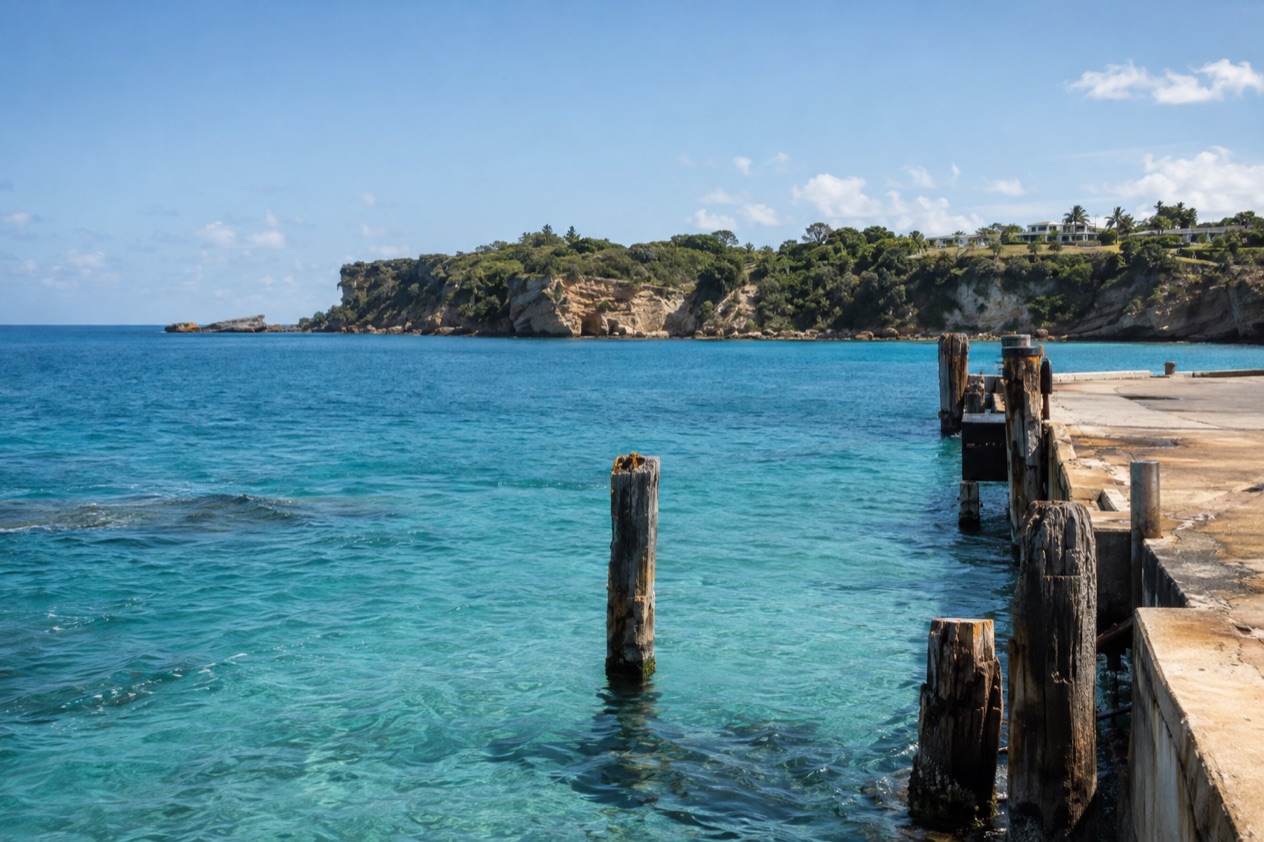
Late in the afternoon at Crash Boat, kids leap off the old pier into water that turns from turquoise to glass-green, and the smell of fried fish drifts from the stands along the sand. On Puerto Rico’s northwest tip, Aguadilla is where ocean waves from the Atlantic greet miles of bluffs, inlets and evening color. It is a beach and surf town with a military past, a lively plaza and an easy base for exploring the whole west coast.
What are the best things to do in Aguadilla?
The best things to do in Aguadilla are mostly outdoors: swimming and snorkeling at Crash Boat, watching surfers work the northern breaks, and following the coast for sunsets, cliffs and fried seafood. A few pleasures take you away from the beach, from the town’s old plaza to an ice rink that surprises nearly everyone.
- Crash Boat Beach, for the old military pier, the jumping, the snorkeling and the stands selling fried snacks.
- The surf breaks along the north shore, where winter swells draw surfers and spectators to the cliffs.
- The ruins of the old lighthouse at Punta Borinquen, for sea views and a feel of the old Ramey base.
- The plaza and the old streets of town, where the Spanish colonial story of Aguadilla begins.
- The Aguadilla Ice Skating Arena, a cool and unlikely break in the Caribbean.
- A day in Rincón, for sunsets, the Thursday art walk and whale watching in season.
- A day in Isabela, for Jobos Beach, leaf cheese and the Guajataca Tunnel.
- A plate of fresh fish, mofongo or a stuffed fritter eaten close to the water.
Aguadilla rewards people who like to wander. You might spend a morning on a beach, an afternoon on a cliff-top walk, and an evening at a table with the sun going down over the Atlantic. Nothing here needs a strict schedule, and the best moments tend to be the ones you did not plan.
Residents call this place the Garden of the Atlantic, and they also call it the Town of the Water Spring, named for the natural spring that Spanish soldiers and early settlers once drank from. Both names hint at what you will find: green hills, salt air and a coastline that feels lived in rather than staged.
Sights and landmarks in Aguadilla
Aguadilla was founded in the late eighteenth century by Luis de Córdova, and its past shows in the old center, the churches and the legends around the water spring that gave the town one of its nicknames. A second layer comes from the air base that shaped the western end of town for decades. Nine places here are listed on the U.S. National Register of Historic Places, which tells you how much history is packed into a small stretch of coast.
The old town, the plaza and the spring
Start in the center, where the plaza and the church anchor a grid of low buildings in pastel colors. It is a good place for a slow morning walk, a coffee and a look at how daily life moves: older men on benches, school groups crossing, the occasional vendor with a cart. The historic theater in town is an elegant building worth seeing from outside even if no performance is on.
Near the shoreline, the area tied to the natural water spring is where local tradition says sailors and soldiers refilled their casks. A monument here is linked to the story of an early Spanish landing, and the spot is as much about legend as about stone. Pair it with a walk along the waterfront, where the town opens onto the sea, and finish with a drink or a snack from one of the small places nearby.
Punta Borinquen and the lighthouse ruins
On the cliffs at the northwest tip, the ruined lighthouse is one of the most photographed spots in Aguadilla. The structure is weathered and open to the wind, and the views run along the coast toward the surf breaks and out over the Atlantic. Late afternoon is the best time for the light, when the cliffs turn golden and the water below goes a deep blue.
The area around it has the feel of old military grounds, with wide roads, a golf course and stretches of open land that were once part of the Ramey Air Force Base. Keep a respectful distance from cliff edges. It suits anyone who likes ruins, photography or a quiet place to watch the sea.
The former Ramey base and the airport
Rafael Hernández International Airport was once Ramey Air Force Base, handed to the Government of Puerto Rico in the early seventies. The Caribbean’s longest runway stretches here, a holdover from the era when big military planes touched down at this spot. The airport is also home to a Coast Guard air station, so helicopters are part of the background of daily life.
You do not need to enter the airport to feel the base’s history. The wide boulevards, former housing blocks and the name Crash Boat all trace back to those years. It is an unusual layer for a beach town, and it explains why Aguadilla feels spacious in some neighborhoods and tightly packed in others.
More to see around town
The Aguadilla Ice Skating Arena is the Caribbean’s only ice skating complex, so it works as a talking point every bit as much as a thing to do. It is covered in the kids section, but it also counts as one of the town’s quirkiest landmarks. Murals and small public spaces appear around the center, and churches and old houses reward a slow wander.
Since Hurricane Maria, Las Cascadas Water Park has stayed shut, though it was once a popular draw, so don’t build your plans around it. Instead, spend that time on the coastline, where the real show has always been. If you have a car, driving the shore road with stops at lookouts is a sight in itself.
Beaches and outdoor things to do in Aguadilla
There are 32 beaches in Aguadilla, from sheltered coves to surf breaks that draw serious riders, and no two feel quite the same. The water can look different from one day to the next and from one beach to another, so check it before entering and obey any flag, sign or lifeguard direction wherever those are posted. Sargassum seaweed can reach some shores in certain springs and summers, which is a chance, not a certainty.
Crash Boat Beach
Crash Boat is the best-known beach in town, halfway between the former Ramey base and the center of Aguadilla. The name comes from U.S. military rescue boats that relied on the pier to reach airmen who had gone down.
Sand eventually built up around the structure and the pier became unusable for docking, but its remains now serve as a fishing and recreation spot. The colorful fishing boats and the pier give the beach a look all its own.
Visitors can swim, sunbathe, surf and snorkel here. The water around the pier is clear and often busy with locals jumping from the structure, though conditions vary and it pays to watch the sea before entering. Mornings are quieter, and weekends fill up with families, music and food stands. Bring water shoes if you plan to walk around the pier remains.
Surf breaks along the north shore
Aguadilla hosted the ISA World Championship surfing competition in the late eighties, and the waves along its north shore still draw riders. Spots with names such as Wilderness, Gas Chambers and Survivors are known in the surfing world, and winter swells from the Atlantic bring the biggest action. Watching from the shore is a pleasure in itself, especially around sunrise when the lines come in clean.
Many of these breaks are for experienced surfers, with reef bottoms and strong currents, so beginners should look to a school or a gentler beach nearby. Even if you never touch a board, a morning on a cliff-top with a coffee and a view of the sets is a fine way to start the day.
Smaller coves, cliffs and walks
Beyond the headline beaches, Aguadilla has small coves tucked beneath cliffs, quiet stretches near the old base and sandy corners where locals fish and picnic. Peña Blanca, with its pale rock formations, is one name you may hear, and each cove has its own mood.
Walks along the coast give wide views of the sea, and the cliffs here are part of a seabird nesting area that stretches east toward Isabela. Early morning and late afternoon are the pleasant hours for exploring on foot. Pack sunscreen, a hat and lots of water, because the open headlands offer little shade.
Day trips from Aguadilla
Aguadilla sits at the center of a northwest coast packed with small towns, so day trips are simple and rewarding. Rincón lies to the south and Isabela to the east, and each has a distinct character. You can combine a morning on a beach with an afternoon in a town square, then drive back along the shore for sunset.
Rincón
Rincón is the surf town of the island, a short drive down the coast from Aguadilla. It rose to international attention through the World Surfing Championship held at Domes and Maria’s beaches in the late sixties, and the main attractions include Domes Beach, Steps Beach, the Balneario de Rincón, the Punta Higuero Lighthouse, Tres Palmas Marine Reserve and La Bandera, the viewpoint at Pico Atalaya. The town has 53 beaches and a laid-back mix of surfers, snorkelers and sunset watchers.
Winter is the big-wave season, with surf best from November through March, and waves can approach 25 to 30 feet. Storms that arrive late in summer can stir up waves too. Whale watching happens in January and February, and a Humpback Whale Festival takes place in March. Every Thursday an Art Walk fills the main plaza, which makes that evening an especially good time to visit.
Rincón is also home to the decommissioned reactor known as the Domes, Puerto Rico’s only nuclear reactor, which gave Domes Beach its name. Plan on a full day, with a swim or a surf-watching session in the morning, lunch in town and a sunset at the lighthouse area. It suits couples, surfers and anyone who likes a relaxed, bohemian atmosphere.
Isabela
Just east of Aguadilla sits Isabela, known as the Garden of the Northwest thanks to its wildflowers. Residents also refer to it as the Town of Leaf Cheeses, a tribute to a fresh white cheese you truly ought to taste, wrapped in banana leaves. Few coastal towns in Puerto Rico combine beaches with mountains that rise above a thousand feet, and Isabela does.
Make sure Jobos Beach, Montones Beach, El Pozo Brujo, the San Antonio de la Tuna Ruins and the Guajataca Tunnel are among the spots you must visit, and this relic of the railroad era rests directly next to the sea. The town has 12 beaches and has hosted two World Cup surfing championships. Jobos has a lively strip of casual restaurants and a social scene, and the cliffs around it are another stretch of the seabird nesting area.
Go in the morning for the beach and the tunnel, then eat lunch near Jobos. The trip suits families, surfers and travelers who like a mix of sea and scenery. As anywhere, check the water before swimming, since conditions on the north coast change quickly.
Smaller stops along the coast
If you have a car, the roads between Aguadilla, Aguada and Moca are lined with small stops. Fishing villages, roadside stands, lookouts and local plazas turn the drive into part of the outing. Many travelers pair Rincón with a stop in Aguada on the way back for a different view of the shoreline.
These smaller stops work well when you want a slow day without a fixed plan. Pack a swimsuit, a towel and a cooler, and let appetite and curiosity guide you.
What to eat in Aguadilla
Eating in Aguadilla means seafood, fried snacks and island classics, often served within sight of the water. The town holds a Festival del Atún in July dedicated to tuna fishing, so fresh fish is a point of local pride. Whatever time you go, look for places where the menu changes with the catch.
Seafood and the classics
Start with the fish. Whole fried snapper, grilled catch of the day, ceviche and shrimp in garlic sauce appear at seaside restaurants and simple eateries alike. Mofongo, a mound of mashed fried plantain with garlic and pork cracklings, is often stuffed with shrimp, crab or chicken. Order it with a side of tostones, twice-fried green plantain slices, and a cold local beer.
For something heartier, look for lechón asado, slow-roasted pork with crackling skin, served with rice and beans. Sancocho, a thick root-vegetable stew, appears on cooler or rainy days. Many small restaurants serve a plate of the day, which is usually the freshest and the most local choice.
Fried snacks and street food
Near the beaches, and especially around Crash Boat, stands often sell frituras, the fried snacks of the island. Alcapurrias are fritters made of green banana and taro filled with seasoned meat, and bacalaítos are crisp salt cod fritters. Pastelillos, or turnovers, come filled with cheese, beef or seafood, and make an easy beach lunch.
Pinchos, grilled skewers brushed with a sweet-savory sauce, are another favorite from roadside grills. For dessert, piraguas are shaved ice with fruit syrup, perfect for a hot afternoon, and tembleque is a coconut pudding that you may find in local bakeries or at festivals.
Drinks, cheese and festival food
Fresh coconut water sold from a machete-opened coconut is a classic beach drink. Locals also enjoy rum-based cocktails, piña coladas and cold local beer at sunset spots. Coffee is grown in the island’s mountains, and a morning café con leche is a good way to begin a day of exploring.
Cheese lovers should look for the leaf-wrapped fresh cheese made nearby in Isabela. During the patron saint festival in October, stalls serve regional food with parades, games, artisans and live entertainment. April’s Kite Festival fills the open air with kiosks, music and snacks, and it is one more fine chance to eat casually.
Things to do in Aguadilla at night
Evenings in Aguadilla begin at sunset and move toward dinner, music and conversation. It is not a big-city nightlife destination, but it has enough to fill a pleasant night, and Rincón and Isabela extend the choices. The mood is relaxed, with beach clothes and flip-flops welcome nearly everywhere.
Sunset and dinner by the sea
The first act of any night is the sunset. Cliff-top lookouts, beaches and waterfront restaurants face west, and the sky often turns orange, pink and violet before dark. Many travelers choose a seaside table, order fish and a drink, and stay until the last light fades.
After dinner, a stroll on a quiet beach under the stars is a simple pleasure. Away from town lights the sky can be bright with stars, and the sound of the surf carries a long way. Take care on unlit sand and rocks, and keep an eye on the water.
Music, bars and the plaza
Small bars and restaurants around town often play salsa, reggaeton and Puerto Rican classics, and live music appears on weekends. During festivals, the plaza and fairgrounds fill with families, rides and bands. The patron saint festival in October is the biggest of these, and the Kite Festival and the tuna festival bring their own crowds and sounds.
For a livelier evening, head to Rincón on a Thursday for the Art Walk in the plaza, where artisans, food stalls and music create a friendly street scene. Isabela’s Jobos area also has casual beachfront places that stay busy after dark. Plan a way back, since the distances between towns are easier by car.
Quieter ways to spend the night
If loud music is not your thing, a long dinner, a dessert of tembleque and a walk along the waterfront can be enough. Some lodgings have terraces for sitting and listening to the sea. Reading, stargazing and early nights suit surfers, who often rise before dawn for the morning swell.
Whatever you choose, nights here are about the sea air and an easy pace rather than a long list of clubs.
Things to do in Aguadilla with kids
Children in Aguadilla can skate, splash, fly a kite and eat fried snacks, which is a decent list for any vacation. The key is to pick the right beach for the day and to keep the heat and sun in mind. Water conditions change, so adults should watch children closely and follow any flag or lifeguard instruction.
The ice skating arena
For lots of kids, just the thought of skating in the tropics feels like magic, and the Aguadilla Ice Skating Arena stands as the Caribbean’s only ice skating complex. It is a good break from the sun, a place to cool off and a fun story to bring home. Even first-timers wobbling along the rail tend to leave happy.
Bring a light sweater, since indoor ice can feel chilly after a day on the beach. It works well in the middle of the day when the sun is strongest, or for a rainy afternoon when beaches are not appealing. Older children and teenagers will enjoy it as much as younger ones.
Beaches and pier fun
At Crash Boat, children watch older kids jump from the old pier and look at the colorful boats pulled up on the sand. Visitors can swim and snorkel here, and a mask is a great way to see fish near the pier remains, though conditions vary and adults should check the water first. Shade is limited, so bring an umbrella, hats and sunscreen.
Among the many beaches, look for those with gentle entries and space for sandcastles. Waves can be strong on the north shore, so younger children may be happier at sheltered coves or in tide-pool areas. Always read local signs and watch for changes in surf.
Kites, festivals and treats
The April Kite Festival fills the sky with color and includes kiosks, music and open space for children to run. In October the patron saint festival adds amusement rides, games and food stalls. These events give families a taste of local life, and kids often remember the rides and sweets long after.
Everyday treats matter too. A piragua on a hot afternoon, a pastelillo from a stand or a fresh coconut can be the highlight of a day. Las Cascadas Water Park, once a family favorite, remains closed since Hurricane Maria, so look to the beaches and the ice arena instead.
Good to know before you go
Americans can visit Puerto Rico without a passport or visa, the money used there is the U.S. dollar, and mainland flights count as domestic, touching down at Rafael Hernández airport in Aguadilla. A car makes it much easier to reach the beaches, lookouts and neighboring towns. Both Spanish and English hold official status, and locals always welcome even a small amount of Spanish.
The Atlantic hurricane season runs from June 1 to November 30, with most activity from mid-August to mid-October, so follow the National Hurricane Center and local official alerts if you travel then. Sargassum can reach some shores in certain springs and summers, and sea conditions change quickly, so check flags and signs wherever they are present.
Sources
- Wikipedia, Aguadilla (https://en.wikipedia.org/wiki/Aguadilla,_Puerto_Rico), checked October 8, 2026
- Wikipedia, Rafael Hernández Airport (Aguadilla) (https://en.wikipedia.org/wiki/Rafael_Hernández_Airport), checked October 8, 2026
- Wikipedia, Crash Boat Beach (https://en.wikipedia.org/wiki/Crash_Boat_Beach), checked October 8, 2026
- Wikipedia, Rincón (https://en.wikipedia.org/wiki/Rincón,_Puerto_Rico), checked October 8, 2026
- Wikipedia, Isabela (https://en.wikipedia.org/wiki/Isabela,_Puerto_Rico), checked October 8, 2026
- NOAA National Hurricane Center, Climatology (https://www.nhc.noaa.gov/climo/), checked October 8, 2026
To plan your stay
- Best Time to Visit Aguadilla: Weather by Month, Surf Season, Beaches and Festivals
- Where to Stay in Aguadilla: Crash Boat, Town Center, Rincón and Isabela
- Aguadilla Airport to City: Getting Into Town, Your Options and What Arrival Looks Like
- Aguadilla in January: Weather, Winter Surf, Whale Season and Things to Do