
On a January afternoon in Aguadilla, the swell rolls in from the Atlantic, surfers paddle out beyond the rocks, and the pier at Crash Boat fills with kids jumping into turquoise water. By late summer the same coast turns sticky and quiet, with afternoon clouds stacking over the hills and the sea as warm as a bath. This corner of northwestern Puerto Rico rewards winter for its dry, breezy days and summer for seas that are often gentle but can shift from day to day and beach to beach, and the months in between have their own appeal.
When is the best time to visit Aguadilla?
The best time to visit Aguadilla is from December through April, when showers are short and rare, the heat is manageable, and the surf season is in full swing. Travelers who care more about warm, flat water than about dry skies can also do very well in June and July, before the wettest stretch of the year.
For the beach and the sea, it depends on what you want from the water. Winter brings the big Atlantic swells that put Rincón and Isabela on the surfing map, and the beaches facing north can be rough then.
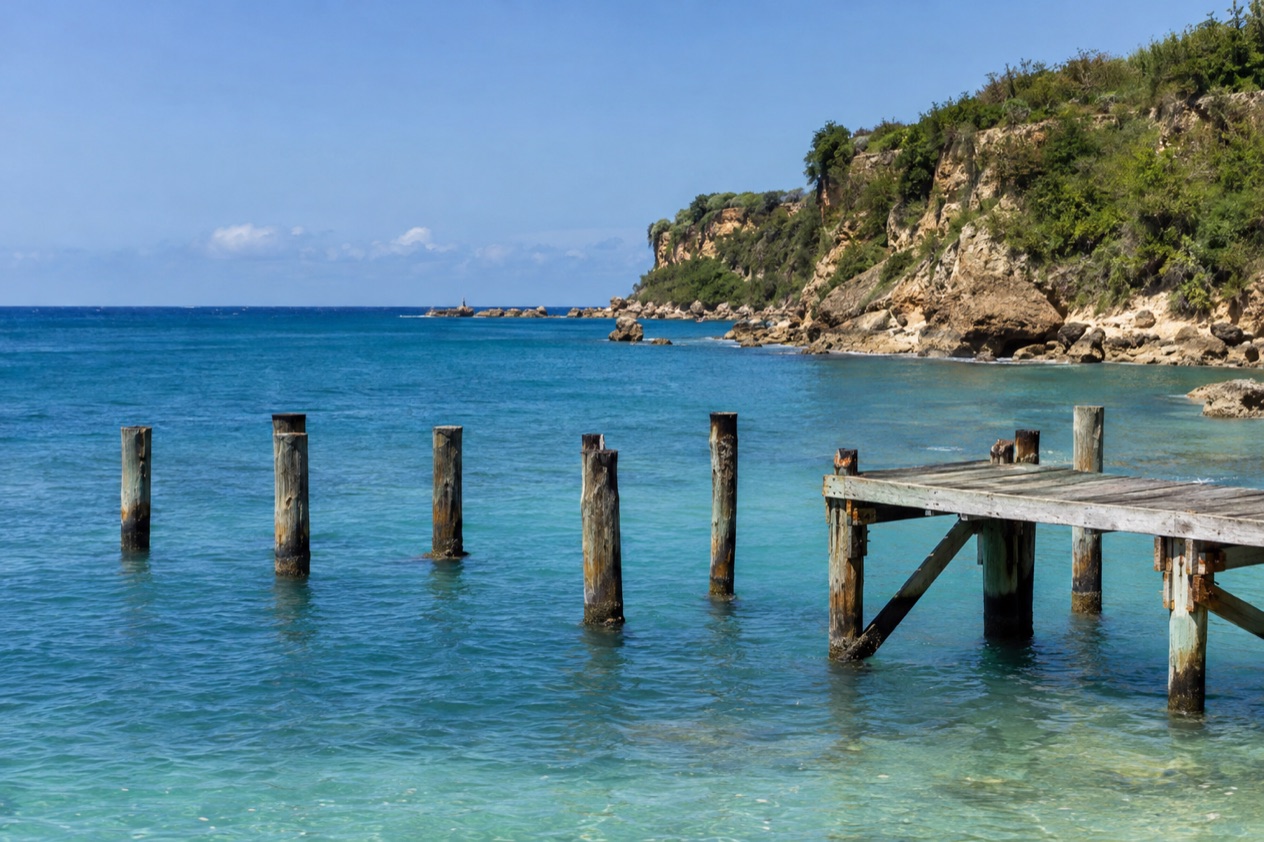
Early summer is the season for snorkeling and swimming at places like Crash Boat, where the sea is usually gentler and the water is at its warmest. No matter where you head, look at the beach flags and signs, since conditions shift from beach to beach and day to day.
For sightseeing, the dry months are the easiest. You can wander the coast between Aguadilla, Isabela and Rincón, climb up to the lighthouse viewpoints, and spend whole days outdoors without watching the sky. In January and February, humpback whales pass off the west coast, which adds a reason to come in the cooler part of the year.
If you want quiet and easier room hunting, look at May, early summer outside the school-vacation rush, and the weeks of autumn. Rain is more frequent then, but it often arrives as an afternoon downpour followed by sun. Families should know that March is loud: spring break fills the beaches and the roads with students and visiting groups. Late spring and early summer give kids warm water and long evenings with fewer crowds.
Aguadilla weather by month
Aguadilla is hot all year, with a drier winter and spring and a wetter late summer and autumn.
| Month | Average high (°F) | Average low (°F) | Rain days | Sea (°F) |
|---|---|---|---|---|
| January | 82.1 | 73.5 | 2.2 | 81.0 |
| February | 82.4 | 73.1 | 2.6 | 80.3 |
| March | 82.7 | 73.3 | 5.2 | 80.5 |
| April | 83.7 | 74.5 | 8.8 | 81.4 |
| May | 84.7 | 76.2 | 13.1 | 84.3 |
| June | 86.5 | 77.7 | 10.3 | 85.6 |
| July | 87.0 | 78.2 | 10.1 | 85.4 |
| August | 86.9 | 78.6 | 13.6 | 85.9 |
| September | 86.3 | 78.4 | 14.7 | 86.9 |
| October | 85.3 | 77.8 | 13.6 | 87.3 |
| November | 83.6 | 76.3 | 7.9 | 85.0 |
| December | 82.6 | 74.8 | 2.5 | 82.8 |
The shape of the year is simple. From December through February, rain is rare and short, and the trade winds keep the afternoons comfortable. March and April bring more clouds and a few more showers, but most days are still bright. From May the pattern changes: showers become more frequent, often in the afternoon, and they can turn heavy when a tropical wave passes.
Heat builds from late spring and peaks in July and August, when the nights stay warm and the air feels thick. Days are longest around June and shortest in December, which matters for beach evenings and for how much you can fit into a day. The sea never turns cold, though it cools a few degrees in the winter months.
What is there to do in Aguadilla in each season?
Winter and early spring: surf, whales and coastal drives
From December through March, the northwest is surf country. Swells arrive from the north Atlantic, and the breaks around Aguadilla, Isabela and Rincón draw surfers who come to watch as much as to paddle.
Even if you never stand on a board, sitting on the sand with a cold drink and watching the sets is a fine afternoon. Winter waves can be very large at Rincón, so spectators should keep a respectful distance from the water.
Humpback whales pass off the west coast in January and February, and the whale festival in Rincón follows in March. You may spot spouts from a headland or on a boat outing, though sightings are never guaranteed. Dry days also suit the drive east to Isabela, with its cliffs, Jobos Beach and the old tunnel at Guajataca, and west toward Rincón for sunsets by the lighthouse.
Late spring and summer: swimming, snorkeling and long evenings
By June the surf calms and the water warms, which is when the beaches change character. Crash Boat is the classic: you can swim or snorkel around the old pier. Sunbathers and snorkelers spread along the sand, and food stands sell fried snacks nearby. Mornings are the best time, before the heat and the clouds build.
Summer afternoons suit slow plans: a long lunch of fresh fish or an evening stroll as the light turns gold. In July, the tuna festival brings fishing-town food and music. Showers come more often, so keep mornings for the sea and leave the afternoons flexible.
Autumn: quiet beaches and local fiestas
September and October are among the wettest months of the year and fall in the heart of hurricane season. Those who travel then get empty stretches of sand and a calmer local rhythm, but should keep plans flexible and follow official forecasts. The sea is at its warmest in October. The patron saint fiestas in October bring parades, rides and regional food to town.
By November the rain eases and the air feels lighter. It is a good shoulder month for beach days without the winter surf or the spring crowds, and the Christmas season starts to appear in the plazas.
When is Aguadilla cheapest and least crowded?
Aguadilla is often cheapest and quietest in May and then again from September through most of November. Rooms are easier to find in those months, and you rarely need to plan far ahead for a table or a spot on the sand.
The busy weeks are the ones you would expect. Christmas and New Year fill the northwest with visiting families and mainland travelers, and the holiday season runs well into January. March is the other crunch, when spring break groups arrive and the popular beaches get loud and crowded by midday. Easter week, which moves from year to year, also brings a surge of Puerto Rican families to the coast.
Summer holds steady rather than frantic. The weeks of school vacation bring local families to the beaches, especially on weekends, but weekdays stay relaxed. Surf season draws a steady crowd of enthusiasts in winter, mostly to the surf towns, so Aguadilla itself can feel more spacious than Rincón on the same day. Weekend beach days anywhere along this coast get busier than weekdays.
Which months should you avoid in Aguadilla?
No month is off limits, but August through October deserve the most caution because they cover the heart of the Atlantic hurricane season, which runs from June 1 to November 30 and peaks around September 10. Those months are among the wettest, with rain on fewer than half the days on average.
That does not mean a trip will be ruined. Many days are a mix of sun and short downpours. Yet a storm can swiftly upend your itinerary, so monitor both the National Hurricane Center and alerts from local officials, and stay flexible with reservations when you go during that period.
Heat is the other factor. July and August are the hottest months, and the humidity makes midday sightseeing tiring. Plan outdoor time for early morning or late afternoon.
Sargassum seaweed can reach some Puerto Rican coasts in spring and summer, and it can leave a brown line on the sand and a smell in the air on affected beaches. It varies from year to year and from beach to beach, so be ready to try another stretch of coast.
In winter, the downside is the surf itself. Big swells can make some beaches unsuitable for swimming, even on sunny days. Pick a more sheltered bay or enjoy the show from shore.
When can you swim in Aguadilla?
The sea is warm in every month, but whether you can swim safely depends on the waves and currents.
In winter the water is a touch cooler, though still comfortable for most people, and the north-facing beaches often have strong surf and currents. That is the season to choose your beach carefully and to follow any flags, signs or lifeguard instructions where they exist. From May through October the sea is at its warmest, often feeling like bathwater by September and October, and it is usually gentler on many beaches, which is why summer is the snorkeling season.
Crash Boat is a favorite for swimming, sunbathing and snorkeling, and it is also used for surfing when the swell is up. Since the water shifts from one day to the next, check it before entering, and skip a swim when the surf runs high.
Festivals and events in Aguadilla through the year
Winter holidays and the start of the year
Christmas in Puerto Rico begins early and ends late. From late November into mid-January, neighbors gather for parrandas, the roving song sessions that turn up at your door with guitars, cuatros and maracas. Plazas are lit, kitchens fill with pasteles and lechón asado, and tembleque, the coconut pudding, appears on every table.
Three Kings Day on January 6 closes the main celebrations, though the octavitas keep the party going for another stretch. January and February make up whale season in Rincón, while the humpback whale festival happens in March.
Spring: kites, Easter and Carnival season
In April, the Kite Festival fills open ground with color, with kiosks, music and kites over the coast. The breeze that makes Aguadilla good for surf also makes it good for flying. Go in the afternoon when the wind is steady, and bring something to shade you.
Holy Week moves every year and brings families to the beaches on the days off. Expect processions in town and crowded sand. Carnival season in the weeks before Lent is centered more on Ponce, but you will see its influence in local celebrations.
Summer and autumn fiestas
The Noche de San Juan Bautista on June 23 is the night when people walk into the sea at midnight for luck, and the beaches fill with families. In July, the Festival del Atún celebrates tuna fishing, with seafood, music and a fishing-town mood.
At the Fiestas Patronales de San Carlos Borromeo, October brings together parades, games, artisans, amusement rides, regional food, and live entertainment. Nearby Rincón holds its own patron saint festival in September, and the Hatillo Mask Festival on December 28 is a popular day trip for those who stay through the holidays. Sea turtles also nest on some beaches in spring and summer, and you may see signs marking protected nests.
Sources
- Open-Meteo / ECMWF ERA5, normals 1991-2020 calculated on the grid cell 18.4274N 67.1541W, checked September 8, 2026
- Open-Meteo Marine API, average 2015-2024, checked September 8, 2026
- sunrise-sunset.org, sunrise and sunset calculated for the 15th of the month, checked September 8, 2026
- Wikipedia, Aguadilla (https://en.wikipedia.org/wiki/Aguadilla,_Puerto_Rico), checked October 8, 2026
- Wikipedia, Rafael Hernández Airport (Aguadilla) (https://en.wikipedia.org/wiki/Rafael_Hernández_Airport), checked October 8, 2026
- Wikipedia, Crash Boat Beach (https://en.wikipedia.org/wiki/Crash_Boat_Beach), checked October 8, 2026
- Wikipedia, Rincón (https://en.wikipedia.org/wiki/Rincón,_Puerto_Rico), checked October 8, 2026
- Wikipedia, Isabela (https://en.wikipedia.org/wiki/Isabela,_Puerto_Rico), checked October 8, 2026
- NOAA National Hurricane Center, Climatology (https://www.nhc.noaa.gov/climo/), checked October 8, 2026
To plan your stay
- Things to Do in Aguadilla: Crash Boat Beach, Surf Spots, Day Trips and Where to Eat
- Where to Stay in Aguadilla: Crash Boat, Town Center, Rincón and Isabela
- Aguadilla Airport to City: Getting Into Town, Your Options and What Arrival Looks Like
- Day Trips from Aguadilla: Rincón, Isabela, Crash Boat and the Northwest Coast