
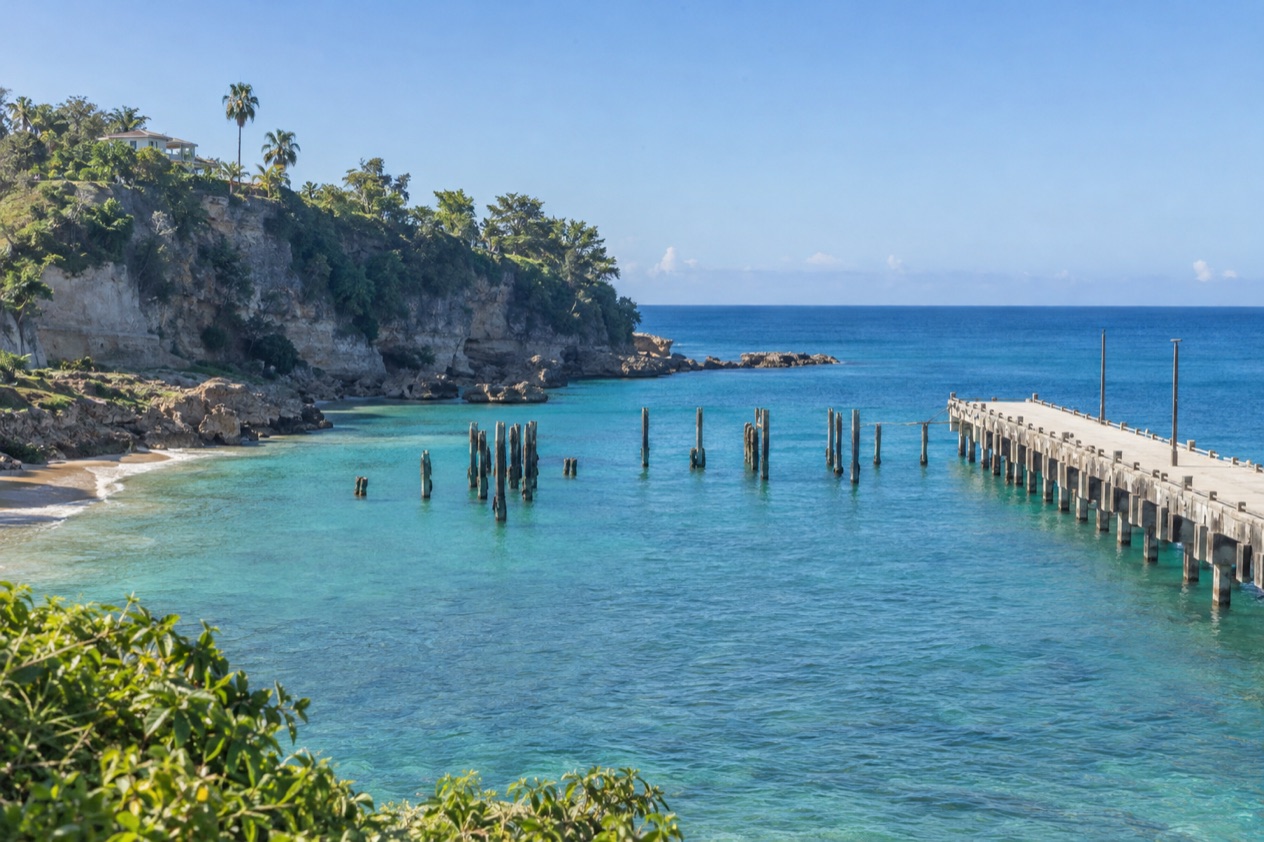
Early in the morning at Crash Boat, fishermen work around the old concrete pier while the first swimmers wade in and the paint on the little beach shacks catches the light. By evening, the scene is a plaza in town with families on benches, or a western sky going orange from a terrace in Rincón. Aguadilla sits in the middle of that stretch of coast, and where you sleep decides whether your vacation feels like a surf trip, a beach week or a town stay.
What is the best area to stay in Aguadilla?
For a first visit, the area around Crash Boat Beach is the easiest choice, because it puts you on the water and keeps the airport and the town close at hand. Beach lovers and surfers will lean toward Rincón, a short drive south.
Travelers who want local life and a lower-key budget will do well in the center of Aguadilla itself. Families usually prefer a place with a beach nearby and a kitchen, and those after evenings out will find the most choice in Rincón and the town center.
The areas differ less in distance than in mood. Crash Boat is a working fishing beach with a relaxed, sun-faded feel, where the day starts early and ends with grilled fish and cold drinks.
The town center is a real Puerto Rican municipality going about its business, with a plaza, bakeries, small restaurants and a calendar built around its own festivals. Rincón is the traveler’s town, shaped by surfers, sunset watchers and people who came for a week and stayed for years. Isabela, to the east, is greener and more spread out, with cliffs, farmland and long beaches.
The airport matters for planning. Since Rafael Hernández Airport sits right in Aguadilla, on the old Ramey Air Force Base grounds, the town and Crash Boat are the quickest trips once you land. Rincón and Isabela add a drive, which is easy to accept if you are staying several nights and less appealing if you land late and leave at dawn.
Season changes the answer too. From about November through March, the Atlantic swells arrive on this coast and Rincón fills with surfers, so the beaches there can be livelier to watch than to swim from.
In spring and summer the sea usually turns gentler and snorkeling comes into its own, which makes the Crash Boat area and the coves farther south more tempting. Conditions change from day to day and from beach to beach, so ask your host about the water on the morning you plan to swim.
If you are splitting a longer trip, a simple pattern works well. Spend the first nights near Crash Boat or the town center, then move to Rincón for sunsets and whale season, or the reverse. Each move is a short drive on this coast, and it lets you see two different faces of the northwest without living out of a suitcase.
The best areas to stay in Aguadilla
Crash Boat and the coast near the airport
Halfway between Aguadilla town and the old Ramey base, which is now the airport, sits Crash Boat Beach. That name comes from the military rescue boats whose crews once set out from the pier to reach downed airmen.
Sand later built up around it, the boats could no longer dock, and what remains is a fishing and recreation spot with the pier’s bones still standing. Here you can swim, sunbathe, surf and snorkel, and at sunset the pier is what everyone photographs.
Lodging in this area leans toward guesthouses, small inns and vacation apartments, many of them within reach of the sand and the beachside kiosks. It suits couples, snorkelers, early risers and anyone who wants to be at the water in minutes.
Because it sits between the airport and the center, it works well for short stays. The coast here has a few beaches close together, so you can change your mind about where to swim depending on the day.
A car makes this area much easier, since the beach, the town and the airport are strung along the road rather than packed into one walkable block. Weekends bring local families to Crash Boat, so a weekday morning feels quieter. Watch for beach flags and signs where they are posted, and if you plan to snorkel, ask where the water is usually clearest that day.
Aguadilla town center
The center is where Aguadilla feels most like itself. Nicknamed the Garden of the Atlantic and established in the eighteenth century, Aguadilla gives visitors a plaza, waterfront historic streets, and a lineup of celebrations that is entirely its own, running from the Kite Festival in April through the Festival del Atún in July to the Fiestas Patronales de San Carlos Borromeo, the patron saint festival, in October. If your trip touches one of those, staying in town puts you in the middle of the parades, the artisans and the regional food stands.
Lodging tends toward simple hotels, guesthouses and apartments, a good fit for travelers who care more about local restaurants and bakeries than about a beach at the front door. It is also a sensible base for travelers who want to see several beaches, because you can head out in different directions each day. The town has places listed on the National Register of Historic Places, so wandering the older blocks is a pleasure in its own right.
The trade-off is that you are not on the sand, so a beach day means getting in a vehicle. Evenings are calmer than in Rincón, with fewer bars aimed at visitors. Aguadilla is home to the Caribbean’s sole ice skating complex, the Aguadilla Ice Skating Arena. Since Hurricane Maria, Las Cascadas, the former water park, has remained shut, so you should not count on it.
Rincón
Rincón is the most visitor-minded town on this coast. Surfing is what made this town famous, and global attention arrived in 1968 when the World Surfing Championship took place at Domes and Maria’s Beaches, yet any visitor soon sees what truly draws people: Domes Beach, Steps Beach, the Balneario de Rincón, the Punta Higuero Lighthouse and the Tres Palmas Marine Reserve. The old domed reactor building that gives Domes its name is a curious landmark in itself.
Lodging here is the widest mix in the area: boutique hotels, surf-oriented guesthouses, villas, condos and apartments, many with ocean or sunset views. It suits surfers, couples, groups of friends and travelers who want restaurants, live music and a social evening. On Thursdays an Art Walk fills the main plaza, and in January and February humpback whales may be seen offshore, with a Humpback Whale Festival in March.
From November through March you get the finest surf, with winter swells that can rise very high, plus summer storms that may stir up waves late in the season. That is thrilling to watch but not a promise of easy swimming, so follow flags and signs where they are posted.
Rincón is farther from the airport than the other bases, which matters on arrival and departure days. Rincón also holds its patron saint festival in September.
Isabela and Jobos
Isabela lies east of Aguadilla and is greener and quieter. Wildflowers have earned it the name Garden of the Northwest, while fresh white cheese wrapped in banana leaves has earned it the name Town of Leaf Cheeses. Also set aside time for the must-see attractions nearby, among them the ruins of San Antonio de la Tuna, El Pozo Brujo, and the Guajataca Tunnel, and remember that Jobos and Montones are the names of two local beaches. Its coastal cliffs also shelter nesting seabirds, which birders enjoy.
Stays here run to beach houses, small hotels, guesthouses and apartments, with Jobos the most popular pocket, and the town has hosted world-class surfing competitions. It suits travelers who want space, mountains and beaches in one trip, and those who would rather drive to restaurants than walk to them. It is also a good choice if you plan to explore more of the north coast.
Isabela is a longer drive from the airport than Crash Boat or the town of Aguadilla, and it is the least walkable of these bases, so plan on having a car for meals and beaches. The payoff is a stay that feels farther from the crowds. As with every beach on this coast, look at the sea and the flags before you get in.
Aguadilla areas compared
| Area | Best for | Feel | Where it sits |
|---|---|---|---|
| Crash Boat | First visit, snorkeling, short stays | Relaxed fishing beach with a historic pier | Halfway between the airport and Aguadilla town |
| Aguadilla town center | Local life, festivals, budget-minded stays | Everyday Puerto Rican town with a plaza | In the town of Aguadilla, near the coast |
| Rincón | Surfing, sunsets, nightlife, whale watching | Social, surf-minded, many visitors | Southwest of the airport, in its own municipality |
| Isabela and Jobos | Space, beaches and mountains, quiet | Green, spread out, laid-back | East of Aguadilla, in its own municipality |
The first trade-off is beach against local life. Crash Boat and Rincón put you closer to the sea, while the town center gives you bakeries, a plaza and festivals but sends you out for a swim. If your days revolve around the water, pick the coast. If you like to wander and eat where residents eat, pick the town.
The second is quiet against nightlife. Rincón has the most going on after dark, with live music, restaurants and a lively sunset crowd, which means more traffic and more noise. Isabela and the Crash Boat shoreline are calmer in the evening. Anyone who wants to be asleep early should ask whether the lodging sits above a bar or beside a busy road.
A third is convenience against character. Staying near the airport makes arrival and departure simple, which helps on short trips. Rincón and Isabela ask for a longer drive but reward you with a quieter or more surf-oriented stay. For a stay of several nights, the extra drive is usually worth it, and for a one-night stop before an early flight it usually is not.
Timing matters here as well. Festival weeks can fill the town center and the coast, so a place that is easy to book in an ordinary week may be harder to find around the Kite Festival in April, the tuna festival in July or the saint’s day celebrations in October.
In Rincón, surf season and whale season both draw visitors. If your dates match one of these moments, decide on the area first and book soon after.
If you cannot decide, choose the area that best matches the activity you plan to do most often. A few nights near Crash Boat or in town give you the airport convenience and local flavor, and a few nights in Rincón add surf, sunsets and evening life. The move is a short drive, and it avoids the feeling of having picked the wrong base.
How to choose your hotel in Aguadilla
Start with the kind of stay you want. Resort-style, all-inclusive arrangements are not what this stretch of coast is built around. Most visitors choose boutique hotels, guesthouses, apartments and villas, and eat at local restaurants and beach kiosks. If you prefer one price for everything, confirm exactly what is included before you book. If you like to cook and shop at the market, an apartment with a kitchen usually fits better.
Next, decide between beachfront and a place a few minutes inland. Beachfront lodging gives you the sound of the sea and quick swims, but it also means more wind, salt, evening noise on busy weekends and sometimes seaweed at the shoreline. A little inland, you get quiet, often more space and sometimes a view, at the cost of a short drive to the beach. There is no single right answer, only the trade you prefer.
Think about the water you are looking at. The northwest faces the Atlantic, so winter brings large swells that suit surfers and not always swimmers, while summer is usually calmer. Sargassum seaweed can reach some Puerto Rican beaches in some springs and summers, and where it lands varies, so ask your host about the beach you are choosing rather than assuming. Wherever you swim, follow flags and signs when they are present.
Booking calendars deserve a look. Rincón’s winter surf season, its whale weeks and the festivals in Aguadilla, in April, July and October, bring more visitors, and Christmas and the long holiday period do the same. The Atlantic hurricane season runs from June 1 to November 30, with its peak in September. If you travel during that period, book a place with a no-penalty cancellation policy, and stay tuned to the National Hurricane Center along with updates from local officials.
Families should look first at space and location. A kitchen helps with meals, and a spot near a beach saves long trips with tired children. Ask about stairs, steep driveways and the distance from parking to the room, which matter a great deal for strollers, grandparents and anyone with limited mobility. Rooms on the ground floor or with an elevator are worth confirming directly.
Before you confirm, check a few practical points with the host. If you are sensitive to noise, ask where the room sits in relation to bars, roads and the airport.
Ask how arrival works if your flight lands late, and whether the lodging can help with the transfer from the airport. Ask about parking, and about air conditioning and fans, since the climate is warm and humid throughout the year.
Finally, match the lodging to your plans for the days. If you intend to surf, a base in Rincón or Isabela saves driving at dawn. If you want to snorkel, swim and watch the sun go down from the pier, Crash Boat is the natural pick. If you are building a trip around festivals, markets and everyday town life, the center of Aguadilla keeps you close to where it all happens.
Good to know before you go
Rafael Hernández Airport is in Aguadilla itself, so you land close to the town and the nearest beaches, and the other bases are a drive from there. The U.S. dollar is the currency of Puerto Rico, and travelers from the United States need neither a passport nor a visa to come. Both languages, Spanish and English, hold official status, and hosts and shopkeepers always welcome a little Spanish, a simple buenos días or gracias.
Sources
- Wikipedia, Aguadilla (https://en.wikipedia.org/wiki/Aguadilla,_Puerto_Rico), checked October 8, 2026
- Wikipedia, Rafael Hernández Airport (Aguadilla) (https://en.wikipedia.org/wiki/Rafael_Hernández_Airport), checked October 8, 2026
- Wikipedia, Crash Boat Beach (https://en.wikipedia.org/wiki/Crash_Boat_Beach), checked October 8, 2026
- Wikipedia, Rincón (https://en.wikipedia.org/wiki/Rincón,_Puerto_Rico), checked October 8, 2026
- Wikipedia, Isabela (https://en.wikipedia.org/wiki/Isabela,_Puerto_Rico), checked October 8, 2026
- NOAA National Hurricane Center, Climatology (https://www.nhc.noaa.gov/climo/), checked October 8, 2026
To plan your stay
- Best Time to Visit Aguadilla: Weather by Month, Surf Season, Beaches and Festivals
- Things to Do in Aguadilla: Crash Boat Beach, Surf Spots, Day Trips and Where to Eat
- Aguadilla Airport to City: Getting Into Town, Your Options and What Arrival Looks Like
- Aguadilla in January: Weather, Winter Surf, Whale Season and Things to Do