
Early on a January morning in Dewey, the only sounds are halyards tapping on the masts and a rooster somewhere behind the canal. Fishing boats sit still in the harbor, and the first golf carts head out toward the beaches with towels flapping on the roll bars.
The trade winds are steady, the air is warm without pressing on you, and Culebra feels like a small island that has kept its own pace. For a winter escape from the mainland, this is the dry, easygoing stretch of the year.
What is the weather like in Culebra in January?
January in Culebra is warm, breezy and mostly dry, with the kind of weather that lets you stay outside from breakfast until the last light.
| Month | Average high (°F) | Average low (°F) | Rain days | Sea (°F) |
|---|---|---|---|---|
| December | 79.6 | 77.3 | 4.9 | 81.9 |
| January | 78.3 | 76.2 | 3.2 | 80.8 |
| February | 77.9 | 75.8 | 1.9 | 80.1 |
Afternoons are warm enough for shorts and a swimsuit under your clothes, and the trade winds keep the sun from feeling heavy, especially on the exposed beaches. Nights barely cool off, so you can eat dinner outside in a T-shirt and sleep with the windows open or a fan running. The sun is still strong in winter, and a few hours on pale sand without sunscreen will catch you out.
Rain, when it comes, tends to be a quick passing shower blown in on the wind, over in a few minutes and followed by sun. A day of steady rain is unusual this month. January has little rainfall overall, though showers can still occur, so a light rain jacket is handy for the golf cart.
Days are a little over eleven hours long, so the light fades early evening. The low sun in the late afternoon turns the water in Dewey harbor a deep turquoise, and it is the best time for photographs. The sea stays warm all month, perfect for long swims at Playa Flamenco.
Can you swim in Culebra in January?
Yes, the sea is warm enough for a long swim and for hours of snorkeling, though a thin shirt helps if you linger in the water.
Winter brings stronger trade winds and swells to some Atlantic-facing shores of Puerto Rico, so conditions on Culebra change from day to day and from beach to beach. Flamenco, a wide horseshoe of pale sand, often has gentle shallow water near the shore, but waves can build on windier days.
On the west side, Tamarindo Beach is a snorkeling spot where green sea turtles can frequently be spotted grazing above the seagrass. Just offshore from Carlos Rosario, which sits a quick stroll away from Flamenco, lies a coral reef.
Families with young children and nervous swimmers do best on the days when the water looks flat, wading in at the edges. If you see a flag, a sign or a lifeguard, do what it says, but never count on one being there. Bring your own mask and snorkel if you have them, and keep your distance from turtles, which you may see but cannot count on.
What to do in Culebra in January
January is beach season in the most literal sense, since the weather is dry enough that almost every day suits the water. The Christmas season in Puerto Rico stretches into mid-January, so you may still hear parrandas, the neighborhood singing parties, and see lights up in Dewey. Three Kings Day on January 6 is the traditional close of the main celebrations, and the days after it, the octavitas, keep a festive mood in the island’s small town.
The island itself is quiet. There is one town, no large resorts and no nightlife machine. Travelers move about by way of golf carts and bikes they rent, while Dewey’s streets come across as a village in which everybody knows who came in on the morning ferry.
Flamenco Beach and the tanks
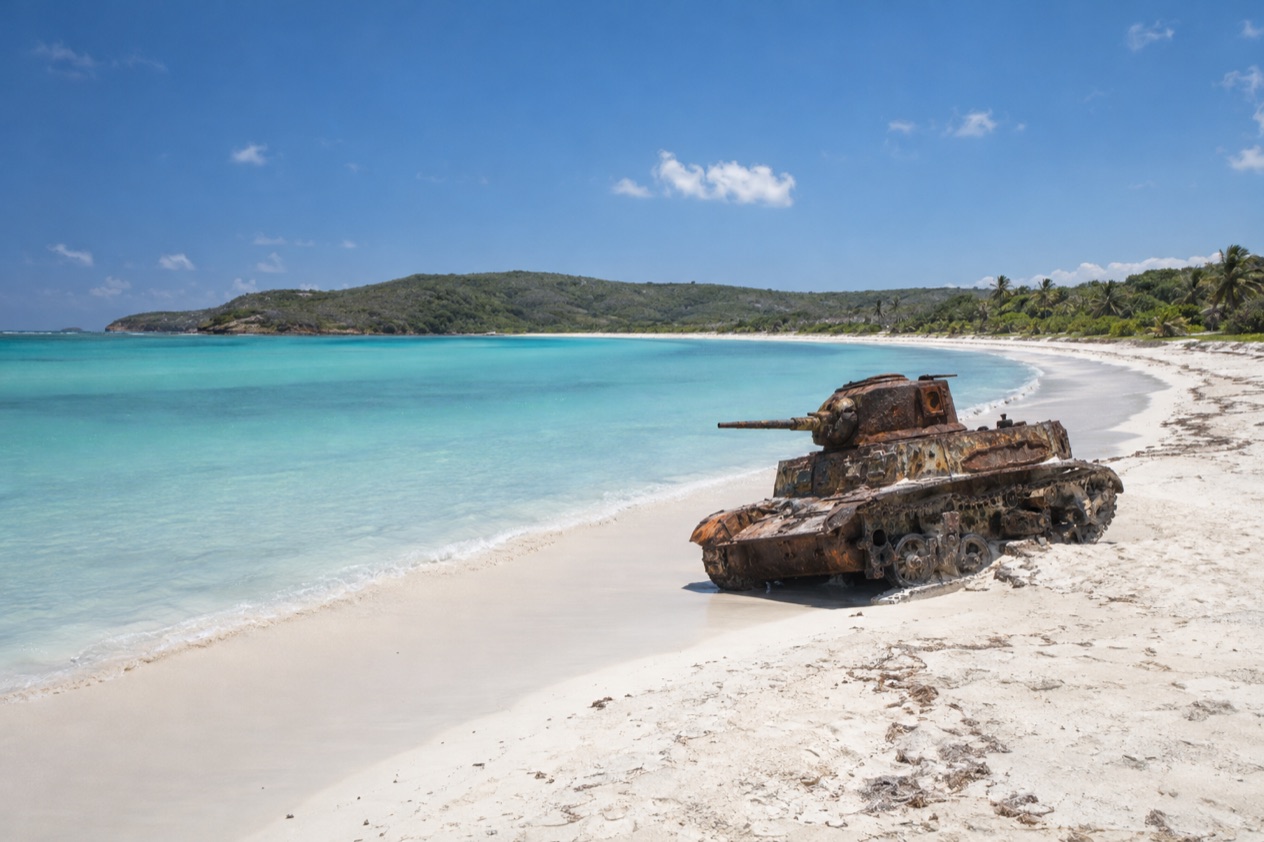
Flamenco Beach sits inside the Culebra National Wildlife Refuge and is the island’s postcard, a wide curve of pale sand with clear shallow water. The rusted military tanks left on the sand are now covered in graffiti and make a strange, memorable photo stop. Go early, before the day-trippers from the ferry arrive, and you can walk the length of the beach nearly alone.
There is shade from the trees along the back of the beach and kiosks near the entrance for a cold drink or a simple lunch. In January, winter swells may bring waves that are fun to watch but harder to swim in, so look at the water before you set your towel down. The beach suits everyone from sunbathers to families building castles.
Snorkeling at Tamarindo and Carlos Rosario
Tamarindo Beach, on the west side, is where you go to see green sea turtles grazing over the seagrass. Swim slowly, keep your hands to yourself and let the animals carry on feeding. The visibility and the turtles vary from day to day, so treat a sighting as a pleasant chance rather than a promise.
A coral reef sits near the shore at Carlos Rosario Beach, just a short walk from Flamenco, letting you drift above colorful fish a few strokes from the sand. It pairs well with a morning at Flamenco: walk over, snorkel, then return for lunch. Bring water shoes for the rocky edges and a snorkel vest if you are not a strong swimmer.
Zoni Beach and the quiet east
A long, quiet stretch of sand at the island’s eastern end, Zoni Beach draws far fewer visitors than Flamenco. It is the place for a book, a long walk along the shore and a picnic with few other people around. The wind there can be strong in winter, which also makes it a good place to watch the swells roll in.
Plan for a half day, bring your own water and snacks, and expect little in the way of services. It suits couples, readers and anyone who finds the main beaches too busy. A golf cart gets you there, and the drive across the island is part of the pleasure.
In Dewey itself, spend an evening on the canal, where small restaurants serve fresh fish, rice and beans, and tostones (twice-fried plantain slices). Order a cold local beer or a rum drink and watch the boats rock at their moorings. The Virgen del Carmen boat procession is a July tradition, so you will not find it in January, but the fishing culture behind it is easy to feel in the harbor.
A two-day itinerary for Culebra in January
Day 1 is for the headline beach. Start with coffee and a pastry in Dewey, then take your golf cart to Flamenco early, while the sand is empty and the light is soft. Walk to the tanks, swim while the water is most welcoming, then cross to Carlos Rosario for a snorkel over the reef.
Have lunch at one of the kiosks near Flamenco, then rest in the shade through the hottest hours. Return to town in the late afternoon, when the light is golden and the harbor turns turquoise. Dinner is a simple fish plate at a canal-side restaurant, with sunset coming early in January, so you will eat as the sky darkens.
Day 2 heads out to the quieter corners, or offshore to Culebrita if conditions allow. Drive east to Zoni for a slow morning of walking and swimming, with a picnic from town. In the afternoon, go west to Tamarindo Beach and snorkel for turtles while the sun is still high and the water is clear.
If a shower rolls in, shelter in a harbor café, wander the shops and galleries of Dewey, or simply wait it out, since rain tends to pass quickly. End the evening on the water’s edge with a drink as the boats settle for the night.
Is Culebra busy in January?
Culebra is moderately busy in January, with a steady stream of winter visitors, though it never feels crowded the way a big resort town does.
The holiday weeks around Christmas and New Year bring the most people, and the early days of the month still carry some of that energy. Later in January, the island settles down. Flamenco fills up midday when the ferry arrivals reach the beach, while Zoni and Tamarindo stay much quieter.
Because Culebra is small and has limited rooms and rental vehicles, book early for the holiday weeks and a little later for the quieter weeks of the month. Visitors get around Culebra on rented golf carts and bikes.
What to pack for Culebra in January
Pack light for warm days and breezy nights, and plan around the sun and the water.
- Swimsuits and a quick-dry cover-up, since you will be in and out of the water all day.
- Sunscreen and a hat, because the winter sun is strong on open sand.
- Mask and snorkel, for the reef at Carlos Rosario and the turtles at Tamarindo.
- Water shoes, for rocky entries and hot sand.
- A light rain jacket, for the quick showers that sometimes cross the island.
- A refillable water bottle, since beaches like Zoni have few services.
Good to know before you go
January falls outside the official hurricane season, which runs from June 1 to November 30, though weather can still change, so follow local official alerts. U.S. citizens traveling from the mainland do not need a passport or visa, and the currency is the U.S. dollar.
You can get to Culebra on a public ferry out of Ceiba or with a quick flight. Once on the island, you can rent a golf cart or bike to get around.
Culebra in January vs December and February
Moving earlier to December gets you slightly warmer water and a bit more rain, along with the full swing of the Christmas season, the parrandas and the busiest weeks of the year. Rooms are harder to find, and the island has more of a holiday bustle. December is also closer to the end of the hurricane season, so it suits travelers who love festive energy.
Moving later to February makes the weather a touch drier and the water a touch cooler, and the holiday crowds have thinned. The island feels calmer and the beaches emptier, with the long, easy days of the dry season in full force. It is a good month for travelers who prefer quiet and a bit more room to move.
Choose December if you want the festive mood and do not mind the busier weeks, February if you want the driest weather and fewer people, and January as the balanced middle, with some of the holiday spirit lingering early in the month and the calm settling in by the end.
Is January a good time to visit Culebra?
Yes, January is a very good time for beach lovers, snorkelers and anyone who wants warm, mostly dry weather and a slow island pace.
You will love it if you want long days on the sand, clear water for snorkeling and quiet evenings in a small harbor town. Families, couples and independent travelers all fit in easily. Surfers and anyone who wants nightlife or big-resort comforts may prefer another place, since Culebra offers neither.
On arrival, pick up your golf cart and head to Flamenco early, before the crowds, then let the rest of the days fall into place. What makes January special here is the mix of the last echoes of the Christmas season in Dewey and a dry, bright island where a turtle over the seagrass at Tamarindo can be the highlight of the day.
Sources
- Open-Meteo / ECMWF ERA5, 1991-2020 normals calculated on the grid cell 18.3N 65.28W, checked October 8, 2026
- Open-Meteo Marine API, average 2015-2024, checked October 8, 2026
- sunrise-sunset.org, sunrise and sunset calculated for the 15th of the month, checked October 8, 2026
- NOAA National Hurricane Center, Climatology (https://www.nhc.noaa.gov/climo/), checked October 8, 2026
To plan your stay
- Things to Do in Culebra: Flamenco Beach, Snorkeling with Sea Turtles, Wildlife Refuge and Island Life
- Culebra from San Juan: Road to Ceiba, Ferry or Flight, and a Day on the Island
- Know Before You Go to Culebra: Getting There, Water, Beaches and Island Customs
- 3 Days in Culebra: Flamenco Beach, Snorkeling Coves and a Slow Harbor Town