
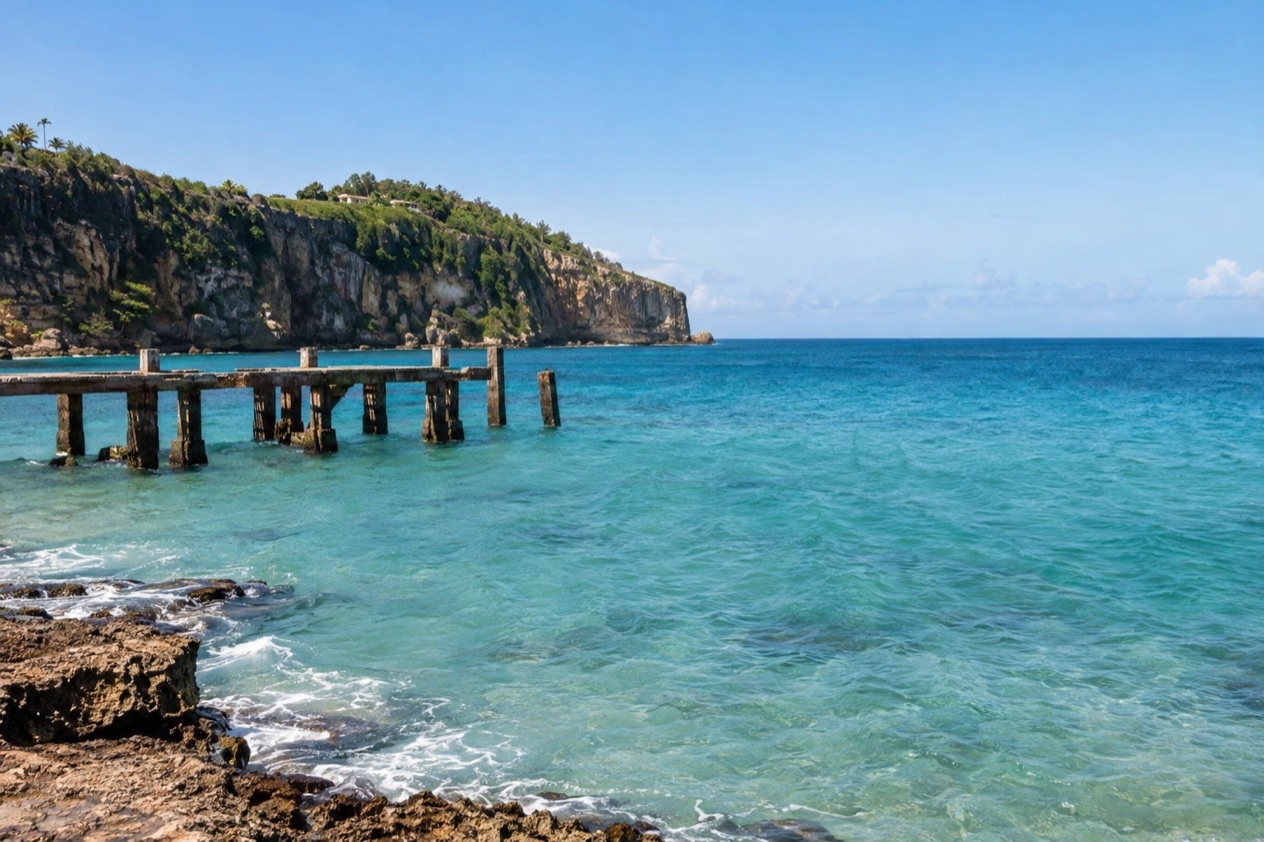
Late in the afternoon at Crash Boat, fishermen work the old pier while teenagers launch themselves off its edge into water that goes from turquoise to deep blue in a few strides. Behind them, the light turns gold over the western horizon and the first surfers paddle in. Aguadilla, on the northwest corner of Puerto Rico, is a beach town with a military past, a long coastline and an easygoing local rhythm, and it suits travelers who want sunsets, surf and snorkeling without the polish of the San Juan resorts.
Where is Aguadilla and what is it like?
Aguadilla sits on the northwest coast of Puerto Rico, facing the Atlantic, with Isabela to the east and the surf towns around Rincon a short way down the coast to the south. It is a working coastal town with a real downtown, a busy airport and a long string of beaches, not a purpose-built resort. Locals call it the Jardin del Atlantico, the Garden of the Atlantic, and the older nickname, La Villa del Ojo de Agua, recalls a natural spring that early settlers and Spanish soldiers relied on.
The town was founded in 1775, and its history shows in the streets near the center, where old buildings stand beside newer shops and bakeries. Nine places in Aguadilla are listed on the U.S. National Register of Historic Places, a reminder that this stretch of coast mattered long before surfers found it.
The other layer of history is military. The airport grounds were once Ramey Air Force Base, handed over to the Government of Puerto Rico in 1973, and traces of that era survive in street names, old hangars and the story behind Crash Boat Beach.
The pace is relaxed and a little rough around the edges in the way that many travelers like. Mornings start with coffee and pastries, afternoons drift toward the water, and evenings gather at the shore for the sunset. Aguadilla’s coastline ranges from wide sandy stretches to small coves under cliffs.
Aguadilla suits people who like to build a day around the sea, eat simple local food and make short drives to neighboring towns. It is a good base for surfers, snorkelers, families who want beach time and anyone flying into the northwest.
It is less suited to travelers who want big nightlife, a walkable cluster of boutique hotels or a polished resort bubble. The Atlantic here has a mind of its own, and the ocean is the main character of any stay.
Spanish is the language you hear on the street, and English is widely understood in the places visitors go. A few words of Spanish, a simple buenos dias in a bakery or a gracias at a beach kiosk, go a long way and are received warmly.
What is there to do in Aguadilla?
The big reasons to come are the beaches, the surf, a few unexpected local attractions and the easy reach of Rincon and Isabela. What sets Aguadilla apart from its neighbors is the mix. Rincon is a surf and sunset village, Isabela is greener and more rural, and Aguadilla combines both with an actual town, an airport and a few quirks you will not find elsewhere in the Caribbean.
Crash Boat Beach
Crash Boat is the beach most people picture when they think of Aguadilla. It takes its name from the U.S. military rescue boats that once used the pier to reach downed airmen from Ramey Air Force Base. Sand gradually built up around the structure until boats could no longer dock, and the remains of the pier are now a fishing and recreation spot, with colorful fishing boats often pulled up along the shore.
Visitors swim, sunbathe, surf and snorkel here, and the beach sits roughly halfway between the old air base and downtown Aguadilla. Weekends bring families, music from parked cars and food stands, while early weekday mornings are quieter and better for a first look at the water. Conditions change from day to day, so look at the sea before you get in and follow any flag, sign or lifeguard instruction you find.
A good plan is to arrive in the morning for snorkeling and a walk along the pier, then return near sunset when the light softens and the crowd thins. Bring water shoes if you want to explore the rocky edges, and sunscreen for the long, bright days.
Surf and the Atlantic coast
Aguadilla has real surf credentials. The town hosted the ISA World Championship in 1988, and its coastline still draws surfers, especially in the cooler months when northern swells roll in. The best surfing in the region runs from November through March, though late summer storms can also send waves toward the coast.
You do not need to surf to enjoy this side of town. Watching the lineup from a cliff or a beach wall is a pleasure in itself, with surfers paddling out in the early light and the sets rolling in one after another. Beginners can look into lessons at nearby surf schools, and everyone should remember that winter swells can be powerful, so ask locals about the day’s conditions before heading in.
Ice skating and other surprises
Aguadilla has the only ice skating complex in the Caribbean, the Aguadilla Ice Skating Arena. It sounds like a joke in a town built around the beach, and that is part of the charm. For families with restless children, or for anyone who wants a cool break from a hot afternoon, it makes an unusual rainy-day alternative.
The old Las Cascadas Water Park has been closed since Hurricane Maria in 2017, so do not plan around it. Other local pleasures include wandering the downtown plaza and trying Puerto Rican staples such as alcapurrias, empanadillas and mofongo. Those festivals, held through the year, give the town its social calendar and a taste of local life.
Day trips to Rincon and Isabela
Rincon, a short hop down the coast, is known worldwide among surfers after the 1968 World Surfing Championship at Domes and Maria’s beaches. Its main attractions include La Bandera (Pico Atalaya), Domes Beach, Steps Beach, the Punta Higuero Lighthouse and the Tres Palmas Marine Reserve. An Art Walk fills the town square on Thursdays, and in January and February the waters offshore are a place to look for humpback whales, a chance rather than a promise.
Isabela, in the other direction, is greener and quieter. It is known as the Garden of the Northwest for its wildflowers and the Town of Leaf Cheeses for a fresh white cheese wrapped in banana leaves. Its attractions include Jobos Beach, Montones Beach, El Pozo Brujo, the San Antonio de la Tuna ruins and the Guajataca Tunnel, and its coastal cliffs shelter nesting seabirds. Between them, the two towns can fill a day each.
How many days do you need in Aguadilla?
A long weekend is enough to taste Aguadilla, and a week lets you settle into the rhythm of the northwest coast. With three or four days you can cover the essentials without rushing: Crash Boat for a morning swim and snorkel, a slow walk through downtown, a couple of sunset evenings on the shore and one outing to a neighboring town.
A typical short stay might begin with a late arrival and a simple dinner near the water. The next morning is for Crash Boat, with a seafood lunch and a long afternoon on the sand. The following day, drive to Rincon for its beaches, lighthouse and the view from Pico Atalaya, and stay for sunset. If you land on a Thursday, plan to be in Rincon in the evening for the Art Walk.
Surfers and divers will want more time, since a swell can change the plan overnight and good days are worth catching. Families benefit from a slower schedule, with a beach morning, a rest in the heat of midday and a second outing late in the day. If rain comes in, the ice skating arena, a long lunch downtown or a drive to see Isabela’s countryside can fill the hours.
With a week, add Isabela for its beaches, cliffs and the Guajataca Tunnel, and take a full day for Rincon’s marine reserve and lighthouse. You can also keep a few days free for simply returning to the beach you liked best. Aguadilla rewards repeat visits to the same stretch of sand, because the light, the swell and the crowd are never quite the same twice.
Time your stay around local events when you can. The Kite Festival is held in April with kiosks, music and kite flying, the Festival del Atun celebrates tuna fishing in July, and the patron saint festival in October brings parades, games, artisans, rides, regional food and live entertainment.
Where to stay in Aguadilla
Where you stay depends on what you want from the coast, and the choice is mostly between the beach areas, the town center and the neighboring towns. Staying near the shore, around the beaches north of the airport and toward Crash Boat, puts you within reach of the water and the sunsets. This suits surfers, snorkelers and anyone who wants to wake up and walk to the sea.
The town center suits travelers who like a bit of local life. You are close to bakeries, the plaza, small restaurants and the everyday rhythm of the town, and you can still reach the beaches without much trouble. It is a good fit for those who prefer a lived-in feel to a resort setting.
The area around the airport, the former Ramey base, is practical for early flights and late arrivals. The airport is reached by two highways from PR-2, and being nearby is convenient if your trip is short or your schedule is tight. It is less atmospheric than the shore, so many visitors treat it as a place for the first or last night.
Rincon is the popular alternative for those who want a surf village feel, with its beaches, sunsets and Thursday Art Walk, and it works well as a base for exploring the whole northwest. Isabela is a quieter choice, greener and more rural, with its beaches and its hills.
Either way, the whole coast is close enough that you can sleep in one town and spend the day in another. Because the beaches are spread along the coast, think about how you plan to move between them before choosing a base.
If your trip falls during a holiday weekend, a festival or the winter surf season, look into rooms early, since the northwest fills up with visitors and locals alike. Outside those weeks, the area tends to feel unhurried.
How do you get to Aguadilla and get around?
Rafael Hernandez International Airport sits within the municipality of Aguadilla itself. For travelers from the mainland, flights are domestic, and U.S. citizens need no passport and no visa. The airport has a long history as Ramey Air Force Base, and its runway is the longest in the Caribbean, which says something about how much aviation has shaped this corner of the island.
The terminal itself is small and easy, with two gates, and you reach it from PR-2 by two highways. It is also home to Coast Guard Air Station Borinquen, so you may notice aircraft that are not on commercial schedules. The airport is located within the municipality of Aguadilla.
Once you are here, the layout is simple. Downtown is a place for strolling, with a plaza, cafes and bakeries within easy reach of one another.
Crash Boat sits roughly halfway between the airport and downtown, which gives you a handy landmark when you are finding your way.
Many visitors build their days around a base and short outings, such as breakfast in town, a beach in the late morning, lunch near the water and a sunset somewhere along the coast. That kind of day does not need a tight schedule. Keep some time loose, since a good swell, a local festival or a long conversation at a beach kiosk can change the plan.
When you head to a more remote beach, take water, sunscreen and a bag for your trash. Look at the sea before you swim, and follow any flag, sign or lifeguard. Conditions can differ from one beach to the next on the same day.
When is the best time to visit Aguadilla?
For most travelers, the best months run from December through April, when the island is in its drier season and the days are warm and bright. This is also the stretch when northern swells arrive, with the best surfing from November through March, so the sea is livelier and the beaches can feel more dramatic. January and February bring the chance of humpback whales off the west coast, and the Humpback Whale Festival in Rincon follows in March.
May through November is the wetter season, and it is hot and humid, with showers that often arrive in the afternoon. Summer has its own appeal, with calmer seas on many days that can be better for snorkeling, and the Festival del Atun in July. Late summer storms can also kick up the surf.
The Atlantic hurricane season runs from June 1 to November 30, with the peak on September 10 and most activity from mid-August to mid-October. Follow the National Hurricane Center and local official alerts if you travel in those months, and keep your plans flexible.
Events shape the calendar too. The Kite Festival in April fills the sky with color, and the Fiestas Patronales de San Carlos Borromeo in October bring parades, rides, regional food and live music to town.
The long Christmas season, which starts in late November and runs into mid-January, adds parrandas and family gatherings, with Three Kings Day on January 6. Festival weekends and holidays are busier, so plan ahead if you want to be part of them.
If you want sunshine, lively waves and the best chance at whales, aim for the winter months. If you prefer a slower, quieter feel, with more time on sheltered beaches, consider late spring or early summer, and keep an eye on the forecast.
Good to know before you go
The currency is the U.S. dollar, and U.S. citizens need no passport and no visa. Spanish and English are both official, and a few words of Spanish are always appreciated.
Bring sunscreen, a hat and plenty of water, since the sun and humidity are strong all year. Sargassum seaweed can reach some shores in spring and summer, so a beach may look different from one visit to the next. If you travel during hurricane season, follow the National Hurricane Center and local official alerts, and keep your plans flexible.
Sources
- Wikipedia, Aguadilla (https://en.wikipedia.org/wiki/Aguadilla,_Puerto_Rico), checked October 8, 2026
- Wikipedia, Rafael Hernández Airport (Aguadilla) (https://en.wikipedia.org/wiki/Rafael_Hernández_Airport), checked October 8, 2026
- Wikipedia, Crash Boat Beach (https://en.wikipedia.org/wiki/Crash_Boat_Beach), checked October 8, 2026
- Wikipedia, Rincón (https://en.wikipedia.org/wiki/Rincón,_Puerto_Rico), checked October 8, 2026
- Wikipedia, Isabela (https://en.wikipedia.org/wiki/Isabela,_Puerto_Rico), checked October 8, 2026
- NOAA National Hurricane Center, Climatology (https://www.nhc.noaa.gov/climo/), checked October 8, 2026
All our pages
When to go
- Best Time to Visit Aguadilla: Weather by Month, Surf Season, Beaches and Festivals
- Aguadilla in January: Weather, Winter Surf, Whale Season and Things to Do
- Aguadilla in February: Whale Season, Crash Boat Beach and Winter Surf
- Aguadilla in March: Weather, Crash Boat Beach, Surf and Whale Season
- Aguadilla in April: Weather, Beaches, Surf and a Two-Day Plan
- Aguadilla in May: Weather, Beach Days and What to Do on the Northwest Coast
- Aguadilla in June: Weather, Beaches, Noche de San Juan and a Two-Day Plan
- Aguadilla in July: Festival del Atún, Warm Sea, Crash Boat and Day Trips
- Aguadilla in August: Crash Boat Beach, Summer Weather and Two Easy Days
- Aguadilla in September: Weather, Beaches, Rincón's Patron Festival and a Two-Day Plan
- Aguadilla in October: Warm Seas, Surf Beaches and a Two-Day Plan
- Aguadilla in November: Weather, Crash Boat Beach, Winter Surf and a Two-Day Plan
- Aguadilla in December: Winter Surf, Crash Boat Beach and Christmas Season
Things to do
- Things to Do in Aguadilla: Crash Boat Beach, Surf Spots, Day Trips and Where to Eat
- Day Trips from Aguadilla: Rincón, Isabela, Crash Boat and the Northwest Coast