
SINTRA · SEPTEMBER · 1991–2020 NORMALS
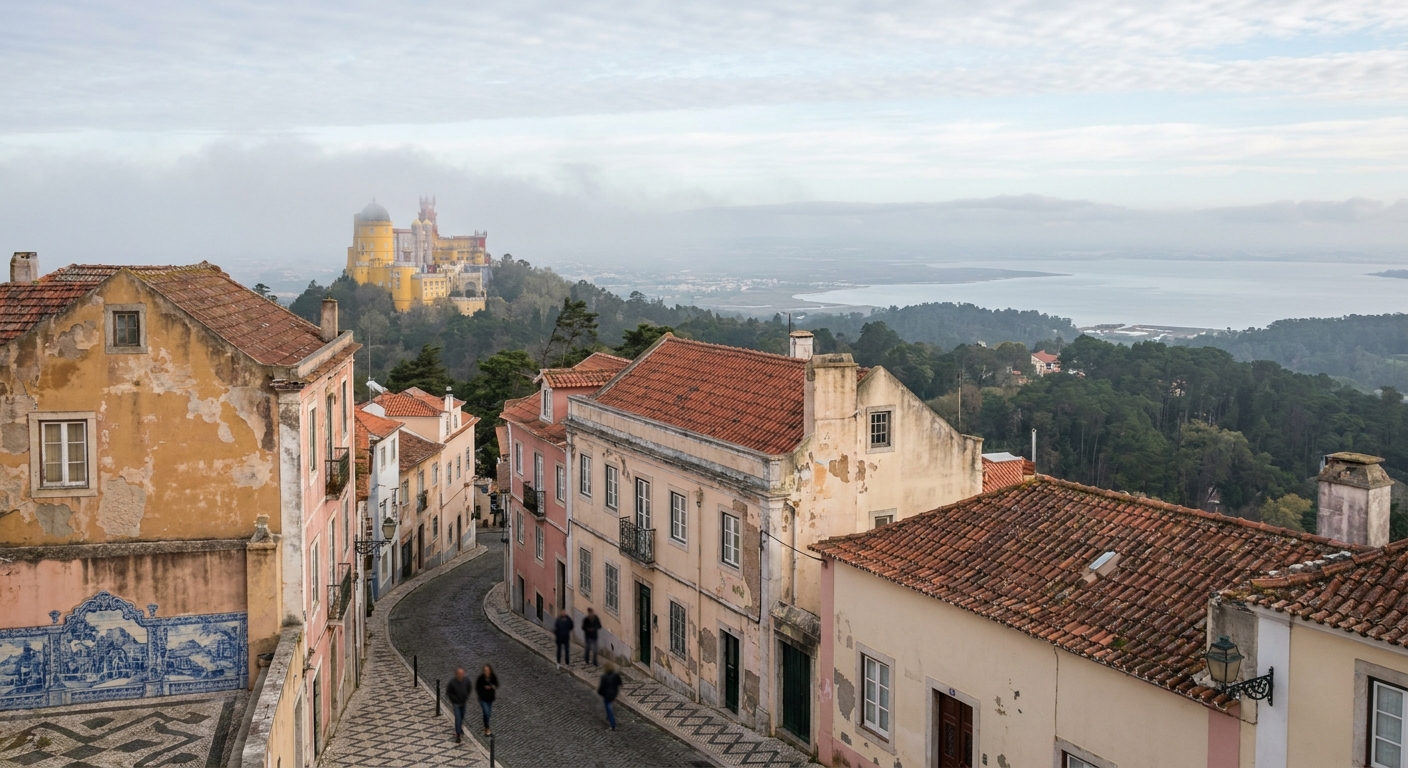
September keeps the warmth and hands back the light. Sintra’s month runs to an average high of 80.2°F and an average low of 63.3°F, with 1.41 inches of rain falling across 3.7 wet days. The hill above the town still makes its own cloud, so the granite stairs up to the Moorish Castle can be misty at nine and sun-struck at two.
That combination matters because the palaces run on clock time, not on mood. The Park of Pena admits visitors until 18:00 and closes at 19:00, and on September 15 the sun sets at 7:45 pm local, so an evening still exists after the last gate. October is a different proposition entirely: 4.05 inches of rain and 8.3 wet days. For the town year-round, our Sintra guide covers what the date does not.
THE MONTH AT A GLANCE · SINTRA · SEPTEMBER
September gives you August’s warmth minus four degrees, four times October’s dry days, and palace parks open until 19:00: the best-balanced month on the Sintra hill for anyone who intends to walk it.
AVERAGE HIGH 80.2°F · 3.7 WET DAYS · PENA PARK OPEN TO 19:00
Go for: two hilltop parks in one day, evening light until a quarter to eight, and gardens holding over 3,000 exotic species at Monserrate without the rain that arrives four weeks later.
Think twice before: counting on airport figures for a mountain trail: the nearest long-run thermometer sits 20 km away and far lower, and the Serra runs several degrees colder and mistier.
Climate: IPMA 1991–2020, station 579 · Hours and tickets: Parques de Sintra, Monte da Lua · Sunlight: sunrise-sunset.org
On this page
- Sintra weather in September80.2°F highs, 1.41 inches, 3.7 wet days
- How warm does it get, and can you swim?Days at 80.2°F, nights at 63.3°F, and the water figure we lack
- Is Sintra crowded in September?Gate times, the 20 EUR Pena ticket, and what we could not price
- Things to do in Sintra in SeptemberPena, Monserrate, Capuchos, Cabo da Roca
- A two-day Sintra planHour by hour, gate by gate
- September or October in Sintra?How August, September and October compare
- Is September a good time to visit Sintra?Our answer, and who should shift the dates
One caveat before the numbers, because it changes what goes in your bag. Sintra has no long-run official thermometer of its own in our sources: the normals below are measured 20 km away and much lower, at Lisbon’s airport. The Serra generates its own cloud and sits colder and mistier than any coastal reading suggests, and a high-ground trail is not a town street.
Sintra weather in September: average highs, lows and rain days
| September, 1991–2020 normals | Value |
|---|---|
| Average high | 80.2°F (26.8°C) |
| Average low | 63.3°F (17.4°C) |
| Precipitation | 1.41 in (36 mm) |
| Days with 0.04 in (1 mm) or more | 3.7 |
| Days with 0.39 in (10 mm) or more | 1.3 |
| Daylight on September 15 | 12 h 29 min |
| Sunrise / sunset, September 15 | 7:17 am / 7:45 pm local |
The figures come from IPMA, the Portuguese sea and atmosphere institute, and specifically from its 1991–2020 normals for station 579, Lisboa Gago Coutinho, at an altitude of 103.9 m. That is a real thermometer in a real instrument shelter, not a model grid cell, and it is worth knowing the difference when two websites quote you two Septembers. What it cannot do is climb the hill with you.
In practice, 3.7 wet days means measurable rain roughly one day in eight, and 1.3 days of the month deliver 0.39 inch or more, which is the kind of downpour that empties a terrace. Note the yardstick: IPMA counts from 1 mm, not from the 0.10-inch threshold most American tables use, so these counts are not interchangeable with the ones you read at home.
The day-to-night spread runs to 16.9°F, and on the Serra it feels wider still. That is one layer in the daypack, not a coat: a light shell for the mist that hangs on Pena’s walls at opening time, and short sleeves by the time you reach Monserrate’s lawns. Shoes matter more than fabric here, since almost every approach is cobble, granite step or garden path. Our packing guide goes further.
Light is the month’s quiet gift. September 15 carries about 12 hours 29 minutes of daylight, sunrise at 7:17 am and sunset at 7:45 pm local time. Pena’s park stops admitting at 18:00 and shuts at 19:00, so the last hour of sun falls outside the walls, on the town, the terraces and the road down toward Cascais.
How warm is Sintra in September, and can you swim?
Average highs of 80.2°F against average lows of 63.3°F give the month its shape: warm afternoons, genuinely fresh mornings, and 16.9°F between them. August runs 4.0°F hotter by day at 84.2°F, which sounds small and is not, because the heat lands on you while you are climbing a walled park. September trades those four degrees for air you can walk in.
Morning on the hill asks for sleeves and a shell; by two in the afternoon you want a hat and water, especially on the open stretch between the Pena ticket line and the palace itself. Carry both, because you will be moving between them all day. Anyone climbing to the Moorish Castle should expect the mist to burn off later up there than it does in the town square below.
Frost is not a September question at this latitude: with an average low of 63.3°F, freezing nights are far off, though we could not verify a frost-day count and quote none. As for swimming, we found no sea-surface temperature series for the Sintra coast, so we give no water figure and no promise about the Atlantic here. Beach temperatures elsewhere in Portugal sit in our 12-month verdict.
How busy is Sintra in September? Crowds, booking and what a ticket costs
September closes the European summer holiday calendar, and the monuments keep full-length hours right through it: Pena’s park 09:00 to 19:00, its palace 09:30 to 18:30, the Moorish Castle 09:30 to 18:00. We found no occupancy series and no monthly room-rate data for Sintra, so we crown no month cheap and no month expensive. What is datable is the clock, and the clock is generous this month.
Ticket prices are published and do not move with the season. Pena comes in tiers: 12 EUR for the park alone, 20 EUR for the Essential visit to park and palace, 45 EUR for the Full Tour, with children under 6 free. The Moorish Castle is 12 EUR, or 10 EUR for visitors aged 6 to 17 and over 65.
On the lodging side we have to leave a blank rather than a guess: we could not verify a nightly tourist-tax rate for Sintra, so we quote no percentage and no per-night amount. The same applies to the journey in. We could not read a Lisbon to Sintra train fare or travel time off an operator page, and we quote neither; our getting-around guide handles the rail network nationally.
The one upgrade that changes a warm day is small and unglamorous: 4.50 EUR buys the round-trip transfer between the Pena park entrance and the palace door. In a month averaging 80.2°F by mid-afternoon, that saves the steepest climb of the day for legs that have eleven Parques de Sintra sites to choose from and only two days to spend.
Things to do in Sintra in September: Pena, Monserrate, Capuchos and Cabo da Roca
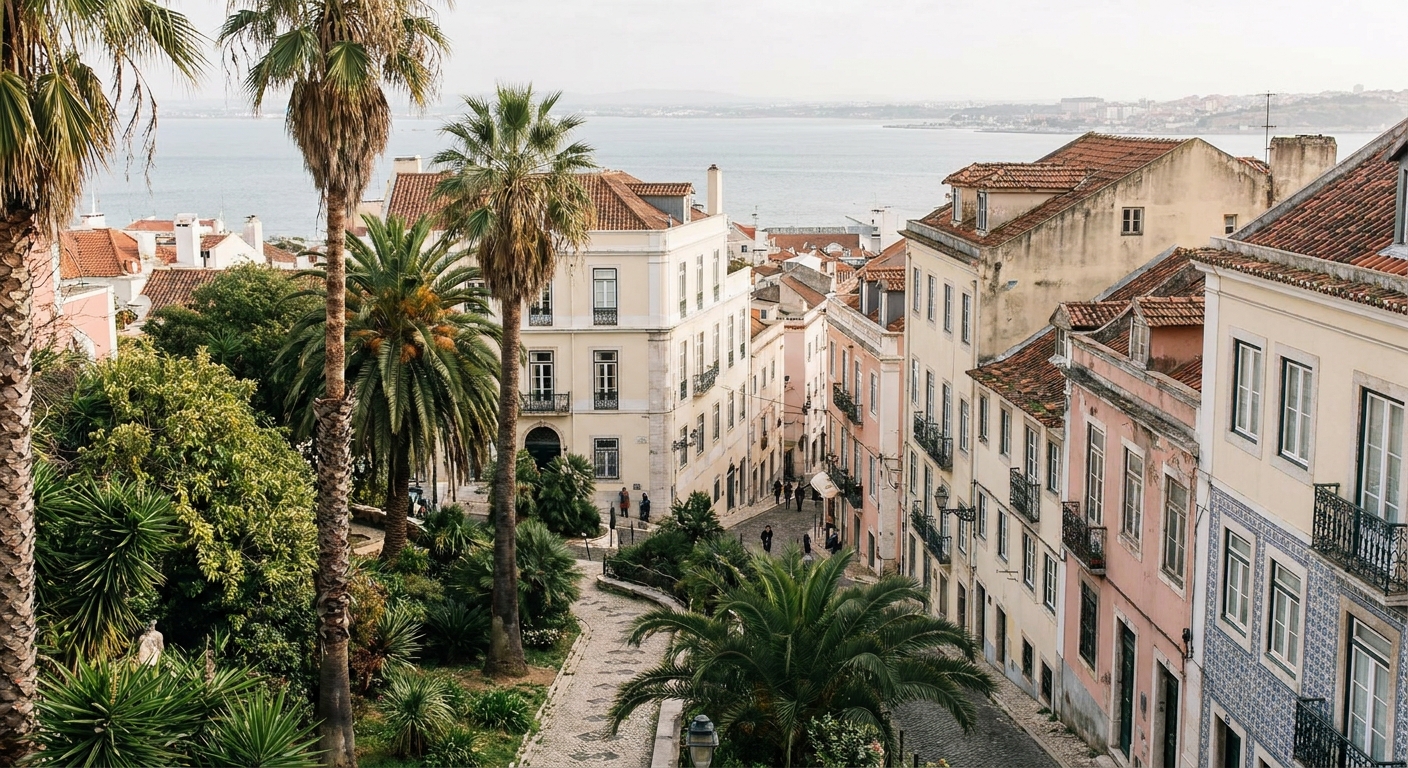
September is the month that lets you stack two hilltops in a single day without losing one to weather or the other to heat exhaustion. With 3.7 wet days against October’s 8.3, and light holding to 7:45 pm on the 15th, a morning inside a walled park and an afternoon in a garden on the far slope both fit before the gates close. In August the same plan works, four degrees hotter and drier.
The names worth your hours: the Park of Pena, 210 hectares behind a stone wall, taking in the Tapada do Mocho and the Moorish Castle, planted from about 1840 by Ferdinand II with species brought from North America, Asia and New Zealand. Monserrate, 50 hectares on the northern slopes, over 3,000 exotic species, 12 EUR. The Convent of the Capuchos, 11 EUR, 09:00 to 17:30. And the National Palace of Sintra in the town center, 13 EUR, 09:30 to 18:30. The whole cultural landscape has been on the UNESCO list since 1995, 946 hectares inside a buffer zone of 3,641.
What the calendar changes is the air, not the planting. Monserrate’s collection was laid out after a study of the microclimatic zones of the land, and those zones do their work in every month; the difference in September is that you can walk the north slope at 80.2°F instead of 84.2°F, with shade where the beds need it. Out at Cabo da Roca, mainland Europe’s westernmost point, the lighthouse courtyard and interpretation center run 09:30 to 17:30, 5 EUR for the Essential visit and 10 EUR to climb the tower.
Two things cost nothing at all, and both reward a month with long evenings: Villa Sassetti is free, 10:00 to 18:00, and the gardens of the National Palace of Sintra are free to enter. Put one of them in the gap between a morning ticket and a late lunch rather than paying for a third palace.
Sintra in September: a two-day itinerary
Day one belongs to the hill. Be at the Pena park gate for 09:00, when the mist is often still on the walls, and take the 4.50 EUR transfer up rather than the climb. Palace interiors from 09:30, back down through the 210 hectares by noon, lunch in town. Walk up to the Moorish Castle in the afternoon and respect its last admission at 17:30, which leaves the 7:45 pm sunset for the terraces below.
Day two crosses to the north slope: Monserrate’s park from 09:00, palace from 09:30, then the Convent of the Capuchos before its 17:30 close, or Cabo da Roca if the sky is clear and the westernmost point appeals. If one of the month’s 1.3 heavy days lands on you, swap both for the National Palace of Sintra, 13 EUR and indoors until 18:30, with the free gardens for the break in the rain.
Sintra in September vs August and October
| Measure (IPMA, 1991–2020) | August | September | October |
|---|---|---|---|
| Average high | 84.2°F | 80.2°F | 72.7°F |
| Average low | 65.3°F | 63.3°F | 58.8°F |
| Precipitation | 0.20 in | 1.41 in | 4.05 in |
| Days with 0.04 in (1 mm) or more | 1.0 | 3.7 | 8.3 |
Between August and September the thermometer drops 4.0°F by day and 2.0°F at night, while rainfall multiplies from 0.20 to 1.41 inches and wet days go from 1.0 to 3.7. The step down to October is far steeper on both counts: another 7.5°F off the daytime high, 4.05 inches of rain, and 8.3 wet days, which is more than double September’s tally.
Shift four weeks later and you gain cool walking weather for the steep parks and thinner queues at the gate, and you lose the near certainty of a dry two-day plan. Shift four weeks earlier and you get the driest month of the three, paid for in heat on a walled hillside. Our October page and August page run the same numbers for their own month.
Is September a good time to visit Sintra?
Yes, for anyone whose trip involves walking uphill, which in Sintra is everyone. Days at 80.2°F with light to 7:45 pm and rain on fewer than four days in thirty is close to the best arrangement the hill offers. The reader it does not suit is the one who wants the town quiet and the ticket line short, because school holidays across Europe still run into the first days of the month.
If crowds outrank weather for you, October is the month to book: 72.7°F highs are pleasant for climbing, and the trade is real at 4.05 inches of rain and 8.3 wet days, so build indoor options into every afternoon. Anyone combining Sintra with beach time should read the wider picture in our 12-month verdict before locking dates.
What no other month gives is this pairing: a 12 hour 29 minute day on the 15th, only 1.3 days of heavy rain to dodge, and every one of Pena’s 210 hectares open until 19:00.
The last word
Book the early Pena slot, pay the 4.50 EUR to ride up, and spend what you save on the afternoon you will actually remember: Monserrate’s 50 hectares with the light coming in sideways. One more thing worth carrying: the whole landscape sits inside the Sintra-Cascais Natural Park, protected under Portuguese law since 1994 and classified as a National Monument, so the rules on paths and gates are not decoration. Walk it accordingly, and September will hand you the rest.
Sources & data for this guide
- September normals, rain-day counts, and the August and October columns · IPMA (Instituto Português do Mar e da Atmosfera), 1991–2020 climate normals, station 579 Lisboa Gago Coutinho, altitude 103.9 m · checked Sep 23, 2026
- Daylight, sunrise and sunset for September 15, converted from UTC to local time · sunrise-sunset.org · checked Sep 23, 2026
- Opening hours, ticket tiers, the 4.50 EUR Pena transfer and the free sites · Parques de Sintra, Monte da Lua, Opening Times and Prices · checked Sep 23, 2026
- UNESCO inscription of 1995, the 946-hectare property and 3,641-hectare buffer, Pena’s 210 hectares, Monserrate’s 50 hectares and 3,000 species, and the 1994 national protection · UNESCO World Heritage Centre, file 723 · checked Sep 23, 2026
- What we could not verify: a Lisbon to Sintra train fare or journey time, a bus timetable inside the Serra, a sea-surface temperature series for the coast, a nightly tourist-tax rate, and any occupancy or room-rate series for Sintra. We quote none of them.