
SAGRES · SEPTEMBER · IPMA STATION 533
Sagres in September runs an average high of 76.8°F (24.9°C) and an average low of 62.1°F (16.7°C), with 0.73 inches of rain spread over about two and a half wet days. That is a beach month with the edge taken off, on a cape where the Atlantic supplies the air conditioning at no charge.
The catch sits in the water. The sea off the cape averages 64.2°F (17.9°C) in September, warmer than August by 2.1°F and still 2.1°F short of October. Anyone who pictured a Mediterranean float should read that figure twice before booking.
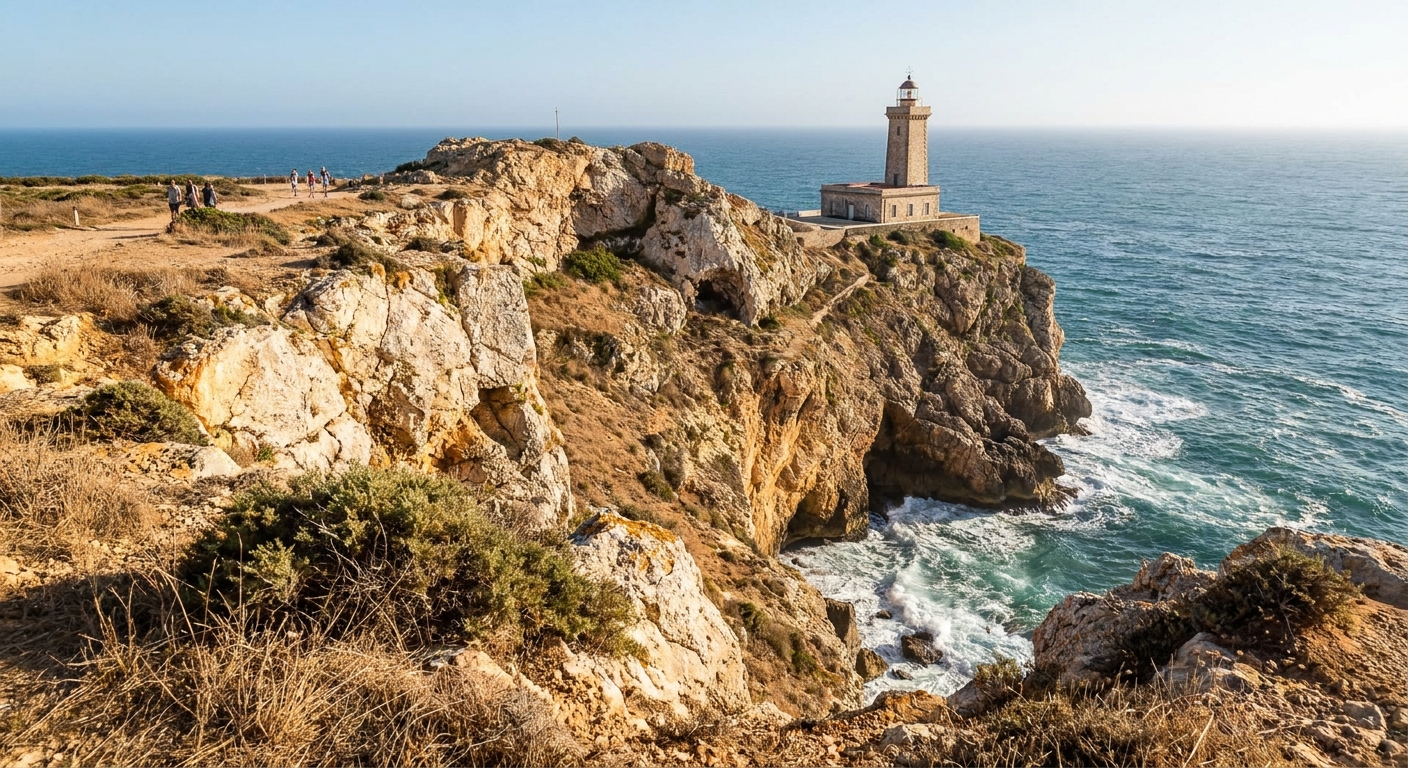
THE MONTH AT A GLANCE · SAGRES · SEPTEMBER
September gives Sagres 76.8°F afternoons and 0.73 inches of rain, and asks you to accept a 64.2°F sea that October will beat.
IPMA NORMALS 1991–2020 · STATION 533 · SEA FROM DAILY MAXIMA 2015–2024
Go for: beach afternoons at 76.8°F, cliff walks with measurable rain on only 2.5 days, and a 7:44 p.m. sunset that still leaves room for dinner after it.
Think twice before: planning long swims. The sea averages 64.2°F, cooler than it will be four weeks later.
Climate: IPMA station 533 · Sea: Open-Meteo Marine · Daylight: sunrise-sunset.org · full sources at the end
On this page
- Sagres weather in September76.8°F highs, 0.73 inches, 2.5 wet days
- Sea temperature for swimming64.2°F off the cape
- Crowds, prices and bookingWhat we could verify, and what we could not
- Things to do in SeptemberFortaleza, Cabo de São Vicente, Tonel, Martinhal
- A two-day plan for the capeTwo days timed to a 7:44 p.m. sunset
- September vs August and OctoberHow the three months compare, degree by degree
- Is September a good time to go?Yes, with one reservation about the water
Every figure here comes from the thermometer at Sagres itself, 22.9 meters up on the exposed southwest cape, and it does not describe the whole Algarve. High ground inland runs colder and far wetter, and the eastern end of the coast keeps its own weather. Pack from the normals below if you are staying on the cape, and from the regional guide if you are moving around.
Sagres weather in September: average highs, lows and rain days
| Measure | September at Sagres | Detail |
|---|---|---|
| Average high | 76.8°F (24.9°C) | IPMA normal, 1991–2020 |
| Average low | 62.1°F (16.7°C) | A 14.7-degree daily swing |
| Precipitation | 0.73 in | Monthly total |
| Days with 0.04 in or more | 2.5 | IPMA threshold, not the US 0.10 in |
| Days with 0.39 in or more | 0.6 | Heavier rain is uncommon |
| Sea surface | 64.2°F (17.9°C) | Mean of daily maxima, 2015–2024 |
| Daylight, Sep 15 | 12h 27m | Sunset at 7:44 p.m. local |
The normals come from IPMA, the Portuguese national weather service, covering 1991 to 2020 at station 533: 76.8°F by day, 62.1°F at night, 0.73 inches for the month. That is a real instrument on the headland, not a model grid cell averaging twenty miles of land and sea together, and on a cape this exposed the distinction is worth having before you pack.
Rain falls on 2.5 days in an average September, counting any day that records at least 0.04 inch. Call it one day in twelve. A proper soaking, 0.39 inch or more, turns up on 0.6 of a day. Check the threshold before comparing with an American table, since US summaries usually count days at 0.10 inch and the two sets of counts are not interchangeable. In practice a week on the cape costs you a wet morning at worst.
Between the 76.8°F afternoon and the 62.1°F night sit 14.7 degrees, and the cape wind widens the gap in the way it feels. A linen layer for dinner is not optional here, and a light windproof shell belongs in the bag even during a cloudless week. For the rest of the country, our packing guide does the sorting.
On September 15 the sun stays up for 12 hours 27 minutes and sets at 7:44 p.m. local time. Dinner at eight therefore happens after sunset, and the evening has one fixed appointment: be on the cliff road before half past seven, because the light goes quickly once the sun touches the water.
Can you swim in Sagres in September? Sea temperature and what it feels like
The sea surface off Sagres averages 64.2°F (17.9°C) in September, from Open-Meteo’s marine series over 2015 to 2024. That average is built from daily maxima, the warmest reading of each day, so it sits a shade above what a full 24-hour mean would give. Tables published on a 24-hour basis will show the cape a little cooler, and neither figure is wrong.
Sixty-four degrees is a swim rather than a soak. Most adults get in, gasp, and then get on with it. Children stay in longer than their parents expect and come out blue-lipped anyway. Anyone planning more than one session a day, surfers included, wants a shorty wetsuit. The consolation is overhead: 76.8°F on the sand against 64.2°F in the water is a 12.6-degree gap, and the towel does the rest of the work.
We found no wind or wave series for Sagres, so we give no figure for either. What the climate record does state is where the station stands, on the exposed southwest cape, open to the Atlantic. That turns beach choice into a daily decision: Tonel and Beliche take the ocean head-on, while Mareta and Martinhal shelter on the bay side east of the promontory.
How busy is Sagres in September? Crowds, prices and booking
We found no occupancy series and no monthly room-rate series for Sagres, so we crown no month cheap and none expensive. What the calendar does fix is that September follows the European summer holidays while the cape keeps summer weather, 76.8°F and 0.73 inches of rain, well after the school run resumes. For the country-wide price picture, our cost guide runs that arithmetic.
No booking-window figure could be verified either, so we quote none in weeks. The pressure everyone underestimates is the car: Sagres sits at the far southwest corner of the Algarve, and most itineraries arrive on four wheels. Reserve the rental when you book the flight, then let the rest wait, with tolls and pickup covered in our car guide and the alternatives in getting around Portugal.
We could not verify a lodging-tax rate for Sagres, so no percentage appears. The municipality is Vila do Bispo, and any tourist tax would be set and published there. If one applies, the property collects it, and it will not always show up inside an online total. Ask when you reserve and read the final line rather than the nightly one.
The bed is where paying more genuinely changes this month, and specifically a sheltered terrace on the bay side, because 62.1°F evenings on an open headland come with wind attached. Beaches, the cliff road and the sunset cost nothing extra. Dinner is priced the same whatever you paid to sleep.
Things to do in Sagres in September: Cabo de São Vicente, Tonel and Martinhal
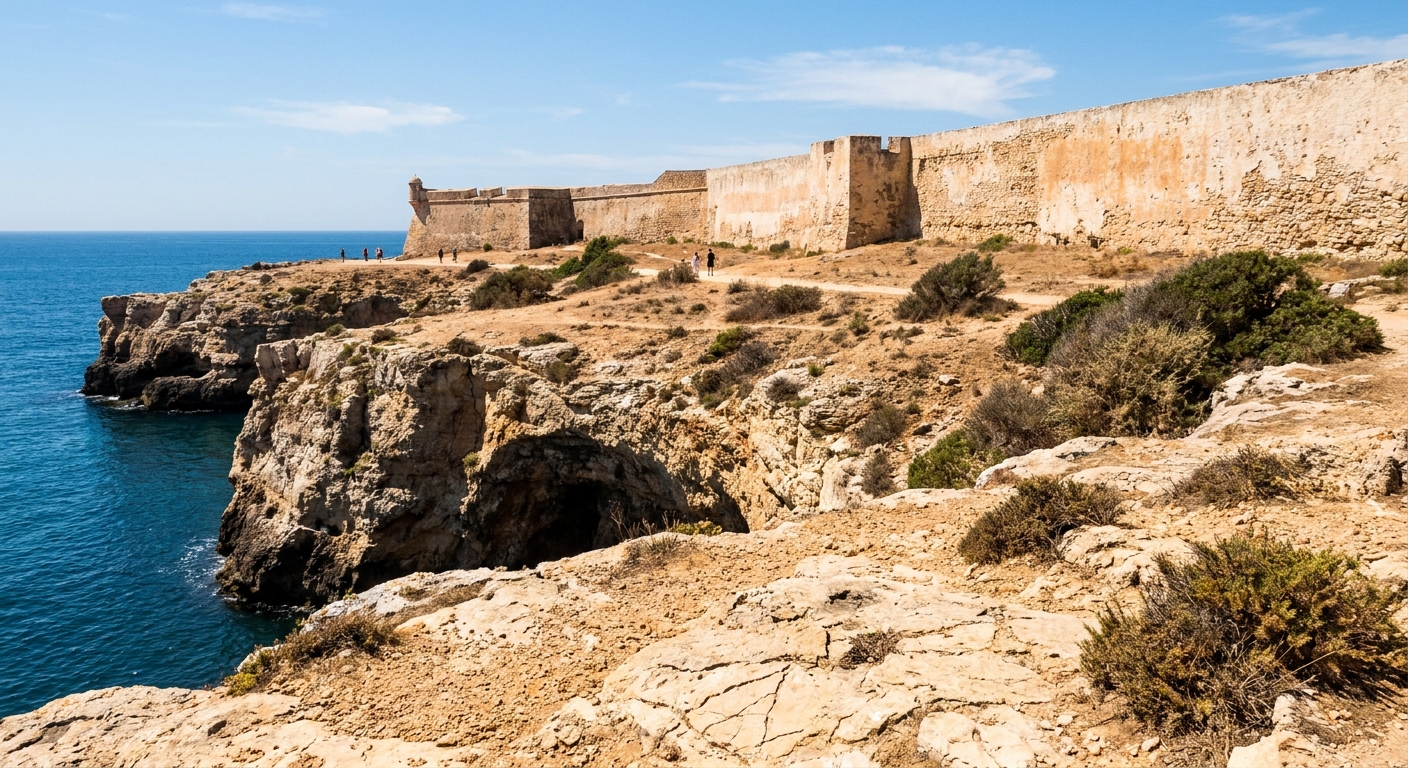
September keeps both halves of a Sagres day open. The air still reaches 76.8°F, so the beach works, and measurable rain shows up on 2.5 days, so a clifftop stretch of the Rota Vicentina is a fair bet on any given morning. October turns that bet sour with 6.7 wet days and 2.42 inches. August keeps the walks dry and hands you the coldest water of the three at 62.1°F.
The Fortaleza de Sagres occupies the promontory, a walled enclosure with its great stone wind rose laid out on the ground. West of town, the lighthouse at Cabo de São Vicente stands on the southwest corner of mainland Europe. The beaches fill the spaces between: Tonel below the fort, Beliche down a long flight of steps, Mareta on the town’s south side, Martinhal further east in the bay.
The rock does not change with the season, the air does. August puts 78.6°F sand above a 62.1°F sea, a gap of 16.5 degrees. September narrows it to 12.6. By October, with the air down to 72.3°F and the water up to 66.3°F, only 6.0 degrees separate them, and the beach stops being the obvious use of an afternoon.
Free in September: every beach on the cape, and the clifftop ground around the lighthouse at Cabo de São Vicente, where the 7:44 p.m. sunset on the 15th arrives late enough that a full beach day can still end there. Parking charges at the cape we could not verify, so keep a little cash aside for the possibility.
Sagres in September: a two-day itinerary
Day one runs on the light. Breakfast, then the Fortaleza de Sagres by nine while the stone is still cool. Tonel from eleven, water at 64.2°F and the wind building through the morning. Lunch in town, then a long flat afternoon on Mareta from four, when the 76.8°F high is doing its best work. Drive out to Cabo de São Vicente for the 7:44 p.m. sunset and eat afterwards, with the layer you packed for a 62.1°F night.
Day two goes east and low: Martinhal in the morning, Beliche after lunch for the steps and a second swim, then a section of the Fishermen’s Trail before the light drops. If the sky turns, the odds favor one grey morning rather than a grey week, and 0.73 inches does not all fall at once. Spend the wet hours in Lagos and come back for the cape at sunset.
Sagres in September vs August and October
| Measure | August | September | October |
|---|---|---|---|
| Average high | 78.6°F (25.9°C) | 76.8°F (24.9°C) | 72.3°F (22.4°C) |
| Average low | 63.3°F (17.4°C) | 62.1°F (16.7°C) | 59.0°F (15.0°C) |
| Precipitation | 0.06 in | 0.73 in | 2.42 in |
| Days with 0.04 in or more | 0.4 | 2.5 | 6.7 |
| Sea surface (daily maxima) | 62.1°F (16.7°C) | 64.2°F (17.9°C) | 66.3°F (19.1°C) |
September sits 1.8°F below August on the daytime high and 4.5°F above October. Rain separates the three far more sharply than heat does: 0.06 inch in August, 0.73 in September, 2.42 in October, spread across 0.4, 2.5 and 6.7 wet days. The sea runs the opposite way, climbing from 62.1°F to 64.2°F to 66.3°F, all three measured the same way, as a mean of daily maxima.
Shift four weeks later and you gain 2.1°F of water, lose 4.5°F of air and take on 4.2 extra rain days, which is the trade that settles most Sagres trips. Shift four weeks earlier and August returns 1.8°F of afternoon heat and an almost dry month, at the cost of the coolest sea of the three and the full school holidays. August in Sagres argues its own case with the same numbers.
Is September a good time to visit Sagres?
Yes, for anyone whose ideal day has sand in it and a walk after it. Days at 76.8°F, rain on 2.5 of them and a sunset at 7:44 p.m. come close to the specification for a cape holiday. No, for the swimmer who wants an hour in the water without neoprene, because 64.2°F will not deliver that, however bright the afternoon looks from the terrace.
If the water is the whole point, October is the warmer sea at 66.3°F, and you pay for it with 6.7 wet days and 2.42 inches. If dry days matter more, August runs 0.06 inch across 0.4 wet days while the sea sits at its coolest of the three. Pick by whichever of the two, cold water or grey sky, you would notice first.
September alone puts a 76.8°F afternoon, fewer than three wet days and a sea that has already passed August’s into the same week.
The last word
Book the car, choose the beach each morning by which way the wind is coming from, and hang the rest of the day on that 7:44 p.m. sunset. One number left over: the sun comes up at 7:17 a.m. on September 15, a civilized hour that makes a sunrise on the cliffs cost almost nothing in sleep. And if the forecast wobbles, remember the month totals 0.73 inches, under a third of what October pours on the same headland.
Sources & data for this guide
- September normals (high 76.8°F, low 62.1°F, 0.73 in, 2.5 days at 0.04 in, 0.6 day at 0.39 in) · IPMA climate normals 1991–2020, station 533 Sagres, altitude 22.9 m · checked Sep 23, 2026
- August and October normals used in the comparison · same IPMA 1991–2020 series, station 533 · checked Sep 23, 2026
- Sea surface 64.2°F, 62.1°F and 66.3°F, means of daily maxima 2015–2024 · Open-Meteo Marine API · checked Sep 23, 2026
- Daylight of 12h 27m, sunrise 7:17 a.m. and sunset 7:44 p.m. on September 15, converted to Europe/Lisbon · sunrise-sunset.org · checked Sep 23, 2026
- We could not verify fortress admission, parking charges at the cape, a lodging-tax rate, or any occupancy and room-rate series for Sagres, so none of those figures appear above · hours and prices change, check operators when you book
To plan your stay
- Best Time to Visit Sagres: Weather, Sea Temperature and Crowds Month by Month
- Sagres in August: Weather, Sea Temperature, Crowds and a Two-Day Plan
- Sagres in October: Weather, Sea Temperature and How It Compares to September
- Sagres in July: Weather, Sea Temperature, Crowds and How the Month Compares to June and August