
FARO · MAY · 37.0° N
By mid-May the Algarve’s capital runs two clocks at different speeds. The air has climbed to an average high of 74.3°F, warm enough to walk the walled old town at noon without hunting for shade. The water off the beach sits at 63.4°F, which is still very much spring.
That gap between the air and the sea is what the month hands you, along with 14 hours 13 minutes of daylight on the 15th and an average of 1.03 inches of rain spread over fewer than four wet days. Where to sleep, what to eat and how the city works in any month live in our Faro guide.
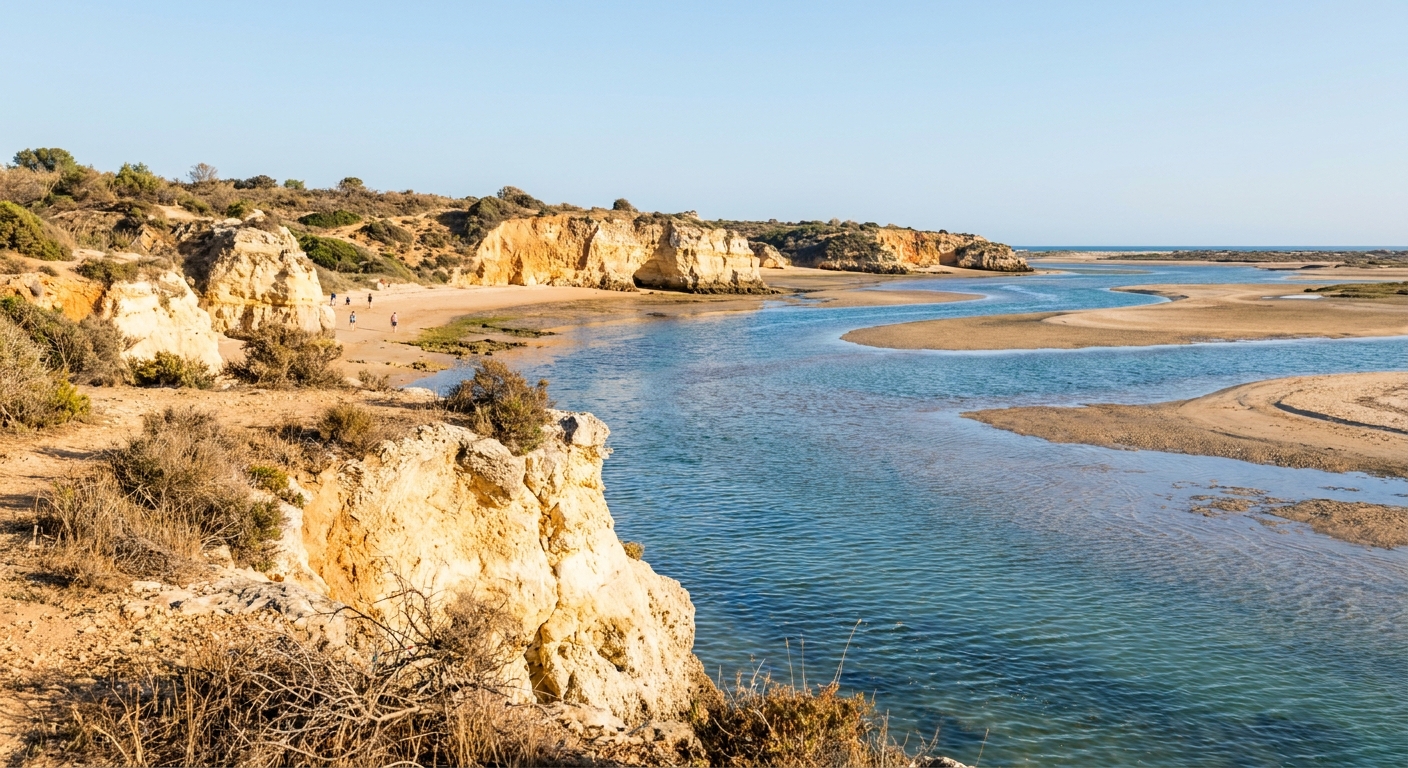
FARO IN MAY · THE ALGARVE
May gives Faro long evenings and comfortable walking weather at 74.3°F, with a sea at 63.4°F that most swimmers will call bracing.
AVG HIGH 74.3°F · SEA 63.4°F · 3.8 WET DAYS · 14H 13M OF DAYLIGHT ON MAY 15
Go for: old-town walking, boats out to the Ria Formosa islands, and dinner in daylight: the sun sets at 8:34 p.m. local on May 15.
Think twice before: building a swimming trip around 63.4°F water. June averages 66.9°F, and the jump arrives all at once.
Normals: IPMA station 554, 1991-2020 · Sea: Open-Meteo Marine, 2015-2024 · Daylight: sunrise-sunset.org
On this page
- Faro weather in May74.3°F days, 59.0°F nights, 3.8 wet days
- Sea temperature in Faro in May63.4°F, and what that feels like
- Is Faro busy in May?Where May sits before the summer season
- Things to do in Faro in MayThe old town, the lagoon islands, Praia de Faro
- A two-day plan for FaroDay one and day two, hour by hour
- Faro in May vs April and JuneHow the three months compare, degree by degree
- Is May a good time to visit Faro?Who should come, and who should shift four weeks
Every figure here comes from the IPMA station at Faro, a real thermometer 5 m (16 ft) above sea level on the eastern Algarve coast. Those normals describe this shoreline and nothing more. The hills behind Monchique run colder and far wetter, and the western cape keeps its own weather, so do not pack for either one on a Faro reading.
Faro weather in May: average highs, lows and rain days
| May at Faro | Normal (1991-2020) |
|---|---|
| Average high | 74.3°F (23.5°C) |
| Average low | 59.0°F (15.0°C) |
| Precipitation | 1.03 in |
| Days with 0.04 in (1 mm) or more | 3.8 |
| Days with 0.39 in (10 mm) or more | 0.7 |
| Sea surface, mean of daily maxima | 63.4°F (17.4°C) |
| Daylight on May 15 | 14h 13m |
The numbers above are the 1991-2020 climate normals published by IPMA, Portugal’s national weather service, for station 554 at Faro. They are measurements from an instrument, not the output of a reanalysis grid cell, and the distinction matters when two websites quote you different lows for the same month. Average high 74.3°F, average low 59.0°F, 1.03 inches of rain across the month.
Those 3.8 wet days work out to measurable rain roughly one day in eight, and only 0.7 day a month reaches 0.39 inches, so a genuine soaking turns up in something like two Mays out of three. One caveat travels with the count: IPMA registers a wet day at 1 mm (0.04 inch), while American tables usually start at 0.10 inch. The two sets of numbers cannot be laid on top of each other.
Between the average high and the average low sits 15.3°F of daily swing. A midday walk through the Cidade Velha is short-sleeve work, and the same street at eleven at night is closer to 59°F with a breeze off the lagoon. Pack a real layer for evenings and something with sleeves for a boat, because the water cools the air over it. Our packing guide handles the rest of the suitcase.
Daylight on May 15 runs 14 hours 13 minutes: sunrise at 6:21 a.m. and sunset at 8:34 p.m. in Lisbon time. That buys a full afternoon after a boat comes back and still leaves light for the walk to dinner, which is the single biggest practical difference between May and the short shoulder months at the other end of the year.
Can you swim in Faro in May? Sea temperature and what it feels like
Sea surface off Faro averages 63.4°F (17.4°C) in May, taken from the Open-Meteo Marine record as the mean of daily maxima over 2015-2024. That method reads a shade warmer than a 24-hour mean would, so treat 63.4°F as the friendly end of the day rather than the temperature at eight in the morning.
For a swimmer, low sixties is an in-and-out proposition. Adults acclimatized to the North Atlantic will do twenty minutes and enjoy it. Most people get a sharp first thirty seconds, swim hard, and come out looking for a towel. Children last less time than their parents expect. A shortie wetsuit turns the same water into an afternoon activity, and the surf schools along the coast rent them.
We could not verify a wind or wave record for Faro in May, so we give no figures for either. What the map does say is that Praia de Faro faces the open Atlantic across a barrier island, while the channels of the Ria Formosa behind it are sheltered from that swell. If a breezy afternoon flattens the beach plan, the lagoon side is the calmer water.
How busy is Faro in May? Crowds, prices and the demand peak
May falls in the run-up to the Algarve’s summer, and the weather turn that summer is built on shows up in the very next column of the normals: June records just 0.20 inches of rain across 0.8 wet days. We found no occupancy series and no monthly room-rate series for Faro, so we crown no month cheapest and quote no percentage. What is a calendar fact is that July and August are the months this coast is organized around.
Book the car before the restaurant. Late-May weekends collide with the start of the season on the rental counters, and small automatic cars are the first category to disappear. Six to eight weeks ahead (est.) is our own judgment rather than a measurement, and we flag it as such. The mechanics of driving here, tolls included, are in our car guide and the getting-around guide.
We could not verify a municipal tourist tax for Faro, so we give no rate. Portuguese municipalities set these individually and change them, so ask the property what it collects at check-in and whether it is charged per person per night. Know Before You Go covers the paperwork side of a Portuguese stay.
One line of spending genuinely changes what May can be, and it is the car. Without one, the trip is Faro plus whatever boat leaves the waterfront. With one, the same 74.3°F afternoons reach Tavira to the east and Lagos to the west, at a time of year when the coast road is not yet a parking lot.
Things to do in Faro in May: the old town, the lagoon islands and Praia de Faro
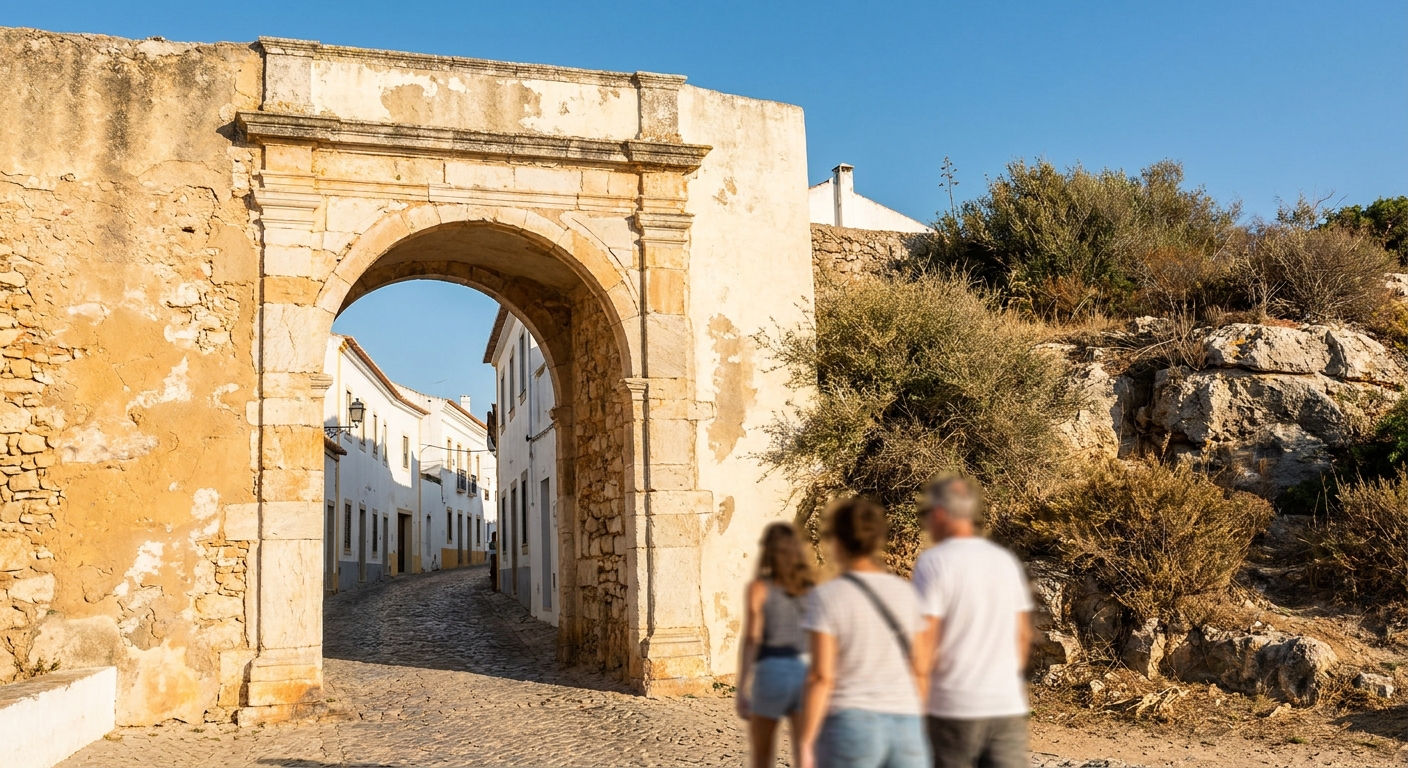
May is the month when a whole day outdoors costs nothing in effort. Fourteen hours of daylight, an average high of 74.3°F, and rain on fewer than four days in the month mean you can put a morning in the old town, an afternoon on the water and an evening on a terrace into the same day. June’s 80.2°F average high makes the same midday walk a different negotiation.
The walled Cidade Velha is the fixed point: the Arco da Vila, the cathedral square, the bone chapel at the Igreja do Carmo a few streets north, the municipal museum in its old convent cloister. From the waterfront, boats run out into the Ria Formosa to Ilha Deserta, Culatra and Farol, and the bus road crosses to Praia de Faro on the barrier island. We could not verify current admission prices or boat timetables, so we quote none: check each operator when you book.
What May changes for those places is the air, not the sea. The water off the islands reads 63.4°F, within a tenth of a degree of April’s 63.5, while the air has gained 5°F on April and still sits 6°F below June. That spread is what a May beach day feels like: warm enough to lie on the sand for hours, cold enough that swims stay short and the sandbanks stay quiet.
Plenty of the best hours cost nothing. Walking the walls, the cathedral square at dusk, the marina promenade, and the paths along the salt pans east of the airport all run on daylight alone, and there is a lot of daylight. We could not confirm whether any Faro museum runs a free day or a free hour in May, so we name none rather than send you on a guess.
Faro in May: a two-day itinerary
Day one. Start at 9 a.m. under the Arco da Vila while the stone is cool, and give the old town two unhurried hours. Lunch near the market, then take an early-afternoon boat into the Ria Formosa and walk a sandbank at low tide. Back on the waterfront by six, with 74.3°F still on the thermometer and more than two hours of light left. Dinner outside: sunset on May 15 is 8:34 p.m.
Day two. Cross to Praia de Faro in the morning, walk the beach, and test the 63.4°F water before the wind gets up. In the afternoon, drive or take the train east to Tavira. If one of the month’s 3.8 wet days lands on you, swap the beach for the bone chapel and the convent museum, then keep the Tavira leg: the rain here usually comes through rather than settling in.
Faro in May vs April and June
| Normal (1991-2020) | April | May | June |
|---|---|---|---|
| Average high | 69.3°F (20.7°C) | 74.3°F (23.5°C) | 80.2°F (26.8°C) |
| Average low | 54.3°F (12.4°C) | 59.0°F (15.0°C) | 64.0°F (17.8°C) |
| Precipitation | 1.54 in | 1.03 in | 0.20 in |
| Days with 0.04 in or more | 5.3 | 3.8 | 0.8 |
| Sea surface | 63.5°F (17.5°C) | 63.4°F (17.4°C) | 66.9°F (19.4°C) |
Across the three months the air climbs almost 11°F, from 69.3°F in April to 80.2°F in June, and the rain collapses from 1.54 inches over 5.3 wet days to 0.20 inch over 0.8. The sea does something else entirely. April reads 63.5°F and May 63.4°F, a difference no swimmer can detect, and the whole warm-up lands in June at 66.9°F. All five rows come from the same IPMA station and the same marine record.
Shift four weeks forward and you gain 5.9°F of daytime air, 3.5°F of water and a nearly rainless month, at the cost of walking a medieval town in upper-seventies heat as the coast fills for summer. Shift four weeks back to April and you keep the same cool sea, lose 5°F of air and take on half an inch more rain across an extra day and a half of it.
Is May a good time to visit Faro?
For anyone whose trip is built on walking, driving and eating outdoors, May is close to ideal here: 74.3°F afternoons, 3.8 wet days, and light until 8:34 p.m. For anyone whose trip is built on swimming, it is a compromise, and the number that decides it is 63.4°F. Families with young children who expect hours in the sea will be disappointed by the water long before they are disappointed by the weather.
If the sea is the point, June is the month to move to. It brings the water to 66.9°F, the average high to 80.2°F and the rainfall down to 0.20 inch, in exchange for more company on the same beaches. Choosing between the whole calendar rather than these three months is the job of our best-time guide.
No other month pairs 14 hours 13 minutes of daylight with an average high still under 75°F, which is the particular bargain May strikes on this coast.
The last word
Decide early whether you are coming for the water or for the land, because May answers one of those questions well and the other one halfway. Book the car, keep two mornings for the old town and the lagoon, and treat a swim as a bonus rather than a plan. On May 15 the sun is up at 6:21 a.m. and still out at 8:34 p.m. local, so an early boat and a late dinner fit inside a single day without anyone rushing.
Sources & data for this guide
- May normals (high 74.3°F, low 59.0°F, 1.03 in, 3.8 days at 0.04 in or more, 0.7 day at 0.39 in or more) · IPMA, climate normals 1991-2020, station 554 Faro, altitude 5.0 m · checked Sep 23, 2026
- April and June normals used in the comparison table · IPMA, same station and same 1991-2020 period · checked Sep 23, 2026
- Sea surface 63.4°F in May, 63.5°F in April, 66.9°F in June, all as the mean of daily maxima 2015-2024 · Open-Meteo Marine API · checked Sep 23, 2026
- Daylight 14h 13m, sunrise 05:21 UTC and sunset 19:34 UTC on May 15, converted to Europe/Lisbon · sunrise-sunset.org · checked Sep 23, 2026
- IPMA counts a wet day from 1 mm (0.04 in); most US tables start at 0.10 in, so the two counts are not interchangeable.
- We could not verify boat timetables, island fares, museum admissions, a municipal tourist tax or any occupancy series for Faro, so we give no figure for them · fares and hours change, confirm with operators when you book.