
COIMBRA · NOVEMBER · IPMA STATION 707
November is the month Coimbra gets wet without getting cold. The national weather service measures an average high of 64.4°F (18.0°C) and an average low of 46.9°F (8.3°C) at its Bencanta station, with 4.78 inches of rain spread over 11.5 days that record at least 0.04 inch. That is the month in one line: afternoons you can climb the hill in a shirt, and a better than one-in-three chance the climb includes rain.
What the date gives you is the university itself, indoors, at the time of year when indoors is where you want to be. The hilltop institution has grown there for more than seven centuries, and UNESCO inscribed it in 2013 as a 36.2-hectare property with an 80.8-hectare buffer zone. What the date takes away is light: ten hours of it on November 15, with the sun down at 5:18 pm, so the outdoor half of the trip has to happen before the coffee you were saving for four o’clock.
NOVEMBER AT A GLANCE · COIMBRA
November hands Coimbra cool walking air and ten hours of daylight, and charges 11.5 rain days for it: come for the university interiors and put every outdoor stop before 5:18 pm.
AVG HIGH 64.4°F · 4.78 IN OF RAIN · SUNSET 5:18 PM ON THE 15TH
Go for: the inscribed university core on a hill you climb without sweating, the 18th-century Botanical Garden under soft light, and Sofia Street’s row of old colleges.
Think twice before: booking a walking-only trip with no indoor fallback: 4.5 days of an average November record 0.39 inch of rain or more.
Normals: IPMA 1991-2020, station 707 Bencanta · Property: UNESCO file 1387bis · full sources at the end
On this page
- Coimbra weather in November64.4°F highs, 4.78 inches, 11.5 rain days
- What to pack for a Coimbra NovemberLayers for a 17.5°F day-night spread
- Crowds, room prices and the lodging taxWhat we verified, and what we could not
- Things to do in Coimbra in NovemberThe Joanine Library, Sofia Street, the Botanical Garden
- A two-day plan built on ten hours of lightHour by hour, Alta first, Sofia second
- November vs October and DecemberHow the three months compare, in numbers
- Is November a good time to visit?Who should come, who should shift four weeks
Every figure here comes from one thermometer: IPMA’s station 707 at Coimbra Bencanta, 26.6 m above sea level on the floor of the Mondego valley. That is a real instrument in the city’s own air, not a reanalysis grid cell averaged over a wide box, and it describes Coimbra rather than the country around it. High ground inland runs colder and far wetter, and the coast west of town keeps weather of its own. Read the normals below for the city, and pack separately if a mountain trail is on the itinerary.
Coimbra weather in November: average highs, lows and rain days
| November at Bencanta | 1991-2020 normal |
|---|---|
| Average high | 64.4°F (18.0°C) |
| Average low | 46.9°F (8.3°C) |
| Day-night spread | 17.5°F |
| Precipitation | 4.78 in |
| Days with 0.04 in or more | 11.5 |
| Days with 0.39 in or more | 4.5 |
| Daylight, Nov 15 | 10 hours · 7:18 am to 5:18 pm |
IPMA, the Portuguese institute for the sea and the atmosphere, publishes the 1991-2020 November normals for Bencanta as 64.4°F by day, 46.9°F at night and 4.78 inches of precipitation. Thirty years of measurement produce one tidy line, and any single November is free to miss it: the normal is the center of a scatter, not a forecast for your week. Treat it as the shape of the month rather than the weather of your Tuesday.
The 11.5 rain days are the number most people misread. They count days reaching 1 mm, which is 0.04 inch, a low bar that a fifteen-minute shower clears; American almanacs usually count at 0.10 inch, so the two tables are not interchangeable. The figure worth carrying is the other one: 4.5 days reach 0.39 inch or more, and those are the ones that soak shoes. Across a five-day stay the arithmetic gives roughly two days with measurable rain and a fair chance of one that turns heavy.
Between the low and the high sits a 17.5°F spread, and it lands inside a single day. Mornings in the valley start near 47°F and afternoons finish near 64°F, so one garment cannot cover both ends. Three things earn their space in a carry-on for this month: a mid layer you take off around eleven, a rain shell rather than an umbrella, and shoes with grip, because the way up to the Alta is stone and it is wet on a third of the days. Our packing guide has the rest of the list.
On November 15 the sun rises at 7:18 am and sets at 5:18 pm in Lisbon time, ten hours exactly, according to sunrise-sunset.org. Daylight is gone well before dinner, and the last usable hour outside runs from about 4:15. Anything with a view, the garden, the walk along Sofia Street, the climb for the rooftops, belongs to the block between 9 and 4. After that the month is an interior.
How warm is Coimbra in November, and what should you pack?
Sixty-four point four degrees is the average afternoon, 46.9°F the average night, and the 17.5°F between them is the whole packing problem. Set against October’s 73.8°F high, the drop is 9.4°F, enough to change lunch from shade-seeking to sun-seeking on the same terrace. Coimbra is an inland city on the Mondego, and we found no water-temperature series for the river or for the coast west of town, so we give no swimming figure at all.
In practice you dress twice a day. At 9 am, walking up from the lower town, a fleece or a light wool layer under the shell is right; by noon, in a 64°F afternoon with the climb behind you, that layer is in the bag and stays there until the light goes. Jeans work, shorts do not. One pair of shoes handles the month if they grip wet stone, and a second dry pair back at the room is the cheapest comfort a rainy trip buys.
On freezing nights, we have to be plain: the 1991-2020 normals we read give a mean November low of 46.9°F and no count of nights at or below 32°F, so we give none. A monthly mean hides its coldest tail, and a valley floor is where cold air settles, but nothing we verified lets us say how often it happens here in November.
How busy is Coimbra in November? Crowds, prices and the demand peak
We could not verify an occupancy series or a monthly room-rate series for Coimbra, so we crown no month cheap and no month expensive. What the calendar says stands on its own: November sits well outside the northern summer, after the warm 73.8°F afternoons that pull October visitors, and before the holiday weeks. The year-wide picture, where we do have national data, lives in our month-by-month verdict for Portugal.
For the shape of the trip: two nights cover the inscribed core at a walking pace (est.), three if a soaking afternoon takes one half-day away from you. Book the bed first and fit the trains around it, since most American itineraries reach Coimbra from a Lisbon or Porto arrival rather than by air, and our getting-around guide has the services. We found no November occupancy figures, so we will not invent a booking lead time in weeks.
On the tourist tax, the same discipline applies: we could not verify a Coimbra lodging-tax rate, so no percentage and no per-night amount appears from us. Assume a small per-person line may be added at checkout, read the property’s own terms at booking, and budget the trip with our Portugal cost guide, which handles the national averages.
The one place where paying more genuinely changes November is location. The inscribed property covers 36.2 hectares on high ground, and the lower town sits on the valley floor beneath it: a bed inside or just under the old town turns a rainy 5 pm into a two-minute walk instead of a wet climb or a taxi. That is the upgrade worth the money on a month with 11.5 rain days. Where to stay in Portugal frames the wider choice.
Things to do in Coimbra in November: the Joanine Library, Sofia Street and the Botanical Garden

The climb is the activity, and November is when it costs you nothing. At 64.4°F you can walk up to the Alta at one in the afternoon without arriving wrung out, which is not true of a 73.8°F October day and less pleasant on a 60.1°F December one. The same 4.78 inches that spoil a picnic push you toward a place whose finest rooms are interiors, so the month and the city agree for once.
The property runs in two components. The Alta, on the hill, holds the Royal Palace of Alcáçova, where the university was installed in 1537, St Michael’s Chapel, the Joanine Library with its baroque decor, and the colleges of Jesus, Holy Trinity, St Jerome, St Benedict, St Anthony of the Quarry and St Rita. The second component is Sofia Street and its own line of colleges, among them St Michael, the old Royal College of the Arts used by the Inquisition, Holy Spirit, Our Lady of Carmel, St Thomas and St Bonaventure. The 12th-century Cathedral of Santa Cruz stands among the university buildings.
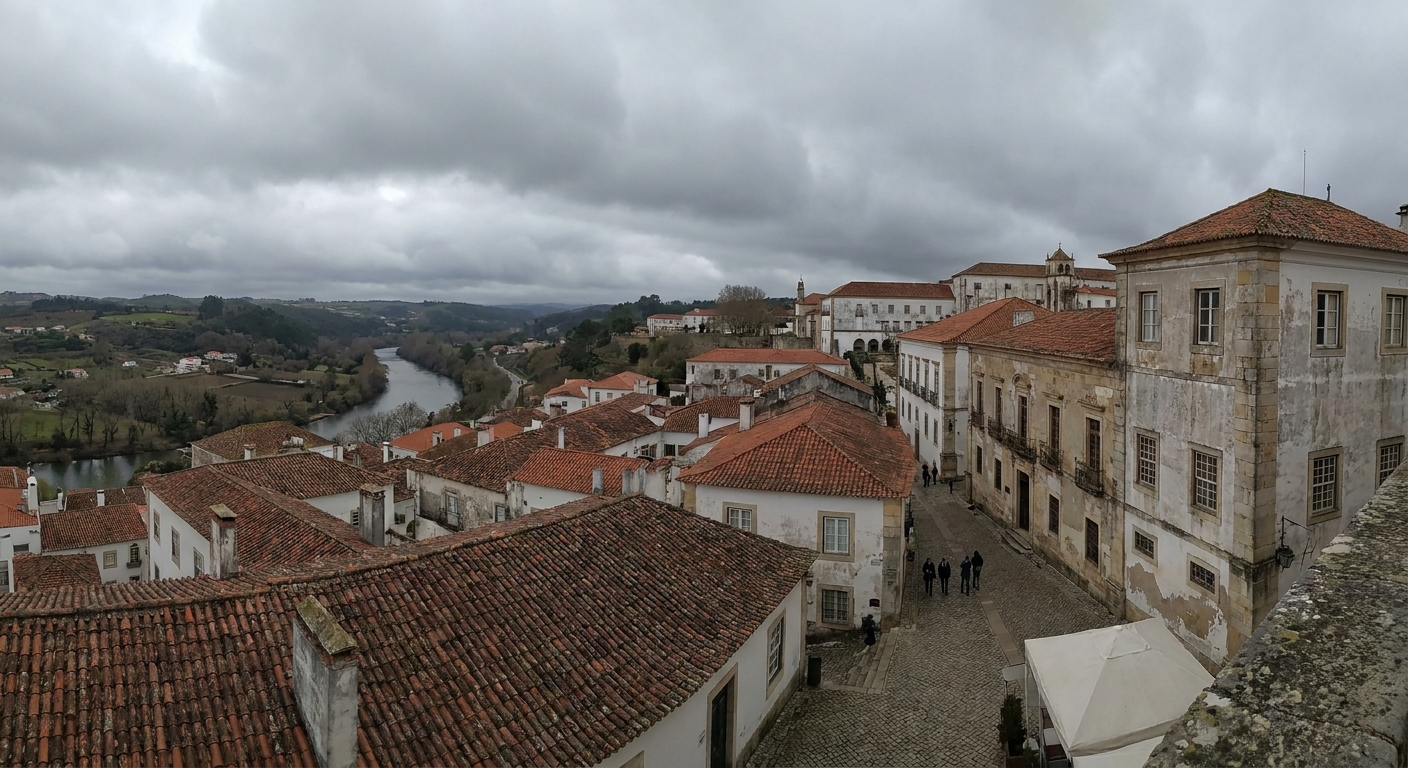
Stone interiors keep their temperature all year; the air at the door does not, and that gap is the season. The one stop November genuinely rewrites is the Botanical Garden, added in the 18th century along with the chemistry laboratories and the University Press: 4.78 inches of rain and ten hours of light make it a morning visit rather than an evening one. UNESCO also flags a weakness you can see from the top, namely that the university reads as a citadel of learning because of where it sits, and large-scale building in the surrounding landscape has already altered that setting.
On money, we stop where our sources stop. We could not verify an opening hour or an admission fee for any building in the property, not the Joanine Library and not the chapel, so check the university’s own visitor desk before you plan a morning around either. What costs nothing is the ground between them: Sofia Street is a public street you can walk end to end, and the 1940s University City, which UNESCO counts inside the inscribed property rather than outside it, is open pavement in daylight.
Coimbra in November: a two-day itinerary
Day one belongs to the hill. Be walking up by 9, an hour and a half after the 7:18 sunrise, while the air is still near 50°F and the climb feels free. Give the late morning to the Alta interiors, the Royal Palace of Alcáçova, St Michael’s Chapel and the Joanine Library, and lunch below them around 1, when the afternoon has come up toward 64°F. Take the Botanical Garden at 2:30, and be back on high ground by 4:15 for the last hour of light before the 5:18 sunset.
Day two runs downhill and in a straight line: Sofia Street from end to end with its colleges, the Cathedral of Santa Cruz among the university buildings, and the 1940s University City in the afternoon. If the sky turns, and on 4.5 days a month it turns hard, invert the order and spend the wet hours inside the Alta you skipped on day one, keeping Sofia Street for whichever half-day stays dry. A city of 36.2 inscribed hectares is small enough to reshuffle twice without losing anything.
Coimbra in November vs October and December
| Measure | October | November | December |
|---|---|---|---|
| Average high | 73.8°F | 64.4°F | 60.1°F |
| Average low | 53.4°F | 46.9°F | 43.2°F |
| Precipitation | 4.51 in | 4.78 in | 4.38 in |
| Days with 0.04 in or more | 10.3 | 11.5 | 11.1 |
| Water temperature | We found no series | We found no series | We found no series |
All three columns come from the same Bencanta thermometer and the same 1991-2020 period, so they compare cleanly. October’s afternoons run 9.4°F warmer than November’s and December’s 4.3°F cooler, while the nights fall from 53.4°F to 46.9°F to 43.2°F. On rain, November is the wettest of the three on both counts, 4.78 inches against 4.51 and 4.38, and 11.5 wet days against 10.3 and 11.1. No water-temperature series turned up for any of the three, so the swimming column stays empty.
Shift four weeks back and you buy that 9.4°F, plus one fewer rain day and evenings that still hold light after dinner starts, at the price of company on the hill: our October page has the detail. Shift four weeks forward and December trades 4.3°F of afternoon warmth for slightly less total rain, 4.38 inches, and the shortest days of the year. November is the middle term, wetter than both and warmer than one.
Is November a good time to visit Coimbra?
Yes, if your trip is built around interiors and walking: a university property whose best rooms are indoors, afternoons at 64.4°F that make the climb painless, and a small city you can cover in two nights. No, if the plan is open-air from breakfast to dinner, or if it needs long evenings. Ten hours of daylight and 4.5 soaking days will edit that kind of week whether you agree or not.
If the answer came out no, October is the month to move to rather than December: 73.8°F afternoons, 53.4°F nights and 10.3 rain days against November’s 11.5, on the same measurements from the same station. December gains you almost nothing on rain, 4.38 inches against 4.78, and loses another 4.3°F of afternoon along with more daylight.
The thing November alone delivers is a warm-enough hill without a warm day: 64.4°F is cool enough that a stone climb to the Alta costs no effort, and mild enough that you make it in a shirt once the first ten minutes are behind you.
The last word
Book the bed inside or just below the old town, give the trip two nights and plan both mornings outdoors, and November stops being the wet month and becomes the quiet one. One more reason the hill repays the climb: UNESCO inscribed it under criteria (ii), (iv) and (vi), with a minor boundary change in 2019, partly because Coimbra trained the elite for every territory under Portuguese administration and set the institutional and architectural model for universities across the Lusophone world. That history is standing there at 5 pm in the dark, and it keeps better hours than the daylight does.
Sources & data for this guide
- November normals, rain-day counts and the 1 mm threshold · IPMA, climate normals 1991-2020, station 707 Coimbra Bencanta, altitude 26.6 m · checked Sep 23, 2026
- October and December normals, same station and same 1991-2020 period · IPMA · checked Sep 23, 2026
- Sunrise 7:18 am, sunset 5:18 pm and ten hours of daylight on November 15, converted to Europe/Lisbon · sunrise-sunset.org · checked Sep 23, 2026
- Inscribed property, 36.2 hectares and an 80.8-hectare buffer, the two components, the buildings, the 1537 installation, the 1940s University City and the warning on the setting · UNESCO World Heritage Centre, file 1387bis · checked Sep 23, 2026
- We could not verify opening hours or admission fees for the Joanine Library or any other building in the property, nor a Coimbra lodging-tax rate, nor any occupancy or room-rate series, so we give no figure for any of them. Check the university’s visitor desk and your property’s terms at booking.