
In early November, Oaxaca smells of copal smoke and marigolds. Orange cempasúchil petals trace paths across cemetery graves, brass bands drift down the side streets, and families carry bread and candles toward the panteones as night falls. The rains are finished, the sky is a hard, clear blue, and the valley is ready for markets, mezcal and a long run of sunny days.
What is the weather like in Oaxaca in November?
November is sunny, dry and warm by day, with cool nights that feel crisp after the heat of the afternoon.
| Month | Average high (°F) | Average low (°F) | Rain (in) | Rain days | Daylight on the 15th |
|---|---|---|---|---|---|
| October | 84.7 | 58.1 | 2.48 | 12.0 | 11 hours 47 minutes |
| November | 84.2 | 54.1 | 0.36 | 3.5 | 11 hours 22 minutes |
| December | 84.0 | 51.8 | 0.35 | 2.4 | 11 hours 9 minutes |
Rain is the big change from October. The afternoon storms that soaked the valley a month earlier have nearly vanished, and the odd shower is brief. Days are long enough for a full schedule of ruins and markets, with sunlight lasting until early evening.
Mornings and evenings turn cool, so you will want a layer for breakfast on a terrace and for late dinners in the Zócalo. Midday sun is strong, especially on open ground like the ruins, and you will feel it even though the air is dry.
What to do in Oaxaca in November
Día de Muertos in the city and its cemeteries
The great event of the month, and arguably of the Oaxacan year, runs from October 31 to November 2. Streets fill with altars built in homes, shops and plazas, loaded with pan de muerto, fruit, chocolate, mezcal and photographs of the departed. Comparsas, costumed groups with bands, wind through the neighborhoods, and faces painted as calaveras are everywhere.
The heart of it is the night vigil in the cemeteries. Panteón General sits in the city, a short taxi ride from the center, while Xoxocotlán and Santa María Atzompa are about 20 to 30 minutes away. You walk among candlelit graves covered in cempasúchil, where families sit, play music and share food and mezcal. Xoxocotlán and Atzompa are known for elaborate sand tapestries and flower arches.
The main vigils fall on the night of October 31 into November 1, and the best time is after 9 p.m. and past midnight, when the altars are fully lit. Some visits continue on November 2.
Entry to the public cemeteries is free, though a community altar may ask for a donation. Visitors are welcome if respectful: ask before photographing people, do not step on graves and keep your voice low. Smoke, crowds and loud music make it a poor fit for very young children.
Monte Albán in clear November light
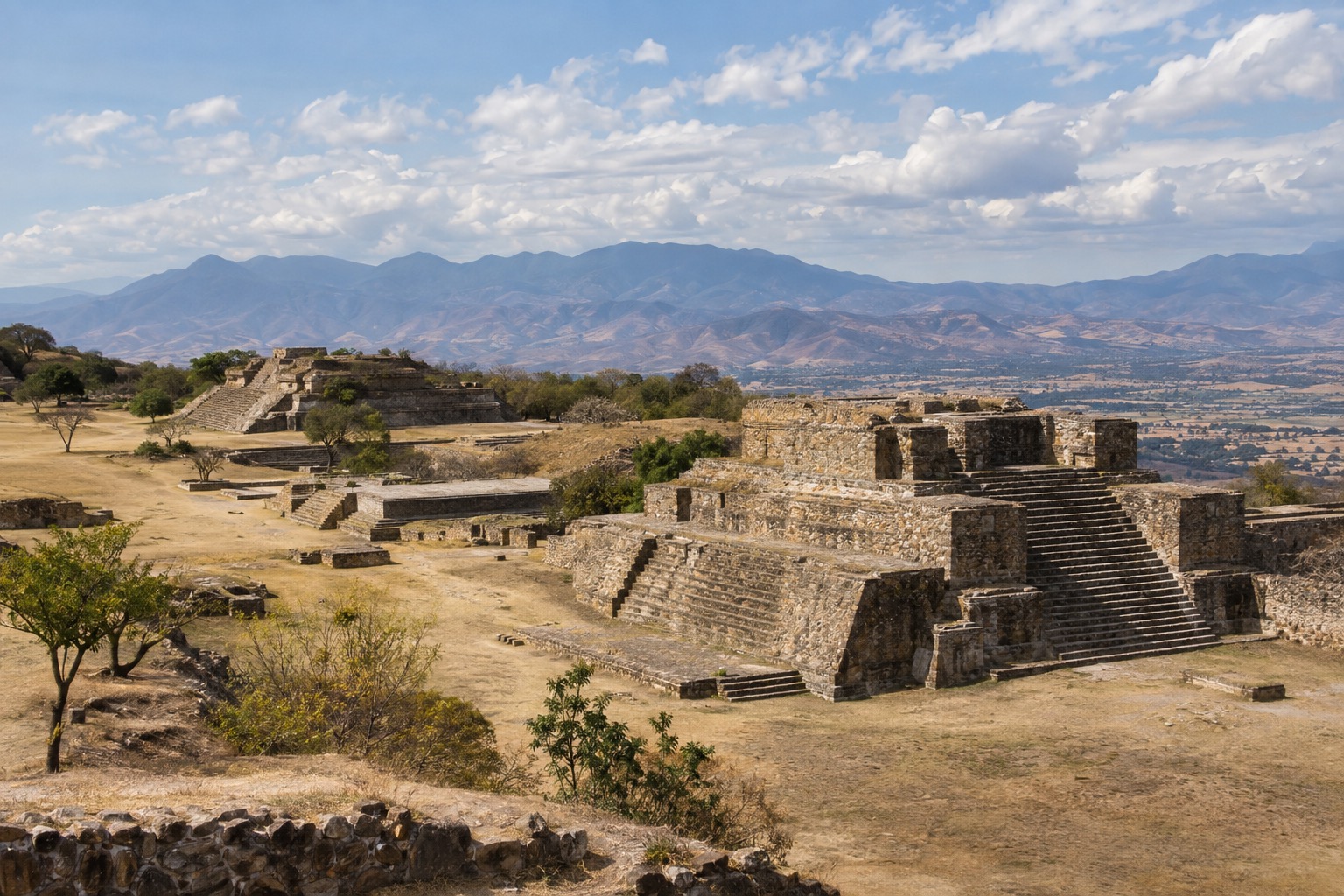
With the rain gone, the Zapotec capital on its hilltop is at its crispest. Views stretch across the whole valley, and you walk among the Gran Plaza, the Ball Court, the gallery of the Danzantes and the North and South Platforms. The site museum holds original stelae.
The drive from the center takes about 20 to 30 minutes, and a local bus also runs from near the city center to the entrance. Go early after opening or late in the afternoon to dodge the midday sun and the main tour groups.
The plaza has uneven ground and little shade, so it suits history lovers and families with older children better than wheelchair users. No food or drink is sold inside, so bring water, a hat and sunscreen.
Mitla, Teotitlán and the Sunday market at Tlacolula
Dry roads make the Mitla route an easy day. Teotitlán del Valle, about 30 to 40 minutes out, is known for wool rugs woven and dyed by hand, and family workshops let you watch the process before you buy.
Mitla, a little farther along, is famous for its geometric stone mosaics, the Patio of the Columns and a church built on a pre-Hispanic platform. Weekday mornings are calmer at the ruins, and weekday afternoons are good for watching weavers.
On Sunday, Tlacolula takes over the streets around its plaza and its 16th-century church. Stalls sell produce, barbacoa, pan de yema, pottery and woven baskets. Go between about 8 and 10 a.m., before the crowds and the heat, and come hungry for barbacoa.
The aisles are narrow, so strollers and wheelchairs struggle, and small bills and a close eye on valuables help. Colectivos and buses leave from the second-class station or the baseball stadium, and the ride takes 45 minutes to an hour.
Mezcal palenques after the harvest
With the roads dry and the days bright, November is a fine month to visit the family distilleries in the valley. Around Santiago Matatlán, roughly 45 minutes to an hour from the city, you see earthen roasting ovens, stone tahonas pulled by horses or mules, wooden fermentation vats and copper or clay stills. You taste small-batch espadín and wild agave mezcals.
Mornings are cooler and owners have more time to talk. Most palenques charge no entry fee, and tastings are usually free, with the hope that you will consider buying a bottle, so bring cash. The visit suits adults. Children can watch but not taste, and the work areas have open fires, heavy equipment and slippery floors.
Hierve el Agua and the city itself
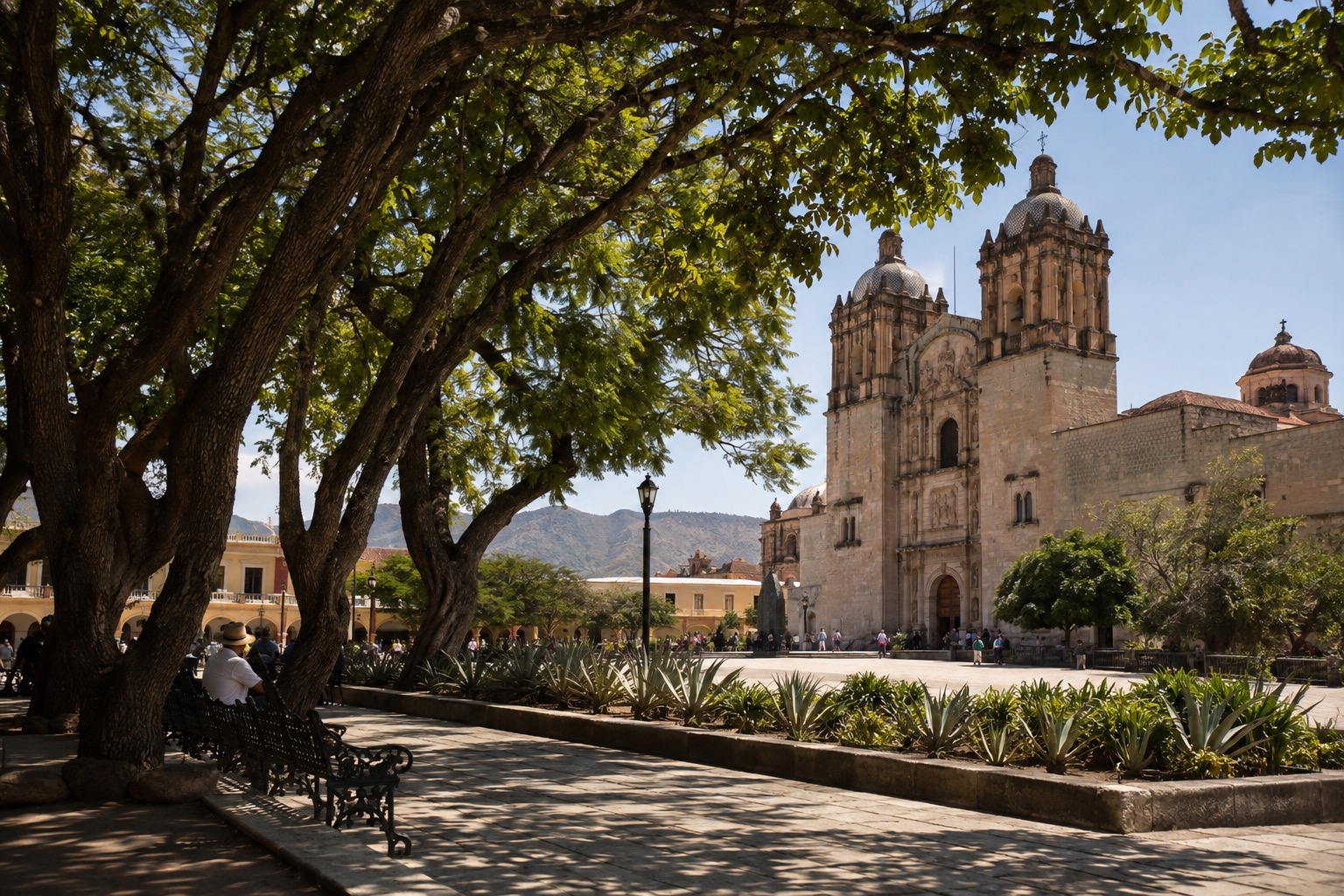
The petrified waterfalls and mineral pools of Hierve el Agua make a full day, about 1.5 to 2 hours each way, and the local community collects its own entrance fee on site. Back in town, the Zócalo under its laurel trees, framed by the cathedral and the government palace, is the place for an evening drink as the air cools. The Museo de las Culturas in the former Santo Domingo convent is a good indoor hour.
Is Oaxaca busy in November?
It is busy in the first days of the month and calmer afterward. Día de Muertos draws visitors from across Mexico and abroad, and the city center, the cemeteries and the taxis fill up around October 31 to November 2. Rooms in the center are the first to go, and restaurants near the Zócalo run full in the evenings.
Once the festival ends, the city settles into a pleasant rhythm. Markets, ruins and mezcal tastings are easier to enjoy, and tables open up. The Sunday market at Tlacolula stays lively whatever the week, and the ruins are best on weekday mornings.
What to pack for Oaxaca in November
Think layers: sun on the ruins by day, a chill after dark, and comfortable shoes for cobbles and uneven stone.
- A hat, sunscreen and a refillable water bottle for Monte Albán, where nothing is sold inside.
- A light sweater or jacket for cool mornings and evenings.
- Sturdy walking shoes for stone floors at Mitla and rough ground at the ruins.
- Small bills for colectivos, market stalls, weavers and mezcal purchases.
- Dark, easy clothes for the smoky night vigils in the cemeteries.
Good to know before you go
The rainy season is behind you, so the weather rarely gets in the way. The main planning point is the festival: rooms and transport are tight around Día de Muertos. The U.S. State Department rates the state of Oaxaca Level 2, Exercise Increased Caution, and places no restrictions on travel to Oaxaca City, Monte Albán, Puerto Escondido or Huatulco. The Museo de las Culturas is closed on Mondays.
| Site | Open | Admission |
|---|---|---|
| Monte Albán | Daily, 8 a.m. to 5 p.m., last entry 4 p.m. | 210 pesos (105 for Mexican nationals and residents) |
| Mitla | Daily, 8 a.m. to 5 p.m., last entry 4 p.m. | 210 pesos (105 for Mexican nationals and residents) |
| Yagul | Daily, 8 a.m. to 5 p.m., last entry 4 p.m. | 210 pesos (105 for Mexican nationals and residents) |
| Museo de las Culturas de Oaxaca | Tuesday to Sunday, 9 a.m. to 5 p.m. | 210 pesos (105 for Mexican nationals and residents) |
Is November a good time to visit Oaxaca?
Yes, especially for travelers who want culture, sun and food in one trip. Few places mark the Day of the Dead as vividly, and the weather suits it, with dry days and cool nights.
Compared with October, the rain has gone and the valley is easier to explore. December keeps the dry sky and cools further at night, but loses the festival. November sits in the sweet spot: warm afternoons, a calmer city once the first days pass, and mezcal makers back at work. It is the month when Oaxaca’s candlelit graves, flower-covered streets and open-air markets all come together.
Sources
- Servicio Meteorologico Nacional (CONAGUA), normales climatologicas 1991-2020, estacion 20079 (Oaxaca, Oaxaca De Juárez), checked September 29, 2026
- sunrise-sunset.org, sunrise and sunset on the 15th of the month, checked September 8, 2026
- INAH, Zona Arqueologica de Monte Alban (inah.gob.mx/zonas/94-zona-arqueologica-de-monte-alban), checked September 29, 2026
- UNESCO (whc.unesco.org/en/list/415) ; INAH, Monte Alban ; chronologie corrigee le 03/10 (relecture Fable)
- INAH, lugares.inah.gob.mx (Mitla), via Fable re-read of 03/10/2026
- INAH, Zona Arqueologica de Yagul (inah.gob.mx/zonas/zona-arqueologica-de-yagul), checked September 29, 2026
- INAH, Museo de las Culturas de Oaxaca Santo Domingo (inah.gob.mx/museos/museo-de-las-culturas-de-oaxaca-santo-domingo), checked September 29, 2026
- U.S. Department of State, Mexico Travel Advisory, State of Oaxaca (travel.state.gov, date issued May 29, 2026), checked October 3, 2026
To plan your stay
- Things to Do in Oaxaca: Monte Albán, Mezcal, Markets and Day Trips
- Where to Stay in Oaxaca: Historic Center, Jalatlaco, Xochimilco and the Pacific Beaches
- Oaxaca Airport to City: Taxi and Car Rides to the Historic Center, Jalatlaco and Xochimilco
- Know Before You Go to Oaxaca: Fees, Cash, Getting Around and Local Customs