
Walk out of the airport and the Oaxaca valley opens around you, with dry, bright air and mountains standing on every side. In the weeks before Día de Muertos, the city ahead is filling with marigolds and sugar skulls, and the first thing you want is to be among them. The ride into town is short, and the real choice is which neighborhood you are heading for: the colonial historic center, the cobbled lanes of Jalatlaco or the local streets of Xochimilco.
How do you get from the airport to Oaxaca?
The easiest way for most travelers is a taxi or car straight to the door of your lodging, a drive of well under an hour that needs no transfers and no map reading. Once you are in the city, the cheaper local buses and shared colectivos become useful for getting around, but they are a way to move within the valley rather than a route from the terminal.
What decides it is where you are sleeping and how much you are carrying. The historic center is the closest, Jalatlaco is only slightly further, and Xochimilco takes a little longer, especially when traffic builds. With heavy bags, or a lodging tucked into a narrow cobbled street, a door-to-door ride is the calmer start to a trip.
Your options from the airport
Taxi or car to the historic center
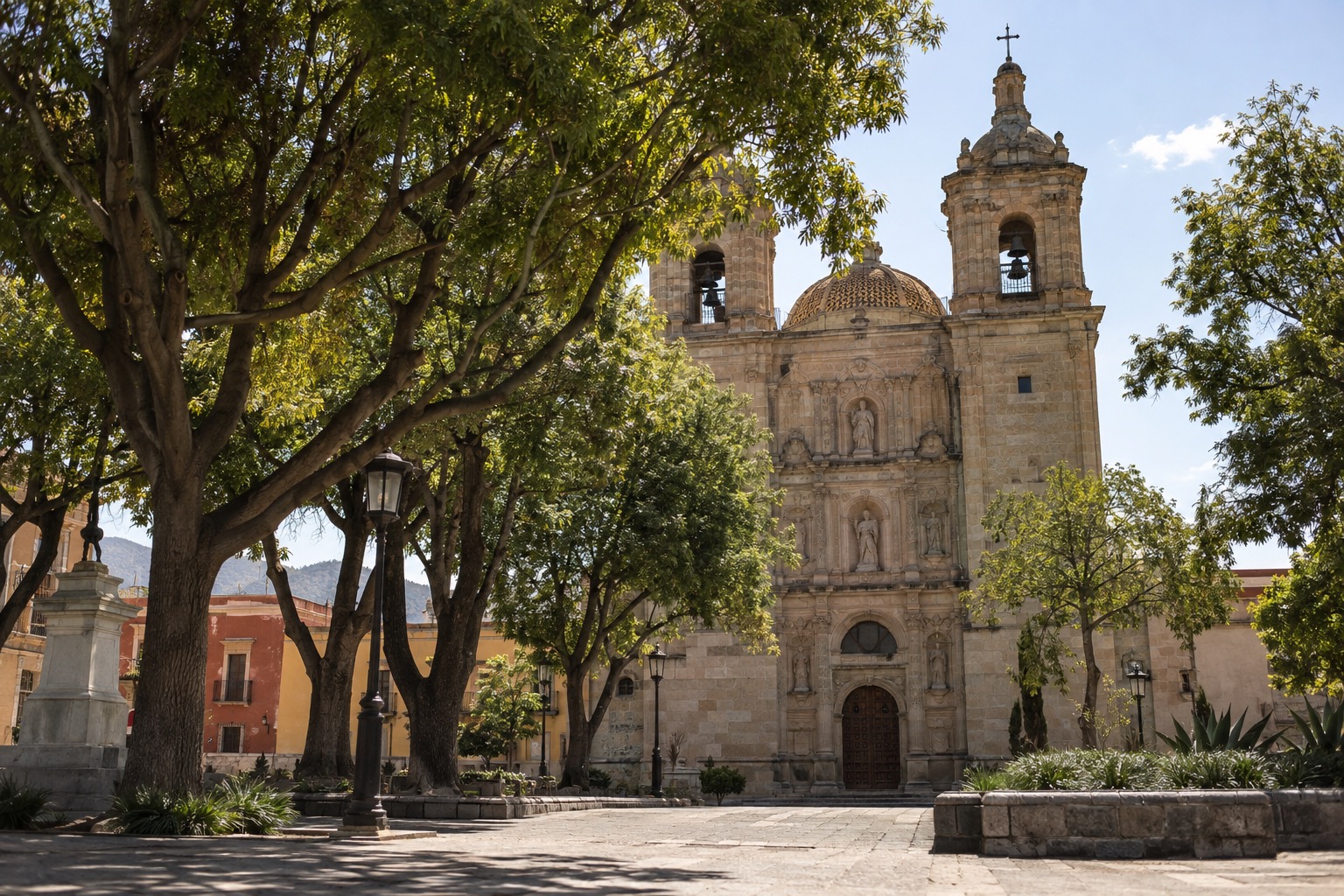
The historic center is the point from which the valley is measured, and it is the nearest of the three main bases. A car or taxi ride lasting about as long as a long coffee break places you among facades from the colonial era, streets reserved for walking, and the Zócalo under its laurel shade, while the cathedral and the state government palace make up its frame.
This is the right choice for first-time visitors, couples and anyone who wants museums, restaurants and bars within walking distance on arrival. Most sights in the center are walkable, so after the ride in you can usually leave the car behind. If your hotel is a boutique place or guesthouse in a restored building, ask for a room around an interior courtyard to keep street noise down on weekends.
Taxi or car to Jalatlaco and Xochimilco
A quiet, artsy barrio with colorful facades and cobblestones, Jalatlaco sits just north of the center, and a ride from the airport takes only slightly more time than a ride to the center itself. Taxis are inexpensive and easy to find there, and the Zócalo is a flat walk away, which makes it a comfortable base for couples and long stays.
Xochimilco is further out and more local, with a neighborhood market, residential streets and a growing handful of cafés and mezcal bars. The ride depends on traffic, so allow a little slack. Once you are settled, city buses along Avenida Ferrocarril are a cheap way into the center, though routes change, so confirm the current one before relying on it. It suits budget travelers and families who prefer a place without heavy tourist crowds.
Airport transfer options compared
| Option | Best for | Time to town |
|---|---|---|
| Car or taxi to the historic center | First-time visitors, culture lovers, couples | 20 to 30 minutes |
| Car or taxi to Jalatlaco | Couples, long stays, a residential feel near downtown | 25 to 35 minutes |
| Car or taxi to Xochimilco | Budget travelers, families, a local atmosphere | 30 to 40 minutes |
The differences are small in minutes and larger in atmosphere. The center puts you closest to everything and in the busiest streets, Jalatlaco trades a little extra distance for calm, and Xochimilco asks a longer ride and a short bus or taxi hop to reach the sights, in return for a lived-in neighborhood feel.
Arriving at the airport
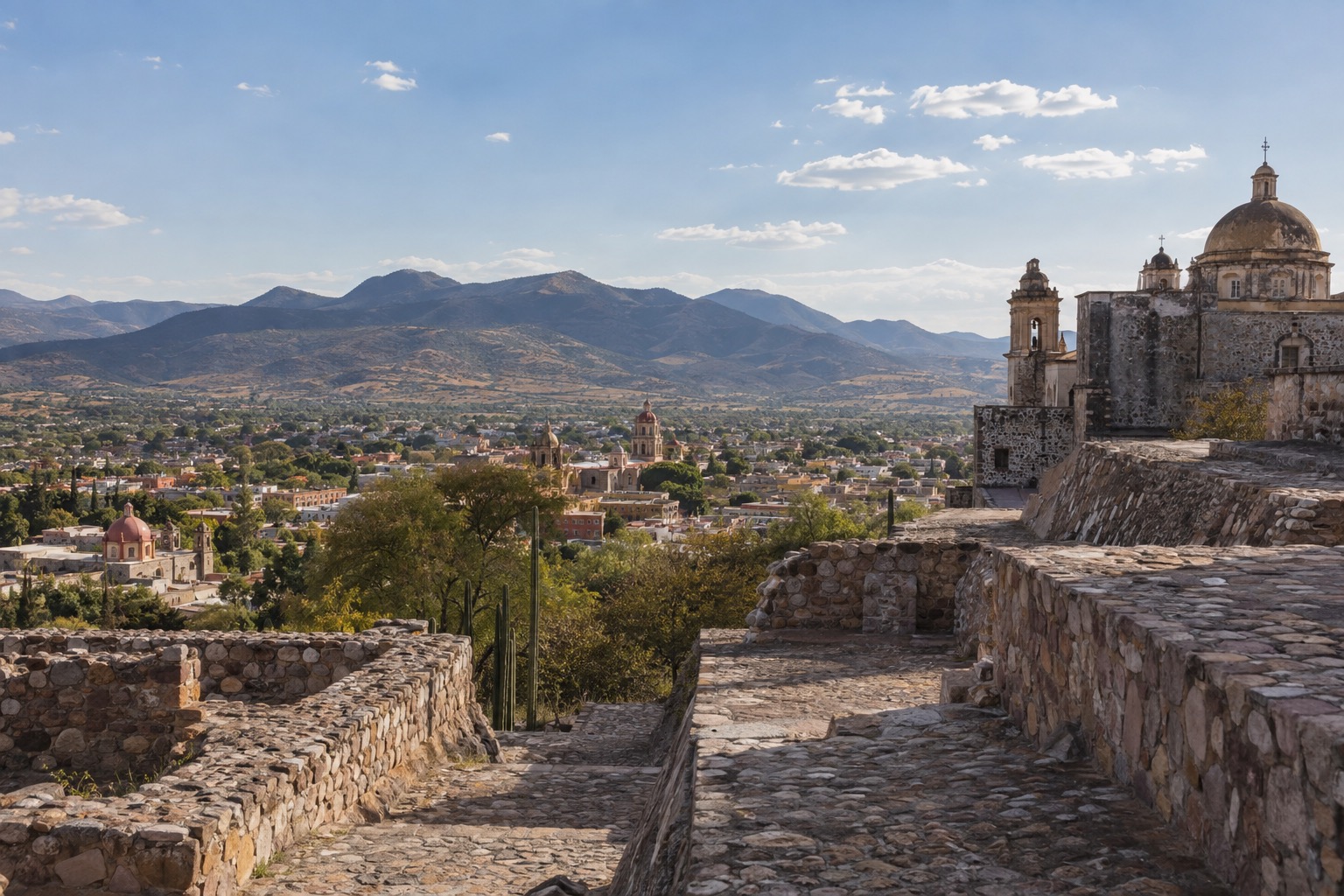
Oaxaca International Airport lies outside the city, in the valley, and every drive into town is counted from the historic center as the central point. Wherever you are staying, you are heading toward that same core, with the barrios of Jalatlaco and Xochimilco close around it.
Good to know before you go
The U.S. State Department rates the state of Oaxaca Level 2, Exercise Increased Caution, and places no restrictions on travel to Oaxaca City, Monte Alban, Puerto Escondido or Huatulco.
Carry cash in small bills from the start, since colectivos, market stalls and small businesses in the valley often work that way. Keep your valuables close in crowds, especially around Día de Muertos, when the markets and cemeteries fill with visitors.
Sources
- INAH, Zona Arqueologica de Monte Alban (inah.gob.mx/zonas/94-zona-arqueologica-de-monte-alban), checked September 29, 2026
- UNESCO (whc.unesco.org/en/list/415) ; INAH, Monte Alban ; chronologie corrigee le 03/10 (relecture Fable)
- INAH, lugares.inah.gob.mx (Mitla), via Fable re-read of 03/10/2026
- INAH, Zona Arqueologica de Yagul (inah.gob.mx/zonas/zona-arqueologica-de-yagul), checked September 29, 2026
- INAH, Museo de las Culturas de Oaxaca Santo Domingo (inah.gob.mx/museos/museo-de-las-culturas-de-oaxaca-santo-domingo), checked September 29, 2026
- U.S. Department of State, Mexico Travel Advisory, State of Oaxaca (travel.state.gov, date issued May 29, 2026), checked October 3, 2026
- official tourism site
- municipality
- Servicio Meteorologico Nacional (CONAGUA), normales climatologicas 1991-2020, estacion 20079 (Oaxaca, Oaxaca De Juárez), checked September 29, 2026
- sunrise-sunset.org, sunrise and sunset on the 15th of the month, checked September 8, 2026
To plan your stay
- Best Time to Visit Oaxaca: Weather, Día de Muertos, Rainy Season and Festivals
- Things to Do in Oaxaca: Monte Albán, Mezcal, Markets and Day Trips
- Where to Stay in Oaxaca: Historic Center, Jalatlaco, Xochimilco and the Pacific Beaches
- Know Before You Go to Oaxaca: Fees, Cash, Getting Around and Local Customs