
Mexico City wakes up to the clatter of metal shutters, the smell of tamales steaming on street corners and office workers lining up for coffee beneath the jacarandas. It is a huge, generous, noisy capital where you can spend a whole day moving between murals, markets and plazas. Like any big city, it asks visitors to keep their eyes open, and the honest question is how to enjoy it while doing exactly that.
Is Mexico City safe to visit?
Millions of people visit without incident, but no honest answer can promise that a trip will go smoothly, so the sensible approach is to travel with the same attention you would bring to any large capital. The U.S. State Department rates the city at the same baseline level as most of the country, which in practice means ordinary city habits matter: keep your phone out of sight at crowded corners, stay in busy places, and choose your transport with care.
Most visitors spend their days in a handful of areas that are used to tourists: the historic center, the museum district around Chapultepec, and the leafy neighborhoods of Roma, Condesa and Polanco. The following sections look at how each one feels and what to watch for.
Safety by area in Mexico City
Centro Histórico
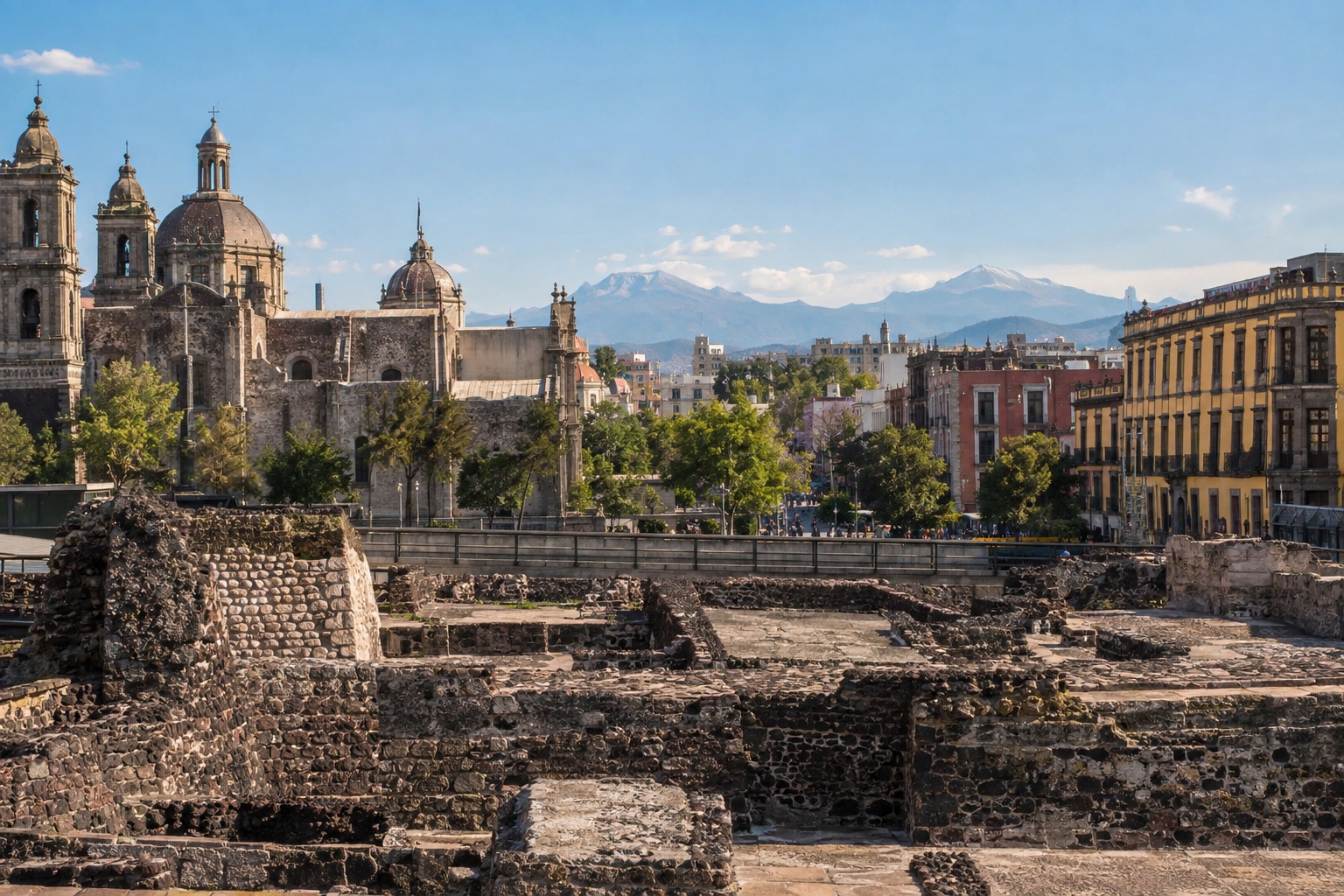
The historic center is the city at full volume. Colonial facades, pedestrian streets, street vendors, museums and government buildings all share the same few blocks, and there is movement from morning until the shops close. First-time visitors, history lovers and budget travelers tend to base themselves here because the major sights are on foot.
Crowds are the thing to watch. Packed sidewalks and the Metro are where phones and wallets are most at risk, so carry only what you need for the day. Lodging runs from hostels to restored colonial hotels, and a room around an interior courtyard keeps the noise down.
Roma and Condesa
Roma is bohemian and leafy, with cafés, galleries and a lively but not overwhelming nightlife. Condesa next door is more elegant, with Art Deco buildings, two central parks and a relaxed, upscale feel. Both are easy to explore on foot, and both draw couples, foodies, families and long-stay visitors.
The ease is what calls for a little discipline: keep your phone off the table at a sidewalk café and take a licensed taxi or an app ride home after a late dinner rather than wandering far. Around Parque México or Parque España, the evenings are calmer.
Polanco
Polanco is the city’s polished side: luxury boutiques, fine restaurants and glassy towers, with a business-oriented and relatively quiet atmosphere. It suits travelers who prefer a more structured setting and high-end hotels.
Within walking distance you’ll find Chapultepec Park and several major museums, and at night ride-hailing apps are the standard way to head out. Even here, the basics hold: stay aware in crowds and do not flash valuables.
Coyoacán
Coyoacán feels like a colonial village inside the metropolis, with cobblestone streets, plazas and artsy markets. It is the neighborhood of the Frida Kahlo Museum and a favorite for culture lovers and families who want something quieter than the skyscraper districts.
Weekends pull large crowds into the main squares, and that is when to keep a hand on your bag. Mornings, when the lines at Casa Azul are shorter, are the calmest hours.
Common scams and how to avoid them
Most tricks in Mexico City are small and easy to sidestep once you know them. Pushy sellers near the big sights, such as the Zócalo and the pyramids at Teotihuacan, are best handled with a polite no and a steady walk.
Taxis hailed on the street without a set fare are the classic trap. Book your trip with a licensed cab or a ride-hailing app, and you’ll know the fare before you depart. At ATMs, pick machines inside banks or shopping centers rather than on the street, and at the airport avoid changing large sums of money at the counters, where rates tend to be poor.
On the water at Xochimilco, boats are hired per boat rather than per person, so settle the price before you step aboard. Food and mariachi boats that drift alongside add up quickly if you accept everything offered.
Getting around safely
Ride-hailing apps and authorized taxis are the easiest choices for evenings and for arriving with luggage. In Polanco and Condesa they are common, and they spare you long walks after dark. To make it up Taxco’s steep hills, take the white Volkswagen taxis.
By day, the Metro and Metrobus are practical and cover much of the center and the museum district. Rush hour crowds are packed, so wear your bag in front. The airport is inside the city and has its own Metro stop, though an authorized taxi or app is gentler after a long flight.
Buses to the day-trip towns, such as Teotihuacan, Puebla, Tepoztlán and Taxco, leave from the main bus terminals and are the simple way to travel between cities. Driving in the capital means heavy traffic, and the walkable neighborhoods are better explored without a car.
Beach, water and weather safety
Mexico City has no beaches, so the weather questions here are altitude, sun and rain. The city sits high, and the first day can bring a little breathlessness or a headache, so go easy on stairs and long walks until your body adjusts.
Even if the air feels cool, the sun can still be fierce. At places such as Teotihuacan, shade is scarce, so carry water plus a hat and sunscreen. On the Tepozteco hike, start early to beat the heat and the afternoon rain.
Summer is the rainy season, with showers most days in July, usually in the afternoon, while winter is dry and cool at night. Tropical systems can still send heavy rain far from the coasts, so a rain jacket belongs in the bag.
Good to know before you go
The U.S. State Department rates Mexico City Level 2, Exercise Increased Caution, the same baseline level as most of the country.
Carry some cash in small pesos bills for markets, boats and small shops, and use cards where they are accepted. A few steady habits cover most of what matters: keep valuables out of sight, stay in lively streets and book timed tickets such as Casa Azul online ahead of your visit.
Sources
- INAH, Zona Arqueologica Templo Mayor (inah.gob.mx/zonas/zona-arqueologica-templo-mayor), checked September 29, 2026
- Sistema de Informacion Cultural (sic.gob.mx), MNA sheet of 28/07/2026, checked October 3, 2026
- INAH, Museo Nacional de Antropologia, checked September 29, 2026
- INAH, Museo Nacional de Historia, Castillo de Chapultepec (inah.gob.mx/museos/museo-nacional-de-historia-castillo-de-chapultepec), checked September 29, 2026
- INAH, meme page, checked September 29, 2026
- INAH, Zona Arqueologica de Teotihuacan (inah.gob.mx/zonas/23-zona-arqueologica-de-teotihuacan), checked September 29, 2026
- Museo Frida Kahlo, museofridakahlo.org.mx (« NO CONTAMOS CON VENTA EN TAQUILLA », entrada general $320) et boletos.museofridakahlo.org.mx, checked October 3, 2026
- U.S. Department of State, Mexico Travel Advisory (travel.state.gov, date issued May 29, 2026), checked October 3, 2026
- ADO
- INAH lugares.inah.gob.mx
- Secretaría de Turismo de la Ciudad de México
- Secretaría de Turismo de Puebla
- Secretaría de Turismo de Guerrero
- Frida Kahlo Museum
- Arena México
- Servicio Meteorologico Nacional (CONAGUA), normales climatologicas 1991-2020, estacion 09048 (Tacubaya Central (Obs), Miguel Hidalgo), checked September 29, 2026
- sunrise-sunset.org, sunrise and sunset on the 15th of the month, checked September 8, 2026
To plan your stay
- Best Time to Visit Mexico City: Dry Season, Rainy Summers, Día de Muertos and Festivals
- Things to Do in Mexico City: Museums, Pyramids, Xochimilco Boats and Street Food
- Where to Stay in Mexico City: Roma, Condesa, Polanco, Coyoacán and the Historic Center
- Mexico City Airport to City: Metro, Taxis and Travel Times to the Center, Roma and Polanco