
Early in the morning, the Zócalo is already full of footsteps, church bells and the smell of coffee from the cafés under the arcades. By evening, a few miles away, couples are walking dogs under the trees of Condesa while a taquero in Roma turns the trompo for the late crowd. Mexico City is a collection of very different neighborhoods, and the one you sleep in shapes the whole trip.
What is the best area to stay in Mexico City?
For a first visit, the historic center puts the big sights at your door, while Roma and Condesa suit travelers who want cafés, restaurants and tree-lined walks, and Polanco fits those who want a polished, upscale base. Budget travelers do best in the historic center, families often like Condesa or Coyoacán, and nightlife seekers will be happiest in Roma. There is no beach here, so the choice is about local life rather than sand.
The areas differ in pace more than in distance. The center is busy and historic, Roma and Condesa are leafy and walkable, Polanco is orderly and quiet after dark, and Coyoacán feels like a colonial village that happens to sit inside a megacity.
The best areas to stay in Mexico City
Historic Center
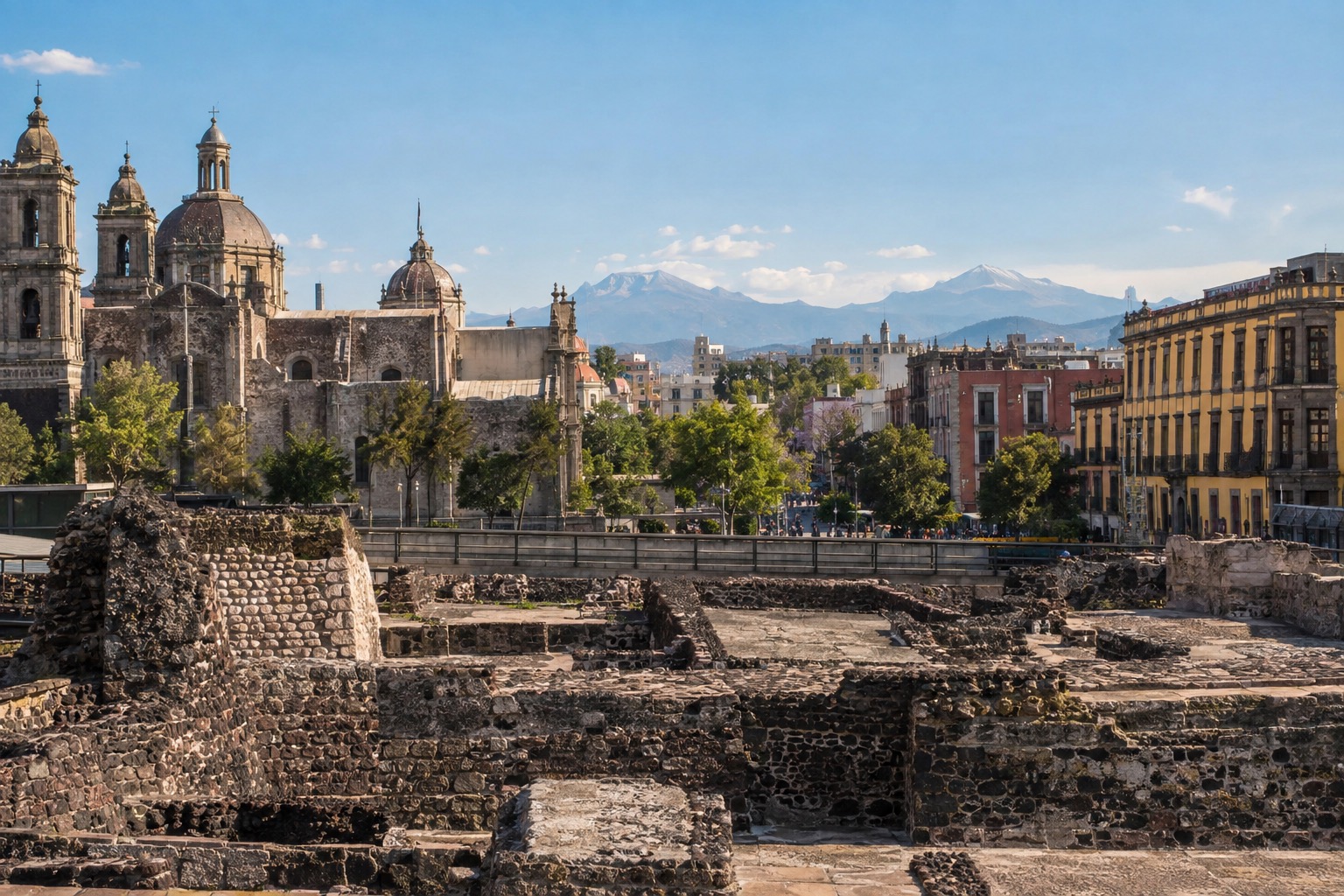
This is the Mexico City of colonial facades, pedestrian streets, museums, government buildings and constant activity from street vendors. It suits first-time visitors, history and architecture lovers, budget travelers and anyone who wants to walk to the major sights. Lodging runs from budget hostels to restored colonial boutique hotels and private apartments. There are no beach resorts.
Metro lines 1, 2 and 3 run through the area, many bus routes cross it, and Ecobici bike share stations dot the streets. From the airport, allow 30 to 60 minutes by car or taxi depending on traffic. Ask for a room facing an interior courtyard if street noise bothers you, and take an authorized taxi or a ride-hailing app from the airport.
Roma
Roma is leafy and bohemian, with trendy cafés, art galleries and a nightlife that is lively without being overwhelming. Young travelers, couples, foodies and digital nomads feel at home here. Lodging is mostly boutique hotels, stylish apartments in early 20th-century buildings and guesthouses.
Metro stations Insurgentes and Chilpancingo, several Metrobús lines and the Ecobici system make it easy to get around, though most people simply walk. The airport is 30 to 50 minutes away by car, and the Zócalo about 10 to 20 minutes. Stay near Álvaro Obregón avenue for the best concentration of restaurants and cafés, and use bikes for short trips.
Condesa
Condesa’s Art Deco buildings and two central parks give it a relaxed, safe, unpretentious feel. Families, professionals and long-stay visitors like it for the green spaces and the range of restaurants and bars. Expect boutique hotels, serviced apartments and guesthouses, with no large resorts.
Metro stations Chapultepec and Patriotismo, Metrobús line 1 and good bike infrastructure connect it to the rest of the city. From the airport count 30 to 50 minutes by car, and about 15 to 25 minutes from the historic center. Pick a place near Parque México or Parque España for a quieter stay, and explore on foot rather than by car.
Polanco
Glass towers, designer boutiques and fine dining set the tone, and the evenings are calmer than in Roma. Business travelers, luxury seekers and families wanting high-end amenities choose it. Lodging means luxury hotels, high-end apartments and a few boutique properties. All-inclusive resorts are not part of the scene.
Metro line 7 stops at Polanco and Auditorio, bus routes are plentiful, and taxis and ride-hailing are common. The airport is 40 to 70 minutes away by car depending on traffic, and the historic center 20 to 35 minutes. Chapultepec Park and several major museums are within walking distance, so use ride-hailing apps for the rest.
Coyoacán
Cobblestone streets, lively plazas and artsy markets give Coyoacán a village rhythm, and it gets crowded on weekends. Culture lovers, families and visitors heading to the Frida Kahlo Museum like the quieter, residential feel far from the skyscrapers. Lodging is guesthouses, bed-and-breakfasts, small boutique hotels and apartments in converted colonial houses.
Metro stations Coyoacán and Viveros on line 3, local buses and taxis serve the area, and the old center is best on foot. Expect 45 to 80 minutes from the airport and 30 to 50 minutes from the city center by car. Visit the Frida Kahlo Museum early in the morning to avoid long lines, and be ready for crowds in the main squares on weekends.
Mexico City areas compared
| Area | Best for | Feel | Getting around | Airport by car |
|---|---|---|---|---|
| Historic Center | First visit, budget, history | Bustling, colonial | Metro lines 1, 2, 3, on foot, Ecobici | 30 to 60 minutes |
| Roma | Couples, foodies, young travelers | Leafy, bohemian, lively | Metro, Metrobús, on foot, Ecobici | 30 to 50 minutes |
| Condesa | Families, long stays | Tree-lined, relaxed, upscale | Metro, Metrobús line 1, on foot, bikes | 30 to 50 minutes |
| Polanco | Business, luxury | Polished, quiet | Metro line 7, taxis, ride-hailing | 40 to 70 minutes |
| Coyoacán | Culture, Frida Kahlo, families | Colonial village, residential | Metro line 3, buses, on foot | 45 to 80 minutes |
The trade-off is mostly between sights and calm. The center keeps you next to the monuments but with more noise, Roma adds nightlife and food, Condesa and Polanco trade some of that energy for quiet streets, and Coyoacán asks for a longer ride in return for a slower, more local mood.
How to choose your hotel in Mexico City
There are no all-inclusive resorts to weigh up here, so the real choice is between a boutique hotel, a guesthouse and an apartment. Apartments suit longer stays and families who want a kitchen, while boutique hotels and guesthouses give you a host who can point you to the corner fondas and markets.
Think about noise before you book. Historic center streets stay busy, so an interior courtyard room helps, and in Condesa a spot near one of the parks is calmer. Families and travelers who prefer a structured stay often lean toward Polanco or Condesa, and Coyoacán works well for a quiet base if you accept longer rides.
Traffic changes how far a neighborhood feels, so choose the area that matches what you will do most. If you plan to spend days at the museums and plazas, stay close to them and walk. If you want evenings out, pick Roma or Condesa and save the ride-hailing apps for longer trips.
Good to know before you go
The U.S. State Department rates Mexico City Level 2, Exercise Increased Caution, the same baseline level as most of the country.
Two airports serve the capital. The main one, the AICM, is inside the city and reached directly by Metro at the Terminal Aérea station, while the newer Felipe Ángeles airport lies well to the north near Zumpango. From either, authorized taxis and ride-hailing apps are the simplest way to reach your hotel. Xochimilco, with its colorful trajineras, is an easy half-day outing from any of these neighborhoods.
Sources
- U.S. Department of State, Mexico Travel Advisory (travel.state.gov, date issued May 29, 2026), checked October 3, 2026
To plan your stay
- Best Time to Visit Mexico City: Dry Season, Rainy Summers, Día de Muertos and Festivals
- Things to Do in Mexico City: Museums, Pyramids, Xochimilco Boats and Street Food
- Mexico City Airport to City: Metro, Taxis and Travel Times to the Center, Roma and Polanco
- Know Before You Go to Mexico City: Getting Around, Money, Altitude and Local Customs