
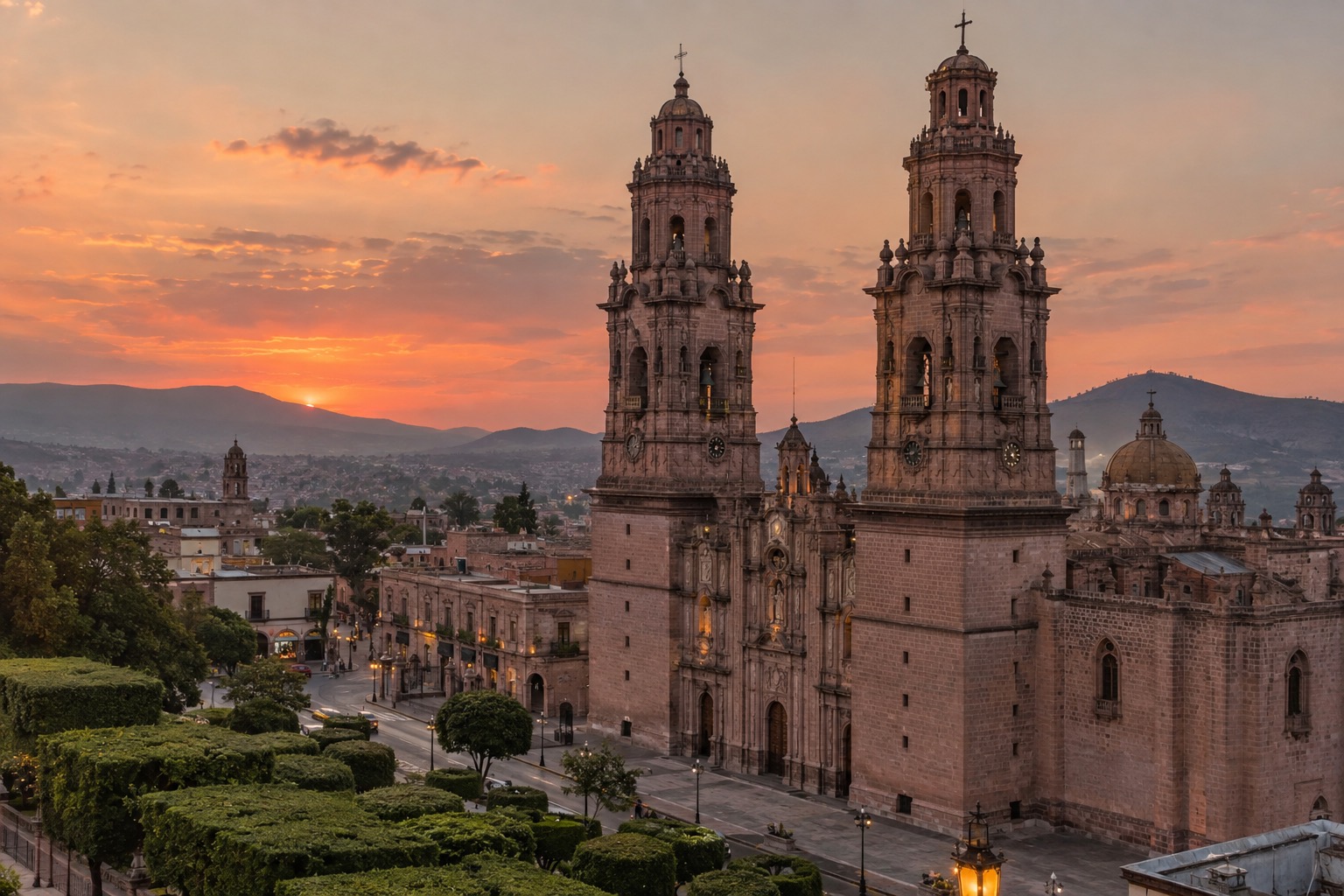
When evening comes to Merida in December, families fill the Plaza Grande, the cathedral shines, and vendors sell marquesitas, crisp rolled crepes with cheese inside. The city has its own rhythm through the year, with a pleasant, rain-light winter, a furnace of a spring, and a green, stormy summer. It sits inland, so the beaches are a drive away, but the city itself is the reason most people come.
When is the best time to visit Merida?
The best months are November through February, when afternoons are warm rather than punishing, nights cool off, and rain is scarce, which suits almost every kind of traveler.
For sightseeing, winter is ideal. You can spend a morning on Paseo de Montejo among the old mansions, wander the colonial center, and still be comfortable at midday. The Gran Museo del Mundo Maya and the Maya ruins nearby are far easier to enjoy before the heat of spring builds. For the sea, March and April bring the clearest, warmest days on the coast, though the city itself turns very hot.
For a budget or quiet trip, the wet months of June through October reward you with green countryside and thinner crowds, as long as you plan around afternoon storms. Families should know that March is loud: spring break fills the coast and the main plazas with students and school groups, and the heat is already heavy by midday. Winter school vacations are a gentler choice for children.
Merida weather by month
Merida is hot all year, and the real differences are in the nights and in how the rain arrives.
| Month | Average high (°F) | Average low (°F) | Rain (in) | Rain days |
|---|---|---|---|---|
| January | 86.4 | 62.4 | 1.31 | 5.1 |
| February | 88.9 | 63.1 | 1.01 | 3.9 |
| March | 91.8 | 64.4 | 0.82 | 2.7 |
| April | 95.7 | 67.6 | 1.28 | 2.4 |
| May | 96.8 | 70.2 | 2.66 | 5.3 |
| June | 94.8 | 70.0 | 6.64 | 11.8 |
| July | 95.0 | 69.6 | 5.44 | 12.9 |
| August | 94.8 | 70.0 | 5.72 | 12.9 |
| September | 93.9 | 70.3 | 6.89 | 14.2 |
| October | 90.7 | 68.2 | 5.37 | 12.2 |
| November | 87.8 | 66.0 | 2.22 | 7.3 |
| December | 86.4 | 63.3 | 1.39 | 5.2 |
Winter is the gentle stretch, with cooler nights and only the occasional shower or a gray day when a cold front passes. Spring is the driest but also the hottest, with May the peak of the heat just before the rains.
From June through October, rain comes most days of the week in the form of heavy afternoon downpours and thunderstorms, and the air stays sticky even when the temperature eases. November is the turning point, with the storms fading and the evenings growing comfortable.
When is Merida cheapest and least crowded?
The quietest stretch is the wet season, roughly May through early November, apart from the Mexican school vacation that runs from about early July to late August, when domestic travelers fill hotels and coastal towns.
The busiest weeks are the U.S. holiday periods: Christmas and New Year, spring break in March, and Easter week, when the city and the coast are at their fullest and rooms are easiest to lose. Winter in general draws snowbirds and retirees escaping the cold, so the pleasant months are also the popular ones.
September and October are the calmest of all. Restaurants have free tables, the plazas feel local, and rooms are easy to find. The tradeoff is the rain and the storm season, which you accept in exchange for space.
Which months should you avoid in Merida?
Avoid April through June if heat bothers you, and think twice about September and October if you are set on a beach trip.
Spring afternoons climb into the mid-90s and stay there into the evening, which makes walking tours and ruins hard going after mid-morning. Most visitors cope by sightseeing early, resting at midday, and returning to the streets at dusk.
The Atlantic hurricane season begins in June and ends in November, while its busiest stretch falls between mid-August and mid-October. Merida is inland and is rarely the front line of a storm, but a system in the Gulf or the Caribbean can bring days of rain and disrupt flights or coastal plans.
Sargassum, the brown seaweed that washes up along Caribbean beaches, is usually heaviest from spring into summer and is the first disappointment of many beach trips. In winter, passing nortes (cold fronts) bring a cooler, windier, cloudy day or two, which matters more at the coast than in the city.
Festivals and events in Merida through the year
Día de Muertos and the winter holidays
Día de Muertos, October 31 to November 2, is observed in Yucatan as Hanal Pixán, the food of the souls. Families build altars with pibes, large baked tamales, along with candles and photographs, and cemeteries are tidied and decorated. In Merida, the days around it bring processions, altars in public squares, and a parade of catrinas, the elegant skeleton figures.
Christmas and New Year follow, with lights in the plazas and a festive mood on Paseo de Montejo. The weather is most comfortable then, which is why the city is busy. Expect family gatherings, posadas in the weeks before Christmas, and restaurants that fill up quickly.
Carnival and Easter week
Carnival in Merida usually falls in February or early March, depending on the Easter calendar. Parades with floats, costumes and music wind through the city, and the atmosphere is lively but still family-friendly. It is one of the biggest events in the local calendar and draws people from across the region.
Holy Week, in March or April, is quieter in the city itself, where many locals head to the coast, and processions and church services mark the days. If you want the solemn side, stay in town. If you want crowds and beach parties, the coast is where everyone goes.
Nature seasons: whale sharks and turtles
Whale shark season off the northern Yucatan coast usually runs from about early summer into early autumn, and boat trips from towns such as Holbox or Isla Mujeres are the way to see them. It is a long day from Merida, so most people combine it with a coastal stay.
Sea turtles nest on Yucatan beaches through the warm months, typically from late spring into autumn, and hatchlings emerge in the following weeks. Nesting sites are protected, so go with a conservation program or a local guide rather than on your own, and visit at night or early morning when activity is highest.
Sources
- Servicio Meteorologico Nacional (CONAGUA), normales climatologicas 1991-2020, estacion 31097 (Merida (Conagua), Mérida), checked September 29, 2026
- sunrise-sunset.org, sunrise and sunset on the 15th of the month, checked September 8, 2026
- Wikipedia, "Merida, Yucatan", en.wikipedia.org, checked September 29, 2026 (source secondaire)
- Gran Museo del Mundo Maya (exploitant), granmuseodelmundomaya.com.mx, checked September 29, 2026
- U.S. Department of State, Bureau of Consular Affairs, Mexico Travel Advisory, travel.state.gov, checked September 29, 2026
- Wikipedia, "Manuel Crescencio Rejon International Airport", en.wikipedia.org, checked September 29, 2026 (source secondaire, citant les statistiques de la Agencia Federal de Aviacion Civil)
- EBSCO Research Starters (INEGI data), confirmed by Geo-Mexico, checked September 29, 2026
- NOAA National Hurricane Center, checked September 29, 2026