
Early in the morning in Merida, shutters rattle open on the narrow streets around the Plaza Grande, and the first smell of coffee drifts out of courtyards that were once private colonial homes. A few blocks away, the tree-lined avenue of Paseo de Montejo is still hushed, and across town the benches around a neighborhood park begin to fill as the heat lifts. Merida has no beach, so the choice is really about which kind of city evening you want to come home to.
What is the best area to stay in Merida?
For a first visit, the Centro Histórico is the easiest base, since museums, churches and markets are all a walk from your door. Couples after a calm, polished stay lean toward Paseo de Montejo, food lovers and remote workers toward Santa Ana, and families or budget-minded travelers toward Santiago. For nightlife, the Centro has the most going on in the evening, while no part of town offers a beach.
The four areas sit close together, so the differences are about mood rather than distance. The Centro is lively and sometimes loud, Paseo de Montejo is stately and residential, Santa Ana is easygoing and café-minded, and Santiago is the most local and the quietest after dark.
The best areas to stay in Merida
Centro Histórico
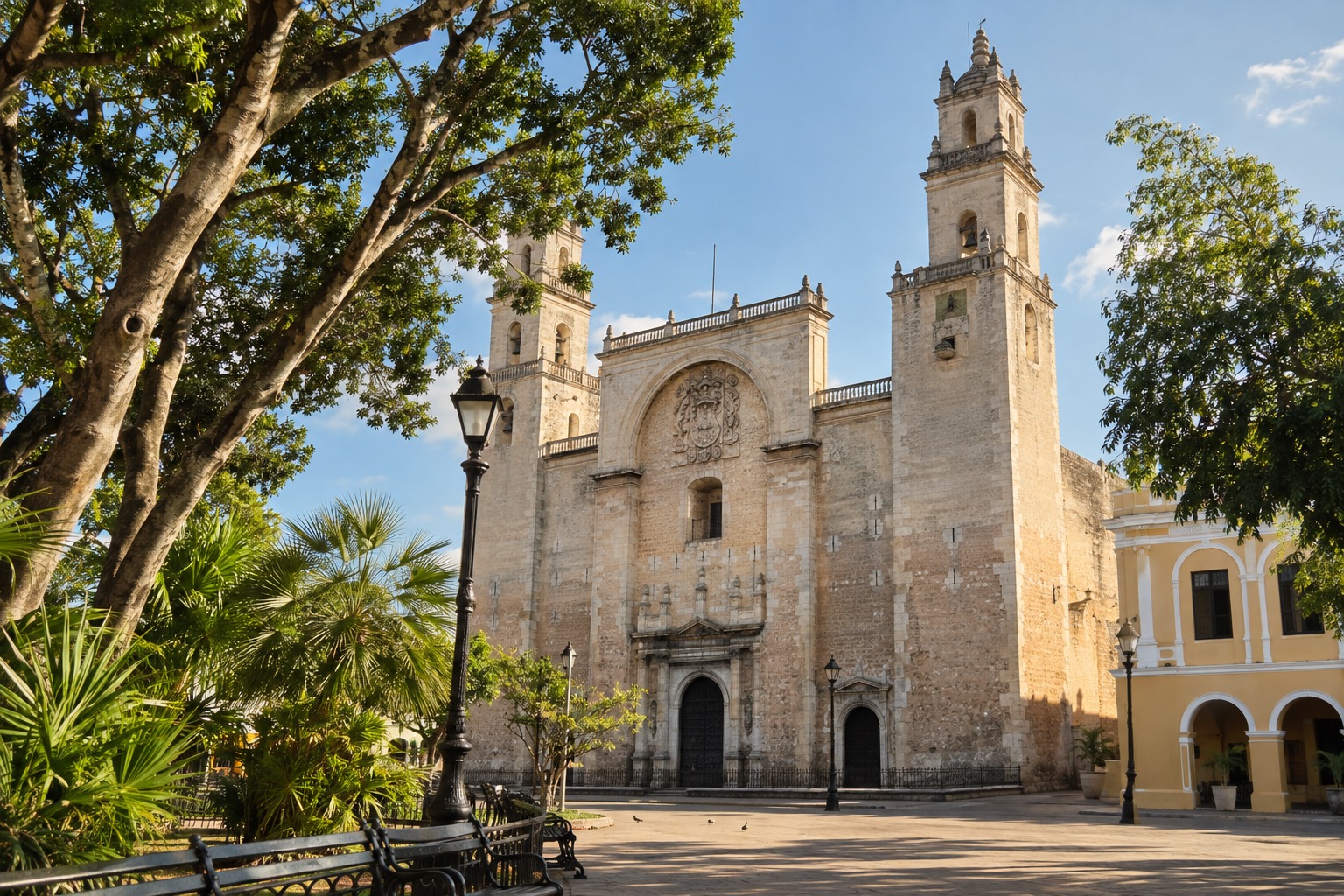
The city’s colonial core is here, where streets are narrow, facades are colorful and squares are busy. You can visit museums, churches and markets entirely on foot, and the Plaza Grande is under five minutes from most lodgings. Evenings can get noisy with restaurants, bars and cultural events, which is part of the charm for some and a drawback for light sleepers.
Lodging here is mostly boutique hotels set in colonial mansions, along with hostels, guesthouses and apartments. It suits couples, solo travelers and anyone who wants to leave the car behind. The airport is about 20 to 30 minutes away by car, and taxis, Uber and local buses fill in when your feet give out.
One tip: ask for a room facing an interior courtyard. It keeps the street noise at bay and gives you the kind of quiet morning these old houses were built for.
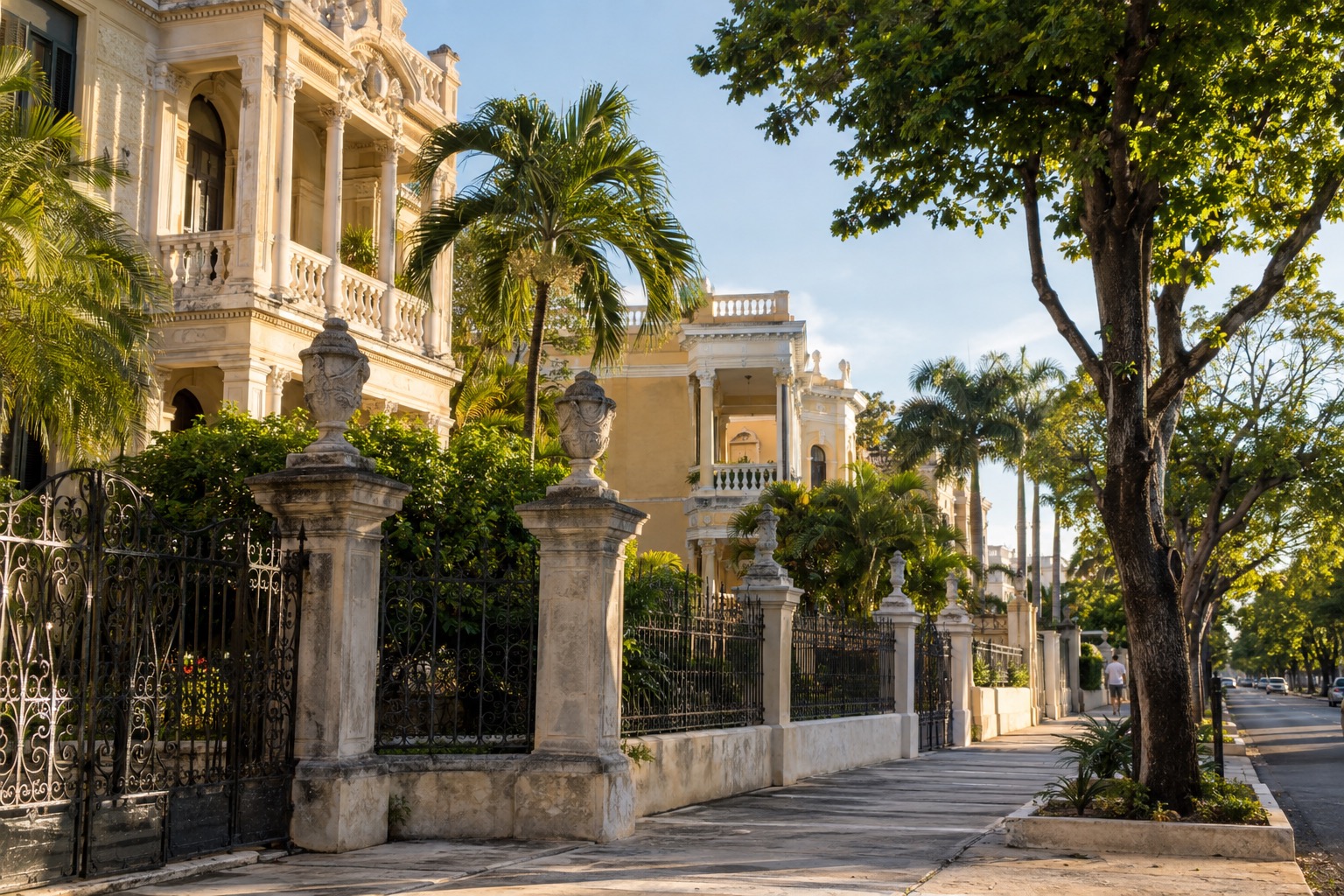
Paseo de Montejo
A broad boulevard lined with trees and grand historic mansions, Paseo de Montejo feels residential and unhurried. Nightlife is limited to a handful of calm restaurants and cafés, so this is where you stay for polish and peace rather than late nights.
You will find boutique hotels in former family mansions, guest rooms in converted houses and upscale apartments. Couples, business travelers and anyone wanting a more refined stay fit in well. The airport is roughly 20 to 30 minutes by car, and the Plaza Grande is about 5 to 10 minutes by car or 20 to 25 minutes on foot. Cars, taxis and Uber are easy, and a bike lane runs along the avenue.
Tip: on Sunday mornings the avenue closes to cars and fills with cyclists and walkers, a lovely time to be staying right on it.
Santa Ana
Around its shaded park, Santa Ana trades on cafés, restaurants and a neighborhood market. Days and early evenings hum along, yet the mood stays relaxed. It draws food lovers, couples, solo travelers and digital nomads who like a lived-in setting.
Lodging runs to boutique hotels, guesthouses and apartments in renovated houses. The center is a 10 to 15 minute walk, the airport about 20 to 30 minutes by car, and you can get around on foot or by bike, with taxis and Uber easy to find. Tip: head to the Santa Ana market for Yucatecan home cooking at modest cost, a good first-morning stop.
Santiago
Built around a park and a church, Santiago is a residential, genuine neighborhood where evenings are quiet and nightlife is scarce. It is a good place to rest after a day in the heat, and it suits families, moderate budgets and longer stays.
Expect guesthouses, small hotels and rental apartments. The center is about a 10 to 15 minute walk from the park, and the airport is about 20 to 30 minutes by car. Besides walking, you can use local buses, taxis or Uber. Tip: stroll over to the park around the end of the afternoon, when neighbors gather and you can watch the day wind down before dinner.
Merida areas compared
| Area | Best for | Feel | Getting around | Airport by car |
|---|---|---|---|---|
| Centro Histórico | First visit, couples, solo travelers | Colonial, lively, noisy at night | On foot, taxi, Uber, local bus | 20 to 30 minutes |
| Paseo de Montejo | Couples, business travelers | Residential, calm, upscale | Car, taxi, Uber, bike lane | 20 to 30 minutes |
| Santa Ana | Food lovers, nomads | Local, trendy, relaxed | On foot, bike, taxi, Uber | 20 to 30 minutes |
| Santiago | Families, moderate budgets, long stays | Residential, peaceful | On foot, local bus, taxi, Uber | 20 to 30 minutes |
The trade-off is mostly energy against sleep. The Centro puts everything within steps but pays for it in evening noise, while Santiago and Paseo de Montejo hand you calm at the cost of a longer walk or a short ride. Santa Ana sits in between, with good eating and an easy stroll to the sights. None of them has a beach, so seaside days mean a separate outing.
How to choose your hotel in Merida
All-inclusive resorts are not part of the picture here. Merida lodging is built around boutique hotels in old mansions, guesthouses and apartments, so you pay for rooms and eat out, which is half the pleasure in a city known for its food. Beachfront or lagoon side does not apply either, since the sea is a day outing away.
Think about noise first. A courtyard room in the Centro is far quieter than one over the street, and Santiago or Paseo de Montejo are quieter still. For festival weekends and busy holiday weeks, book early, because the small historic properties have few rooms and fill first.
Families often do well with an apartment or a guesthouse in Santiago, where there is room to spread out and calm evenings. Many colonial houses have steps, uneven floors and courtyards, so ask about ground-floor rooms if mobility matters. Also ask how a place handles airport transfers, since the ride is short but arriving late is easier with a ride arranged.
Good to know before you go
The U.S. State Department rates the state of Yucatan Level 1, ‘Exercise normal precautions’.
The airport lies just southwest of downtown, so getting to any of these neighborhoods by taxi or Uber is quick. Merida received the International Safe Community designation from Sweden’s Karolinska Institute, and that easygoing feel comes through in its walkable neighborhoods. From June through November the Atlantic hurricane season is on, with activity heaviest from mid-August to mid-October. Merida is inland, but a storm in the Gulf or the Caribbean can still bring heavy rain and disrupt flights, so check the forecast before you travel.
Sources
- Wikipedia, "Merida, Yucatan", en.wikipedia.org, checked September 29, 2026 (source secondaire ; distincte de tout classement generaliste de 'ville la plus sure', non retenu faute de source primaire datee)
- U.S. Department of State, Bureau of Consular Affairs, Mexico Travel Advisory, travel.state.gov, checked September 29, 2026 (date issued May 29, 2026) (date issued May 29, 2026)
- Wikipedia, "Manuel Crescencio Rejon International Airport", en.wikipedia.org, checked September 29, 2026 (source secondaire, citant les statistiques de la Agencia Federal de Aviacion Civil)
- NOAA National Hurricane Center, checked September 29, 2026
- Office du tourisme du Yucatán