
In September, a storm can sweep across the Huatulco hills in the late afternoon, then leave the air washed and the jungle so green it looks freshly painted. Fishermen drag their boats up the sand while pelicans wait for the sea to settle. This is the green season on the Oaxaca coast: warm water, empty beaches, and a town that moves at its own unhurried pace.
What is the weather like in Huatulco in September?
September is hot, sticky and wet, with rain falling on most days, usually as a heavy downpour or a stormy spell rather than a day of steady gray.
| Month | Average high (°F) | Average low (°F) | Rain (in) | Rain days | Sea (°F) | Daylight on the 15th |
|---|---|---|---|---|---|---|
| August | 83.0 | 74.6 | 12.96 | 21.5 | 88.2 | 12 hours 41 minutes |
| September | 81.9 | 73.9 | 20.67 | 23.8 | 87.6 | 12 hours 15 minutes |
| October | 82.0 | 73.2 | 16.01 | 19.0 | 86.4 | 11 hours 49 minutes |
Mornings are often the best part of the day, bright and calm, which makes them the time for the beach or a boat ride. Clouds usually build after lunch, and the heaviest rain tends to land in the afternoon or overnight. Some storms bring an inch or more in a single go, enough to turn dirt roads to mud and cancel a boat trip.
Evenings stay warm enough that you will not need a layer, and the humidity lingers after dark. The sea feels like warm bathwater, so swimming and snorkeling are comfortable, though visibility can drop after a big downpour stirs up the bays. Daylight runs a little over twelve hours.
What to do in Huatulco in September
September is a month for the sea in the morning, a long lunch under a palapa when the clouds close in, and a slow evening in town. Mexican Independence Day on September 15 and 16 gives the month its one big party, and the nesting season gives it its quiet drama.
Independence Day in the plaza
On the night of September 15, towns across Mexico repeat the Grito de Dolores, the cry that launched the independence movement. In Huatulco, families gather in the plaza of Santa Cruz and in La Crucecita, where the main square sits under big shade trees and the church faces a lively circle of cafés.
Expect flags in green, white and red hanging from every storefront, vendors selling elote, tamales and tostadas, music from a stage, and fireworks to finish. The next day brings parades and a calmer, family-centered mood. Restaurants fill with locals, so it is a good chance to eat what Oaxacans eat on a holiday, such as pozole, chiles en nogada in some kitchens, and mezcal poured in small glasses.
Turtles on the nesting beaches
The olive ridley sea turtle comes ashore along this stretch of the Oaxaca coast in the rainy months, and the Playa Escobilla sanctuary, run by the national conservation commission, sits on the same coastline as Huatulco. Nesting happens mostly at night, in waves that locals call arribadas, when many females crawl up the sand together.
Turtle programs and releases of hatchlings at dusk are what most visitors look for, and they are a gentle outing for children. Timing depends on the tides and the moon, so ask your hotel which conservation groups are running releases that week. Keep lights off and give the animals room.
Bays, boats and green hillsides
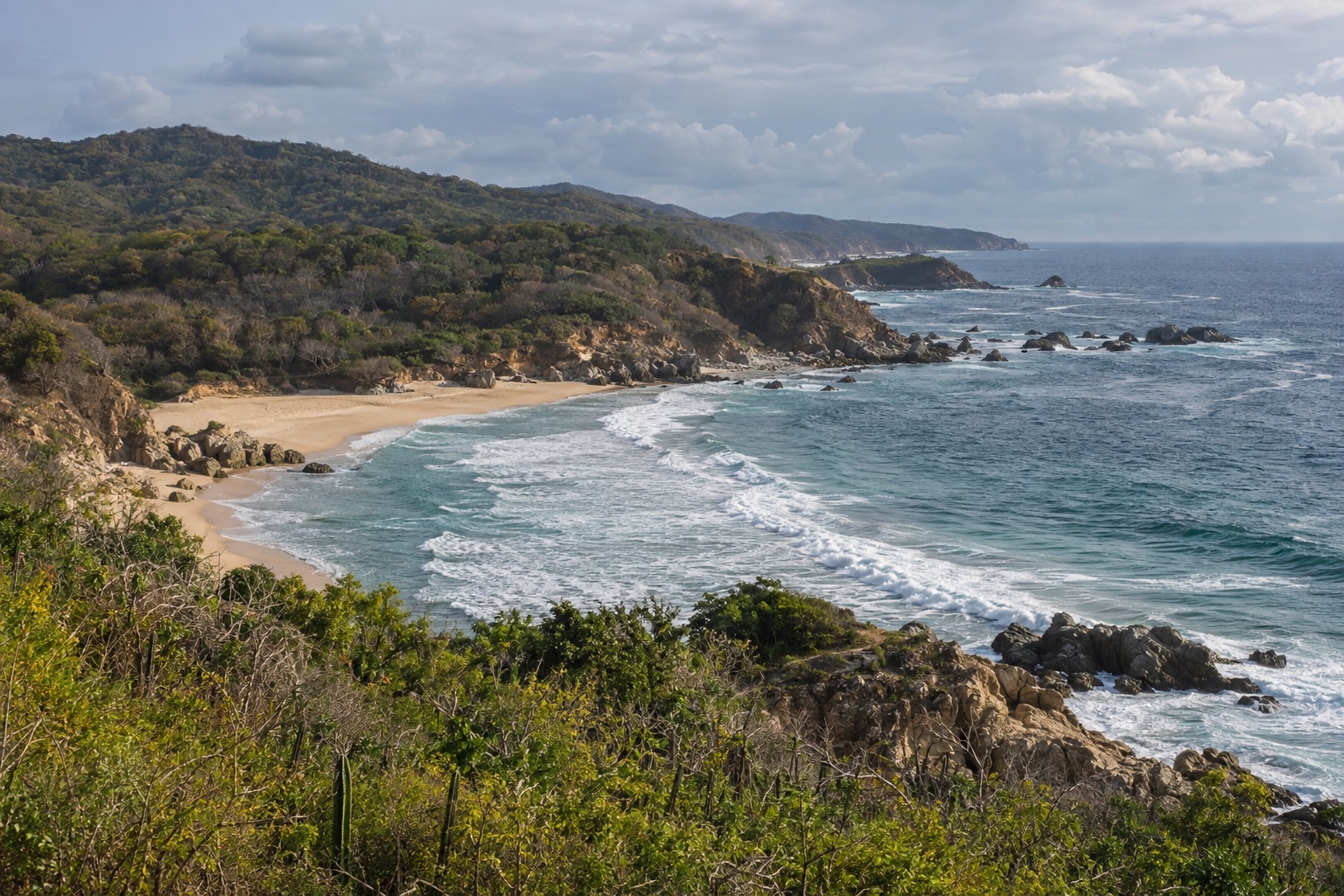
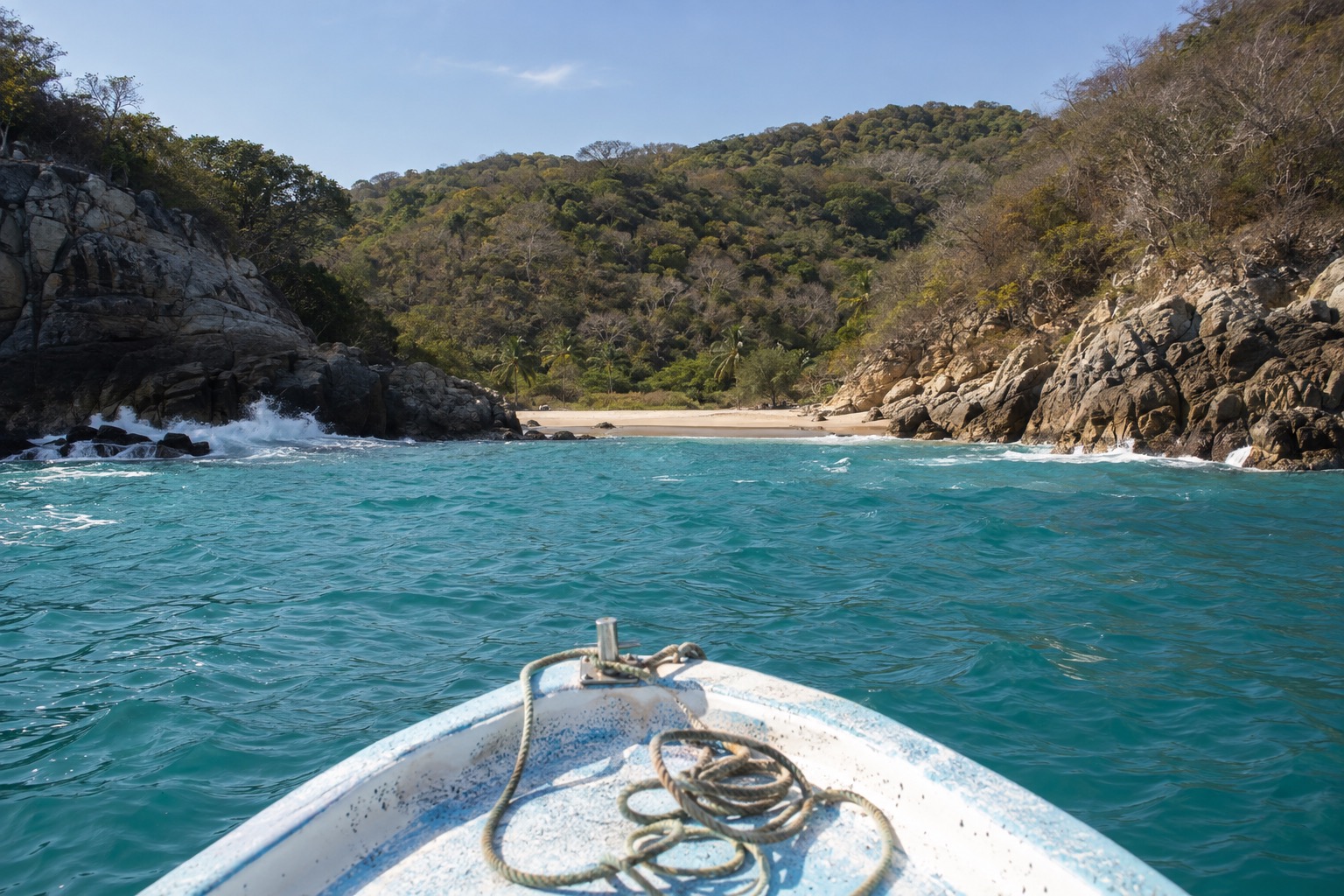
The rainy season thins out the crowds on the water. Some bays, such as Organo, are best reached by boat or trail, while Maguey also has road access, so a morning outing is easy to plan around the weather. Snorkelers find warm, calm water on clear mornings, though a night of storms can cloud the shallows.
On land, the dry forest that looks brown for half the year turns lush, and waterfalls and streams run in the hills. Birdwatchers find migrants passing through, and the coastal lagoons fill with herons and egrets. Seafood is the dish of the season on the beach: whole grilled fish, shrimp in garlic, and ceviche with a cold beer or a glass of agua de jamaica.
Coffee and cooler hours
When the afternoon storms arrive, the town turns to its cafés. Oaxacan coffee from the nearby mountains is easy to find in La Crucecita, and hot chocolate stirred with cinnamon and served with pan de yema is a local treat. Rain here is not a reason to stay in the room, since a warm shower is gone in an hour and the streets steam afterward.
Is Huatulco busy in September?
No, September is among the quietest stretches of the year in Huatulco, apart from the Independence Day weekend.
Most U.S. school calendars are back in session, and the stormy season keeps many foreign visitors away. Mexican families travel around the national holiday, so the plaza, the beach restaurants and the bus routes get busy for a couple of days. Outside that window, bays are nearly empty and tables are easy to find.
Rooms are easier to come by, and some smaller hotels and restaurants slow down or close for a week or two to repair and repaint. Cruise ships come through less often than in winter, so the main waterfront feels relaxed.
What to pack for Huatulco in September
Think quick-drying and light, since clothes will be damp at some point, and pack for boats, beaches and the odd muddy path.
- Lightweight rain shell or poncho that packs small
- Sandals with grip for wet stone and sand, plus a pair of closed shoes for trails
- Mineral sunscreen, since the sun is strong between clouds and sunscreen is better kept out of the reefs
- A dry bag to keep your phone and camera dry when you go out on the boat.
- Insect repellent for evenings, especially near lagoons
Good to know before you go
The U.S. State Department’s Mexico travel advisory rates Oaxaca at Level 2, ‘Exercise increased caution’.
Since September sits within the Pacific hurricane season, an offshore tropical system can deliver intense rain and churning seas, and boat departures could be put on hold. Keep your plans loose and leave a day of slack around any flight home. Banks and some shops close for the Independence Day holiday.
| Fee | Amount | Who pays |
|---|---|---|
| Lodging tax (Impuesto Sobre Hospedaje), Oaxaca | 3% | Guests, added to the hotel bill |
Is September a good time to visit Huatulco?
Yes, this spot is ideal for visitors who love warm seas, lush landscapes and uncrowded beaches, and who are okay with arranging their days around storms that roll in during the afternoon.
Compared with August, September is a touch cooler and rains on a few more days, while October starts to ease off, with fewer wet days and a slightly cooler sea. The humpback whales come later, usually from December, so this month belongs to birds and turtles instead.
What sets September apart is the pairing of a loud, joyful national party in the plaza with nights when turtles come ashore on dark sand. It is a month to see the coast at its greenest, with space to yourself.
Sources
- Open-Meteo / ECMWF ERA5, 1991-2020 normals, grid cell 15.7794N 96.1353W, model reanalysis, not a station record, checked September 8, 2026
- Open-Meteo Marine API, average 2015-2024, checked September 8, 2026
- sunrise-sunset.org, sunrise and sunset on the 15th of the month, checked September 8, 2026
- El Contribuyente and J.A. del Rio, ISH tables by State 2026, read on September 29, 2026
- U.S. Department of State, Mexico Travel Advisory (travel.state.gov), checked September 29, 2026
- CONANP, official press releases on the Santuario Playa Escobilla, read on September 29, 2026
To plan your stay
- Things to Do in Huatulco: Bays, Boat Trips, Sea Turtles and Oaxacan Food
- Where to Stay in Huatulco: Tangolunda, Santa Cruz, La Crucecita and Quieter Bays
- Best Time to Visit Huatulco: Weather by Month, Crowds, Swimming and Festivals
- Huatulco in August: Green Season Weather, Warm Sea, Turtles and What to Do