
On a Sunday in Akihabara, the main street goes silent to traffic and fills with cosplayers posing for photos, local bands setting up, and shoppers drifting from one anime storefront to the next. Over at the station, the trains of three JR lines keep coming and going, and the arcades hum with chimes and drum-game thumps.
Staying here puts you in the middle of it. Staying a few stops away in Ginza or Roppongi gives you a calmer lobby and a different Tokyo to come home to, so the real question is how close to the noise you want to sleep.
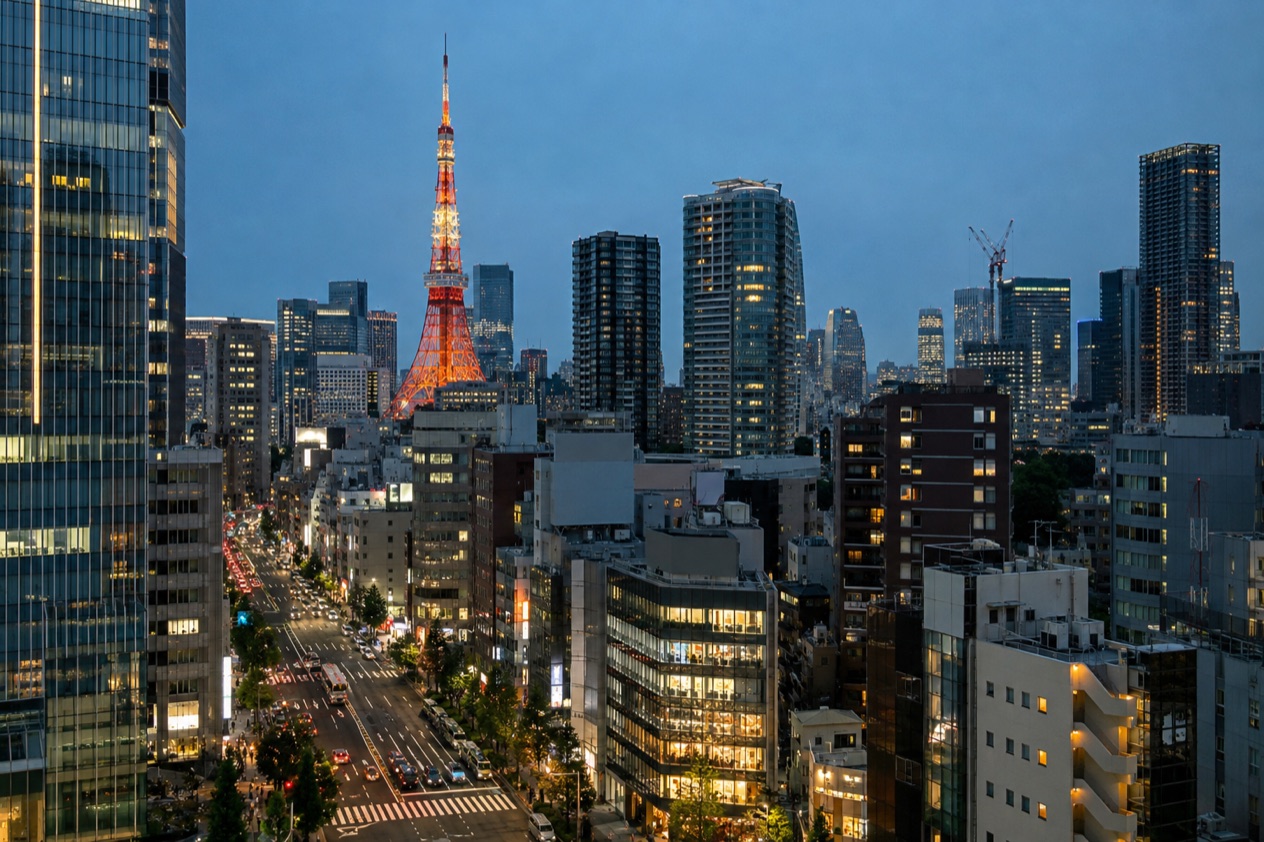
What is the best area to stay in Akihabara?
For a first visit built around games, anime, manga and electronics, the streets around Akihabara Station are the best base, because the shops, maid cafés and arcades start right outside the door. If your plans are broader sightseeing across Tokyo, the same station area still works, since Akihabara Station sits on the JR Yamanote, Keihin-Tohoku and Chuo-Sobu Local Lines. Travelers who want an upscale evening of restaurants and luxury shopping may prefer Ginza and Nihonbashi, and those who want a nightlife-oriented neighborhood with embassies and international hotels nearby can look at Roppongi and Akasaka.
Budget-minded travelers tend to look at the kinds of lodging that Tokyo does well, such as compact business hotels, capsule hotels and guesthouses, and Akihabara’s station-side streets are a natural place to compare them because the district is built around a transit hub. Families and anyone traveling with luggage will care most about a short, direct connection from the airport and a station exit close to the lobby, so it helps to pick a base on a line you will actually use. Nightlife seekers have a clearer answer in Roppongi, while those who like their evenings to end with a game of claw machines and a late bowl of ramen will be happy in Akihabara itself.
The three areas feel very different. Akihabara is Tokyo’s Electric Town, a shopping district for household electronics that grew out of a post-war black market and now carries the weight of otaku culture, with icons from anime and manga painted across the shop fronts.
Ginza is an upscale downtown area with high-end restaurants and luxury shops, and its neighbor Nihonbashi has a rich heritage and is the main financial district of Japan. Roppongi and Akasaka are districts of Tokyo reached by several subway lines, which suits travelers who plan to spend time across the city rather than in one neighborhood.
A useful way to decide is to picture your first and last hour of each day. If you want to step out of your hotel and be among arcades and electronics shops, stay in Akihabara.
If you want to return to a polished street of department stores and tasting menus, Ginza is the answer. If your days begin and end with train rides to other parts of Tokyo, any of the three can work, as long as the nearest station connects well to where you are going.
The district also has a calendar that can shape your stay. Kanda Myojin Shrine organizes a festival around May in which a massive portable shrine is carried through the streets, and every Sunday the main thoroughfare, Chuo-dori, is closed to vehicles. Sleeping in Akihabara means you are already on the spot for both, while a base in Ginza or Roppongi turns them into outings.
The best areas to stay in Akihabara
Three areas make sense as a base for an Akihabara trip. The first is Akihabara itself, the second is the Ginza and Nihonbashi side of the city, and the third is the Roppongi and Akasaka group of districts. Each gives you a different night, and each puts a different set of train lines at your door.
Around Akihabara Station and Chuo-dori
This is the heart of Electric Town, where the main area of Akihabara lies on a street just west of the station. Multi-story shops stack games, figures, trading cards, manga and computer parts one above the other, maid cafés send staff out to hand flyers to passersby, and the large arcades spill sound onto the sidewalk. On Sundays Chuo-dori turns into an unofficial stage for cosplayers and local bands, which makes the neighborhood feel like a street party you happen to be sleeping next to.
The lodging you are likely to find here is built for people who spend their days on the street: business hotels, capsule hotels and guesthouses are the types to look for, along with serviced apartments if you want a kitchen. The station is the great asset.
Akihabara Station is on the JR Yamanote, Keihin-Tohoku and Chuo-Sobu Local Lines, and it is also the terminal of the Tsukuba Express Line, which runs to Tsukuba and other stations in Ibaraki and northern Chiba prefectures. Haneda Airport and Narita Airport are the two nearest to Tokyo, and you will pick the route from either based on the lines you prefer.
It suits first-timers who came for pop culture, shoppers and friends traveling together. A tip for the shopping days: the large duty-free store keeps the hours in the table, so you can plan a purchase around them.
| Site | Open |
|---|---|
| LaOX Duty Free, Akihabara | Mon to Thu 10:00 to 20:00, Fri and Sat 10:00 to 21:00, Sun and holidays 10:00 to 20:00 |
Ginza and Nihonbashi
Ginza is an upscale downtown area with high-end restaurants and luxury shops, and the lobby you return to there tends to match the setting. Nihonbashi sits next to it with a rich heritage and the role of the main financial district of Japan, so the area mixes department-store windows with business towers. If your idea of a Tokyo evening is a long dinner, a stroll past lit shop fronts and an early night, this is the base that fits.
The lodging here leans toward polished city hotels and business hotels, with boutique options for travelers who want a design-minded room. It makes sense for couples, for travelers on a food-focused trip and for anyone who wants Akihabara as a day outing rather than a bedroom view. Both Ginza and Nihonbashi are located in Tokyo, in the Kanto region of Japan, and from here you would reach Electric Town by train, picking the line that fits your route on the day.
A tip: choose Ginza if you want contrast. After a day among arcades and manga shops, an evening in a district of luxury boutiques feels like another city entirely, and that change of pace is the reason visitors split a stay between two areas.
Roppongi and Akasaka
Roppongi and Akasaka are districts of Tokyo that work as a base when your trip stretches well beyond one neighborhood. Roppongi Station is served by the Tokyo Metro Hibiya Line and the Toei Oedo Line, Nogizaka Station by the Tokyo Metro Chiyoda Line, and Roppongi-Itchome Station by the Tokyo Metro Namboku Line. That spread of subway lines is the main reason to stay here.
Both districts can be reached from Shibuya Station in about 10 minutes by train, which suits visitors who plan to cover several parts of the city. The lodging runs from international-style hotels to business hotels and apartments, and it fits travelers who want an after-dark scene and don’t mind that Akihabara is an outing rather than a doorstep.
A tip: look at which of the metro stations above sits closest to your hotel before you book, because the three stations are on different lines and each leads to a different part of the city.
Akihabara areas compared
| Area | Best for | Feel | Getting around |
|---|---|---|---|
| Akihabara Station and Chuo-dori | Games, anime, manga and electronics | Electric Town with maid cafés, arcades and anime icons on the shop fronts | JR Yamanote, Keihin-Tohoku and Chuo-Sobu Local Lines, plus the Tsukuba Express Line |
| Ginza and Nihonbashi | Upscale dining and shopping | High-end restaurants and luxury shops, with a financial district and rich heritage next door | Reached by train from Akihabara, from Tokyo’s nearest airports Haneda and Narita |
| Roppongi and Akasaka | Wider sightseeing and evenings out | A group of Tokyo districts served by several subway lines | Tokyo Metro Hibiya, Chiyoda and Namboku Lines and the Toei Oedo Line |
The first trade-off is closeness against calm. Sleeping beside Akihabara Station means the arcades, shops and cafés are your neighbors, and so is the sound of a district built around entertainment. Ginza and Roppongi give you a base that feels removed from the Electric Town, but you give up the easy habit of dropping into a store between two other plans.
The second trade-off is the old town against the new. Akihabara is a place whose name is tied to a post-war black market and a station opened in the nineteenth century as a freight point, yet its present face is all screens and anime posters.
Nihonbashi carries its heritage in a more formal way, as the financial heart of Japan, while Roppongi and Akasaka feel like newer international districts. Think about which of those textures you want to wake up in.
A third consideration is how you will use the trains. The Tsukuba Express Line ends at Akihabara, which matters if you plan to travel toward Ibaraki or northern Chiba, while the three JR lines serve travelers heading across Tokyo. Roppongi and Akasaka spread across four subway lines, which opens a different set of connections. Choosing the area that matches your next day’s destination often saves more time than choosing the hotel itself.
If you cannot decide, a split stay is a sensible compromise: a few nights in Akihabara for the arcades and shops, then a few in Ginza or Roppongi for dinners and a change of scene.
How to choose your hotel in Akihabara
The first choice is the kind of lodging. A business hotel offers a compact private room with a bath and a desk, and it fits travelers who spend their days outside.
A capsule hotel gives you a sleeping pod and shared facilities, which suits a solo traveler on a short stay. A guesthouse usually has a shared lounge where you meet other travelers, and a serviced apartment gives you a kitchen and a place to spread out luggage after a day of shopping.
A ryokan, the traditional Japanese inn, is a different experience: tatami floors, futon bedding, a yukata robe to wear, and often a communal bath. In a district like Akihabara that is surrounded by neon and electronics, a ryokan stay is less common, so visitors save that experience for a trip beyond the city.
Next comes the station. Akihabara Station is on the JR Yamanote, Keihin-Tohoku and Chuo-Sobu Local Lines, and the Tsukuba Express Line ends there, so a hotel near an exit gives you the widest choice of connections.
Haneda Airport and Narita Airport are the two nearest to Tokyo, and the route you take from either will decide which station you want to be near. Look at a map before booking to see which exit your hotel is closest to, because large stations have several.
Families and travelers with limited mobility should think about the route from the station to the lobby. A hotel directly beside a station exit saves you from carrying bags along busy streets, and the Sunday closure of Chuo-dori to vehicles changes how that street feels for a stroller or a wheelchair. For young children, the arcades and toy shops are a draw, and a room that can sleep a family together matters more than any view.
Finally, think about your evenings. If you plan to stay out late among the arcades, a room in the district keeps the walk back short. If you want sleep and silence after a day of crowds, look at hotels on side streets or choose Ginza or Roppongi as your base and treat Akihabara as a day out. Either way, picking the hotel last, after the area and the station, usually leads to the best fit.
Good to know before you go
Haneda Airport, officially Tokyo International Airport, and Narita Airport, Japan’s largest international airport, are the nearest airports to Tokyo, and from either you reach Akihabara by train. Money in Japan is the yen, so keep some on hand for small shops and arcades.
Sources
- Wikipedia, Akihabara (https://en.wikipedia.org/wiki/Akihabara), checked October 11, 2026
- Wikivoyage, Tokyo/Akihabara (https://en.wikivoyage.org/wiki/Tokyo/Akihabara), checked October 11, 2026
- Japan National Tourism Organization, Tokyo (https://www.japan.travel/en/destinations/kanto/tokyo/), checked October 11, 2026
To plan your stay
- Best Time to Visit Tokyo: Cherry Blossoms, Autumn Leaves, Weather by Month and Festivals
- Things to Do in Tokyo: Temples, Towers, Markets and Day Trips
- Tokyo from the airport: Narita and Haneda, the Skyliner, Local Trains and Taxis
- Know Before You Go to Tokyo: Entry, Money, Getting Around and Local Etiquette