
The little Enoden train rattles between houses so close you could read the laundry, then slips out beside the water, where surfers sit like dark commas on the swell. Kamakura gathers all of that into one town: temple bells rolling down wooded valleys, incense drifting off hillside steps, and bowls of pale shirasu (tiny whitebait) arriving at lunch. It is a seaside town with a shogun’s past, built for travelers who like to wander from temple to trail to beach without ever opening a big-city itinerary.
What are the best things to do in Kamakura?
The best things to do in Kamakura mix temples, shrines, hillside paths and the sea, and the town rewards a day that moves between all four. Here are the essentials, each one developed further down the page.
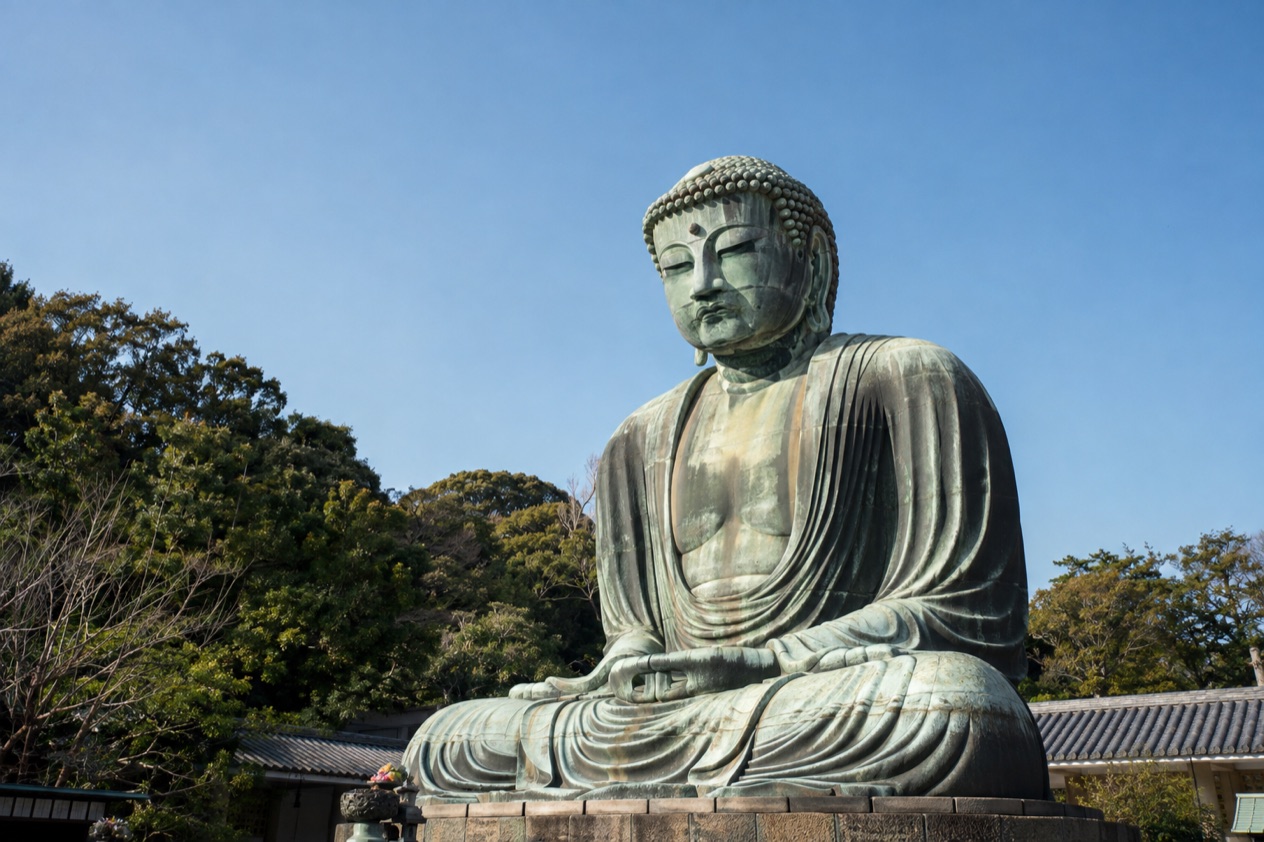
- Stand before the Great Buddha at Kotoku-in, the bronze figure that defines the town’s skyline of memory and sits in the Hase district.
- Visit Hase-dera, the Kannon temple whose towering wooden statue and terraced grounds reward a slow visit.
- Climb the approach to Tsurugaoka Hachimangu, the most important Shinto shrine in Kamakura and the spine of the old city.
- Ride the Enoden line, the small train that links the town with the coast and with Enoshima.
- Spend an afternoon on Enoshima, the island with sandy beaches, shrines, and seafood stalls.
- Walk one of the wooded hill paths between temples, where Kamakura feels most like a valley town.
- Eat shirasu, the local whitebait, over rice or on toast, the dish that tastes most of this coast.
- Browse the shops and snack stalls of the main pedestrian street leading toward the shrine, for sweets, pottery and the lacquerware Kamakura is known for.
Kamakura was Japan’s de facto capital from 1185 to 1333, when the Kamakura shogunate ruled from here under Minamoto no Yoritomo. That warrior-era history is why the town has so many temples tucked into folds of hillside, and why a day here feels different from a day in Tokyo, even though both belong to the same region of Honshu.
A sensible day links two or three of these, not all of them. Pair the Great Buddha with Hase-dera, since both sit in the same district, then add the beach or a bowl of shirasu. A second day can go to the shrine, the hill paths and Enoshima.
Sights and landmarks in Kamakura
Kamakura’s landmarks are spread across valleys and districts, so the town reads less like a single center and more like a string of places linked by narrow streets and a small railway. Zen monasteries, a Shinto shrine and the great statues each hold a different layer of its history, and the three below are the ones that anchor most visits.
Kotoku-in and the Great Buddha
Kotoku-in is a Buddhist temple of the Jodo-shu sect in the Hase district, and its seated bronze Buddha is the image people carry home from Kamakura. The figure sits in the open air, hands folded in meditation, its green patina softened by centuries of sea weather. Walk around it slowly, because the view changes with the angle: from the front it is serene and grand, from the side you notice the heavy folds of the robe and the calm lowered gaze.
The temple grounds are modest, so the statue is the whole event. Incense burns in a large bowl near the entrance, and visitors tend to pause, bow slightly or simply stand in silence. It pairs naturally with Hase-dera, since the two temples lie in the same neighborhood and you can move between them on foot through ordinary residential lanes.
Hase-dera and its Kannon
Hase-dera, also called Hase-kannon, belongs to the Jodo-shu sect and climbs a hillside in a series of terraces. Its main Kannon statue is 30.1 feet tall and is one of the largest wooden statues in Japan, gilded and carved with a gentle, many-faced presence that fills the hall. A pond garden near the entrance sets the tone, with stone lanterns and koi, before the steps lead upward through hall after hall.
Along the way you meet rows of small Jizo statues, tiny stone figures wearing knitted caps and bibs, left by families in memory of children. They are among the most touching sights in town, and visitors usually pass them quietly. From the upper terrace the view opens over the bay, a reward for the climb.
Tsurugaoka Hachimangu
Tsurugaoka Hachimangu is the most important Shinto shrine in the city, and it anchors the old samurai capital. A long, wide approach lined with trees leads from the town toward the main hall, crossing a red arched bridge by a lotus pond. A broad flight of stone steps carries you up to the hall itself, where the view back along the approach shows how the whole town was once laid out around this axis.
Look for the ginkgo stump near the steps, tied to local stories of the shogunate, and for the festival banners that appear on certain days. Weddings in traditional dress often pass across the courtyard, a bride in white and a groom in dark crested robes moving slowly under paper umbrellas. Give the shrine a generous stretch of time, because the grounds hold smaller shrines, a museum of treasures and quiet corners away from the main stairs.
More temples and neighborhoods
Beyond the headliners, Kamakura keeps a long list of smaller temples, each with its own character. Engaku-ji and Kencho-ji are great Zen monasteries with tall gates and quiet courtyards. Meigetsu-in is known for its hydrangeas, Hokoku-ji for a bamboo grove with a tea house, and Zeniarai Benzaiten for a cave shrine where visitors wash coins in spring water in the hope of multiplying them.
Komachi-dori, the pedestrian street running toward the shrine, mixes snack stalls, ceramics and souvenir shops. Nearby lanes hold small galleries, cafes in old wooden houses and shops selling Kamakura-bori, a local lacquerware carved in relief. Nothing here demands a schedule, which is part of the charm.
Outdoor things to do in Kamakura
The outdoors in Kamakura means wooded ridges, sandy shoreline and temple gardens, often all within sight of one another. Because the town was built into a valley with hills on its landward side and a bay in front, a walk can start among cedars and end with salt air.
Hill trails between temples
Narrow footpaths climb through the ridges around town, passing between temples and over saddles in the hills. They run through mossy cuts in the rock, past carved stone figures and under stands of cedar and bamboo, and they reward walkers with glimpses of rooftops and the water beyond. Several trails link the Great Buddha area with the shrine district, so you can arrive at a temple on foot from the woods rather than from the street.
Stout shoes help, because roots and stone steps can be uneven, and the trails turn slippery after rain. Pack water and plan a slow pace with pauses at the viewpoints, where the hum of the Enoden and the bay come into view together. The paths suit anyone who likes a woodland walk with a temple at the end.
The beaches of Yuigahama and Zaimokuza
A broad curve of sand opens along the bay, with surfers paddling out beyond the break and families spreading towels near the dunes. In the Kamakura area, the beach is as much a place for watching as for doing: skimboarders, dog walkers, kite flyers and people who simply sit with a drink and look at the horizon. Cafes and seaside shacks sit along the road behind the sand.
The sea changes from day to day, so look at the water before you decide anything, and keep an eye on the surf if you intend to go in. A walk along the shore toward the headlands is a pleasant counterpoint to temple days, and the light over the water can turn the whole bay silver.
Temple gardens and seasonal color
Many of Kamakura’s temples are as much gardens as shrines. Moss, stone lanterns, carefully shaped maples and small ponds fill the grounds, and the color changes as the seasons turn, with hydrangeas along the paths when they bloom and maples reddening toward autumn. Meigetsu-in and Hokoku-ji are especially associated with this sort of slow, looking-around visit.
Kamakura is also a good place for simply sitting. A tea house tucked into a bamboo grove, a bench beside a lotus pond or a stone ledge on a temple terrace all turn a stop into a pause. Bring a camera, but leave time to put it down.
Day trips from Kamakura
The trips below range from an island with beaches to a port city and a mountain resort region, each with a different character than the temple town you came from.
Enoshima
Enoshima is the natural first choice, home to some of the closest sandy beaches to Tokyo and Yokohama. It is served by three railway stations: Katase-Enoshima on the Odakyu Enoshima Line, Enoshima Station on the Enoshima Electric Railway (Enoden), and Shonan-Enoshima Station on the Shonan Monorail. The Enoden ride from Kamakura follows the coast and slips through streets and gardens, a trip travelers often remember as much as the island itself.
On the island, a road climbs past shrines, souvenir shops and seafood stalls toward lookouts over the water and Mount Fuji on clear days. Cave walks, gardens and a lighthouse-topped summit give the island its structure, and grilled shellfish and shirasu dishes fill the stands. Wear shoes for stairs, since the way up involves quite a few.
Yokohama
Yokohama is a port city with a very different feel, all waterfront promenades, red-brick warehouses, ferris wheels and one of Japan’s best-known Chinatowns. Go for a walk along the harbor, a meal of dumplings and noodles among the lanterns of Chinatown, and an hour or two in the shops and museums near the bay. It makes a lively counterweight to Kamakura’s quiet temple lanes.
This is a trip for travelers who enjoy cities and food as much as shrines. Plan the day around a few anchors, such as the waterfront and Chinatown, and leave the rest open. The harbor lights give the evening a particular glow, and the area is easy to wander without a plan.
Hakone
Hakone is a mountain resort region known for hot springs, lake views and art museums set among the trees. A visit usually links a few stops, a ride on a ropeway or small mountain railway, a lake with sightseeing boats, and a soak in an onsen, a natural hot spring bath. On clear days the region gives views of Mount Fuji across the water.
Because Hakone is a region and not a single sight, it suits travelers who want a change of scenery and a day of moving between places. Many choose to stay overnight in a ryokan, a traditional inn with tatami rooms and multicourse meals, to turn the excursion into a night away. Whether as a long day or an overnight, the contrast with Kamakura’s coastal air is strong.
Getting around from Shinjuku
Travelers coming from Tokyo have more than one route. An alternative from Shinjuku is to take the private Odakyu line to Fujisawa and then change onto the Enoden line to Kamakura, about 90 minutes in all. The Enoshima-Kamakura Free Pass offers a roundtrip from Shinjuku and unlimited use of the Enoden line for one day, but it does not include fares on local buses.
That arrangement links Kamakura and Enoshima in a single loop, since Fujisawa is the changing point onto the Enoden. It is worth knowing about when you plan to ride the small train more than once in a day.
What to eat in Kamakura
Eating in Kamakura means seafood from the bay, vegetables from the hills and the plain, careful cooking of temple tradition, and a good deal of street snacking. The town sits at the meeting of mountain and sea, and its menus show it.
Shirasu and the catch of the bay
Shirasu, tiny whitebait, is the dish people associate most with this coast. It arrives boiled and lightly salted, or sometimes raw, heaped over a bowl of rice with a sprinkle of seaweed, grated ginger and a drizzle of soy. The flavor is delicate and sweet, with the faintest taste of the sea.
You will also see shirasu on pizza, in omelets, on toast and in croquettes, a sign of how fully the town has taken it up. Seafood restaurants near the beach serve it with grilled fish, tempura and miso soup. Order a set meal and you taste the whole shoreline in a tray.
Temple cooking and local flavors
Shojin ryori is the vegetarian cooking of Buddhist temples, and Kamakura’s Zen heritage means it appears here in restaurants and temple-linked dining rooms. A meal is built from seasonal vegetables, tofu, sesame and mushrooms, arranged in small dishes that look as careful as a garden. It is a quiet, thoughtful way to eat in a town of monasteries.
Kenchin-jiru, a hearty soup of root vegetables and tofu, is also tied to Kamakura’s temple kitchens. Locally grown vegetables, sometimes called Kamakura vegetables, show up on plates in many forms, from simple grilled pieces to colorful salads. Soba noodles in small shops round out the picture.
Street snacks, sweets and coffee
Komachi-dori is the place to graze, with stalls selling croquettes, sweet potato treats, grilled rice crackers, skewers, taiyaki (fish-shaped cakes filled with bean paste) and soft-serve in every flavor, often matcha.
The coffee and craft beer scene has grown alongside the surf culture. Small roasters, cafes in old wooden houses and beachside bars give you places to pause between temples. A cold drink on a terrace facing the sea can be as memorable as any sight.
Things to do in Kamakura at night
Evenings in Kamakura are low-key, built around dinner, a drink and a walk, with none of the neon of a big city. The pace suits people who prefer a lantern-lit street to a club, and the sea gives the town a soft edge after dark.
Dinner, izakaya and bars
An izakaya, a casual Japanese pub serving small plates and drinks, is the natural setting for an evening. Expect grilled skewers, fried chicken, sashimi, seasonal vegetables and cold beer or sake, ordered a few dishes at a time and shared. Seafood fresh from the bay turns up on many menus.
Craft beer bars, wine bars and small cocktail spots tuck into side streets and the lanes near the station. Many are small rooms with a handful of seats, where conversation with the staff comes easily. It is a good way to wind down after a day of temples.
Evening by the sea
The beach does not stop being interesting when the sun goes down. People gather along the sand and the seawall to watch the sky fade, and beachside cafes and bars stay lively for a while with music and drinks. The sound of waves does most of the work.
Enoshima, across the bay, has its own evening mood, with lanterns, shrine paths and views of lights over the water. The Enoden itself becomes a pleasure, its windows reflecting the dark and the glow of the coast. A ride along the shore is an evening activity by itself.
Quieter options
If you prefer something gentler, a long dinner in a small restaurant, a stroll through lit streets and a late tea or coffee fill an evening nicely. The town’s rhythm encourages unhurried plans, and a conversation over food often becomes the main event. Some visitors choose to stay overnight in a guesthouse or inn to enjoy the hush after the day crowds thin.
A night in a traditional inn, a ryokan, adds its own rituals: slippers at the door, a yukata (light cotton robe) to wear, and futon bedding laid out on tatami. It is a way to feel the tradition from inside, rather than from a temple path.
Things to do in Kamakura with kids
Kamakura gives children a mix of sand, trains, statues and small adventures, and it works best when you keep the temple stops brief and break them up with something to run around in. The beach and the train are the clear stars, with temples as the interesting supporting cast.
The Enoden train and the beach
The Enoden is a treat for children in itself, a small train that rumbles through streets, past gardens and beside the sea. Window seats turn the ride into a show, with houses, crossings and sudden glimpses of water. Riding it from Kamakura to Enoshima makes a trip with its own built-in excitement.
The sandy beaches near Kamakura and Enoshima are an easy draw, with space for castles, shell hunting and chasing waves at the edge. Check the water and the surf before anyone goes in, and keep children close to you near the sea. Sun hats and drinks help on bright days.
Statues, steps and stories
The Great Buddha at Kotoku-in is a big, clear sight that even small children grasp at once, and the open setting lets them look without being hushed. Hase-dera adds the tiny Jizo statues in their knitted caps, which tend to capture young imaginations, along with koi in the pond and steps to climb.
Tell children a few stories, such as that Kamakura once ruled Japan under warrior lords and that the shrine once sat at the center of that world. The wide approach to Tsurugaoka Hachimangu, with its pond and its steps, gives them room to move. Steps and slopes are part of Kamakura, so expect some carrying for the youngest.
Enoshima with children
Enoshima has a lot to hold a child’s attention: a winding road lined with food stalls, grilled seafood smells, cave paths, shrines and sea views. Snacks along the way keep energy up, and the beaches are close by for a stop at the end. Wear comfortable shoes, because the island involves stairs.
Enoshima also has an aquarium, a natural fit for a family day. Pair it with the beach and a ride on the Enoden for a trip built around moving, looking and eating.
Good to know before you go
Getting around Kamakura centers on the Enoden line and on foot, with local buses filling in the gaps, and a one-day Enoshima-Kamakura Free Pass from Shinjuku covers the Enoden but not the buses. The Odakyu line to Fujisawa, then the Enoden, is another way in from Shinjuku. Expect hills and steps between sights, wear shoes you can walk in, and keep an eye on the weather forecast in the typhoon and rainy seasons, since rain changes the trails and the beach.
Sources
- Wikipedia, Kamakura (https://en.wikipedia.org/wiki/Kamakura), checked October 11, 2026
- Wikivoyage, Kamakura (https://en.wikivoyage.org/wiki/Kamakura), checked October 11, 2026
- Wikipedia, Kōtoku-in (https://en.wikipedia.org/wiki/K%C5%8Dtoku-in), checked October 11, 2026
- Wikipedia, Enoshima (https://en.wikipedia.org/wiki/Enoshima), checked October 11, 2026
- Wikipedia, Hase-dera (Kamakura) (https://en.wikipedia.org/wiki/Hase-dera_(Kamakura)), checked October 11, 2026
- Wikipedia, Tsurugaoka Hachiman-gū (https://en.wikipedia.org/wiki/Tsurugaoka_Hachiman-g%C5%AB), checked October 11, 2026