
A morning in Hakone often starts with steam rising off the hot-spring pools and the sound of the little mountain train pulling out of Hakone-Yumoto. Beyond the ryokan and the lake, a whole region opens up: a seaside temple town, the towers of Tokyo, the cone of Mount Fuji and a ring of volcanic sights right on your doorstep. Here are the outings that make sense when you wake up in Hakone and want to be back for the evening bath.
What are the best day trips from Hakone?
The best day trips from Hakone split into two kinds: the big names that take you out of the mountains (Kamakura, Tokyo, Mount Fuji) and the volcanic and artistic loops that keep you inside the national park.
- Kamakura, for temples and shrines in a city that was the political capital of Japan under the Kamakura shogunate.
- Tokyo, for Ginza’s luxury shops and restaurants and the financial heart of Nihonbashi.
- Roppongi and Akasaka, for a different side of Tokyo’s districts, reached on the Hibiya, Oedo, Chiyoda and Namboku lines.
- Mount Fuji, for a look at the highest mountain in Japan, a UNESCO World Heritage site.
- Lake Ashinoko and Owakudani, for a boat on the lake and the black eggs said to prolong life.
- Sengokuhara, for a day among art museums and the open-air sculptures of Japan’s first open-air museum.
Hakone itself sits in the western part of Kanagawa Prefecture, inside the Fuji-Hakone-Izu National Park, so several of these outings can start from your room and finish at your own onsen.
The best day trips from Hakone
Kamakura
Kamakura is a city of Kanagawa Prefecture, and for a stretch of Japanese history, from 1185 to 1333, it was the seat of government under the shogunate that took its name. That past is what you come for: hillside temples, shrine approaches lined with stone lanterns, moss-covered steps and the great bronze Buddha that sits out in the open air. Between the sights, the lanes near the station fill with snack stalls and shops selling sweets, and shirasu (tiny whitebait) shows up on rice bowls in local restaurants.
From Shinjuku, one route takes the private Odakyu line to Fujisawa and then changes onto the Enoden line to Kamakura, about 90 minutes in all. The Enoshima-Kamakura Free Pass covers a roundtrip from Shinjuku and a day of unlimited Enoden rides, though it does not include local bus fares. From Hakone, the Odakyu side of that trip is the natural thread to follow, since the Odakyu Line is the one that links Odawara with Tokyo.
Kamakura suits travelers who like to walk between temples and stop for tea. It fills a full day, and the Enoden’s old-fashioned cars, which run close to the houses, are a small pleasure in themselves.
Tokyo: Ginza, Nihonbashi, Roppongi and Akasaka
Tokyo sits on Tokyo Bay in the Kanto region and is the capital of Japan. For a day out from Hakone, pick a district or two rather than the whole city.
Ginza is an upscale downtown area of high-end restaurants and luxury shops, the place for window-shopping, department store food halls and a long lunch. Nihonbashi, close by in spirit, is known for its rich heritage and is the main financial district of Japan, with old commercial streets among the office towers.
Both can be reached from Shibuya Station in about 10 minutes by train. Roppongi Station is served by the Tokyo Metro Hibiya Line and the Toei Oedo Line, Nogizaka Station by the Chiyoda Line, and Roppongi-Itchome Station by the Namboku Line, so you can choose your entry point to the district.
Tokyo suits travelers who want a city day: shops, restaurants and districts that are very different from the onsen town you left behind. The Hakone Freepass with the Odakyu Line option includes one return trip on the Odakyu Line between the departure station and Odawara Station, which ties the city to the mountain.
Mount Fuji
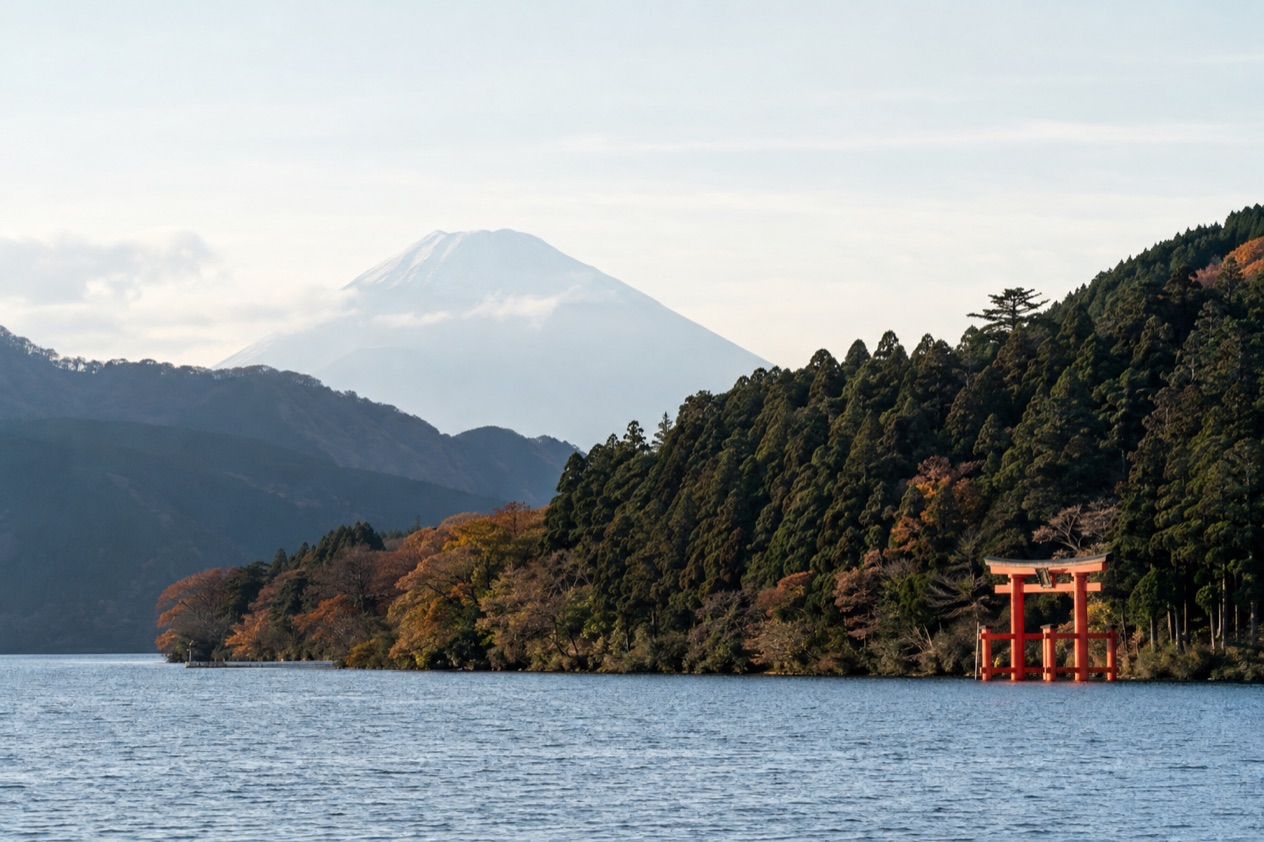
Mount Fuji is the highest mountain in Japan and a UNESCO World Heritage site. Hakone is known for hot springs set within view of it, so for travelers the Fuji day starts with simply looking: from a lakeshore, from a ropeway cabin, from the window of a ryokan bath. When the cloud lifts, the cone stands over the whole region.
Climbing is a separate matter and a seasonal one. The climbing season for Mt. Fuji ends on September 10th, and in winter the Yoshida, Subashiri and Gotemba trails are closed from the 5th station to the summit, while the Fujinomiya Trail is closed from the 6th station up.
For anyone planning a climb, the official website for Mt. Fuji climbing gives the latest information for a safe climb and return. For an October trip like this one, that makes Fuji a day of views and photographs, not of summit trails.
Lake Ashinoko and Owakudani
This is the classic circuit of the national park, which is centered on Lake Ashi and sits on volcanically active ground. You can explore Lake Ashinoko by boat, and at Owakudani you can taste the black eggs that are said to prolong life. They are boiled in the volcanic hot springs, which turns the shells dark, and eating them beside the sulfurous steam is as much a ritual as a snack.
The Hakone Freepass offers unlimited rides on eight transportation means in Hakone, including the Hakone Tozan Train, the Hakone Ropeway and the Hakone Sightseeing Cruise. That means a day can chain a mountain train, a ropeway over the volcanic slopes and a lake crossing, with Hakone-Yumoto, known for its many restaurants and gift shops, as a base for lunch and souvenirs.
The loop suits anyone who likes to keep changing vehicles. September is the wettest month in Hakone, so an October day can still bring a gray spell. A gray day does not spoil the steam at Owakudani.
Sengokuhara and the open-air museum
Sengokuhara is filled with art museums, which makes it the answer to a day when the weather asks for indoor stops. Among them is Japan’s first open-air museum, where the open-air art installations stand on the hillside and you walk from sculpture to sculpture with the mountains behind them.
The Hakone Freepass “Hako Ticket” Plus combines the Digital Hakone Freepass, with unlimited use of eight modes of transport, with the Hako Ticket, which grants unlimited use of applicable art museums, hot springs and activity facilities. It is valid for 2 days or 3 days, which fits a stay that mixes museums with a soak. This outing suits art lovers and anyone who wants a slow day in the national park, with a hot spring to finish.
Day trips from Hakone compared
| Trip | Best for | How to go |
|---|---|---|
| Kamakura | Temples, shrines and the Great Buddha | Odakyu line from Shinjuku to Fujisawa, then Enoden line (about 90 minutes from Shinjuku) |
| Tokyo (Ginza, Nihonbashi) | Shopping, restaurants, heritage streets | Odakyu Line between Odawara and Tokyo |
| Tokyo (Roppongi, Akasaka) | City districts on several metro lines | Hibiya, Oedo, Chiyoda or Namboku lines |
| Mount Fuji | Views of the highest mountain in Japan | Seen from Hakone, or climbed in season (season ends September 10th) |
| Lake Ashinoko and Owakudani | Boat, ropeway, black eggs | Hakone Freepass, eight modes of transport |
| Sengokuhara | Art museums and open-air sculpture | Hakone Freepass, or Hako Ticket Plus for 2 or 3 days |
To choose, start from the kind of day you want. If you want history, Kamakura gives you temples and a medieval capital. If you want a big city, Tokyo gives you Ginza’s shops, Nihonbashi’s heritage and the districts of Roppongi and Akasaka. If the mountain is the draw, the Fuji views and the Lake Ashinoko circuit let you stay within the national park and sleep in the same bed.
A couple of days in Hakone leaves room to mix them: one day on the volcanic loop with the Freepass, another among the museums of Sengokuhara, and a third, if you want it, out toward Kamakura or the capital.
Tour or on your own?
Inside Hakone, the transport itself is built around the pass. The Hakone Freepass bundles eight transportation means, from the Hakone Tozan Train to the Hakone Ropeway and the Sightseeing Cruise, so a day on the loop around Lake Ashinoko and Owakudani is largely a matter of moving from one ride to the next. The Hako Ticket Plus goes further by adding applicable art museums, hot springs and activity facilities, valid for 2 days or 3 days.
Going out of the mountains asks for more planning. Kamakura involves two railways, the private Odakyu line and the Enoden line, with a change at Fujisawa, and the Enoshima-Kamakura Free Pass covers a roundtrip from Shinjuku plus a day on the Enoden, not local buses. Tokyo, for its part, is a place where the Odakyu Line connects Odawara to the city, and the Freepass option with an Odakyu ticket includes one return trip on that line between the departure station and Odawara Station.
Mount Fuji is the case where it pays to read the official information. Visitors planning to climb are strongly advised to check the latest on the Official Website for Mt. Fuji Climbing, and the season for the summit trails ends on September 10th. If your interest is the view, you can look at the mountain from Hakone without any of that.
Before booking anything, compare what each option actually covers: which railways, which museums, which boat, and whether local buses are included. Each pass in this region covers a defined set of rides, and the differences between them are where a day’s plans are made.
Good to know before you go
Hakone has a humid subtropical climate, with warm summers and cool winters, and September is the wettest month, so rain can still arrive in autumn. A light waterproof layer is a reasonable companion on the lake and ropeway days. Keep the pass you choose close at hand, since each one covers a defined set of rides, and treat the Fuji climbing season as finished for the year once September 10th has passed.
Sources
- Japan National Tourism Organization, Hakone (https://www.japan.travel/en/destinations/kanto/kanagawa/hakone-and-around/), checked October 11, 2026
- Hakone Tourist Information (https://www.hakonenavi.jp/international/en/), checked October 11, 2026
- Wikipedia, Hakone, Kanagawa (https://en.wikipedia.org/wiki/Hakone,_Kanagawa), checked October 11, 2026
- Japan National Tourism Organization, Tokyo (https://www.japan.travel/en/destinations/kanto/tokyo/), checked October 11, 2026
- Wikipedia, Kamakura (https://en.wikipedia.org/wiki/Kamakura), checked October 11, 2026
- Wikivoyage, Kamakura (https://en.wikivoyage.org/wiki/Kamakura), checked October 11, 2026
- Japan National Tourism Organization, Mount Fuji guide (https://www.japan.travel/en/fuji-guide/), checked October 11, 2026
- Official website for Mt. Fuji climbing, about the climb (https://www.fujisan-climb.jp/en/about/), checked October 11, 2026
To plan your stay
- Best Time to Visit Hakone: Autumn Leaves, Rainy Season, Weather by Month and Festivals
- Where to Stay in Hakone: Hakone-Yumoto, Lake Ashi, Sengokuhara and Ryokan Stays
- Hakone from Tokyo: Romancecar, Shinkansen, Local Trains and the Hakone Freepass
- Know Before You Go to Hakone: Getting There, the Freepass, Weather and Etiquette