
From the rail of a ship on the Seto Inland Sea, the land never really leaves you: a green island slides past, then a bridge, then another island with orange groves or a single shrine at the water’s edge. This is Japan’s sheltered inner sea, and sailing it means moving between islands, ports and art, not crossing an empty horizon.
What are Seto Inland Sea cruises?
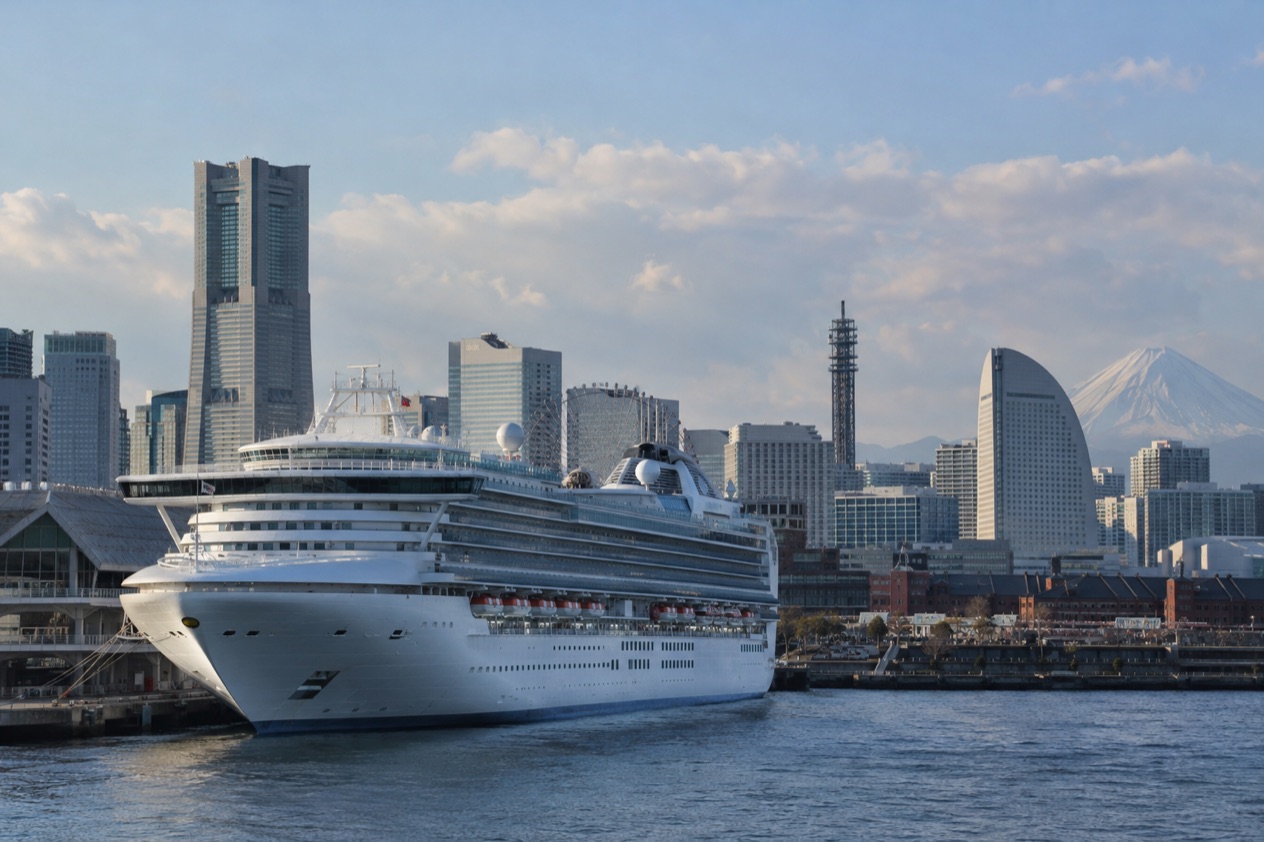
They are leisurely voyages on the body of water that separates Honshu, Shikoku and Kyushu, three of the four main islands of Japan, a route where the scenery is islands, bridges and harbor towns. Cruise ships are large passenger ships used mainly for vacationing, and dining on almost all of them is included in the cruise price. On the Inland Sea that means your days are built around what slides by the window and what you step ashore to see.
The sea is about 280 miles long from east to west, and it is never much wider than 34 miles from south to north. That narrowness is the whole charm. Shorelines stay in view, and the water is shallow, with an average depth of 125 feet. A ship here feels less like an ocean liner and more like a floating balcony over a landscape of small hills and working harbors.
A sea of islands
Almost 3,000 islands sit in the Inland Sea, and over 170 of them are inhabited. The largest is Awaji-shima, followed by Shodo-shima. Most are small, wooded humps with a fishing village, a ferry landing and terraced slopes, and a few are famous enough to shape a whole itinerary.
Shodoshima is the island of olives, so expect olive oil, olive soft-serve and olive-scented souvenirs. Ikuchijima is Japan’s Lemon Island, and it also holds a famously eccentric temple complex. Naoshima is devoted to contemporary art, and it is the island that draws travelers who care more about museums than harbors.
Bridges overhead, art ashore
Several great bridges cross the sea, and seeing them from below is part of the appeal. The Akashi Kaikyo Bridge, with the longest suspended span in the world, connects Akashi (off Kobe, on Honshu) and Awaji. The Seto-Ohashi Bridge is a set of ten bridges joining Kurashiki, in Okayama, to Sakaide, in Kagawa. The Shimanami Kaido strings seven bridges between Onomichi and Imabari.
Ashore, the eastern end of the sea hosts the Setouchi Triennale art festival, inaugurated in 2010, and some of its events take place on Naoshima, which is known colloquially as the art island and is home to several permanent museums. Even outside the festival, Naoshima remains home to several permanent museums.
A national park on the water
The coast of the Inland Sea was appointed the Setonaikai National Park on March 16, 1934, as one of the three oldest national parks in Japan. The designation covers the coastal area except for Osaka Prefecture and a part of Wakayama Prefecture. The national park designation covers much of the coastal area, while working ports remain part of the landscape.
Whirlpools at the eastern gate
At the far eastern extremity of the sea, where it meets the Pacific Ocean, are the Naruto whirlpools. They can be reached by sightseeing boats, which makes them one of the few natural spectacles here that you watch from the deck. Sightseeing boats take passengers to the Naruto whirlpools at the eastern end of the sea.
Which ports do they visit?
Places around the Inland Sea include Kobe, Hiroshima, Miyajima, Naoshima, Onomichi, Kurashiki and Imabari. Each one offers something different ashore, from harbor cafés to museums to shrines on the water.
Kobe and the eastern end
The Port of Kobe is a Japanese maritime port in Kobe, Hyogo, in the Keihanshin area, backed by the Hanshin Industrial Region. Flat land is limited, so artificial islands were built, among them Port Island, Rokko Island and the island that carries Kobe Airport. Seen from the water, the city is a band of towers pressed between the harbor and the hills behind.
Kobe is also a food city in the minds of travelers, with its beef, its bakeries and its harbor-front strolls, and it is the end of the sea from which the Akashi Kaikyo Bridge comes into view, joining Akashi to Awaji.
Hiroshima and Miyajima
Hiroshima is home to the Hiroshima Peace Memorial, the Genbaku Dome, a UNESCO World Heritage Site because of the atomic bomb damage in 1945. It is a sober visit and a lasting one, a place people tend to approach quietly. Alongside it, the city has a reputation for okonomiyaki, the layered savory pancake grilled on a hot plate, and for oysters in the cold months.
Miyajima, also called Itsukushima, is famous for its shrine and its floating torii gate. Itsukushima Shrine stands on the island of Itsukushima in the city of Hatsukaichi and is a UNESCO World Heritage Site as well.
The torii appears to float when the tide is in, and sits on wet sand when it is out, so the same view changes through the day. Island snacks include grilled oysters and maple-leaf-shaped cakes called momiji manju.
Naoshima and the island stops
Naoshima is the stop for art: several permanent museums, outdoor sculptures near the shoreline and a calm island rhythm between galleries. A day there tends to be spent walking from one work to the next, with coffee breaks in between.
Shodoshima brings olive groves and soy sauce traditions into the mix, and Ikuchijima adds lemons, which show up in everything from sweets to sodas, along with its eccentric temple complex. Awaji, the largest island, sits under the Akashi Kaikyo Bridge and is a gentle counterpoint to the cities at either end.
Bridge towns: Onomichi, Imabari, Kurashiki, Sakaide
Onomichi, in Hiroshima Prefecture, and Imabari, in Ehime, are the two ends of the Shimanami Kaido. The Shimanami Kaido Bikeway crosses its seven bridges, on a 43 miles route that can be done in a single long day or split in two, and bike rentals are widely available at both ends. Kurashiki, in Okayama, and Sakaide, in Kagawa, are linked by the ten bridges of the Seto-Ohashi.
These towns are where the sea meets everyday Japan: shopping arcades, small harbors, ramen counters and ferries that carry commuters between islands. They add a human scale to a trip otherwise made of big names and big views.
Who operates them?
Two kinds of vessels carry travelers on the Inland Sea: large cruise ships built for vacationing, and smaller sightseeing boats that run to a single sight, such as the Naruto whirlpools. They are different experiences, and it helps to know which one you are picturing before you plan around it.
Cruise ships
A cruise ship is a large passenger ship used mainly for vacationing, and on almost all of them dining is included in the cruise price. That makes the ship both the transport and the hotel, so mealtimes and lounges are part of the trip.
What you see from the deck follows the geography: islands close on both sides, bridges passing overhead and a coast that remains part of the view for most of the way. It is a different rhythm from a Pacific crossing, with scenery in nearly every direction rather than long stretches of open water.
Sightseeing boats
At the far eastern end, sightseeing boats reach the Naruto whirlpools, where the Inland Sea meets the Pacific. These are outings built around one spectacle, a short sail in spirit if not in a timetable, and they suit travelers who would rather watch the water move than step onto an island.
Ferries and boats also tie the islands to the mainland towns, which is how the sea works for the people who live on it. Naoshima, Shodoshima, Ikuchijima and Miyajima are all island stops where the boat itself is part of the day.
Good to know before you go
Prices on the islands and in the port towns are in yen, and dining on a cruise ship is generally part of the fare, so a day ashore is mostly about snacks, museum visits and souvenirs. The Inland Sea is known for being sheltered, but weather still shapes what you see, so rain can soften the islands into gray silhouettes and a clear day brings the bridges out sharply. Shrine visits tend to involve shoes on, then off, and quiet voices, and art museums on Naoshima reward a slow pace.
Sources
- Wikipedia, Seto Inland Sea (https://en.wikipedia.org/wiki/Seto_Inland_Sea), checked October 11, 2026
- Wikivoyage, Seto Inland Sea (https://en.wikivoyage.org/wiki/Seto_Inland_Sea), checked October 11, 2026
- Wikipedia, Cruise ship (https://en.wikipedia.org/wiki/Cruise_ship), checked October 11, 2026
- Wikipedia, Port of Kobe (https://en.wikipedia.org/wiki/Port_of_Kobe), checked October 11, 2026
To plan your stay
- Japan Cruise in March: Weather by Port, Cherry Blossom Timing and What You See
- Cruises from Los Angeles to Japan: Departure Port, Yokohama Arrival and Crossing Length
- How Much Does a Japan Cruise Cost?: What the Fare Covers, Drinks and Shore Excursions
- Japan Cruise in April: Cherry Blossoms, Spring Weather and What You See From Port