
Somewhere on the last sea day before Japan, a customs declaration form turns up in the cabin, and the question comes quickly: does a ship change what the officers at the pier expect to see? For a U.S. citizen on a cruise that calls at Japan, the passport is the center of it all, and the paperwork follows the same logic as arriving by air.
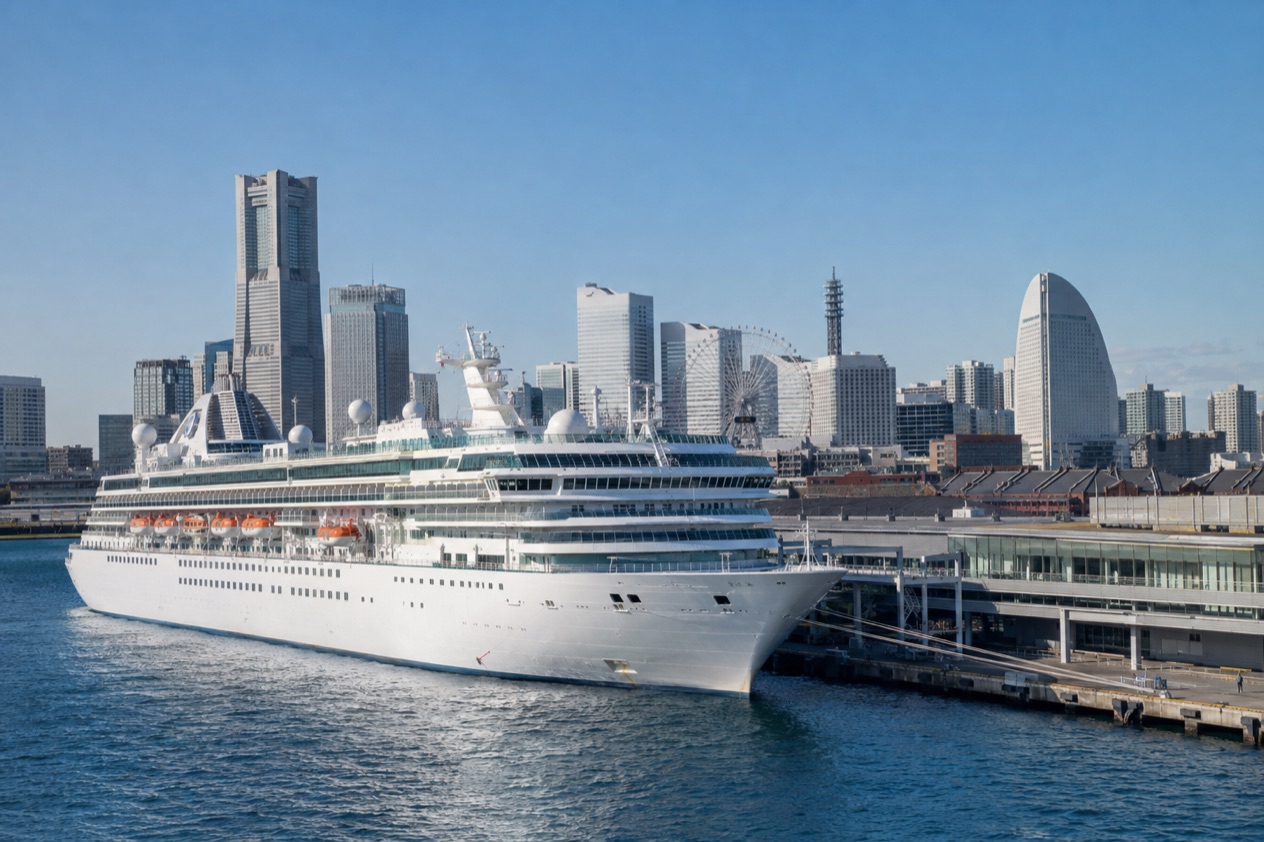
Do you need a passport for a Japan cruise?
Yes, every foreign visitor to Japan must hold a valid passport, and that includes passengers who arrive by ship. The U.S. State Department says that for tourist or business visa-free stays, U.S. citizens must have a valid passport and should carry proof of a return or onward ticket. For a cruise passenger, the booking that carries you back out of Japan is the natural form of that proof.
The passport must be valid for the entire time you are staying in Japan. Airlines in Japan may refuse boarding if the passport has less than six months of validity left, which matters when a cruise is paired with a flight home from a Japanese airport. Checking the expiration date well before sailing costs nothing and avoids a very bad afternoon at the gangway or the check-in counter.
If a passport is lost or stolen
A passport you have reported as lost or stolen cannot be used again, even if you find it later, and Japanese authorities will likely deny you entry if you try. After a loss you need to get a new passport before traveling. Passport services are not available at the airport in Japan, so the replacement has to be in hand before you leave home.
For a cruise this means the document has to be sorted out before boarding, since the ship will not wait for a replacement to be issued. Keeping a separate note of the passport number and a copy stored apart from the original is an ordinary traveler’s habit, and it makes any later paperwork simpler.
Proof of support and unpaid bills
Immigration officers may deny entry if you lack proof of how you will support yourself in Japan. They may also deny you exit from Japan if you have unpaid bills. Neither is a common story among cruise passengers, but both belong to the picture of what an officer is allowed to look at.
Active-duty U.S. military personnel follow a different route: they may enter Japan under the Status of Forces Agreement with proper Department of Defense identification and travel orders. Everyone else, including civilians traveling with a service member, follows the ordinary tourist rules described here.
What happens at the first Japanese port?
At the first Japanese port you go through immigration and customs, where you provide fingerprints, have your photo taken and hand over a customs declaration. All visitors must provide fingerprints and have their photo taken on arrival. The exceptions are those entering on diplomatic visas, minors and certain members of the military traveling on official orders.
The customs declaration
When entering Japan, all travelers must submit a customs declaration form for personal effects and unaccompanied baggage. The forms are available on board the aircraft or ship, and in the airport customs inspection area, so a cruise passenger can pick one up on the vessel and fill it in during the last stretch at sea.
Travelers can also complete the declaration online, through a website or a QR code. Visit Japan Web is the online service for people entering or returning to Japan, letting them pre-register immigration, customs and tax-free shopping information and generate a QR code. Registration there is not mandatory, but it makes certain procedures, tax-free shopping among them, smoother.
What cannot come ashore
Japan imposes restrictions on duty-free allowances, so travelers should check the limits before buying on board or abroad. It also restricts both imports and exports, much as many other countries do. The international trade of ivory is prohibited in Japan by both CITES and Japanese law.
Bringing meat, meat products, plants and plant products into Japan is strictly prohibited. Illegally importing them can result in a fine of up to 3 million JPY for individuals, or up to 50 million JPY for businesses, and imprisonment of up to 3 years. A sandwich or a piece of fruit carried off the ship from a previous port is the kind of thing to leave behind.
Arriving at one port and leaving from another
Travelers transiting to a third country via Japan can enter for up to 72 hours under specific conditions. If a passenger departs at a port different from the port of entry, the passenger is issued a Transit Pass. To be eligible, passengers should arrive and depart within the same group of ports of entry. Group A, for example, includes the airports of Narita, Haneda, Nagoya, Niigata, Komatsu and Yokota.
Ports are part of the picture too. The Port of Kobe sits in Kobe, in Hyogo, in the Keihanshin area, backed by the Hanshin Industrial Region. Flat land there is limited, so artificial islands such as Port Island and Rokko Island, and the island that holds Kobe Airport, have been built.
What about visas for cruise passengers?
U.S. citizens on a tourist or business stay of up to 90 days do not need a visa. Under the State Department’s description, these visa-free stays require a valid passport and proof of return or onward travel. The Japan National Tourism Organization adds that nationals of certain countries and regions are exempt if their stay is 90 days or less and they engage only in tourist activities.
What a visa-free stay does not allow
You cannot work on the local economy during a visa-free stay. You also cannot change to another visa while in Japan, such as a spouse, work or study visa. To do that, you must leave and re-enter with the correct visa.
A cruise stop is a tourist activity, so a sightseeing call at a port sits within these terms. The point of knowing the limits is that they apply to the person, not the ship: the same rules follow you whether you arrive by sea or by air.
If a visa is needed
Not every nationality is treated alike, and a companion of another nationality may face different rules. The list of exempt countries and regions is published on the Ministry of Foreign Affairs website. Some examples show how varied it is: Bruneian citizens may enter without a visa for up to 30 days, and Thai citizens for up to 15 days with a biometric passport.
A tourist visa application may require an application form, a valid passport, a recent photo, an accommodation booking confirmation or an itinerary, and proof of sufficient financial resources. Processing generally takes about five working days. Most tourist visas allow a stay of up to 90 days, though some nationalities may be allowed 15, 30 or 180 days. With a tourist visa you cannot work, undertake long-term training or apply for residency.
Japan also offers a Digital Nomad visa for international teleworkers, which is a different category from tourism. For any visa question, the contact is the Japanese embassy or consulate in your country of residence.
Good to know before you go
Carry the passport, the customs form or the Visit Japan Web QR code, and your onward travel details together, so each step at the pier is a matter of handing something over. Dining on almost all cruise ships is included in the cruise price, which keeps spending ashore to what you choose to buy at each port. Duty-free limits and the bans on meat and plants are worth a second look before the last port, since that is where a forgotten item turns into a problem.
Sources
- U.S. Department of State, Japan travel information, entry and exit requirements (https://travel.state.gov/content/travel/en/international-travel/International-Travel-Country-Information-Pages/Japan.html), checked October 11, 2026
- Japan National Tourism Organization, customs duty-free allowances, prohibited items, declarations (https://www.japan.travel/en/plan/customs-and-duty/), checked October 11, 2026
- Japan National Tourism Organization, who needs a visa, visa exemption, length of stay, passport, how to apply (https://www.japan.travel/en/plan/visa-info/), checked October 11, 2026
- Wikipedia, Visa policy of Japan (https://en.wikipedia.org/wiki/Visa_policy_of_Japan), checked October 11, 2026
- Wikipedia, Cruise ship (https://en.wikipedia.org/wiki/Cruise_ship), checked October 11, 2026
- Wikipedia, Port of Kobe (https://en.wikipedia.org/wiki/Port_of_Kobe), checked October 11, 2026
To plan your stay
- Japan Cruise in March: Weather by Port, Cherry Blossom Timing and What You See
- Cruises from Los Angeles to Japan: Departure Port, Yokohama Arrival and Crossing Length
- How Much Does a Japan Cruise Cost?: What the Fare Covers, Drinks and Shore Excursions
- Japan Cruise in April: Cherry Blossoms, Spring Weather and What You See From Port