
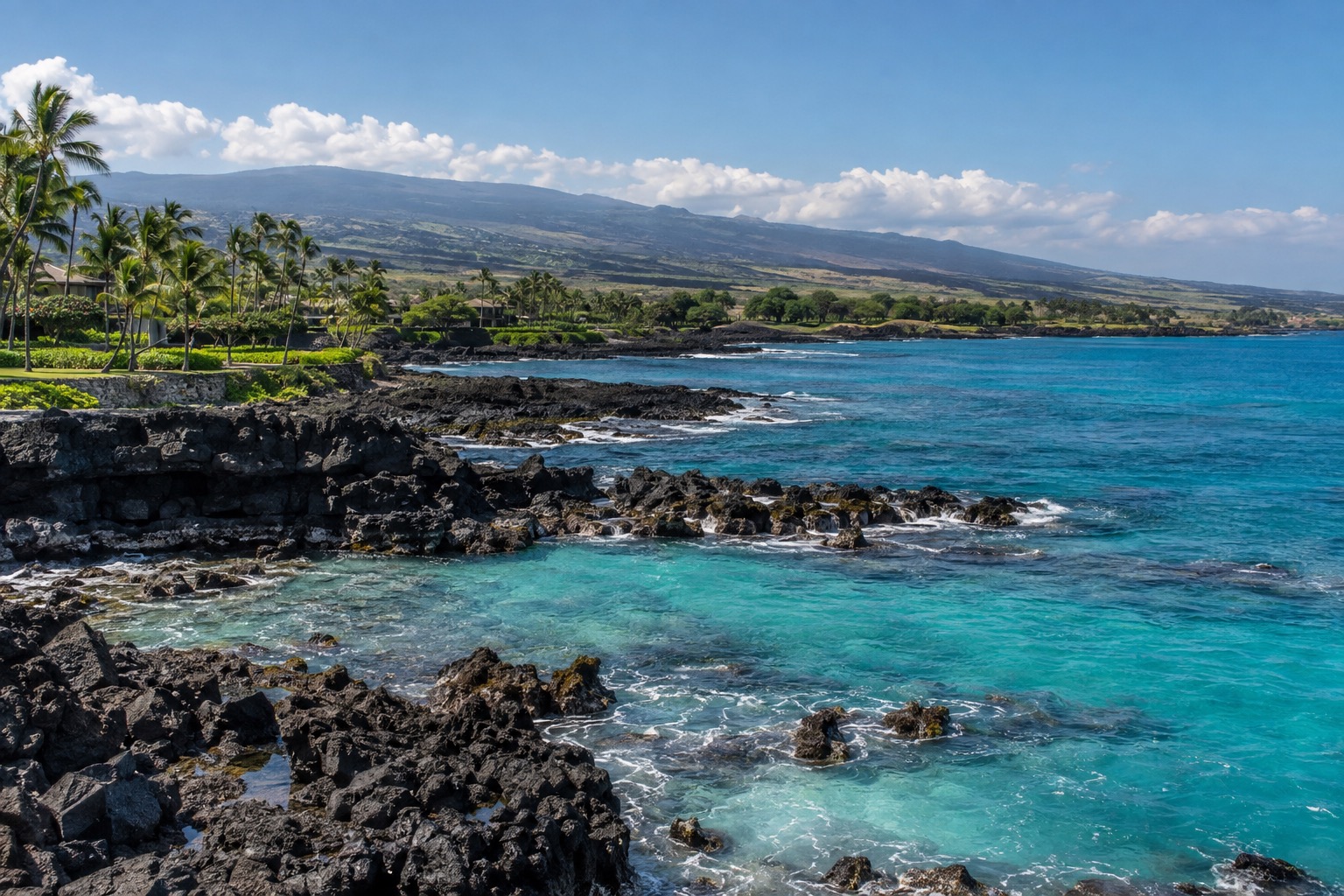
By the time September arrives, a toasted color settles over the lava fields bordering the Kohala coast under a sun that holds its height and constancy, while at first light the trade wind that drifts among the palms near the resort lagoons becomes the earliest sound to reach your ears. Mornings on the Waikoloa beaches are quiet, the sea is bathtub-warm, and the long summer rush has thinned out. It is a month for snorkeling early, resting through the hot middle of the day and watching the sun drop behind the lava in the evening.
What is the weather like in Waikoloa in September?
September in Waikoloa is hot, dry and sunny, a lot like the summer just behind it, with almost no rain to plan around.
| Month | Average high (°F) | Average low (°F) | Rain days | Sea (°F) |
|---|---|---|---|---|
| August | 88.5 | 75.4 | 1.0 | 81.5 |
| September | 87.8 | 74.9 | 1.2 | 81.5 |
| October | 87.2 | 74.0 | 1.0 | 81.3 |
Because Waikoloa rests on the dry Kohala coast, where the big volcanoes block the rain, a September day typically brings blue sky from breakfast to sunset. Mornings are warm enough for a swimsuit and a light cover-up, and by midday the sun on the black lava makes shade, a hat and a cold drink feel like necessities. The trade winds often soften the heat in the afternoon, though they can drop and leave the air still.
When rain does come, it is a brief shower that crosses the coast and moves on, and a day with a real downpour is unusual. September’s rain is a story for the island’s far shore. Hilo, on the windward coast, gets several times more rain than Waikoloa all year, and the mountain slopes inland are often cloudy while the beach stays bright.
You can eat dinner outdoors in a short-sleeved shirt because evenings remain warm, and once night falls, a thin extra layer will do. In the middle of the month, daylight lasts about twelve hours, so the light goes gold early, and that leaves plenty of room in the day for walks on the shore at sunset and stargazing from the resort lawns.
Can you swim in Waikoloa in September?
Sure, the ocean feels warm for a nice, long swim, and an hour in the water won’t leave you cold.
Summer is the calmer season on west-facing Hawaii Island, and September water along this coast is usually gentle, with small swells and good visibility on many mornings. Most days the water off the beach stays smooth with soft waves, but the ocean can shift without warning. Snorkelers like the early hours, before the afternoon breeze ruffles the surface and the beaches fill up.
Since the ocean can shift from one day to the next, look at the flags and beach signs, and where lifeguards are present, do what they say, above all at beaches exposed to the swell. Bring a rash guard or a shirt for the strong sun, a mask and snorkel, and water shoes for rocky entries. Give turtles and other wildlife plenty of room and stay off the living reef.
What to do in Waikoloa in September
September is a month of ordinary pleasures done well: early swims, slow lunches, afternoons in the shade and evenings outdoors. Hawaii has no single headline festival that belongs to Waikoloa this month, so the pull is the weather itself, dry and warm, with the summer crowds starting to ease. Honu, the green sea turtles, are often seen resting on the sand or feeding in the shallows along this coast, and they are a pleasure to watch from a respectful distance.
Food leans toward the sea and the grill: fresh poke, grilled fish, shave ice after a hot afternoon, and fruit from the stands and farmers markets of the island. Dinner tables on lanais and open-air terraces are at their pleasantest once the sun goes down and the air cools a notch.
Beaches and snorkeling on the Kohala coast
The beaches near Waikoloa are pale crescents of sand set against black lava, and each has its own character. Some are wide and open with room to stroll, while others are small coves with calm, clear water good for floating and looking for fish. In September, with the swell usually small, the coves are most inviting in the morning.
Plan on a morning swim or snorkel, then retreat to shade by late morning when the sun is strongest. Bring plenty of water, a hat and mineral sunscreen, and stay on the sand and the marked paths because the lava is sharp and hot underfoot. Families do well at the sheltered spots, while confident swimmers can explore further along the shore when the flags and lifeguards say conditions are fine.
Petroglyphs and the lava fields
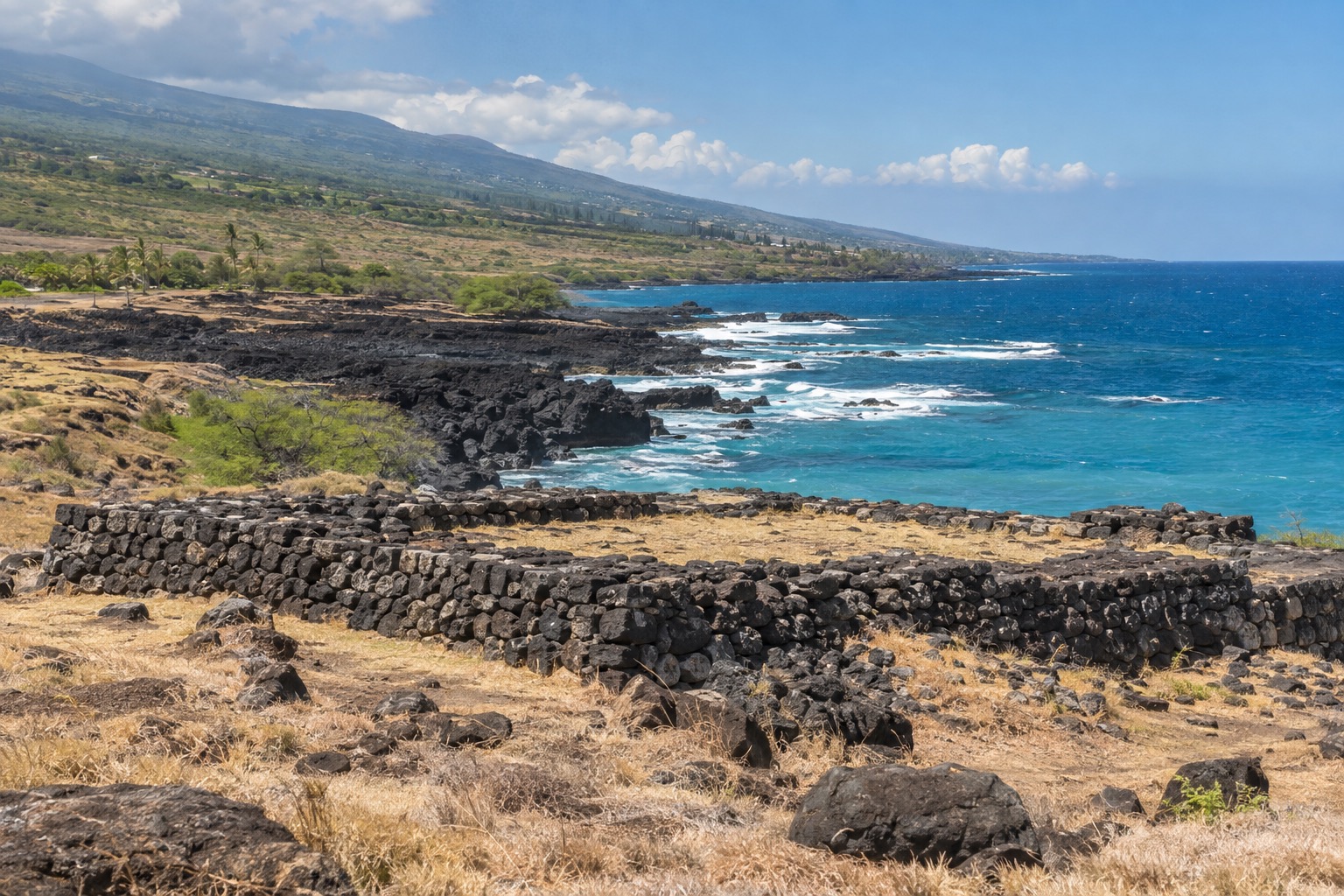
One of the most interesting ways to spend a dry September morning is on foot among the ancient petroglyphs carved into the lava, small figures and symbols made by Hawaiians long ago. Keep to the trail that is marked, remain on the path, and do not ever step on or touch the carvings, for they are fragile and the site carries deep meaning.
The lava has no shade, so go early or late in the day, wear closed shoes and carry water. The long low light of late afternoon shows the carvings best and makes the black rock glow. It suits curious travelers of any age who like a short, quiet walk with a sense of history.
Resort days, shopping and sunset
Waikoloa is built around its resorts, and a lazy day can mean a pool, a lagoon, a spa or a round of golf on a course laid across the lava. Shops and restaurants cluster in open-air centers where you can browse, eat and watch the sky turn orange after the heat of the day.
Sunset is the evening event. Find a beach, a lawn or a restaurant terrace facing west and watch the sun slide toward the horizon. On clear nights the stars here are bright, because the coast has less haze than the wet side of the island.
A two-day itinerary for Waikoloa in September
Day 1 is for the sea. Start early with a swim or a snorkel at a sheltered beach while the water is glassy and the sand is nearly empty. Eat breakfast close by, then spend the midday hours inside or in the shade, enjoying a leisurely lunch of grilled fish or poke and a poolside rest.
Later in the day, once the heat lets up, stroll by the water or wander the open-air shops, then find a west-facing terrace to take in sunset and dinner. If a stray shower passes, wait it out over shave ice or a drink, because it rarely lasts long.
Day 2 turns to the land. Go out early to the petroglyph fields before the lava heats up, with water, a hat and sturdy shoes, and walk the marked trail slowly. Mid-morning is a good time for a farmers market or a fruit stand for a snack, then a quiet lunch somewhere with air conditioning.
Spend the afternoon on a golf course, at a spa or simply in a lagoon, and finish with a last beach sunset and a relaxed dinner. If the weather turns gray, spend the day on a spa treatment, a long meal or a stroll through the shops.
Is Waikoloa busy in September?
Waikoloa is moderately busy in September, quieter than the height of summer and the winter holidays, though still a popular resort coast.
Most mainland school calendars have started by now, so the family crowds of July and August thin out, and the visitors you meet are more often couples, honeymooners, golfers and travelers with flexible schedules. The Labor Day weekend at the start of the month is the exception, when rooms and rental cars go quickly, so book that stretch early. The rest of the month is easier, and you can often find a table at a good restaurant with less planning.
Beaches fill up around midday and empty in the early morning and late afternoon, so timing matters more than the date. Securing a room or a rental car is simpler than during holiday weeks, yet on this resort coast it still pays to reserve early. Other Hawaii sites such as Hawaii Volcanoes National Park and some state parks may have their own entry rules, so look at the official park pages before you plan a day around them.
What to pack for Waikoloa in September
Pack for sun, heat and water, with one light layer for the breeze after dark.
- Pack a broad-brimmed hat and mineral sunscreen, since the sun stays strong all day long.
- A rash guard, for long snorkeling sessions without burning your back.
- Bring a mask, a snorkel and water shoes for clear water and entry points full of rocks.
- Sturdy closed shoes, for walks over the sharp lava.
- A refillable water bottle, since walks on the lava have no shade.
- A light sweater or shawl, for breezy evenings on a terrace.
Good to know before you go
September falls inside the Central Pacific hurricane season, which runs from June 1 to November 30, so it is worth choosing flexible bookings and watching the forecast before you leave. Getting around the Kohala coast is simplest with a rental car, and booking your room first matters most, particularly near Labor Day. Lodging taxes add to the bill, so the table gives the rates.
| Fee | Amount | Who pays |
|---|---|---|
| State Transient Accommodations Tax | 11.00% | Guests, on lodging |
| County of Hawaii Transient Accommodations Tax | 3% | Guests, on lodging |
| General Excise Tax a business may pass on (county) | 4.7120% | Customers, on purchases |
Waikoloa in September vs August and October
Moving the trip to August gives you almost the same weather and sea, but with more families, fuller beaches and a busier resort scene. The water is just as warm, so the main difference is the crowd, and anyone who likes a livelier summer atmosphere may prefer it.
October feels much the same on the Kohala coast, with warm sea, little rain and a calm mood, and the beaches grow quieter still as the season turns. Late in the month, the island fills with the athletes and spectators of the Ironman World Championship in Kona, which can make rooms and cars harder to find around the Big Island.
Travelers who want a quieter coast after the summer rush should choose September, while those who want the liveliest beaches might choose August. Anyone drawn to the Ironman spectacle will want October, and should book early.
Is September a good time to visit Waikoloa?
September is indeed a great month for travelers seeking sunshine, warm water and a laid-back resort coastline minus the summer crowds.
It suits snorkelers, beach lovers, golfers, couples and anyone who likes to rest through the hot afternoon and come alive in the evening. Travelers seeking cool air, green waterfalls or rainforest scenery will find it a poorer fit, because the Kohala coast is dry, sunny, bare and hot, while the island’s lush landscapes lie on the wet side.
On arrival, put the first morning toward the sea, with an early swim at a sheltered beach before the sun is high, and save the lava walks for the following early morning. What makes September here special is its steadiness: warm water, a dry sky, long golden evenings and the black lava glowing at sunset.
Sources
- NOAA NCEI, monthly normals 1991-2020, station USC00518422, checked September 8, 2026
- Open-Meteo Marine API, average 2015-2024, checked September 8, 2026
- sunrise-sunset.org, sunrise and sunset calculated for the 15th of the month, checked September 8, 2026
- Hawaii Department of Taxation, Tax Announcement No. 2025-03 (Transient Accommodations Tax Law Changes from 2025 Legislative Session), files.hawaii.gov/tax/news/announce/ann25-03.pdf, checked September 24, 2026
- County of Hawaii, Department of Finance, Transient Accommodations Tax (TAT) page, hawaiicounty.gov/departments/finance/transient-accommodations-tax-tat (live returned HTTP 403 on request, read via Internet Archive Wayback Machine snapshot dated August 14, 2026, same official content), checked September 25, 2026
- Hawaii Department of Taxation, County Surcharge on General Excise and Use Tax page, tax.hawaii.gov/geninfo/countysurcharge/, checked September 25, 2026
- NOAA NCEI, monthly normals 1991-2020, station USW00021510
- NOAA NCEI, monthly normals 1991-2020, station USW00021504
- NWS Honolulu / Central Pacific Hurricane Center, « 2026 Central Pacific Hurricane Season Outlook », weather.gov/hfo/hurricaneOutlook2026, checked September 24, 2026