
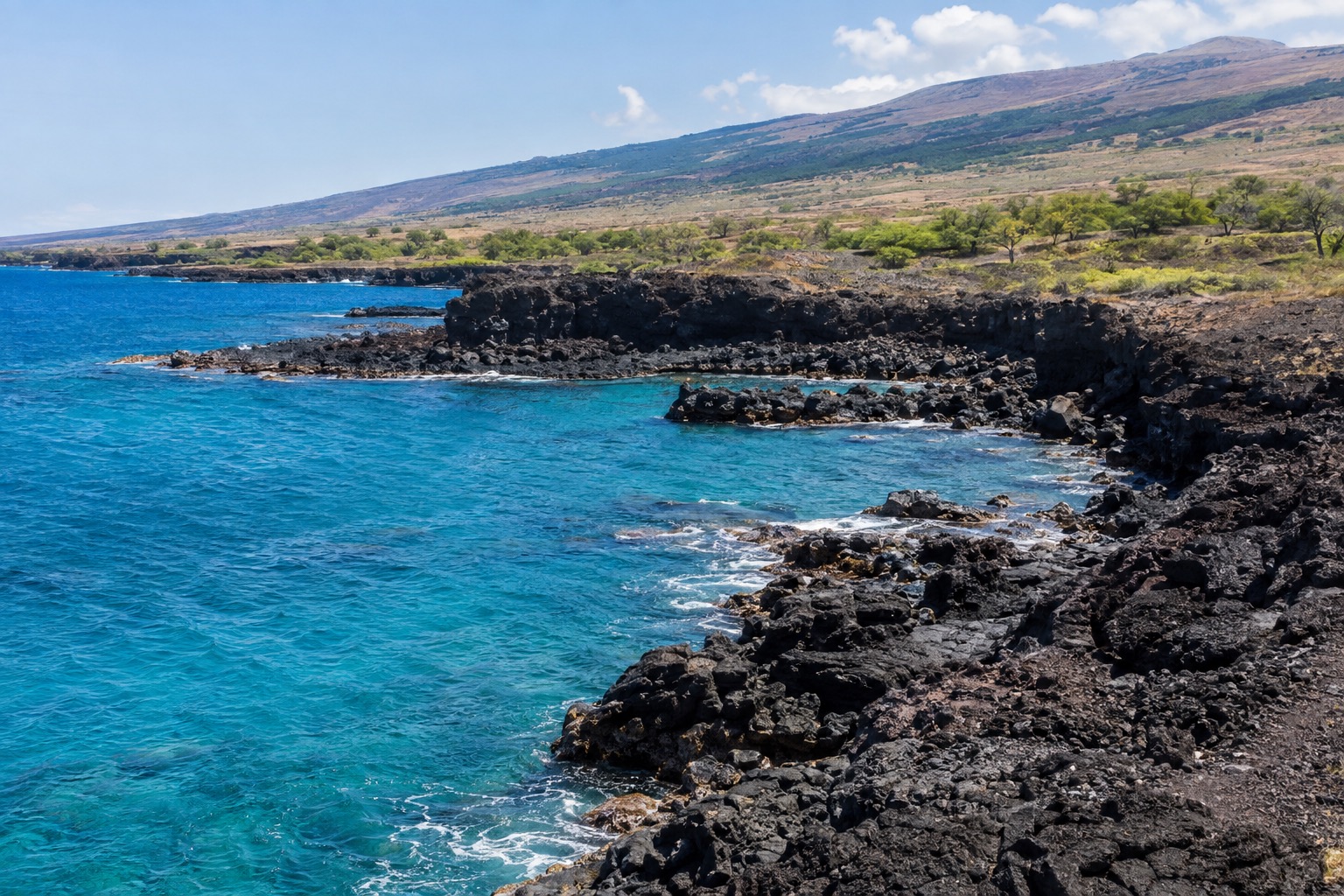
Early in July the black lava fields along the Kohala coast shimmer by mid-morning, and the first thing you hear at the resort lagoons is the slap of flip-flops heading for the water. The sky is blue from dawn to dusk, the trade winds soften the heat, and the evenings smell of plumeria and charcoal grills. Waikoloa in July is the dry, sunny leeward coast of the Big Island at the height of summer, and the month offers plenty to beach lovers, snorkelers and families.
What is the weather like in Waikoloa in July?
Hot, sunny and almost entirely dry, with warm nights that make dinner outside the default. On the Big Island’s leeward side, where the volcanoes cast a rain shadow, Waikoloa enjoys July as one of its most reliable months of the year.
| Month | Average high (°F) | Average low (°F) | Rain days | Sea (°F) |
|---|---|---|---|---|
| June | 87.0 | 73.6 | 1.3 | 80.5 |
| July | 87.9 | 74.9 | 0.6 | 80.6 |
| August | 88.5 | 75.4 | 1.0 | 81.5 |
Mornings start clear and pleasantly warm, and the best hours for walking, golf or a trail are before the sun climbs high. By early afternoon the lava rock holds the heat and the shade of a palm or a beach umbrella becomes precious. The trade winds usually pick up in the afternoon and take the edge off, which is why a breezy lunch on a lanai feels better than you might expect.
Rain is a rare event on this coast in July. A shower, if one comes, is brief and light, and the real rain belongs to the other side of the island, where Hilo and the windward slopes stay green and wet all summer. If you drive across the island, expect clouds and drizzle on the east side while Waikoloa stays bright.
Pack for sun rather than for weather: light cotton, a hat, sunglasses and a thin layer for breezy evenings by the water. The light is strong, with about thirteen hours of daylight, so the sun is up early and stays long into the evening. Sunset glows orange over the lava and the sea, and it is a pleasure to watch from a beach or a restaurant terrace.
Can you swim in Waikoloa in July?
You can wade right in without a jolt, and the ocean stays warm enough for long swims. The marine data puts the water in the low 80s, which is comfortable for snorkeling without a wetsuit and for children who like to stay in for an hour.
Summer is usually the gentler season for west-facing shores on the Big Island, since the big winter swells arrive mostly on north and west coasts in the cooler months. Beaches along the Kohala coast, from the sheltered resort lagoons to the longer sandy stretches nearby, are often calm in July, with clear water for snorkeling over lava rock and coral. Even so, conditions change by day and by beach, and the posted flags and the lifeguards decide whether it is a good day to swim.
Families tend to like the quiet lagoons and sandy coves, while confident swimmers head for the open bays. Pack mineral sunscreen, a rash guard for those long hours in the water, and a mask and snorkel. Sea turtles sometimes rest near the shore. Admire them from a distance and never touch them, since they are protected, and keep off the reef, which is alive.
What to do in Waikoloa in July
July here is a beach month, built around long mornings in the water and slow golden evenings. Summer on the Big Island has its own holidays: Kamehameha Day on June 11 closes out the festival season just before, and in July the mood is more about family vacations, barbecues and the Fourth of July than about one big event. Fireworks and community gatherings around the Fourth are common on the island, and resorts often put on a luau or an evening show with torches, hula and a Hawaiian buffet.
Food in July is simple and delicious: poke from a market counter, grilled fish, shave ice in every flavor and tropical fruit at the stands. Cold drinks and ice cream are part of the daily rhythm, and a long lunch in the shade is a good way to wait out the hottest hours.
Beaches and snorkeling on the Kohala coast
The coast north of Waikoloa has some of the best sand on the island, with white crescents set against dark lava. Beaches are a short drive from the resorts, and many have shade, showers and restrooms. Morning is the best time, when the water is clearest and the sand not yet hot.
Snorkelers swim along rocky edges where fish gather, and in calm conditions you may see turtles grazing. Bring your own gear or rent it nearby, take a towel and water, and leave by midday when the sun is fiercest. Lifeguards and posted signs tell you what the sea is doing that day.
Petroglyphs and the lava coast
Not everything here is about sand. The lava fields around Waikoloa hold ancient petroglyphs, carved by Hawaiians long ago, and a walk on the marked trails gives a sense of the land before the resorts. Go early or late in the day, because the black rock has no shade and the heat builds quickly.
Walk only on the marked paths, never step on the carvings and take your trash with you. The place is culturally important, and the quiet of the lava, with the sea in the distance, is a good counterpoint to a beach day.
Pu’ukohola Heiau and the north Kohala coast
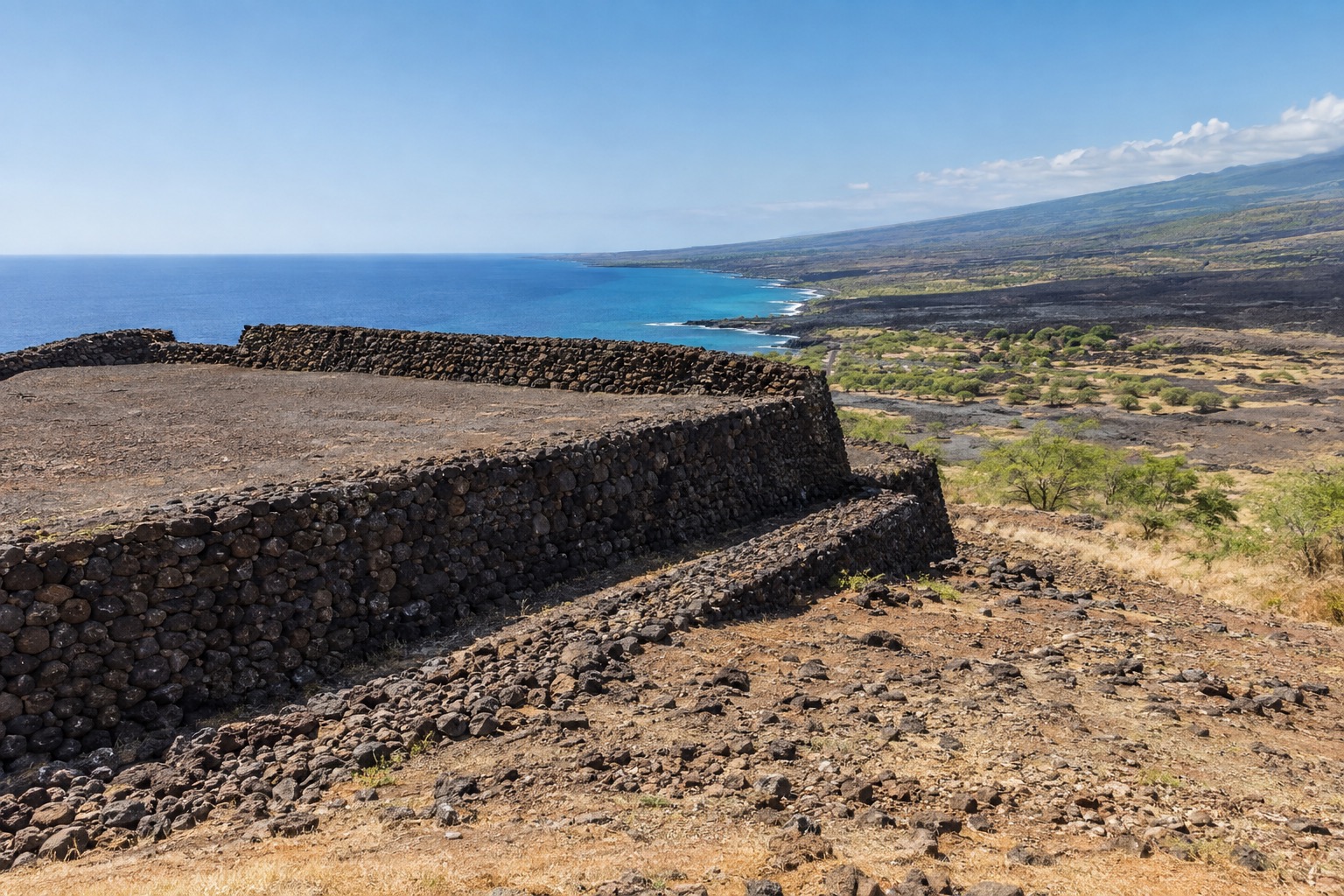
A short drive north brings you to Puukohola Heiau, the great stone temple built by Kamehameha, with views across the water toward Maui on clear days. It is a place of history and respect, so do not climb on the stones and keep to the paths. The nearby town of Kawaihae has places for a casual lunch.
Continue to the old plantation towns of North Kohala for a cooler, greener contrast, with small shops, galleries and a statue of Kamehameha. It makes a good half-day when you have had enough sun, and the road gives wide views of the coast.
Back at the resorts, evenings are for sunset walks, a luau, stargazing and a cold drink on the lawn. With so little rain and so much light, July rewards those who plan around the sun: water in the morning, shade at noon, culture in the late afternoon.
A two-day itinerary for Waikoloa in July
Day 1 is for the water. Start at a Kohala coast beach soon after sunrise, when the sand is cool and the sea is at its clearest, and snorkel until the sun gets strong. Take a long lunch in the shade, with fish tacos or poke, then rest through the hottest hours by a pool or in your room.
In the late afternoon, walk the lava trails to the petroglyphs when the light turns gold and the heat eases. Finish with dinner on a terrace, timed for the sunset over the sea, and linger for the stars. If a rare shower or cloud rolls in, move indoors to the resort shops, galleries and cultural programs.
Day 2 heads north. Drive to Puukohola Heiau in the morning, when the stones are cool and the views are clear, then continue to Kawaihae for a casual lunch. Carry on to North Kohala for a stroll through the small towns, with their galleries, bakeries and shave ice.
Return in the afternoon for a last swim at a beach you have not tried yet, then a farewell dinner at a restaurant by the water. If you prefer a quiet evening, a lawn chair and the sunset with a cold drink is plenty.
Is Waikoloa busy in July?
Yes, July is a busy summer month, with school vacations bringing families from across the mainland. Resorts are lively, pools are full and restaurant tables fill up by evening, especially around the Fourth of July week.
Rooms and rental cars tend to go early for the holiday weeks, so book those first, and book later, with more flexibility, for the quieter weeks of the month. Dinner reservations are a good idea at popular restaurants, particularly at sunset and on weekends.
Beaches are busiest from late morning to mid-afternoon, so go early or late and you will find more space. Petroglyph trails and the northern towns stay quieter than the resort beaches, and a sunrise or evening walk feels almost private.
If you plan to visit a popular park or attraction that uses reservations, check the official site for the current rules when you book your flight. The best approach in July is to lock in the big pieces early and leave room for slow days.
What to pack for Waikoloa in July
Think light, sun-ready and ready for the water, with one thin layer for breezy evenings.
- Pack mineral sunscreen and a wide-brimmed hat too, since the sun beats down hard from morning to night.
- A rash guard and swimsuits, for long hours snorkeling.
- Water shoes, for rocky entries and hot sand.
- Closed shoes for lava trails, since the rock is sharp and hot.
- A light layer, for breezy evenings on a terrace.
- A refillable water bottle, for the heat of the day.
Good to know before you go
July falls inside the Central Pacific hurricane season, which runs from June 1 to November 30. Hawaii is rarely hit, but it is worth watching forecasts before you travel. Flights from the mainland require no passport or visa, and getting among beaches, trails and towns is simplest with a rental car. Lodging taxes are added to your bill, so expect them on the total.
| Fee | Amount | Who pays |
|---|---|---|
| State Transient Accommodations Tax | 11.00% | Guests staying in lodging |
| County of Hawaii Transient Accommodations Tax | 3% | Guests staying in lodging on the Big Island |
Waikoloa in July vs June and August
Moving the trip to June gives you slightly cooler air, a touch more chance of a passing shower and the tail end of the festival season, with Kamehameha Day on June 11. The sea is a little cooler, though still comfortable, and the crowds are often lighter outside the late-June school breaks.
August is the warmest of the three, with the warmest sea and similar dry skies. Families are still on vacation early in the month, then the pace eases as schools return. It is a fine choice for those who want the water at its warmest.
Choose July if you want the Fourth of July atmosphere and long, dry days. Choose June for a gentler start to summer, and August for the warmest swimming and a slightly calmer second half. The differences are small, so schedule and rates should decide.
Is July a good time to visit Waikoloa?
Yes, especially for beach lovers, snorkelers and families who want reliable sun. The days are bright, the water is warm and the rain stays on the other side of the island.
It suits those who enjoy heat and long evenings outdoors, and it is less ideal for anyone who prefers cool air, quiet beaches or the big winter surf and whales. If the sun bothers you, plan your days around mornings and late afternoons.
On arrival, get into the water first, with a morning snorkel at a Kohala beach, and save the trails for the golden hours. July in Waikoloa is lava glowing in the late light, a warm sea at your feet and a sunset that arrives slowly over the Pacific.
Sources
- NOAA NCEI, monthly normals 1991-2020, station USC00518422, checked September 8, 2026
- Open-Meteo Marine API, average 2015-2024, checked September 8, 2026
- sunrise-sunset.org, sunrise and sunset calculated for the 15th of the month, checked September 8, 2026
- Hawaii Department of Taxation, Tax Announcement No. 2025-03 (Transient Accommodations Tax Law Changes from 2025 Legislative Session), files.hawaii.gov/tax/news/announce/ann25-03.pdf, checked September 24, 2026
- County of Hawaii, Department of Finance, Transient Accommodations Tax (TAT) page, hawaiicounty.gov/departments/finance/transient-accommodations-tax-tat (live returned HTTP 403 on request, read via Internet Archive Wayback Machine snapshot dated August 14, 2026, same official content), checked September 25, 2026
- Hawaii Department of Taxation, County Surcharge on General Excise and Use Tax page, tax.hawaii.gov/geninfo/countysurcharge/, checked September 25, 2026
- NOAA NCEI, monthly normals 1991-2020, station USW00021510
- NOAA NCEI, monthly normals 1991-2020, station USW00021504
- NWS Honolulu / Central Pacific Hurricane Center, « 2026 Central Pacific Hurricane Season Outlook », weather.gov/hfo/hurricaneOutlook2026, checked September 24, 2026