
In November, the road along Molokai’s south shore is quiet in the early morning, with the smell of salt and kiawe smoke drifting from backyard grills and fishermen standing knee-deep on the reef flats. Pickup trucks wave at one another and nobody is in a hurry. This is the Hawaii of small-town stores, empty beaches and long open views, and November gives it a softer, greener face as the first winter rains return.
What is the weather like in Molokai in November?
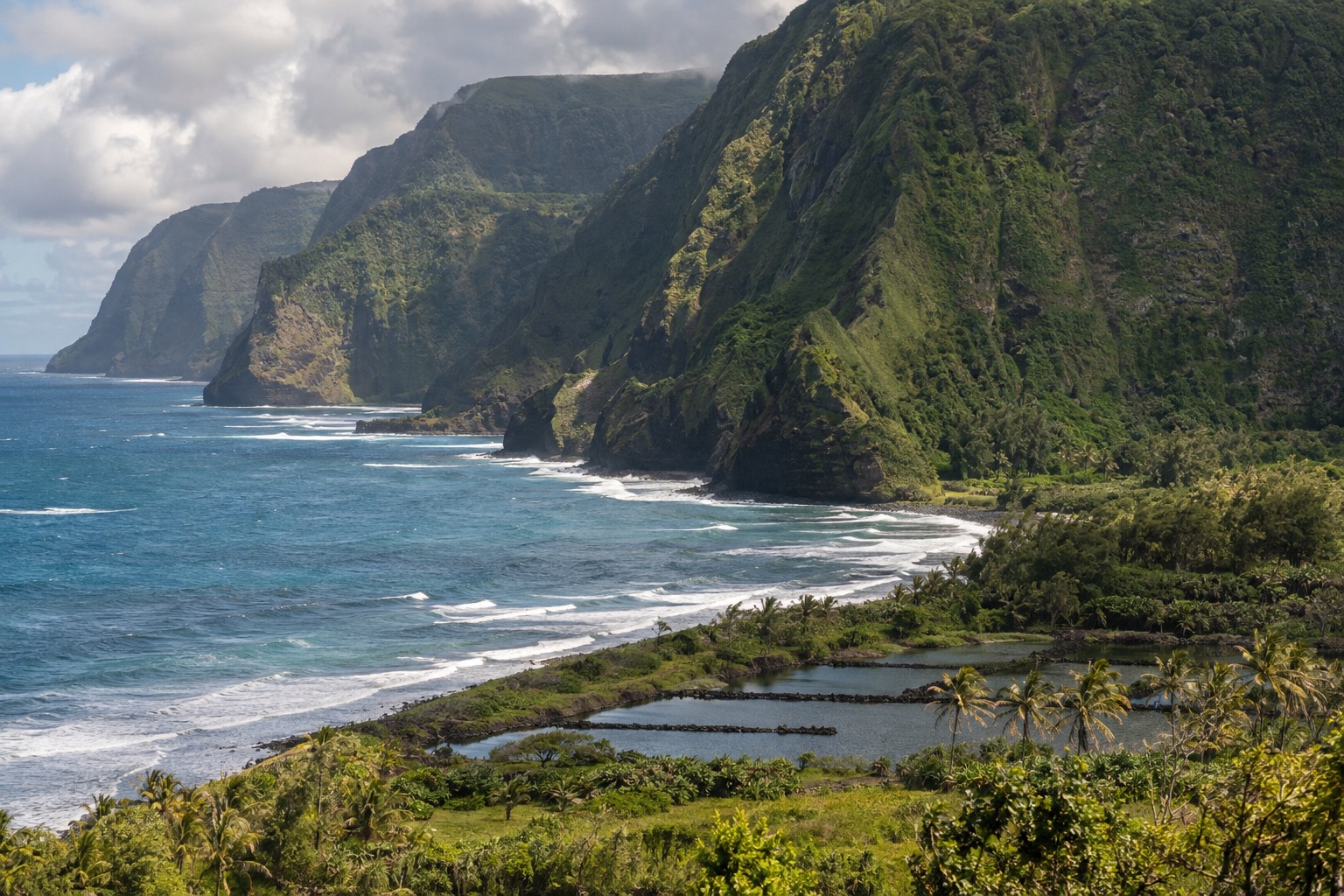
November on Molokai is warm and mostly sunny, with a little more cloud and a few more showers than in the fall months just behind it. The island sits on the dry side of the trade winds, so the central plain and the south shore stay bright most days.
| Month | Average high (°F) | Average low (°F) | Rain days | Sea (°F) |
|---|---|---|---|---|
| October | 85.5 | 71.4 | 2.7 | 80.7 |
| November | 82.8 | 69.6 | 4.3 | 79.2 |
| December | 80.2 | 66.9 | 5.1 | 78.3 |
Mornings are soft and pleasantly mild, good for a walk on the beach or a drive before the sun climbs. By midday it is warm enough for shorts and a swimsuit, and afternoons stay comfortable in the shade of the trade winds. As night falls, the air grows cool enough that a light layer might feel good on a porch or a patio.
Rain arrives in short, passing showers, usually in the night or early morning, and a heavy day is rare. The wettest ground is the green valleys and slopes of the east end, where clouds snag on the hills. The airport plain and the south shore get a fraction of what a windward town like Hilo receives, so a gray hour at one end of the island often means sunshine at the other.
Days are shorter now, with about eleven hours of daylight in mid-month, so the light turns golden early in the afternoon and sunset comes in the late afternoon. Plan beach time for the middle of the day and save the last hours for a drive or a quiet dinner.
Can you swim in Molokai in November?
The ocean is still plenty warm for a nice, long swim, but it feels a little cooler than it did in the fall, and on shores that face the open water the waves begin to build.
As winter swells begin to arrive, the north shore turns rough and is not a place for swimming, and its cliffs and valleys are best admired from a distance. South-facing beaches and the stretches behind the reef are usually the gentler choice, with shallow water that suits families and nervous swimmers. The long west-end beaches are broad and wild, lovely for walking, and their surf and currents can change quickly.
Snorkelers do best on mornings when the water is clear and the wind has not yet risen. The reef is alive, so keep your fins off the coral.
What to do in Molokai in November
Molokai rewards people who slow down. November has no big tourist festivals to chase, which is part of the appeal. The month is about the rhythm of the island: fishing, farming, church suppers and talk-story at the store counter. The first winter swells begin to rise, the hills turn greener, and the island looks lush after the dry months.
Begin in Kaunakakai, the island’s only genuine town, where a few blocks of low wooden storefronts line a quiet main street. Stop at the bakeries and small markets for fresh bread, local fruit and plate lunches, and walk out along the old wharf at the edge of town, where fishermen and kids are often at work. It is a good place to see how ordinary daily life moves on the island.
The south shore and its fishponds
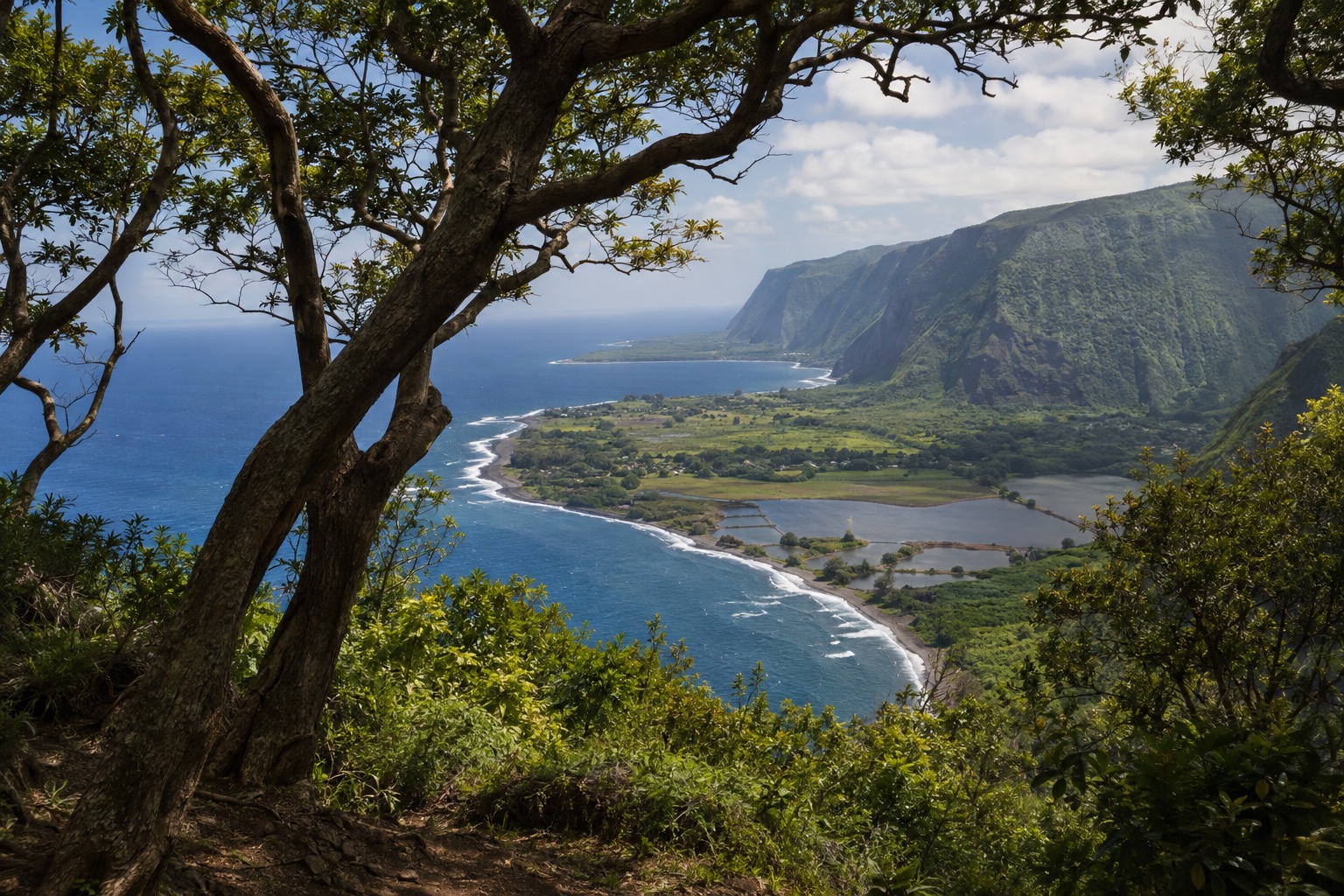
East of Kaunakakai the road runs beside the water for miles, and the shallows are lined with ancient Hawaiian fishponds, low rock walls that once fed whole communities. A calm morning with clear light and still water gives you the finest view of them from the roadside. Some stand in the open, others are half hidden behind shoreline brush.
The drive is slow and winding, with small beach parks, churches and roadside stands along the way. It suits anyone who likes photography, history or simply an unhurried drive. Treat the walls as the cultural sites they are, and do not climb on them or take stones.
The west end and the central plain
West of town, the land flattens into red earth and open pasture, then reaches long, nearly empty beaches where you can walk for an hour and meet no one. November brings stronger swell here, so these shores are better for walking, sitting and watching the waves than for swimming. At sunset the sky over the water turns orange and pink, and neighboring Oahu glows on the horizon.
Inland, the central plain holds farms, a few small shops and wide views toward the green hills. It is a good place to see the working side of the island, and a short detour to a local farm stand makes a simple, tasty stop.
The cool green uplands
Climb into the hills and the air changes: cooler, damper, scented with forest. Shaded trails and overlooks here are at their freshest after the first rains of the season, and the clouds roll across the ridges. Bring a light jacket, since the weather up high can turn quickly.
On a showery afternoon these slopes can be misty and slippery, so go in the morning when the views are clearer, and wear shoes with a good grip. It is a fine half-day outing for walkers who like quiet and scenery.
Food on Molokai is simple and local: fish plates, poke, sweet bread, shave ice and whatever the farm stands have that week. Eat early, since many places close by early evening. In the rain, linger at a bakery or visit a small local shop to talk with the people behind the counter.
One thing to remember is respect. Much of the island is cherished by the people who live here, and many places are private or sacred. Stay on public roads and marked paths, ask before entering anything that looks private, and leave beaches as you found them.
A two-day itinerary for Molokai in November
Day 1 begins in Kaunakakai, where a bakery breakfast sets the tone before the day warms up. Start at the pier, then head east along the south shore and pause at the fishponds and little beach parks. Pick up lunch from a plate-lunch counter or a roadside stand, then take a midday swim, when the air is warmest and the water clearest.
In the afternoon turn back toward town, browse the little shops and stop for shave ice. Dinner should be early and simple, since kitchens close sooner than on the busier islands. After dark the sky is wonderfully clear of city light, and a walk outside brings out the stars.
Day 2 heads west, starting with coffee and an early drive across the plain to the long open beaches, where the morning is calm and cool. Walk the sand, watch the swell and keep to the shallows. Return through the farm country for a late lunch.
For the afternoon, climb into the uplands for a cool, shady walk and the views, then drop back down to the coast for sunset, which comes in the late afternoon this month. Should showers move in, pass the time inside over a leisurely lunch, a stop at a neighborhood shop, or a gentle drive with the windows rolled down whenever the rain lets up.
Is Molokai busy in November?
No, Molokai is quiet in November, as it is most of the year, and that is much of its charm. The island has few hotels and no resort crowds, so the month feels calm even when other islands are filling up with early holiday visitors.
Rooms and rental cars are limited because the island is small, so book early for the Thanksgiving week and later for the quieter days before it. Rental cars can run out on busy weeks, and a car is the way to see the island. Restaurants are few and keep short hours, so plan dinner a little ahead and do not count on a late table.
Most visitors come for peace, so the beaches, roads and trails are open and uncrowded. Locals use the same beaches and parks, so be a considerate guest, keep your voice low and say hello. Molokai gives back what you bring to it.
What to pack for Molokai in November
Pack light, easy clothes for warm days and one layer for cooler evenings and the damp uplands.
- A light rain jacket, for passing showers and the misty hills
- Reef shoes, for rocky shore entries and shallow reef flats
- Because the sun stays powerful even when skies are gray, pack mineral sunscreen along with a hat.
- A rash guard, for snorkeling and sun protection
- Sturdy walking shoes, for slippery upland trails
- A refillable water bottle, since shops are few and far apart
Good to know before you go
The Central Pacific hurricane season runs from June 1 to November 30, so November is its last month. As winter swells start to arrive and the island’s services are few, top off the tank and pick up what you need in Kaunakakai on your way through. Distances are short but the roads are slow, and a rental car is the way to get around.
| Fee | Amount | Who pays |
|---|---|---|
| State Transient Accommodations Tax | 11.00% | Guests, on the room rate |
| Maui County surcharge on the General Excise Tax | 0.5% | Added to taxable sales in Maui County |
Molokai in November vs October and December
Move the trip a month earlier and October is hotter, drier and a little calmer, with the sea at its warmest and the beaches gentler. It suits swimmers and people who want the most reliable sunshine on the island.
Move it a month later and December is cooler, greener and showerier, with bigger winter swells that make the north and west shores rougher. Come the holiday weeks, more travelers arrive, which makes cars and rooms tougher to come by, yet by every other measure the island remains peaceful.
Choose October for beach days and warm water, and December for a cozy, green island and the festive season. November sits between them, with warm weather, light crowds and a landscape just turning fresh.
Is November a good time to visit Molokai?
November is a fine month for visitors seeking an island that is peaceful and easygoing, with mild conditions and space to relax. It suits walkers, drivers, photographers and anyone who likes simple food and open landscapes more than nightlife.
It is less right for those who want guaranteed calm water on every shore, big resort amenities or a busy calendar of events. If that is you, another island or another month may fit better.
On arrival, pick up your car, buy groceries and water in Kaunakakai, and take the south shore road slowly. November here is the island turning green again, with warm afternoons, empty beaches and the first winter swells rolling in beyond the reef.
Sources
- NOAA NCEI, monthly normals 1991-2020, station USW00022534, checked September 8, 2026
- Open-Meteo Marine API, average 2015-2024, checked September 8, 2026
- sunrise-sunset.org, sunrise and sunset calculated for the 15th of the month, checked September 8, 2026
- Hawaii Department of Taxation, Tax Announcement No. 2025-03 (Transient Accommodations Tax Law Changes from 2025 Legislative Session), files.hawaii.gov/tax/news/announce/ann25-03.pdf, checked September 24, 2026
- Hawaii Department of Taxation, County Surcharge on General Excise and Use Tax page, tax.hawaii.gov/geninfo/countysurcharge/, checked September 25, 2026
- NOAA NCEI, monthly normals 1991-2020, station USW00021504
- NWS Honolulu / Central Pacific Hurricane Center, « 2026 Central Pacific Hurricane Season Outlook », weather.gov/hfo/hurricaneOutlook2026, checked September 24, 2026